
Pages
Stay In Touch
More
© 2013 KentuckyGuard
By Staff Sgt. Scott Raymond, Kentucky National Guard Public Affairs
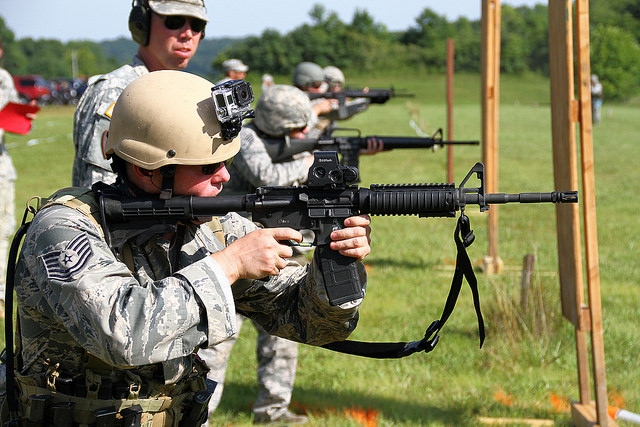
Kentucky National Guard Airmen and Soliders compete in a rifle match at Fort Knox, Ky., July 25, 2015. The Guardsmen fired M4 rifles and M9 pistols in a variety of events during the annual Adjutant General Marksmanship Match. (U.S. Army National Guard photo by Staff Sgt. Scott Raymond)
FORT KNOX, Ky. — Annually, the top shooters in the Kentucky National Guard gather to prove their skills and compete for the exclusive Governor’s Twenty patch. More than 50 Soldiers and Airmen took to the firing line at Fort Knox, Ky., July 25-26 for the Adjutant General’s Marksmanship Match.
“This event showcases what the Kentucky National Guard has to offer as far as marksmanship is concerned,” said Sgt. 1st Class James Dean, Kentucky Marksmanship coordinator. “Shooting, I think, is in a Kentuckian’s DNA.”
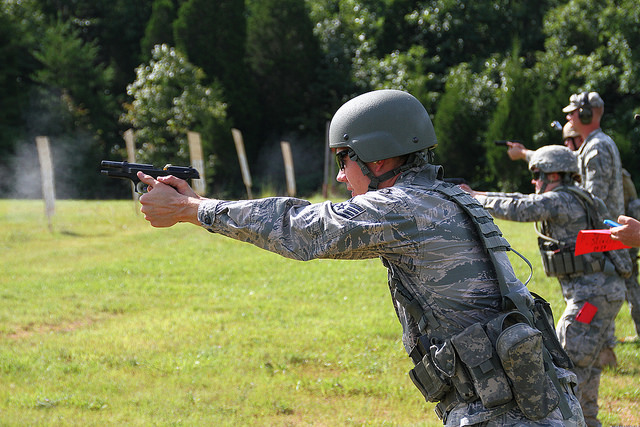
An Airman fires during a pistol event at The Adjutant General’s Marksmanship Match in Fort Knox, Ky., July 25, 2015. (U.S. Army National Guard photo by Staff Sgt. Scott Raymond)
Click here for more photos.
The Kentucky Guard awards the “Governor’s Twenty” tab only to the top 20 participants who have accumulated enough points over the two days of matches. Those that have earned the tab must also out perform those that may have already earned it, meaning if 18 of the participants currently ranked in the top 20 have previous been awarded the tab then only two will be awarded, which happened this year.
Master Sgt. Edwin Garcia of Joint Force Headquarters, and Staff Sgt. Shahid Iqbal of the 238th Training Regiment were the only two awarded the tab this year.
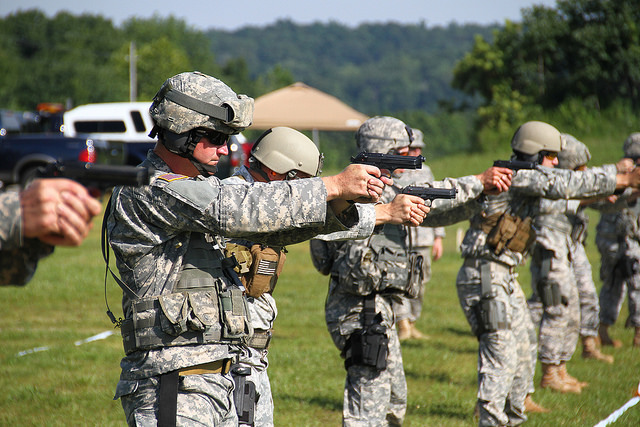
Kentucky Guardsmen compete in a pistol event during The Adjutant General’s Marksmanship Match at Fort Knox, Ky., July 25, 2015. (U.S. Army National Guard photo by Staff Sgt. Scott Raymond)
“When all the many things we as Soldiers and Airmen have to do to satisfy yearly training obligations are complete, we still have to be a confident and competent operator of small-arms,” said Dean. “Thankfully the Kentucky National Guard’s leadership has already seen the importance of these events and once again stepped up to ensure its success.”
Guardsmen also compete for the “Top Gun” award, which is given to the participant who achieves the highest point total over the two days. This year there were five individual matches that created the aggregate score. Staff Sgt. Jacob Fuller of 123rd Civil Engineering Squardron, 123rd Air Wing was the winner of the award. Fuller was also the top rifle marksman for the weekend, while Dean brought home top honors for pistol competition.
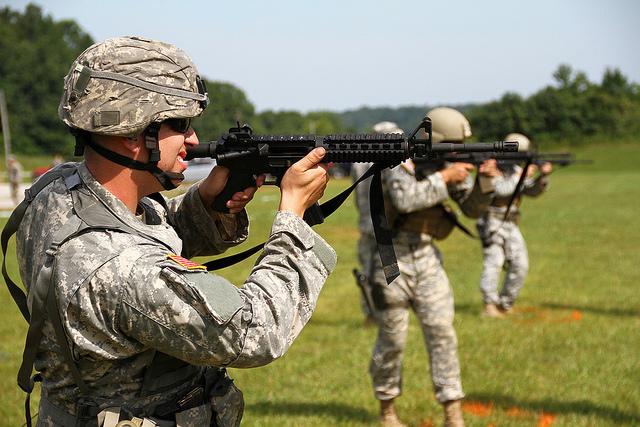
A Soldiers fires during a rifle event at The Adjutant General’s Marksmanship Match at Fort Knox, Ky., July 25, 2015. (U.S. Army National Guard photo by Staff Sgt. Scott Raymond)
Capt. William Wilford, Kentucky’s senior marksmanship coordinator said the Small Arms Readiness Training Section’s (SARTS) mission is to stand ready to be a combat multiplier to commanders across the state via clinics, or by sending SARTS NCO’s to their training events to assist in training Soldiers.
“From basic qualifications of individual weapons, to training in the live-fire Shoot-house, we have the tools available to meet a commander’s intent,” said Wilford. “This yearly training event allows a wealth of knowledge to gather to assist new soldiers and airmen in some of the finer arts of marksmanship and to simply become better at their jobs.”
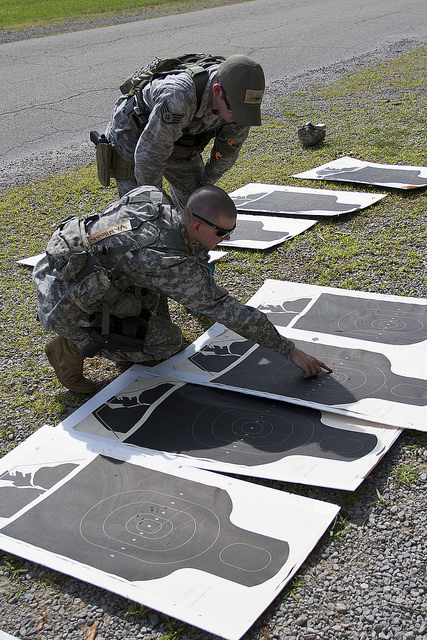
Kentucky Guardsmen review their targets at The Adjutant General’s Marksmanship Match in Fort Knox, Ky., July 25, 2015. (U.S. Army National Guard photo by Staff Sgt. Scott Raymond)
By Staff Sgt. Scott Raymond, Kentucky National Guard Public Affairs
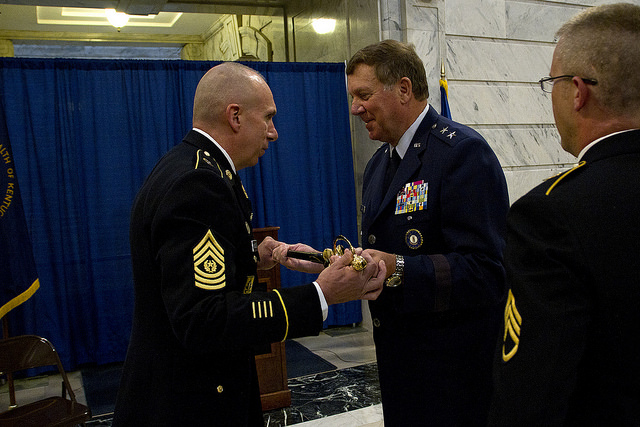
Maj. Gen. Edward W. Tonini, Kentucky’s adjutant general passes the non-commissioned officer’s sword to Command Sgt. Maj. David Munden during an assumption of responsibility ceremony in Frankfort, Ky., Aug. 7, 2015. Munden became the state’s ninth command sergeant major, taking over for Command Sgt. Maj. Thomas Chumley who retired in June. (U.S. Army National Guard photo by Staff Sgt. Scott Raymond)
FRANKFORT, Ky. — Command Sgt. Maj. David Munden became Kentucky’s ninth state command sergeant major during an assumption of responsibility ceremony in the Capitol Rotunda in Frankfort, Ky., Aug. 7. He takes over from Command Sgt. Maj. Thomas Chumley who retired in June.
Kentucky’s Adjutant General, Maj. Gen. Edward W. Tonini presided over the event and presented Munden with the NCO sword signifying Munden’s responsibility as the senior non-commissioned officer for the Kentucky Army National Guard.
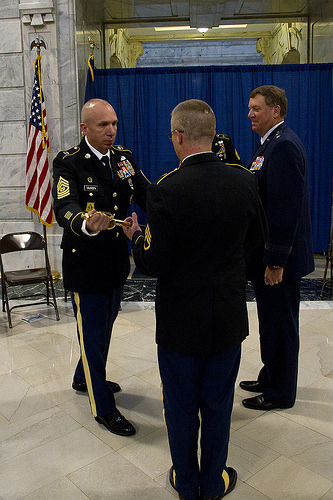
Command Sgt. Maj. David Munden returns the non-commissioned officer’s sword to Staff Sgt. Adam Rients to complete an assumption of responsibility ceremony in Frankfort, Ky., Aug. 7, 2015. Munden assumes the role following an assignment as the command sergeant major of the Warrior Transition Battalion in Fort, Knox, Ky. (U.S. Army National Guard photo by Staff Sgt. Scott Raymond)
“This is the culminating event of my career,” said Munden. “I can’t imagine any other job that I’d want after this one.”
In his position as the senior noncommissioned officer, the state command sergeant major advises the Adjutant General of Kentucky on the nearly 6500 enlisted Soldiers in the Kentucky Army National Guard, emphasizing training and quality of life issues. He is also charged with the fair and equitable management of promotions and personnel actions.
“I am a Soldier, and I’m a sergeant. And sergeants execute missions. I may have a fancy title, but I will still execute this mission with the confidence and trust I have been shown.”
Munden has served 33 years in uniform, 23 of those while married to his wife, Ginger. It was a very emotional event for the Munden family with several family members in attendance for the ceremony.
“I’m so proud of him today and I know he will do such a good job for the Soldiers,” she said. “We’ve worked hard to get him here and it means a lot to him and I hope he has the opportunity to accomplish the mission.”
Munden originally enlisted in the U.S. Marine Corps in 1979 and served six years active duty before joining the Kentucky Guard in 1988. He served the majority of his career with the 223rd Military Police Company and the 198th MP Battalion. In 2012, Munden deployed to Afghanistan as a senior mentor with Kentucky’s final Agribusiness Development Team. Upon his return, Munden was appointed the command sergeant major of the Warrior Transition Battalion at Fort Knox, Kentucky, a job he called eye-opening and very rewarding.
“I’m from the military police, I’m of the troops and for the troops. That’s the last time you’ll hear me speak specifically of MPs, I am for all the Soldiers of the Kentucky National Guard. That’s how I’m going to be.”
By Staff Sgt. Vicky Spesard, 123rd Airlift Wing Public Affairs
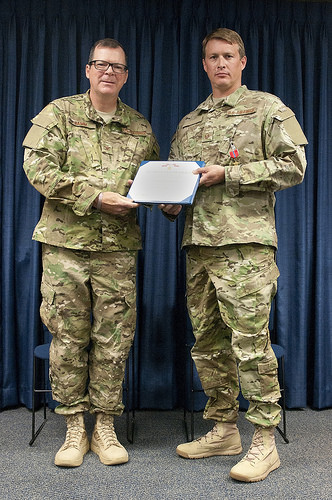
Master Sgt. Benjamin (right), a combat controller with the 123rd Special Tactics Squadron, is awarded the Bronze Star Medal during a ceremony at the Kentucky Air National Guard Base in Louisville, Ky., June 6, 2015. The medal, presented by Col. Robert Hamm, commander of the 123rd Operations Group, was awarded for meritorious service while conducting operations in support of Operation Inherent Resolve. (U.S. Air National Guard photo illustration by Staff Sgt. Vicky Spesard
KENTUCKY AIR NATIONAL GUARD BASE, LOUISVILLE, Ky. — A combat controller from the Kentucky Air National Guard’s 123rd Special Tactics Squadron was awarded the Bronze Star Medal here June 6 for meritorious service while deployed to Southwest Asia and Northwest Africa, where he engaged enemy forces and deterred their advances.
Master Sgt. Benjamin was instrumental in the execution of nine missions across five countries and seven landing zones, conducting nine forward-area refueling point surveys and one drop-zone certification in support of Operation Inherent Resolve, according to the award citation.
Benjamin supervised a 53-man joint special operations team during the night infiltration and assessment of a strategic airfield. Working with Marine Corps Force Reconnaissance operators, Benjamin was able to maintain tactical control of three separate maneuver elements on the ground while simultaneously conducting pavement evaluations for two primary runways on the airfield.
Additionally, he supervised a 12-man joint special operations team tasked with an airfield security assessment, enabling partner nation forces to maintain momentum and resupply forces in their fight against Al Qaeda.
Finally, Benjamin delivered crucial survey results to two Special Forces teams conducting strategic site assessments, equipping commanders with support to re-open strategic infrastructure.
The Bronze Star Medal was authorized by executive order on Feb. 4, 1944, and is awarded to service members who have distinguished themselves by heroic or meritorious achievement or service in connection with military operations against an armed enemy.
Kentucky infantrymen conduct largest air assault exercise in six years
By Staff Sgt. Scott Raymond, Kentucky National Guard Public Affairs
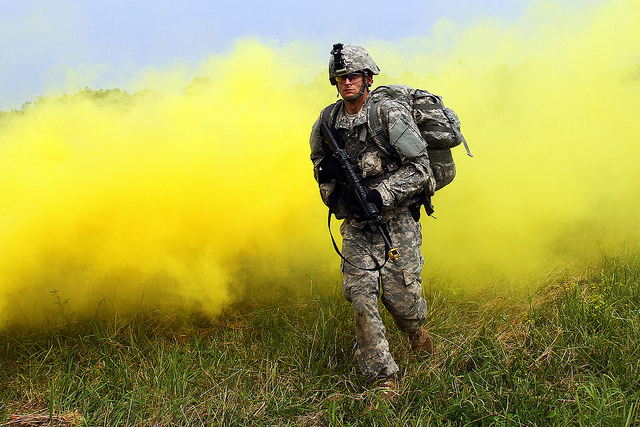
Spc. Robert Satterfield with Bravo Company, 1st Battalion, 149th Infantry exits a landing zone during an air assault exercise at Muscatatuck Urban Training Center in Butlerville, Ind., July 26, 2015. Three companies of infantrymen participated in one of the largest training exercises for the battalion in six years. (U.S. Army National Guard photo by Staff Sgt. Scott Raymond)
BUTLERVILLE, Ind. — In terms of basic Soldier skills, the infantry is arguably the hardest training unit in the Kentucky Guard. But it’s not everyday Soldiers of the 1st Battalion, 149th Infantry get to put all that training into a full-spectrum exercise. As a culminating event to this year’s two-week annual training for the unit, the Mountain Warriors conducted a multi-day air assault mission at the Muscatatuck Urban Training Center near Butlerville, Ind., July 24-27.
“Stuff like this is phenomenal, it’s great training,” said Spc. David Woodford with Alpha Company, 1/149th. “This kind of training will keep me in uniform.”
Soldiers with Alpha and Bravo Co., 1/149th loaded their gear and flew by UH-60 Blackhawks to the landing zone at Muscatatuck, compliments of the U.S. Army Reserves’ 11th Theater Aviation Command out of Fort Knox, Ky. Each Soldier carried their weapon and everything they needed for the three-day mission on their backs. Many of the Guardsmen flew on their first helicopter ride. And at the end of it, they had to get themselves, their gear and their fellow Soldiers out of the aircraft as quickly and as organized as possible.
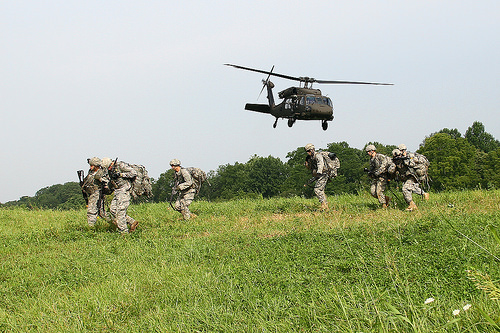
Soldiers with the 1st Battalion, 149th Infantry conduct an air assault exercise at Muscatatuck Urban Training Center in Butlerville, Ind., July 26, 2015. Aviators from the 11th Theater Aviation Command at Fort Knox, Ky., provided eight UH-60 Blackhawk helicopters to transport the infantrymen to the training site. (U.S. Army National Guard photo by Staff Sgt. Scott Raymond)
Click here for more photos.
From the landing zone, the 1/149th was tasked with assaulting and securing a building complex occupied by members of Charlie Company, simulating an opposition forces. The three companies of infantrymen then had to hold their position and establish relations with locals.
In advance of the air assault, a small platoon of scouts paved the way for the main body attack. For those scouts, the mission was a couple days longer as they infiltrated the area two days prior to the battalion’s arrival. They were the eyes and ears of the attack. A job they said they wouldn’t trade for any other in the battalion.
“This is as high as you can get as far as training value,” said Staff Sgt. Nicholas Combs with Headquarters, Headquarters Company, 1/149th. “No one here would want any other job during this training. When this mission is all said and done, only good stories will come out of it.”
From boarding and egressing a helicopter, moving as a fire team and even kicking in doors, the Mountain Warriors checked off a number of mission essential tasks they must train for each year. Lt. Col. Joseph Lear, commander of the 1/149th said the AT provided an excellent chance for each section of the battalion to not only train, but to put their job specialities to the test.
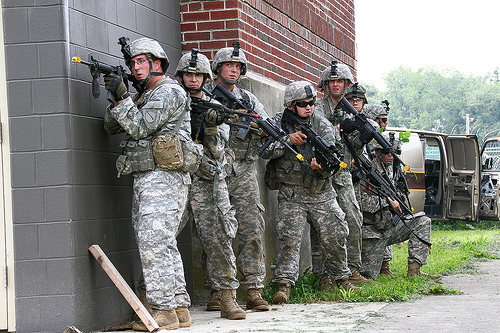
Soldiers with the 1st Battalion, 149th Infantry stack on a wall during a training exercise at the Muscatatuck Urban training Center in Butlerville, Ind., July 26, 2015. The unit conducted an air assault mission to seize a building complex and hold their position against a simulated enemy force. (U.S. Army National Guard photo by Staff Sgt. Scott Raymond)
“Conducting an air assault is one of our primary tasks,” said Lear. “This enabled us to do something we haven’t done since 2009 as a battalion. It’s a tremendous training multiplier for us, to be able to do that kind of mission at that scale, we are grateful to have the opportunity.”
Members of Delta Company provided the ground assault and convoyed by Humvees to the site. In reserve was the 1149th Forward Support Company, whose job is to ensure the infantry can do their job. Chief Warrant Officer Melissa Propes with the 1149th said the annual training was also an invaluable training opportunity for her Soldiers as well.
“I love seeing these Soldiers get experience in what they do, and they got to do that here. Not only did they get good training, it made a difference to the infantry. And that is absolutely what the 1149th FSC is supposed to do,” she said. “Everybody from the infantryman to the mess section, to distro to maintenance, everybody has an essential piece of the puzzle, or they wouldn’t be here. And we’re just happy to contribute.”
Leading up to the assault mission, Soldiers of the unit trained in a variety of squad and platoon-sized drills at Camp Atterbury, Indiana, to hone their skills and prepare for the final mission.
Pvt. Scottie Pace is a cook with the 1149th FSC and attended his first annual training.
“When I first enlisted, I had no idea what to expect on an AT,” he said. “Now, I feel like knowing that I can do my job and help the unit is a great thing to prepare me for future training and makes me a better Soldier.”
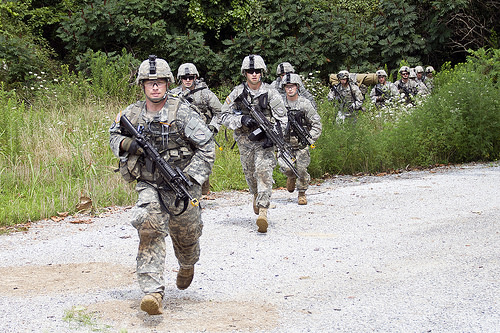
Soldiers with the 1st Battalion, 149th Infantry advance across a road during a training exercise at the Muscatatuck Urban Training Center in Butlerville, Ind., July 26, 2015. The exercise was the culminating event of the unit’s two-week annual training period. (U.S. Army National Guard photo by Staff Sgt. Scott Raymond)
More than 550 Soldiers of the battalion were on hand for the training period. Platoon leaders and company commanders agreed their Soldiers greatly benefitted from the unique training and the boost in morale.
“There’s nothing like training in the field,” said Spc. Joseph Hill from Alpha Co. “You’re really able to do your job and refresh your skills. It’s hard to find a bad part of this AT.”
Battalion leadership were pleased with the effort put forth by their Soldiers and the chance to put them in the field and participants and witnesses to the unique energy of the infantry.
“This type of training is also why people enlist,” said Lear. “They don’t join to stand a drill hall and get briefs. These troops will talk about this air assault for years.”
“That’s how this type of training leads to retention, which leads to strength, which leads to funding, which leads to more quality training. That’s the impact this has on this battalion.”
By Staff Sgt. Scott Raymond, Kentucky National Guard Public Affairs
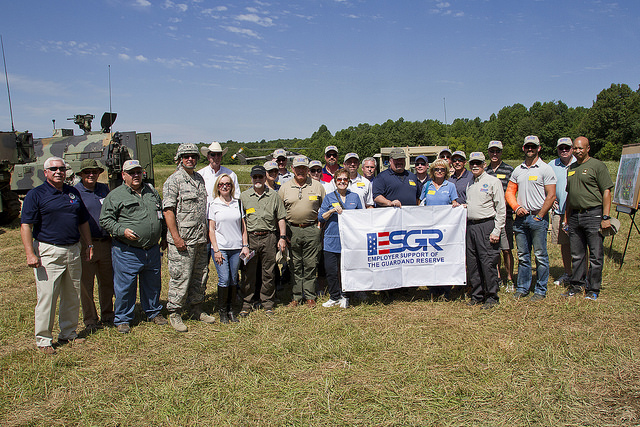
Kentucky civic leaders and employers visit with Kentucky Guardsmen as part of an Employer Support of the Guard and Reserve (ESGR) Boss Lift at Fort Knox, Ky., July 22, 2015. (U.S. Army National Guard photo by Staff Sgt. Scott Raymond)
FRANKFORT, Ky. — When a National Guard Soldier or Airman serves their one weekend and month and two-weeks in the summer, they are considered a traditional Guardsman. With the overwhelming majority of Kentucky’s Guardsmen falling into that category, hundreds of employers across the commonwealth are included in the extended Guard family. During ceremonies to welcome home, promote or award Guardsmen, we always hear the common gratitude to the families for sharing their loved one with the Guard. But it also a familiar acknowledgment to the employers and businesses that have also supported Kentucky’s Citizen-Soldiers.
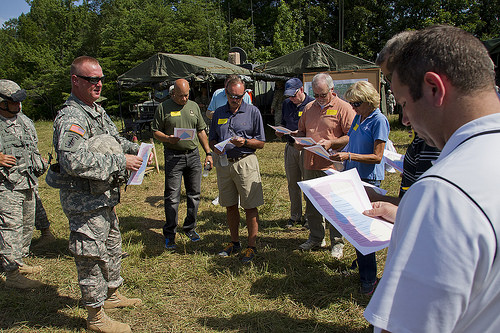
Lt. COl. Rob Larkin, command of the 138th Field Artillery Brigade speaks to employers and civic leaders during the civilians’ visit to the unit as part of an Employer Support of the Guard and Reserve boss lift at Fort Knox, Ky., July 22, 2015. The ESGR group toured the 138th’s tactical operations center, interacted with Soldiers and witnessed a live fire exercise of M109 Paladins. (U.S. Army National Guard photo by Staff Sgt. Scott Raymond)
As a thank you to several such military-friendly employers, Kentucky’s Employer Support of the Guard and Reserve held a day with the troops event, July 22. Commonly referred to as a Bosslift, such events provide employers and civic leaders the opportunity to see first hand what Kentucky’s Guardsmen, their employees, do when they are “off work.”
More than 30 representatives from local agencies and businesses from Lexington to Bowling Green flew by Blackhawk helicopter to Fort Knox, Kentucky and the Wendell H. Ford Regional Training Center in Greenville, Kentucky for the up-close view of National Guard training.
“The ESGR Bosslift program is essential in helping employers and community leaders understand what our Citizen-Soldiers do while in uniform,” said retired Army Brig. Gen. Mike Richie, a support specialist with Kentucky’s ESGR. “Most develop a deep appreciation for the dedication and sacrifice required to serve in the military. It’s also an opportunity to thank them for their contribution to our nation’s defense by employing and supporting our Service members.”
Click here for more photos.
Soldiers with the 138th Field Artillery Brigade were first to play host to the ESGR group at Fort Knox. Kentucky Adjutant General, Maj. Gen. Edward W. Tonini joined Lt. Col. Rob Larkin, commander of the 138th in greeting the civilians in a field environment the 138th was occupying for annual training. The employers met with the artillery Soldiers, toured their tactical operation center and vehicles, and witnessed a live fire exercise by the unit’s M109 Paladins.
One of the Paladin crew members was Sgt. 1st Class James Hatfield, a fireman with the Bardstown FIre Department. Among the visitors was Chief Marlin Howard, Hatfield’s boss.
“He has seen me in uniform before, but never in the field, never in this atmosphere, I’m sure his perspective will probably change a little bit,” said Hatfield. “Telling someone what you do is one thing, but when they see you in the environment you do it, is a completely different story. It’s hard for them to get that visual.”
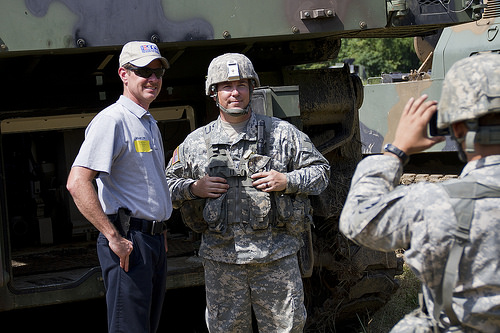
Chief Marlin Howard, chief of the Bardstown FIre Department has he photo taken with Sgt. 1st Class James Hatfield during an Employer Support of the Guard and Reserve boss lift at Fort Knox, Ky., July 22, 2015. Hatfield serves with Howard in Bardstown as his full-time employment. (U.S. Army National Guard photo by Staff Sgt. Scott Raymond)
“It means a lot that he came out here,” Hatfield added. “We are super busy at work and for him to take the time, see what I do and be a part of it, and to have a boss care enough to want to know what you do is pretty awesome.”
Hatfield has spent 21 years in the military uniform and 14 years as a fireman. The balance has worked for him, but knows some still believe that Guardsmen just get a couple extra days off each month.
“Employers on these boss lifts can see first hand, this isn;t a vacation out here, it’s good quality training for something we might have to do down the road.”
Howard said he has a small and close department, so everyone knows each other pretty well but hearing and seeing are two different things.
“He is a great employee and I kinda knew what he did outside work, but until you put boots on the ground with him, stand there beside with the equipment he works with, it’s an unbelievable moment,” said Howard. “It’s great to know and see that training that they get here, they take it back to their community.”
“I really appreciate everything the Guard has done to make us feel welcome into all of this, it’s been very nice and educational.”
In addition to the visit with the 138th, the employers and civic leaders traveled to the Kentucky’s Guard’s primary training facility in Greenville to see members of the 103rd Chemical Company during search and rescue training and Soldiers with the 138th Signal Company conducting vehicle roll-over training.
Chief Keith Jackson has a unique view of the day as he spent 27 years in the military. Now the Lexington Fire Department chief returns to the training fields to see Larkin, his friend and fellow fireman. Jackson expressed the pride he has for Larkin and the accomplishments he continues in the Guard and knows the sights and sounds will have an impact on the other employers.
“I think, today has opened their eyes to what truly at Citizen-Soldier is,” he said. “And they see what the Service members can offer, not only to the country but to the average American citizen.”
For more information on ESGR, visit www.esgr.mil, and www.kentuckyguard.com for information on Kentucky’s ESGR program.
By, Maj. Jimmie Warinner, 1st Battalion, 623rd Field Artillery
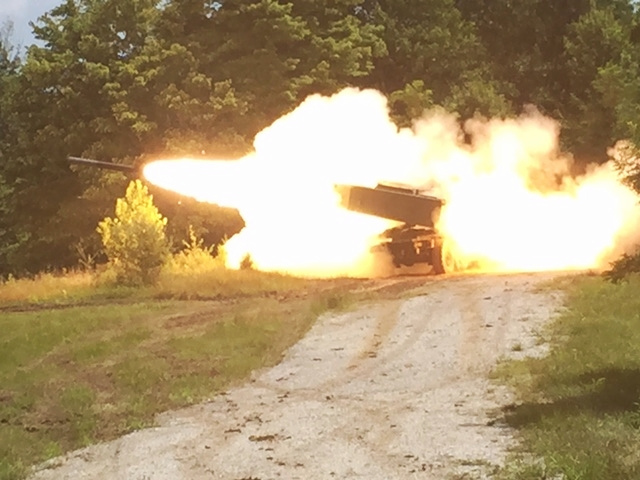
A M142 High Mobility Rocket Launcher (HIMARS) from the 1st Battalion, 623rd Field Artillery fires during training at Camp Atterbury, Ind., July 21, 2015. The launch was the first live fire exercise conducted at Camp Atterbury. (U.S. Army National Guard photo by Maj. Jimmie Warriner)
CAMP ATTERBURY, Ind. — Soldiers of the 1st Battalion 623rd Field Artillery recently completed an innovative and successful annual training at Camp Atterbury, Indiana. The key training event for AT 2015 was a seven day field training exercise that concluded July 24 with all crews in the battalion conducting multiple live fires with the M142 High Mobility Artillery Rocket System (HIMARS).
This was the first Multiple Launch Rocket System (MLRS) or HIMARS live fire ever conducted at Camp Atterbury, and was made possible through close coordination with the 1/623rd and Camp Atterbury’s Range Control personnel. Not only did this coordination allow Morgan’s Men to successfully complete crew certifications, but it also demonstrated an increased training capability for Camp Atterbury confirming that they can support future live fire training for both MLRS and HIMARS units.
This was only one of three “firsts” that Morgan’s Men accomplished during this annual training.
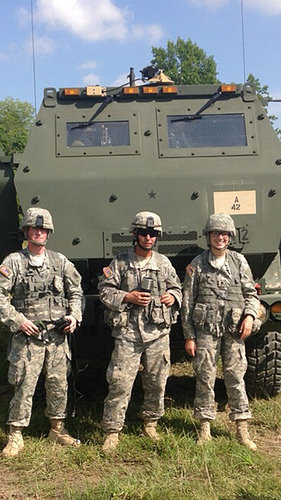
Spc. Michael Fosso, Staff Sgt. Norman Schwartz, and Spc. Logan Green with the 1st Battalion, 623rd Field Artillery stand in front of their HIMARS vehicle, “Rebel 42” during their live fire exercise during annual training July 21, 2015 at Camp Atterbury, Ind. Green is the first female crew member with the 1/623rd. (U.S. Army National Guard photo by Maj. Jimmie Warriner)
Among the crew members sending rockets roaring downrange was Spc. Logan Green, the first female MLRS Crewman to ever fire a rocket for the 1/623rd. With more combat arms military occupational specialties opening to women, females now have the option of becoming MLRS Crewmen (13M) or Fire Direction Control Operators (13P) within HIMARS units.
A HIMARS crew consists of a Gunner, Driver, and Launcher Chief. Green is the driver for Alpha Battery’s HIMARS nicknamed “Rebel 42”. She grew up in Florida and joined the Kentucky National Guard because she always wanted to be in the military and it allowed her to fund her college education.
“I am proud and excited to be the first female to live fire the HIMARS in the 1-623d and I want to set a good example for other Soldiers, males and females, who serve with me”. Green, a 2015 recipient of the Minuteman Scholarship, plans on continuing her military career by pursuing a commission as a Field Artillery officer through the University of Kentucky’s ROTC program.
Click here to read about Green’s enlistment into the Kentucky Guard.
The final “first” completed during Annual Training 2015 was support of a MLRS Crewmen (13M30) Advanced Leadership Course (ALC) conducted by 1st Battalion 238th Regiment. Nine Soldiers, including seven from the 1/623rd completed the first week of the 13M30 course at the Wendell H. Ford Regional Training Center in Greenville, Kentucky before traveling to Camp Atterbury to complete week two in the field. For the culminating event of the course, the ALC students were certified by the battalion’s Master Gunner and then participated in a HIMARS live fire.
This was the first time that a HIMARS live fire has been part of a MLRS crewman course, but something that Regional Training Institutes throughout the country are considering implementing as part of their course of instruction. The partnership between the 1/623rd and 1/238th proved that this concept of training is viable, allowing Soldiers to complete ALC while also participating in valuable training exercises with their assigned units and crews. This cooperative effort also resulted in the Soldiers completing the course with very little additional cost to the Kentucky Army National Guard beyond that of a normal annual training.
With Annual Training 2015 completed, Morgan’s Men are now preparing for future training operations and more “firsts” such as a planned training event with the Kentucky Air National Guard.
To learn more about Morgan’s Men and the great things they’re doing, follow them on Facebook.
Story by Sgt. 1st Class Rebecca Wood, 149th Maneuver Enhancement Brigade Public Affairs
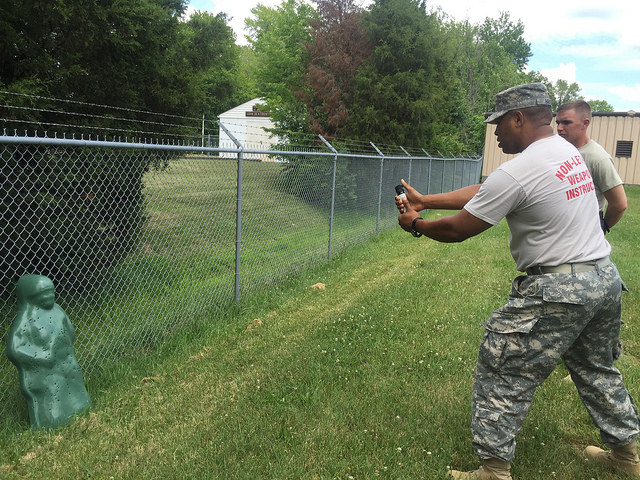
Sgt. 1st Class Jacque Hayes, an instructor from the 198th Military Police Battalion, demonstrates the proper use of oleoresin capsicum spray as part of the law enforcement certification. Hayes conducted OC spray certification and contamination on all of the 1103rd MP DET Soldiers so they can meet the Law Enforcement Council requirements. (U.S. Army National Guard Photo by Sgt. First Class Emily Cooper)
RICHMOND, Ky. – The Kentucky National Guard’s 198th Military Police Battalion conducted annual training in June at three vastly different training areas in an effort to maintain its legacy as a highly skilled and trained fighting force.
According to Maj. Tim Starke, battalion commander of the Louisville, Kentucky-based unit, each of the six companies trained at the platoon level to ensure overall readiness to conduct mobility support, policing and detention operations.
“It’s important for Soldiers to know field-craft and to not only survive, but also successfully conduct their mission while living out of their trucks and rucksacks,” said Starke. “The return to self-sufficiency in the field using organic military assets versus (units) relying on built-up infrastructure and contractor support results in Soldiers who can overcome adversity caused by inclement weather, sleep deprivation and continuous operations.”
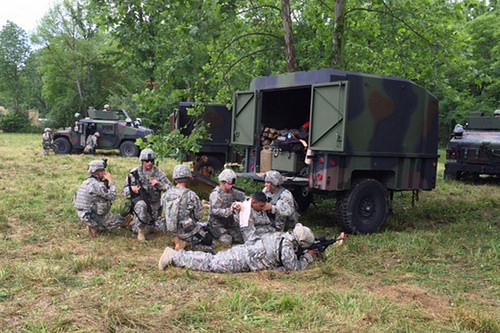
Medics under the 617th Military Police Company conducts first aid at a Casualty Collection Point while under attack during a training exercise at Camp Atterbury, Indiana. This type of training conveys the concept of tactically immersed training for the Soldiers (Photo courtesy of 198th Military Police Battalion)
Mission Command
Headquarters and Headquarters Detachment, 198th MP, 223rd MP Company, 617th MP Company and 940th MP Company conducted command support and mobility operations at Camp Atterbury, Indiana.
The exercise simulated theater-opening operations, where platoons and squads focused on: route reconnaissance, route signing, convoy security, operating hasty detainee holding areas and conducting access control and base defense without support from a forward operating base.
This was 1st Lt. Christopher Mostek’s first AT with the 223rd MPs, and as a brand new platoon leader, he said the training “forced me out of my comfort zone.”
“It empowered me as a new platoon leader and helped me to get to know my Soldiers,” he said.
Mostek said the high intensity training and sleep deprivation made the training even more austere and realistic.
“When you are training like that, it pushes you to that point of exhaustion, but you keep going because you are part of a team,” he said. “My Soldiers maintained a positive attitude despite some tremendous adversity.”
Mother Nature didn’t cooperate with the MPs, dumping rain on the exercise for nearly a week.
“This is the first AT we’ve had where, for six-plus days, you only have your truck or a cover to sleep in,” said Spc. Alex Huesman, 2nd Platoon, 940th MP Company. “It rained almost every day so we were constantly facing the elements. I was miserable but it was great training.”
Huesman said the realistic scenarios – including the opposing forces (OPFOR) – added to the overall experience.
“The environment was realistic,” he said, “with legit ECP (entry control points) spots, OPFOR raids breaking through our ECPs in the middle of the night (and) 360-degree security.
“We had really good leadership involved in our training,” he said. “They were out there in the elements with us; and immediately after every mission we did a platoon or company-wide after action review. It made me feel real confident in my unit.”
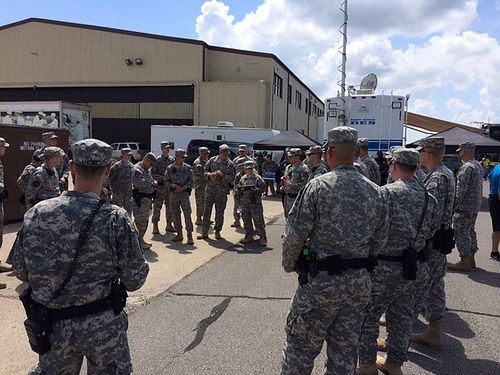
Soldiers from the 1103rd Military Police Detachment receive a mission brief before they pull security for the annual Fort Knox Morale, Welfare and Recreation Concert on June 13, 2015. This mission, working side by side with active duty MPs, will certify them to work in a Law and Order capacity if activated (Photo courtesy of 1103rd Military Police Detachment)
Law and Order
The Louisville-based 1103rd MP Company’s law and order mission requires law enforcement certifications regularly. The Kentucky Guardsmen partnered with the 34th Military Police Detachment and the Fort Knox Department of Emergency Services to validate certifications.
“When you initially enlist as a MP, this is what you think you will be doing –traffic stops, enforcing the law, things a police officer does but on a base,” said Spc. Dakota Dockery. “So the best thing about this training is actually going out with the active duty Fort Knox MPs. It is a great learning experience.”
An active-shooter scenario provided some of the 1103rd’s leaders, who are also civilian law enforcement officers when not drilling with the Guard, the ability to teach younger Soldiers the best practices for responding to active shooters.
“I personally liked moving through different scenarios in this closed-down school armed with paint rounds,” said Dockery. “It was awesome responding to the different situations and seeing how they played out.”
Detention Operations
The Murray, Kentucky-based 438th MP Company also worked side-by-side with its active duty counterparts at Fort Leavenworth, Kansas. More than 100 Soldiers joined the 15th MP Brigade to conduct military corrections operations inside the United States Disciplinary Barracks.
The 438th MP Company’s first platoon leader, 2nd Lt. Hallie Freeman was one of the liaisons between the company and the Fort Leavenworth MP trainers.
“We tried to make it more of a right seat left seat,” said Freeman, “so that our less experienced Soldiers could see what it would be like to work detainee operations, how the guards and inmates interact, understand the struggles and hardships of being a guard and to see proper reaction times of situations that happen in the prison.”
Freeman said the Soldiers rotated through and shadowed the active duty guards while conducting random searches, observing the prison’s activities through the control room, and operating switches and video cameras; they also got experience monitoring the housing units, control points, individual cells and work details such as the barbershop or woodshop. After watching her Soldiers gain confidence in their training, she said there is a tremendous difference in their abilities.
“Before AT and if a deployment came up, I would say we weren’t ready,” said Freeman, “but after me and my guys worked at this facility, I would say now we are 100 percent ready to go.”
Conclusion
Starke said while the battalion doesn’t have the time or funding to train all units on each discipline every year during AT, they do have the ability to cross-train units using their subject-matter experts on each discipline and its associated tasks during drill weekends.
“We plan to leverage our junior NCOs and junior officers to build knowledge and capabilities across the battalion,” said Starke.
Starke also said they definitely plan on doing more ATs like this in the future.
“Soldiers of the Thoroughbred Battalion were fully engaged every minute of the AT period doing what they signed up to do—work within their MOS, whether that be MP, Cook, Mechanic, Admin Clerk or Medic,” said Starke. “Despite some difficult conditions, morale was high and leaders were far more proficient at the end than they were on first day of AT.”
Story by Sgt. 1st Class Rebecca Wood, 149th Maneuver Enhancement Brigade
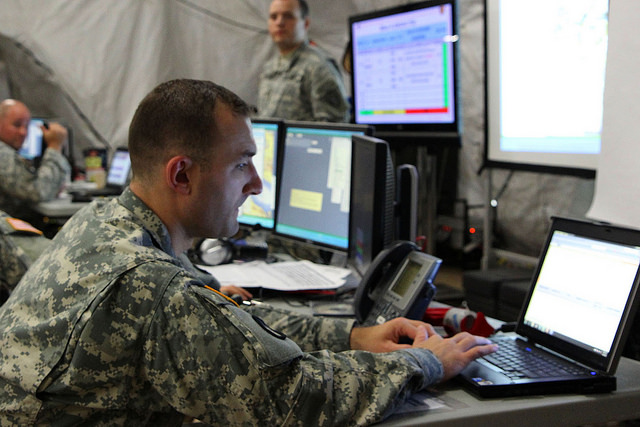
First Lt. Samuel Boulet, a battle captain in the 149th Maneuver Enhancement Brigade main tactical operations center, monitors reports and email during a 72-hour Command Post Exercise June 21-23 at Camp Atterbury, Indiana. (U.S. Army National Guard photo by Sgt. First Class Rebecca Wood)
CAMP ATTERBURY, Ind. — Soldiers of the 149th Maneuver Enhancement Brigade conducted a 72-hour Command Post Exercise (CPX) from June 21-23 at Camp Atterbury, Indiana. The units participating in the CPX were the Headquarters Company, 206th Engineer Battalion, 198th Military Police Battalion, 149th Battle Support Brigade and the 129th Signal Company. The main portion of the brigade started training on June 11 for the actual exercise.
The 198th MP Battalion’s operation officer, Maj. Brandon McNeese, was in charge of the battalion’s tactical operation center. He said the 198th also conducted main supply route patrols and convoy security for other elements in the brigade; but the main takeaway was to get back to the field craft training the Army was skilled at before 9/11.
“The overall mission was to come into a theater to set up operations in an austere environment,” said McNeese. “Years ago, before 9/11, we had training like this, but with a lot less assets. It was supposed to be like the beginning of a war, where there is nothing set up and we are initially moving in. We have gotten used to rolling into a forward operations base with established command posts and living areas, and cover down on equipment from other units.”
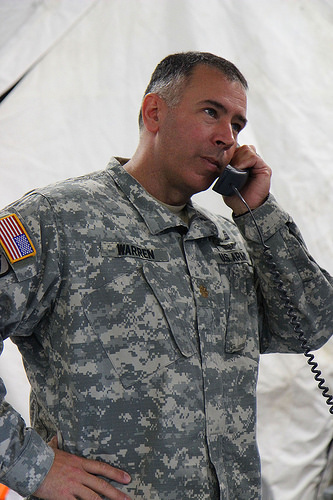 McNeese said this training was very helpful, especially to his soldiers who weren’t around before the War on Terror.
“For some of the newer soldiers, this is a very new experience because they never trained like this,” said McNeese, “but they have adapted very well. We had several shortfalls, but their morale and motivation kept them going and we pushed through and accomplished the mission.
“That’s not me,” said 1st Lt. Samuel Boulet, a current operations battle captain for the CPX, while looking around the TOC for the source of the ringing he heard. “Where is that phone?” Boulet barely had a moment to himself, while reports were populating on the Command Post of the Future (CPOF) and phones were ringing off the hook.
As a battle captain, Boulet’s job was to direct the flow of information and resources from the ground and the different sections in the brigade. He said this exercise was to test the brigade’s staff functions and prepare the Soldiers for a warfighter training exercise scheduled in 2016.
“It’s very energizing,” said Boulet. “You feel very plugged into everything that is going on around you.”
On a deployment to Iraq in 2010, Boulet actually worked as a battle captain on a company and battalion level, but he said he learned a lot from this CPX training.
“We did a large bridge gap of knowledge as a team, executing battle drills, tracking info and reports, communicating through missions, and mitigating crises when they happened,” said Boulet. “I wish I had this training before that deployment.”
One administrative specialist, Spc. Brooklynd Decker has been in the 206th Engineer Battalion for five years and was the sole human resources rep for the battalion’s operations center during the CPX. She said she was nervous to be in charge of her section, but felt honored to take on such an important role.
“It meant a lot to me and it was really good for morale, because everyone was important to the operation and had a serious job to do. Sometimes it was difficult to make quick decisions when the pressure was on and I had to communicate with my battle captain on a lot of things,” said Decker. “But overall I felt comfortable in my position, and I knew it was meant to be a learning experience -and I learned a lot.”
Decker and her peers were also enthusiastic about learning battle-tracking systems like CPOF and Joint Combat and Tactical Simulation, because of how they streamline communication between the battalion and the brigade.
“The battalion was so involved in brigade operations, more then we have ever experienced in the past and it gave us all a view of the bigger picture,” said Decker.
“The quality of this training could not have been captured in a short drill weekend. The timing for this type of exercise was perfect and I feel like we should do more exercises like this in the future.”
Story by Staff Sgt. Scott Raymond, Kentucky National Guard Public Affairs with contributions from Kyle Hilbrecht
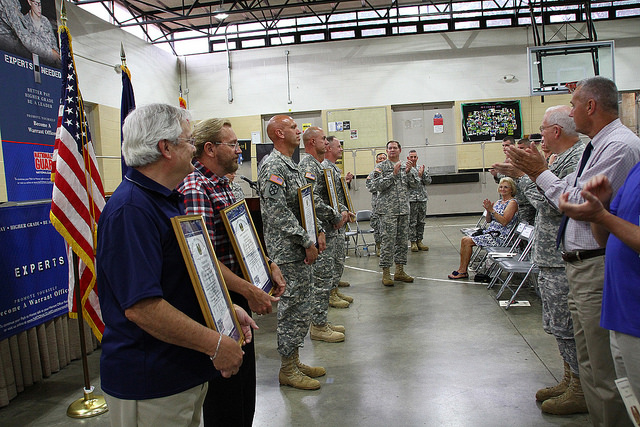
Former Kentucky Warrant Officer of the Year are recognized during the 97th anniversary of the Warrant Officer Corps ceremony in Frankfort, Ky., July 9, 2015. Each winner since 2007 was presented with the commendation which became an official award in 2014. (U.S. Army National Guard photo by Staff Sgt. Scott Raymond)
FRANKFORT, Ky. — The Kentucky National Guard gathered to celebrate the 97th anniversary of the Warrant Officer Cohort at the Boone National Guard Center in Frankfort, July 9. State Command Chief Warrant Officer Dean Stoops was joined by Brig. Gen. Charles Jones, Deputy Adjutant General and hundreds of warrant officers and Soldiers to recognize nearly 100 years of the “quiet professional.” “The modern U.S. Warrant officer Cohort is nearly a century old, and I’m sure the original forty warrant officers of the 1918 Mine Planter Service had no idea the significance their appointment would have on the United States Army,” said Stoops. “We now see a highly professional cohort that is indispensable to the United States Army and the Kentucky National Guard.”
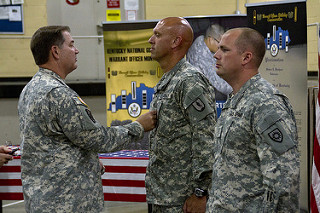
State Command Chief Warrant Officer Dean Stoops promotes Ricky Skelton to the rank of chief warrant officer four during the 97th anniversary celebration of the Warrant Officer Corps in Frankfort, Ky., July 9, 2015. In addition to celebrating 97 years, several warrant officers were honored for their achievements and service to the Kentucky Guard. (U.S. Army National Guard photo by Staff Sgt. Scott Raymond)
Click here for more photos.
Stoops commended Kentucky’s warrant officers for their recent gains in National Guard categories of education and readiness. There are less than 175 warrant officers in the Kentucky Guard, while nearly 30,000 warrant officers serve worldwide in the Army components.
Known as technical experts in their fields, warrant officers are also referred to as the “quiet professional” for their behind the scenes stance in numerous occupational specialities.
In addition to the celebration of 97 years, Kentucky Guard leadership also recognized the previous eight Warrant Officers of the Year, ensuring each received the commendation which became official just last year. Stoops said the award is the only award among the three Army components dedicated to the recognition of warrant officers for their outstanding service and achievements.
“The creation of this official state award is the culmination of a seven year effort to create an award that was equal to the Outstanding Airman and Soldier of the Year Award,” said Stoops. “I am very pleased and proud that we could go back and present it to all of the previous seven recipients. It just seemed to be the right thing to do.”
Stoops said he has already been contacted by other states looking to adopt the award and he fully expects it to take off and potentially become a national standard.
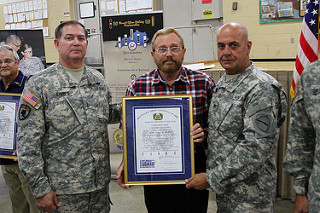
Retired Chief Warrant Officer Larry Moore receives the 2008 Kentucky Warrant Officer of the Year commendation during a birthday celebration of the warrant officer corps in Frankfort, Ky., July 9, 2015. (U.S. Army National Guard photo by Staff Sgt. Scott Raymond)
Following that award presentation, Chief Warrant Officer Ricky Skelton was promoted to the rank of chief warrant officer four and Warrant Officer Jonathan Dukes was promoted to chief warrant officer two.
Chief Warrant Officer Jacob Lewis was also recognized for being named the 2014 Most Outstanding Engineer Warrant Officer in the National Guard. He was presented with the Meritorious Service Medal for his accomplishment.
Jones said the warrant officer used be an untapped resource for the Army and National Guard, but that has changed thanks to education, leadership and support from senior warrant officers. He called them an integral part of the Guard’s daily operations.
“The Army takes the cream of the NCO Corps off the top, makes it warrant officers and gives it special, graduate level training,” said Jones. “Warrant officers are an incredible resource of commanders and soldiers alike. They are world renowned for being the Army’s technical and tactical experts and are valuable leaders as well.”
Story by Capt. Desiree Dillehay, 206th Engineer Battalion
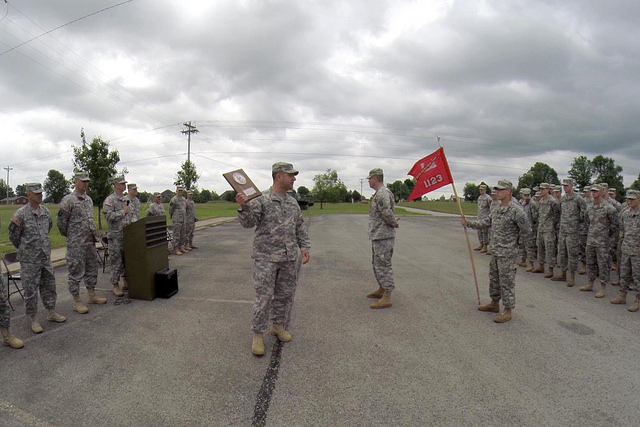
Capt. Robert McWhorter, former commander of the 1123rd Engineer Company, compliments Soldiers of the unit during their annual training at Camp Atterbury, Ind. June 25, 2015. The unit was named the best engineer company in the Army National Guard for 2014, earning them the Itschner Award. (U.S. Army National Guard photo by SGt. Sandra Fariss)
FRANKFORT, Ky. — The Kentucky National Guard’s 1123rd Sapper Company was named Most Outstanding Engineer Company of the Year for 2014.
The Itschner Plaque is an award given to the most outstanding engineer company each year. First awarded in 1960, the award is named in honor of Army Lt. Gen. Emerson C. Itschner. In 1974, the competition for the Itschner Award was broadened to include the Army National Guard and the Army Reserve.
With hard work and dedication to the mission, to the 206th Engineer Battalion, the 149th Maneuver Enhancement Brigade, and to the Kentucky Army National Guard, the 1123rd received the Itschner Award for the fiscal training year 2014.
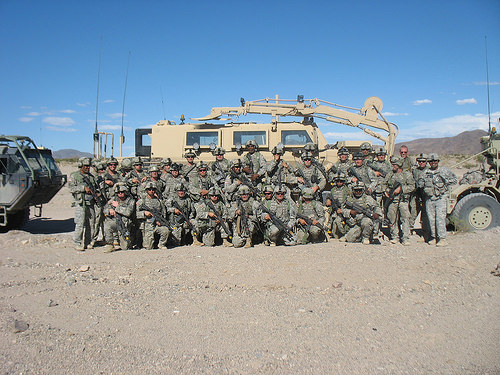
Soldiers of the 112rd Engineer Company gather for a group photo at the National Training Center in Fort Irwin, Calif., Aug. 21, 2014. The three-week rotation at NTC was the culminating event of a hard year of training for the unit. (Photo courtesy of the 1123rd Engineer Co.)
The level of proficiency that this company achieved during the evaluated period has inspired the unit’s leadership, who said the award serves as a testament to the Soldiers’ unwavering motivation, dedication to their unit, and their ability to learn, adapt and overcome any obstacle. Given the many hurdles National Guard units inherently face with training continuity between drill weekends, this unit’s Non Commissioned Officers and Officers are exceptionally outstanding.
“Winning the Itschner Award speaks of the caliber of Soldiers within the 1123rd Sapper,” said Lt. Col. James Richmond, commander of the 206th Engineer Battalion. “The unit is only eight years old and to have achieved superior achievements in strength, training, and performance in such a short time and against such a complex mission set is simply incredible.”
Richmond also added that few know what Sappers are in the military. “He is the Swiss Army Knife of Soldiers, in essence an infantryman who specializes in laying or clearing minefields,
demolitions, field defenses and general construction, as well as road and airfield construction and repair.”
Click here for more photos of the 1123rd.
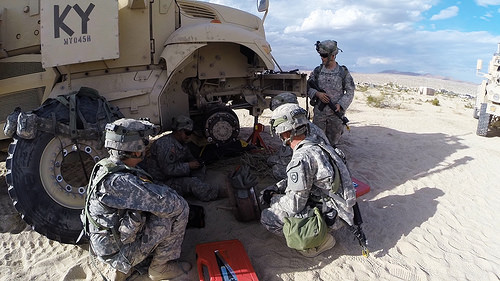
Engineers with the 1123rd Sapper Company change a tire on an armored vehicle during a training exercise at Fort Irwin, Calif., Aug. 15, 2014. The unit’s hard work at NTC earned them respect from a variety of training supervisors and Reserve and active duty units. (Photo courtesy of 1123rd Engineer Co.)
For the 1123rd, a 20 day rotation at the National Training Center in Fort Irwin, California was the culmination of a rigorous six month journey. Originally, the 1123rd was considered to serve as a component of the Opposing Force (OPFOR), but the focus shifted and the Sappers had an opportunity to serve as a Brigade Special Troops Battalion (BSTB) enabler in order to perform route clearance missions. This assignment required a dramatic change in the unit’s task organization, moving from three Sapper platoons and a headquarters platoon to two Route Clearance Packages, one Company Intelligence Support Team and a headquarters platoon. The 1123rd had 14 training days from March to July to prepare for NTC. The pace of training became very intense and success hinged on detailed planning, commitment to excellence and, most importantly, leveraging the knowledge of experienced route clearance personnel to increase training efficiencies without compromising quality.
The Sappers executed their strenuous training plan and completed the NTC rotation with remarkable results. Competence, adaptability and readiness for any mission was proudly displayed throughout the exercise. The 1123rd received accolades from a variety of training supervisors and both reserve and active duty counterparts. The predominant theme conveyed during the course of training was the unit’s willingness and desire to learn and better themselves. A high level of motivation and a productive and professional culture was demonstrated to every Soldier in the company.
The 1123rd was given professional development and networking opportunities that would not have been available without a rotation at NTC. These opportunities allowed the 1123rd leadership to collaborate with their active duty counterparts and higher headquarters in order to establish the unit’s relevance and credibility. This paid dividends as the 1123rd maintained an active voice in their utilization and had the opportunity to contribute to missions for the battalion in addition to route clearance.
The 1123rd has gained an incredible amount of experience this year and is fully prepared to carry out its engineer mission, only now with the title of “the best.”
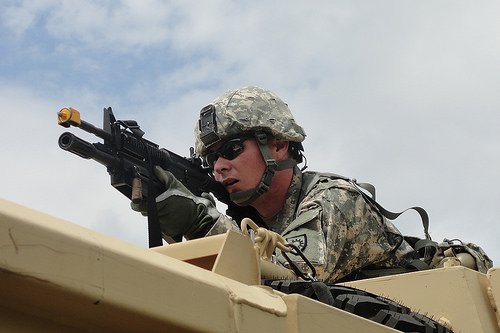
A Soldier with the 1123rd Engineer Company takes up a defensive position during a training exercise at Camp Atterbury, Ind., June 21, 2015. (U.S. Army National Guard photo by Spc. Brooklynd Decker)
“The Soldiers are truly honored to receive this award,” said Sgt. 1st Class Thomas Elmore, readiness NCO for the 1123rd. “This unit went from standing up the 1123rd in 2009 to the best National Guard engineer unit in the country in 2014. Don’t know how else to put it except they are proud to be the BEST.”
However, the 1123rd Sapper Company is not just an operational machine. In addition to their rigorous training schedules, they incorporated time to give back to their community. The 1123rd is broken into two armories located in Leitchfield and Marion, Kentucky. Both locations have long been and continue to be involved with their respective communities. During the 2014 training year the two armories actively contributed to several community events, either during scheduled drill or by Soldiers volunteering outside of normal duty periods. The 1123rd participated by marching in the Christmas and Labor Day parades, provided speakers and representatives to three Veterans’ Day events and a Memorial Day ceremony. Additionally, they collaborated with the local American Legion for military funeral honors for veterans upon their family’s request.
“The level of proficiency that this company has achieved during the evaluated period is truly remarkable and serves as a testament to their unwavering motivation, dedication to their unit and their ability to learn, adapt and overcome any obstacle through Unbridled Service,” said Elmore.
The Soldiers of the 1123rd are revered throughout the 206th Engineer Battalion for always maintaining a high level of motivation in any training environment and with every mission; this training year they have raised the bar. Engrained into this company is a true sense of ownership and pride, where each Soldier maintains a stake in its success and proactively works to improve the unit.
