
Pages
Stay In Touch
More
© 2013 KentuckyGuard
By 123rd Airlift Wing Public Affairs
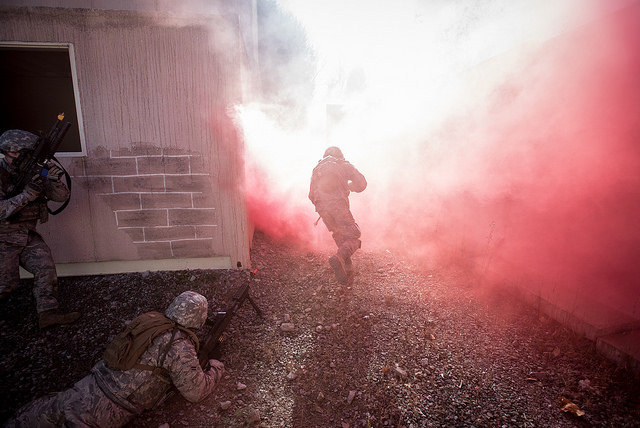
Fire Team members from the Kentucky Air National Guard’s 123rd Security Forces Squadron conduct training to recover a downed pilot inside a simulated Afghan Village at Fort Knox, Ky., Oct. 20, 2015. The Airmen were required to execute a coordinated search while defending their positions and engaging hostile enemy forces. (U.S. Air National Guard photo by Maj. Dale Greer)
FORT KNOX, Ky. — Fire Team members from the Kentucky Air National Guard’s 123rd Security Forces Squadron conducted a field training exercise here Oct. 20 that was designed to enhance their ability to operate in a combat environment.
Unit members were evaluated on their ability to extract a downed pilot from a simulated Afghan village and defend a military outpost in the Afghan countryside.
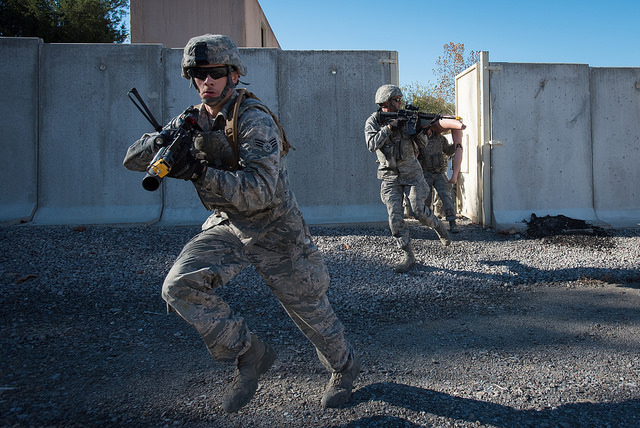
Fire Team members from the Kentucky Air National Guard’s 123rd Security Forces Squadron conduct training to recover a simulated downed pilot inside a mock Afghan Village at Fort Knox, Ky., Oct. 20, 2015. The Airmen were required to execute a coordinated search while defending their positions and engaging hostile enemy forces. (U.S. Air National Guard photo by Maj. Dale Greer)
Click here for more photos.
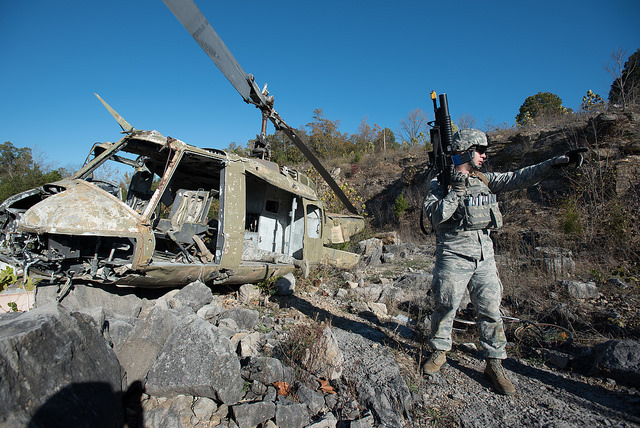
Senior Airman Randy Roberts, a Fire Team leader from the Kentucky Air National Guard’s 123rd Security Forces Squadron, directs efforts to recover a simulated downed pilot inside a mock Afghan Village at Fort Knox, Ky., Oct. 20, 2015. Roberts and his fellow Airmen were required to execute a coordinated search while defending their positions and engaging hostile forces. (U.S. Air National Guard photo by Maj. Dale Greer)
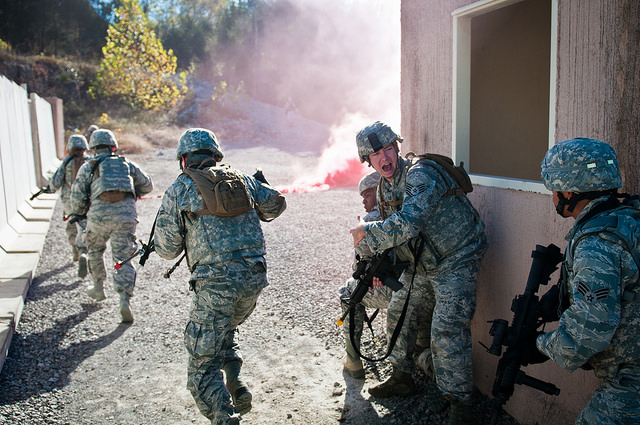
Tech. Sgt. Julien Borchert, a squad leader for the Kentucky Air National Guard’s 123rd Security Forces Squadron, shouts commands during a field training exercise at Ft. Knox, Ky., Oct. 20, 2015. Unit members were being evaluated on their ability to extract a downed pilot from a simulated Afghan village. (Kentucky Air National Guard photo by Master Sgt. Phil Speck)
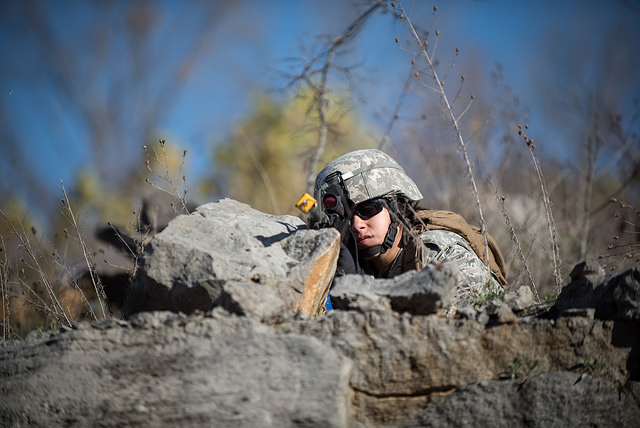
A Fire Team member from the Kentucky Air National Guard’s 123rd Security Forces Squadron provides cover as his teammates search for a simulated downed pilot inside a mock Afghan Village at Fort Knox, Ky., Oct. 20, 2015. The Airmen were required to execute a coordinated search while defending their positions and engaging hostile forces. (U.S. Air National Guard photo by Maj. Dale Greer)
By Staff Sgt. Scott Raymond, Kentucky National Guard Public Affairs
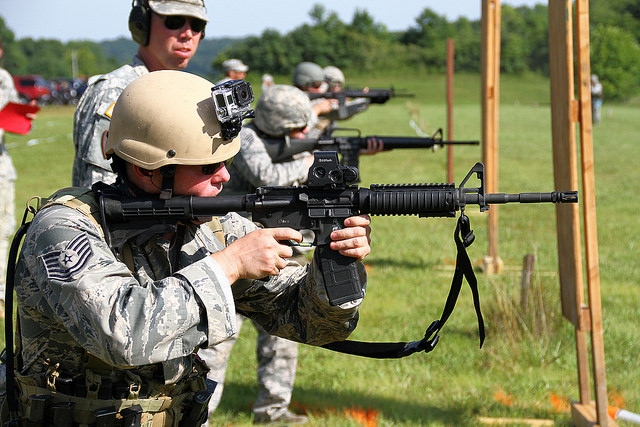
Kentucky National Guard Airmen and Soliders compete in a rifle match at Fort Knox, Ky., July 25, 2015. The Guardsmen fired M4 rifles and M9 pistols in a variety of events during the annual Adjutant General Marksmanship Match. (U.S. Army National Guard photo by Staff Sgt. Scott Raymond)
FORT KNOX, Ky. — Annually, the top shooters in the Kentucky National Guard gather to prove their skills and compete for the exclusive Governor’s Twenty patch. More than 50 Soldiers and Airmen took to the firing line at Fort Knox, Ky., July 25-26 for the Adjutant General’s Marksmanship Match.
“This event showcases what the Kentucky National Guard has to offer as far as marksmanship is concerned,” said Sgt. 1st Class James Dean, Kentucky Marksmanship coordinator. “Shooting, I think, is in a Kentuckian’s DNA.”
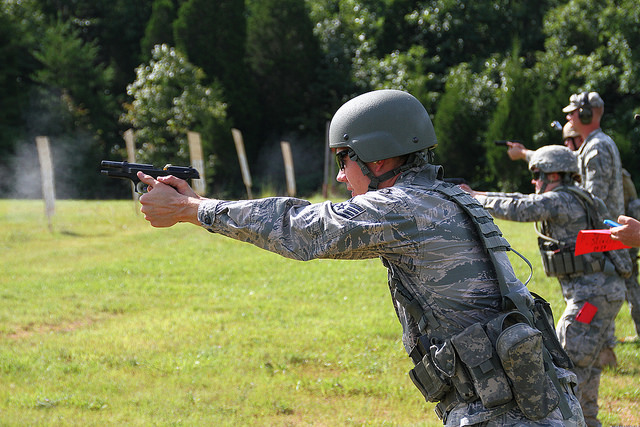
An Airman fires during a pistol event at The Adjutant General’s Marksmanship Match in Fort Knox, Ky., July 25, 2015. (U.S. Army National Guard photo by Staff Sgt. Scott Raymond)
Click here for more photos.
The Kentucky Guard awards the “Governor’s Twenty” tab only to the top 20 participants who have accumulated enough points over the two days of matches. Those that have earned the tab must also out perform those that may have already earned it, meaning if 18 of the participants currently ranked in the top 20 have previous been awarded the tab then only two will be awarded, which happened this year.
Master Sgt. Edwin Garcia of Joint Force Headquarters, and Staff Sgt. Shahid Iqbal of the 238th Training Regiment were the only two awarded the tab this year.
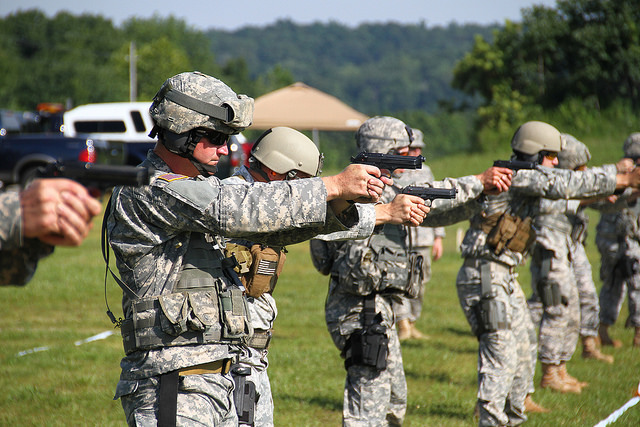
Kentucky Guardsmen compete in a pistol event during The Adjutant General’s Marksmanship Match at Fort Knox, Ky., July 25, 2015. (U.S. Army National Guard photo by Staff Sgt. Scott Raymond)
“When all the many things we as Soldiers and Airmen have to do to satisfy yearly training obligations are complete, we still have to be a confident and competent operator of small-arms,” said Dean. “Thankfully the Kentucky National Guard’s leadership has already seen the importance of these events and once again stepped up to ensure its success.”
Guardsmen also compete for the “Top Gun” award, which is given to the participant who achieves the highest point total over the two days. This year there were five individual matches that created the aggregate score. Staff Sgt. Jacob Fuller of 123rd Civil Engineering Squardron, 123rd Air Wing was the winner of the award. Fuller was also the top rifle marksman for the weekend, while Dean brought home top honors for pistol competition.
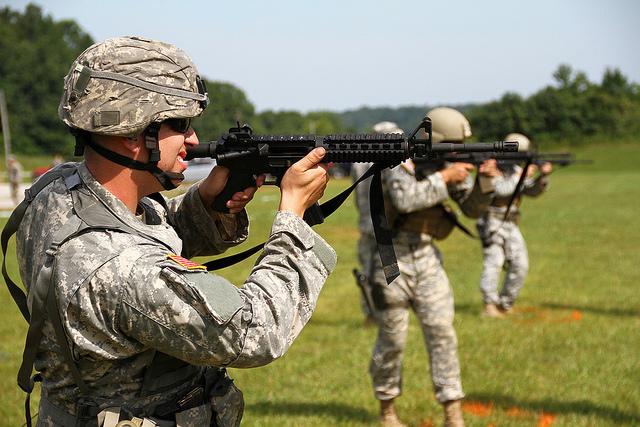
A Soldiers fires during a rifle event at The Adjutant General’s Marksmanship Match at Fort Knox, Ky., July 25, 2015. (U.S. Army National Guard photo by Staff Sgt. Scott Raymond)
Capt. William Wilford, Kentucky’s senior marksmanship coordinator said the Small Arms Readiness Training Section’s (SARTS) mission is to stand ready to be a combat multiplier to commanders across the state via clinics, or by sending SARTS NCO’s to their training events to assist in training Soldiers.
“From basic qualifications of individual weapons, to training in the live-fire Shoot-house, we have the tools available to meet a commander’s intent,” said Wilford. “This yearly training event allows a wealth of knowledge to gather to assist new soldiers and airmen in some of the finer arts of marksmanship and to simply become better at their jobs.”
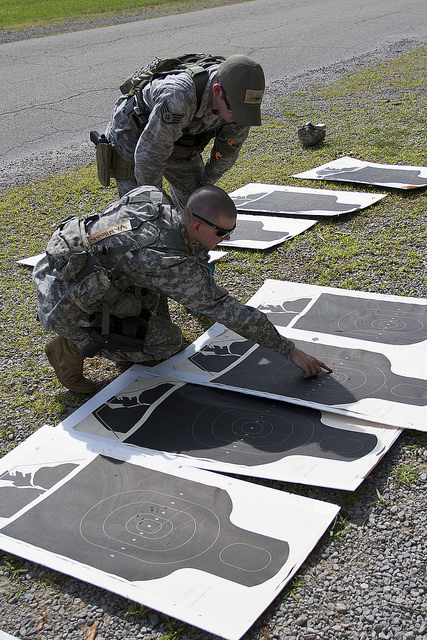
Kentucky Guardsmen review their targets at The Adjutant General’s Marksmanship Match in Fort Knox, Ky., July 25, 2015. (U.S. Army National Guard photo by Staff Sgt. Scott Raymond)
Story by Staff Sgt. Scott Raymond, Kentucky National Guard Public Affairs
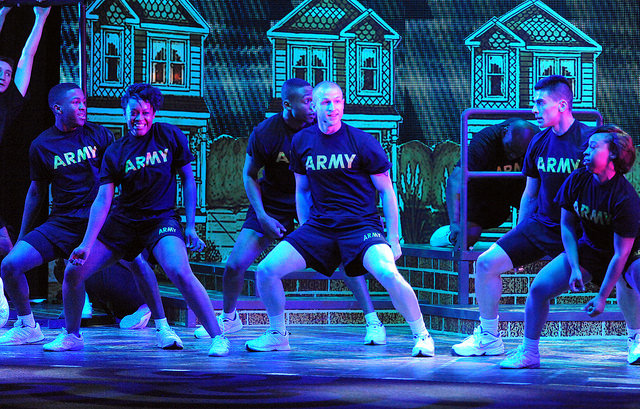
Kentucky Army National Guard 1st Lt. William Bland (center) performs during the 2015 U.S. Army Soldier Show’s opening weekend at the Fort Sam Houston Theatre in San Antonio. The musically-inclined Louisville-native serves as the personnel officer with the 198th Military Police Battalion. (U.S. Army photo by Tim Hipps, IMCOM Public Affairs)
FRANKFORT, Ky. — Since 1983 talented Soldiers have had the opportunity to share their artistry with the Nation as part of the U.S. Army Soldier Show. This year the Kentucky National Guard’s 1st Lt. William Bland earned a spot in the nationally-touring production.
A native of Louisville, Kentucky, Bland serves as the personnel officer for the 198th Military Police Battalion. When he’s not in uniform Bland likes to perform at clubs, festivals, benefits and wherever he can to gain exposure and experience.

Kentucky National Guard 1st Lt. William Bland’s promotional photo for the 2015 U.S. Army Soldier Show. The tour opened in San Antonio, Texas, in April and runs through October. (Image courtesy of IMCOM)
“It is truly a once in a life time opportunity,” he said. “Being a part of the U.S. Army Soldier Show and seeing all that goes into a big production and being a part of all of it has definitely opened my eyes to a world of opportunities after this.”
Click here for more photos.
Bland is one of three Guardsmen performing in the tour. He is joined by Louisiana Army National Guard Sgt. Neasha Powell of Shreveport and Idaho Army National Guard Sgt. Andrew Enriquez of Coeur d’Alene.
Bland’s journey to the show began like that of hundreds of other Soldiers around the country in the form of an audition tape and packet submitted to Army Entertainment, a program of Morale, Welfare and Recreation that runs the Soldier Show. He called the audition process a long and stressful one, but made the cut to try out in person and flew to Fort Sam Houston, Texas where the hard work began.
“Audition week culminated with a live performance of the choreography and the vocal number that we learned throughout the week, and a piece we each prepared on our own. On February 16, 2015 the cast was selected and narrowed down to a total of 18 members, and that was the day the dream became reality.”
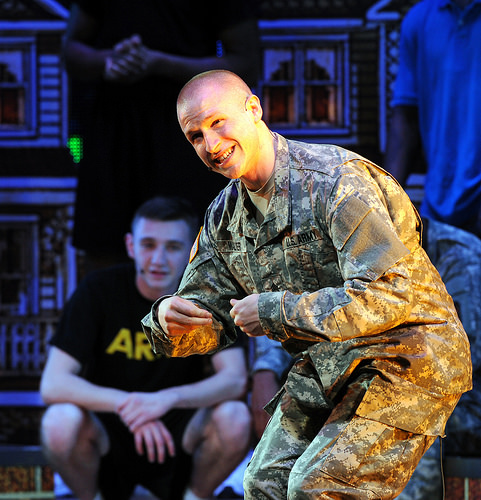
Kentucky Army National Guard 1st Lt. William Bland of Louisville performs during the 2015 U.S. Army Soldier Show’s opening weekend at the Fort Sam Houston Theatre in San Antonio. (U.S. Army photo by Tim Hipps, IMCOM Public Affairs)
As one of 18 performers, Bland will travel the country for shows in a scheduled 40-stop tour. An experience he said “couldn’t be a better way to use my passion to impact the lives of others in a positive way.”
Music entered Bland’s life at an early age. He said he still remembers when his older brother taught him about freestyling and how he was finally able to step out of his shell and attend open mic nights as a student at Union College. Influenced by Eminem and Michael Jackson, Bland keeps an open mind musically and pulls inspiration from as many other musicians as possible.
He first saw the Soldier Show while he was in basic training and left with a great motivation and pride in being a Soldier. As he got more serious with his own music and more into his Guard career, the idea of combining the two became a perfect fit.
“I thought it would be amazing to share what I love to do and to give Soldiers that same motivation and purpose that was given to me when I saw the show.”
Initially enlisting to help pay for college, Bland quickly realized a “greater purpose” in uniform and commissioned as an officer through ROTC. Rising through the ranks, he has earned the respect of his unit and leadership, who are proud to be his cheerleaders during the tour.
“While we will miss his services in 198th MP Battalion, we couldn’t be more excited and proud to have one of our own representing the battalion, the 149th Maneuver Enhancement Brigade and the Kentucky National Guard in this very prestigious program,” said Maj. Timothy Starke, commander of the 198th. “We hope to have a large turn out to support 1st Lt. Bland when the show comes to Kentucky this year.”
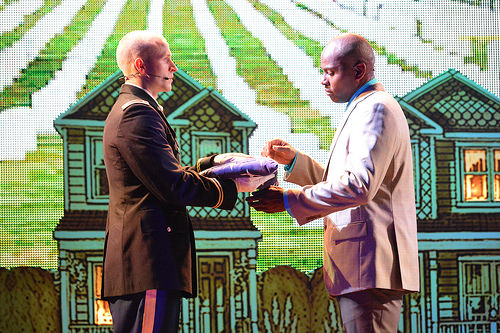
Kentucky Army National Guard 1st Lt. William Bland of Louisville presents Sgt. Darius Riggins of Fort Gordon, Georgia, a U.S. flag during the Gold Star segment of the 2015 U.S. Army Soldier Show’s opening weekend at the Fort Sam Houston Theatre in San Antonio. (U.S. Army photo by Tim Hipps, IMCOM Public Affairs)
According to the U.S. Army, “entertainment for the Soldier, by the Soldier” has been a part of the U.S. Army’s heritage since 1774. Building on the tradition of Civil War camp shows, and more known military shows “Yip Yip Yaphank” during World War I and “This Is The Army” during World War II written and directed by then Sgt. Irving Berlin, Army Entertainment was formalized to inspire, support and coordinate theatrical and musical programs at Army installations worldwide.
Bland said his routine with the show has included a lot of hard work, many 16 plus hour days and has been physically and mentally exhausting, but he wouldn’t change a thing,
“A dream can only come true if you are willing to do the work necessary to make it come true. But success is worth the sacrifice. When you are faced with a challenge just tell yourself, ‘Easy’s never worked for me!'”
The Soldier Show is a 90-minute high-energy top ‘40s and classics show, and it’s free!. It makes two stops in Kentucky during the 2015 tour: July 29-30 at Fort Knox, and Aug. 2-3 at Fort Campbell.
Story by Sgt. Brandy Mort, 133rd Mobile Public Affairs Detachment
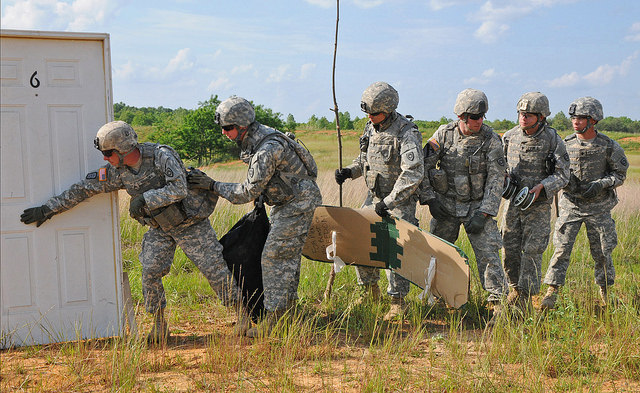
Soldiers of the 577th Sapper Company inspect a mobile door frame before attaching a silhouette charge during demolition training at Fort Knox, Ky., May 15, 2015. A silhouette charge provides a hole in a door so Soldiers can gain access into a building. (U.S. Army National Guard photo by Sgt. Brandy Mort)
FORT KNOX, Ky. – The terrain rumbled as pieces of a wooden door shot out in every direction. From the looks of the scene, you’d think a tornado had ravaged the area. Instead, it was a silhouette charge the 577th Sapper Company had attached during their demolition training.
Soldiers of the 201st Engineer Battalion, 577th Sapper Company, participated in standard demolition training at Fort Knox,Kentucky, May 15-16.
Capt. James Schmitz, 577th Sapper commander, said Sapper teams are essential for troops to advance through breached obstacles, such as a collapsed building, safely. He said this training helped when they deployed to Afghanistan in 2009.
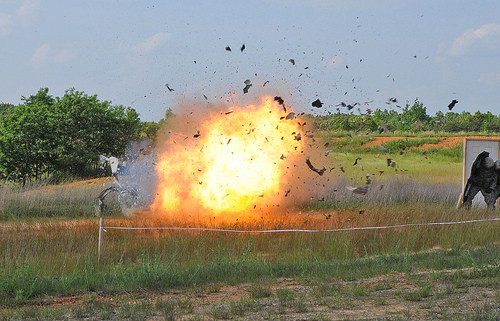
Soldiers of the 577th Sapper Company take cover during demolition training at Fort Knox, Ky., May 15-16, 2015. A C-4 charge blast takes 1.34 seconds after detonation. (U.S. Army National Guard photo by Sgt. Brandy Mort)
“Proper demolition training is very essential,” said Schmitz. “It is vital to get it right before we are tasked to do it in the future, whether it’s for our training exercise in Louisiana or a future deployment. We need to do it right, here, so we can do it right, there.”
Sgt. John Howard, Sapper non-commissioned officer, has 10 years experience in the engineers. It’s that experience, he said, that keeps the unit proficient. He said, each year leadership uses lessons learned to improve the training.
“When I was new I got vital training during this time and I use things I have learned through the years as I teach other junior enlisted to do the same,” he said.
Click here for more photos.
Traditionally Sappers are combat engineers who advance with the front-line infantry and are some of the first people sent to assess damages caused. Howard said training the younger Soldiers in their craft is similar to the role of the combat engineer sweeping the battlefield; they make sure the path is safe and clear before others go through.
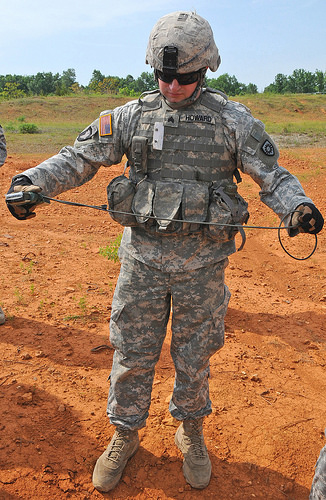
Sgt. John Howard, combat engineer with the 577th Sapper Company, unravels a C-4 charge during demolition training at Fort Knox, Ky., May 15-16, 2015. This year is Howard’s 10-year anniversary with the Kentucky National Guard’s 577th Sapper Company. (U.S. Army National Guard photo by Sgt. Brandy Mort)
“As a Sapper, we are the first people sent into the building to ensure the foundation is stable,” said Howard. “I use the same method as a platoon sergeant. If I don’t tell them the proper information, they won’t be able to be a strong foundation for their legacy.”
Staff Sgt. Aleksandr Vinogradov, a combat engineer, agrees that good leaders start from the beginning of their career.
“New Soldiers to the unit are like sponges,” said Vinogradov. “They will absorb anything you teach them. It is important to set a good example and train them the correct. We need to train for the future, not for the present.”
The team trained in various types of C-4 charges: A simulation charge, shape charges, Bangalore charges, urban breaching and mine clearing, also known as, MCLC. During urban breaching, they learned about linear door charges and silhouette charges. Sappers use what they learn in these scenarios for reforming the terrain for new structures, or to demolish existing structures.
“During urban breaching, we are able to see that different charges do different things,” said Howard. “A linear door charge will split a door in half, while a silhouette charge will create a hole in the door big enough for a person to walk through. If we don’t use the correct one in a non-training environment, we may be in trouble.”
Schmidtz said that safety and proficiency are two very important topics he focuses on at all times.
“My goal is to have everyone perform proficiently at their tasks and, most importantly, practice proper safety at all times. I have no doubt that my Soldiers will succeed in both aspects, whether in training exercises or in real-world scenarios.”
The Sapper Company is participating in this training in preparation for their annual training at the Joint Readiness Training Center in Fort Polk, Louisiana.
Story by Staff Sgt. Scott Raymond, Kentucky National Guard Public Affairs
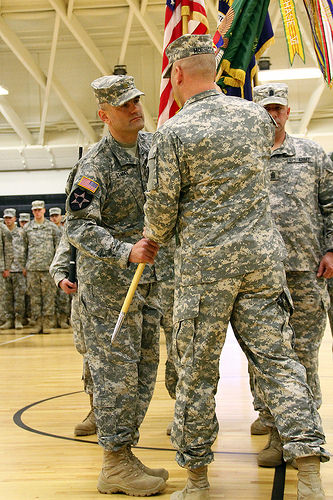
Maj. Timothy Starke receives the battalion colors from Col. Jerry Morrison, commander of the 149th Maneuver Enhancement Brigade during a change of command ceremony for the 198th Military Police Battalion in Fort Knox, Ky., Nov. 16, 2014. Starke assumed command from Lt. Col. John Treufeldt. (U.S. Army National Guard photo by Staff Sgt. Scott Raymond)
FORT KNOX, Ky. — Maj. Timothy Starke took charge of the 198th Military Police Battalion during a change of command ceremony at Fort Knox, Nov. 16, 2014. Friends, family and former MPs of the unit joined the roughly 800 Soldiers of the 198th in welcoming the new commander of Kentucky’s Thoroughbred Battalion.
“It’s such an honor to be entrusted with command of such a fine group of Soldiers,” said Starke.
He assumed command from Lt. Col. John Treufeldt who led the battalion since 2012.
Click here for more photos from this story.
“It’s just a great honor to serve with this unit and all the people here today,” said Treufeldt. “This has been the most fun I’ve ever had.”
“Its humbling to be here with former commanders and other friends of this battalion and the MP community,” he continued. Sure, we’re here for a ceremony, but its the unit that done all this great stuff. I’ve just been able to put my name on it for the past two and a half years. Maj. Starke has been here for a while and there couldn’t be a better person to give this to.”
After 31 years in uniform, Treufeldt said he plans to stay. He will move to Joint Forces Headquarters working special projects with the personnel and finance sections.
Starke, a 15-year Army Veteran previously served as the battalion’s executive officer and said the familiarity will benefit the unit during the transition.
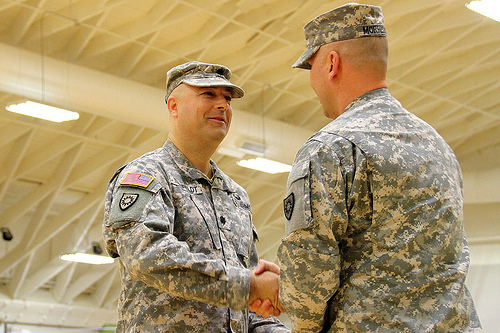
Col. Jerry Morrison presents Lt. Col. John Treufeldt with the Meritorious Service Medal during a change of command ceremony at Fort Knox, Ky., Nov. 16, 2014. Treufeldt led the 198th Military Police Battalion since 2012 and handed over command to Maj. Timothy Starke during the ceremony. (U.S. Army national Guard photo by Staff Sgt. Scott Raymond)
“Lt. Col. Treufeldt and I have worked together for years, I have a great deal of respect for him, we see things very similarly in many ways,” he said. “There is a lot of continuity in the organization, which is great for the Soldiers. They won’t see much difference in the way things are done.”
“I just want to live and enjoy each and every day and try to help these Soldiers continue the heritage and pride of this unit, and create their own legacy here,” said Starke.
Next up for the battalion, as Starke said is to “take a breath” and enjoy a family day for the holidays in December, a time he is ready to enjoy as the new commander.
“That’s when we get to get out and meet the families, that’s what I’m excited about. We can’t do this without families. We have to wrap our arms around them and let them know they are a part of this military police family.”
The MP battalion is made up of Headquarters and Headquarters Detachment, 223rd Military Police Company, the 438th MP Co., the 617th MP Co., the 940th MP Co. and the 1103rd Law and Order Detachment.
Since 2001, the units of the battalion have mobilized 13 times in support of overseas operations including Iraq, Afghanistan and Bosnia.
Story by Staff Sgt. Scott Raymond, Kentucky National Guard Public Affairs
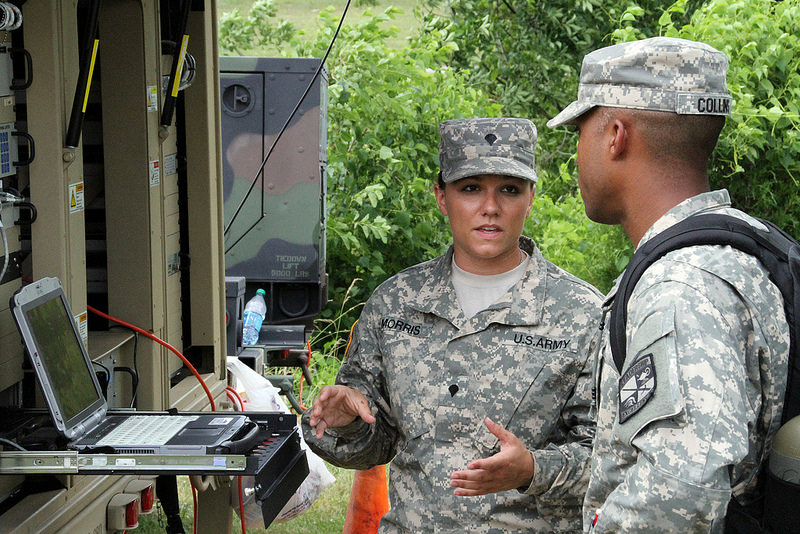
Spc. Jennifer Morris with the 149th Signal Company shares her knowledge of a Satellite Transportable Terminal with a ROTC cadet at Fort Knox, Ky., June 20, 2014. Morris and other members of the Kentucky National Guard were on hand to showcase various career fields for the cadets to pursue when they graduate. (U.S. Army National Guard photo by Staff Sgt. Scott Raymond)
FORT KNOX, Ky. — Each year thousands of Army ROTC cadets attend the Leadership Development and Assessment Course to help determine where and how they will serve in the Army. This 28-day event is considered a centerpiece of the ROTC program and historically has been held at Joint Base Lewis-McChord in Washington. For 2014, the LDAC was held at its new home alongside the U.S. Army’s Cadet Command at Fort Knox.
More than 8,000 cadets filtered through the grounds of Fort Knox during the summer for LDAC, formerly known as Advanced Camp. The course is a series of evaluations for each cadet in various leadership positions. A small portion of the event called Branch Orientation allows the cadets a taste of each branch of the Army they can request to be commissioned into. In addition to active duty units, Army National Guard and U.S. Army Reserve units played a role in representing each speciality, such as infantry, transportation, armor and aviation.
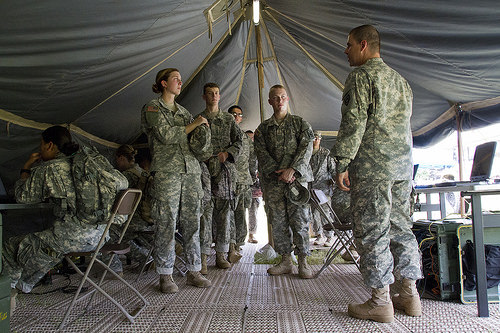
Spc. Nathan Hamilton with the 149th Signal Company discusses the advantages of being a signal officer with ROTC cadets at Fort Knox, Ky., June 20, 2014. Thousands of cadets took in their future opportunities during branch orientation as part of their annual Leadership Development and Assessment Course. (U.S. Army National Guard photo by Staff Sgt. Scott Raymond)
Soldiers of Kentucky’s 149th Signal Company were on hand to demonstrate the highlights of the Signal Corps and what being a signal officer would be like.
“It’s an honor to have the opportunity to share my passion for communications with future signal officers,” said Spc. Nathan Hamilton, a multi-channel transmission system operator with the 149th. “Hopefully I can provide some of my knowledge to them for a few to be as excited about communications as I am.”
Soldiers from the unit set up a Satellite Transportable Terminal, STT with full communication operability, provided a brief run-down of what signal is about and even gave cadets the chance to get on-line to check an email or two.
Sgt. 1st Class Matthew Mathesius, Readiness NCO for the 149th Signal said the unit was requested by the Army’s signal headquarters in Fort Gordon, Georgia to support the branch orientation. He believed their set up would attract cadets to the Signal Corps because of the unique mission and equipment the job requires.
“Thousands of cadets will have the opportunity to see the best signal company in the Army National Guard in action,” he said.
“Our static display differs from other branches because it is not just a piece of equipment on display. It is a functioning satellite terminal trailer and command post node that provides data and voice capability to demonstrate what we do. This showcases our ability to provide communication access anywhere, anytime.”
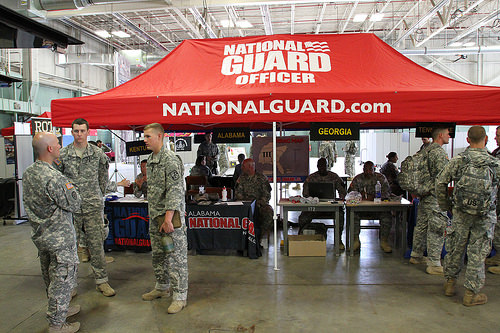
Chief Warrant Officer Greg Scott speaks with ROTC cadets at a National Guard display at Fort Knox, Ky., June 20, 2014. National Guard Soldiers and Reservists played a large role in the U.S. Army ROTC’s annual Leadership Development and Assessment Course. (U.S. Army National Guard photo by Staff Sgt. Scott Raymond)
In addition to the signal Soldiers, Kentucky Guardsmen from the 2nd Battalion, 138th Field Artillery showed up with one of their M109 Howitzers to draw cadets into artillery. Soldiers from Kentucky’s 198th Military Police Battalion also attended to provide the information for those interested in military law enforcement.
According to Chief Warrant Officer Greg Scott, Kentucky Army National Guard Liaison to the cadet command, around 50 percent of each year’s graduating classes become officers in the reserve components which is why it is important for National Guard and Reserve units to have such a presence at LDAC.
“This year the Army National Guard and the Reserves played a major role in executing the seven branch orientation events,” said Scott. “Every state and territory is invited to participate to inform interested cadets of what their state has to offer.”
“The goal, with the idea that we are all one team, is to broadcast what your branch has to offer and to talk about the benefits of the Guard in every state. Each component is out here to find the best of the best as their future leaders.”
While budgetary constraints played a part also, using local units close to Fort Knox, Scott said the LDAC’s move to Kentucky will be a benefit to the Kentucky National Guard.
“It only makes sense that we try to take the lead on this. Moving forward, this could be a major opportunity for the Kentucky National Guard to play a big role in the summer training that is conducted in our own backyard.”
Story by Sgt. Alexa Becerra, 138th Field Artillery Brigade Public Affairs
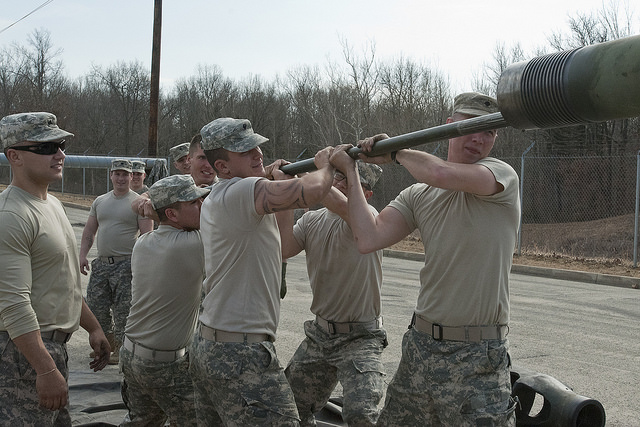
Soldiers with Charlie Battery, 2nd Battalion, 138th Field Artillery clean the barrel of a M109 Paladin during a drill weekend at Fort Knox, Ky., March 8, 2014. (U.S. Army National Guard photo by Sgt. Alexa Becerra)
LEXINGTON, Ky. — After being constantly deployed to different combat zones for the past decade as security forces, convoy security and military trainers, the dynamic 138th Field Artillery Brigade returned their focus to their main field of expertise.
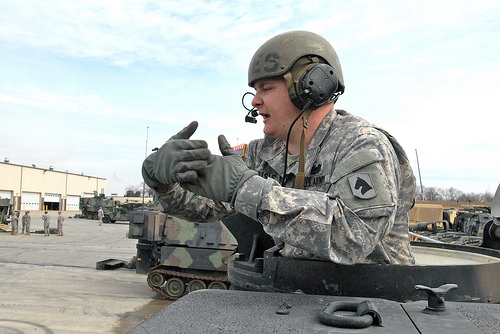
Staff Sgt. Christopher Lisle, a howitzer section chief with the 2nd Battalion, 138th Field Artillery communicates orders to his crew during a training exercise at Fort Knox, Ky., March 8, 2014. The exercise is part of the unit’s goal to complete qualification with functional combat artillery support capabilities. (U.S. Army National Guard photo by Sgt. Alexa Becerra)
As combat deployments become few and far between, the 138th Field Artillery is transitioning back to being able to provide accurate and predictable artillery fires, all while maintaining overall soldier readiness.
“After being off the guns for several years, our focus now is getting back to Field Artillery fundamentals,” said Staff Sgt. Christopher Lisle, Howitzer Section Chief at Bravo Battery, 2nd Battalion, 138th Field Artillery. “It’s amazing to see this level of excitement from our guys, most of which have served almost a full contract doing deployment related tasks and have not been on the Howitzers.”
Lisle added that while there is a depth of experience, it hasn’t all been artillery related.
“We are building our teams from the ground up, and doing it right,” said Lisle, whose battery conducts their training at Fort Knox, Ky. “Our goal by the end of the year is to complete table seven section qualification.”
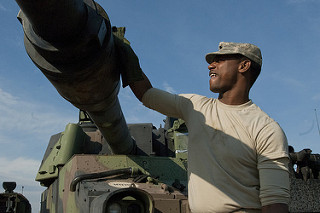
Spc. Glemeau with the 2nd Battalion, 138th Field Artillery wipes grease off the barrel of a M109 Paladin at Fort Knox, Ky., March 8, 2014. (U.S. Army National Guard photo by Sgt. Alexa Becerra)
Table VIII section qualification consists of live fire missions and certifies the units as qualified firing batteries. As in many other fields, to be able to execute the artillery mission operational support is needed.
“Our mission in the fire control section is to redeploy the operations center by retraining and reintegrating ourselves in the role of being digital artillerymen,” said Staff Sgt. J.C. Parsons, Assistant Fire Control Non-Commissioned Officer for Headquarters Headquarters Battery, 138th Field Artillery.
The operations center is currently located at Bluegrass Station, Ky., said Parsons.
“We are training to reestablish proper command flow and control of how the field artillery is used and commanded in the modern day warfare,” said Parsons.
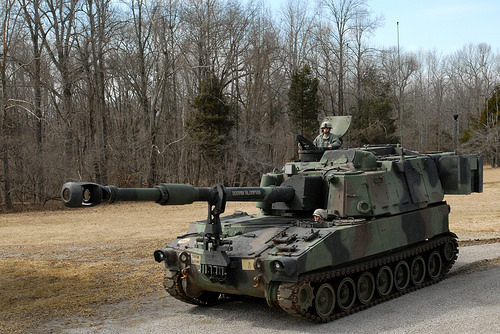
Soldiers with the 2nd Battalion, 138th Field Artillery maneuver a M109 Paladin during a training exercise at Fort Knox, Ky., March 8, 2014. (U.S. Army National Guard photo by Sgt. Alexa Becerra)
The full reintegration process will take time, but so far the 138th is headed in the right direction.
“The environment and circumstances we are working in have changed,” said 2nd Lt. Holdun Reed, Platoon Leader at Charlie Battery, 2/138th. “Yet, we are adaptive and resilient and have smoothly made the changes necessary to operate like we always have; perhaps better than before.”
As with most National Guard units, versatility and adaptability are traits that are required to succeed and have even become second nature to the 138th.
“I have always believed that Field Artillery is the most versatile force and we have proven that so far and will continue to prove it,” said Reed. “We stand ready for missions abroad and within our own state.”
Story By Lynsie Dickerson, Gold Standard Staff Writer ([email protected])

Col. Matthew Rettke, Command of Fort Knox MEDDAC, passes the flag from the outgoing commander of the Fort Knox Warrior Transition Battalion, Lt. Col. Dwight Lewis, to the incoming WTB commander, Lt. Col. Timothy Fanter, during Friday’s change of command ceremony (Staff Photo by Lynsie Dickerson)
FORT KNOX, Ky. — The Fort Knox Warrior Transition Battalion welcomed Lt. Col. Timothy Fanter as its new commander while giving regards to outgoing commander Lt. Col. Dwight Lewis during a change of command ceremony Friday at Smith Physical Fitness Center.
Col. Matthew Rettke, commander of Fort Knox MEDDAC and Ireland Army Community Hospital, was the first of the three speakers. He explained that the WTB gave Soldiers a time and place to heal.
During the ceremony, Lewis explained that healing is the WTB’s top priority, and discussed programs such as Career Education Readiness and Soldier Adaptive Reconditioning program. He also thanked the people he worked with and other leaders, community partners and his friends and Family.
“It has been my pleasure…to command WTB,” Lewis said.
Lewis also left the Soldiers with a bit of advice.
“Soldiers, continue to do great things,” Lewis said. “This is a wonderful opportunity; take full advantage of every opportunity while you’re here.”
Fanter addressed Lewis during his remarks, saying, “You have done a great job and I know I will have to work hard to maintain the high level of professionalism, leadership and service you provided for the past two years, but I am up to the challenge.”
“I am excited about this opportunity and am ready for the challenge of empowering our Soldiers and their Families to build a successful future and accomplish your objectives,” Fanter said.
Fanter, who is a native of Versailles, Ky., was commissioned in 1989 as an infantry officer through ROTC at Westminster College in Missouri. He was also a distinguished military graduate.
During his career, Fanter has served as the commander of the 1st Battalion, 623rd Field Artillery in Glasgow, Ky.; assistant professor of Military Science at the University of Kentucky; assistant S-3/simulations officer in 138 Fires Brigade; G-7 plans officer in Multi-National Division, Baghdad (Operation Iraqi Freedom) and S-3 in the 138 Fires Brigade.
Fanter has received many awards and decorations, some of which are the Bronze Star Medal (one Oak Leaf Cluster); Meritorious Service Medal (on Oak Leaf Cluster); Army Commendation Medal (10 OLCs); Army Achievement Medal (six OLCs); Armed Forces Reserve Medal (with M device (2) and Bronze Hourglass); Afghanistan Campaign Medal; Iraq Campaign Medal, National Defense Service Medal (with Bronze Star); Global War on Terrorism Expeditionary Medal; Global War on Terrorism Service Medal; Korean Defense Service Medal; Meritorious Unit Commendation; Superior Unit Award; Parachutist Badge; Air Assault Badge and he is a member of the Honorable Order of Saint Barbara.
Fanter has also received awards for his time as a reservist, some of which were given by the state of Kentucky.
During the ceremony, Fanter thanked distinguished guests for their mentorship and leadership, the Fort Knox community for supporting the Soldiers and the battalion, his Family for supporting him throughout his career and the Soldiers themselves.
Fanter said that as he works with the WTB, together they will focus on caring for WTB members and their Families, developing the Soldiers and leaders to build the team and sharing professionalism to build an ethical and moral foundation.
“I ask and expect that you continue to be the professional Soldier that you are,” Fanter said. “Do what is right. Do your best. Act, think, and be the professional Soldier that you are. If you do that, we will all be successful in our mission.”
Story by Master Sgt. Phil Speck, 123rd Airlift Wing Public Affairs Office
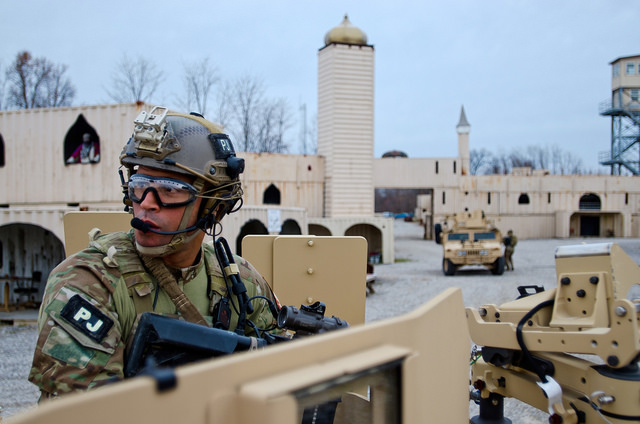
A member of the Kentucky Air National Guard’s 123rd Special Tactics Squadron defends a vehicle during training at Zussman Range at Fort Knox, Ky., on Nov. 21, 2013. The Airman and his teammates were practicing insertions, extractions and close-quarters combat in a simulated Afghan village. (U.S. Air National Guard photo by Master Sgt. Phil Speck)
FORT KNOX, Ky. — A UH-60 Blackhawk helicopter comes to a hovering stop above a two-story building in the middle of an Afghan village. With blades rotating above, a Kentucky Air National Guard pararescueman scoots to the edge of the chopper’s open door and grabs a thick rope before sliding 25 feet down to the building’s roof. He’s followed by five teammates who quickly secure the rooftop and scan the village for threats.
The scene may sound like a sequence from a Hollywood blockbuster, but it’s just another day at the “office” for members of the Kentucky Air National Guard’s 123rd Special Tactics Squadron. They executed the mission in November as part of regular combat training at Fort Knox’s Zussman Urban Training Center.
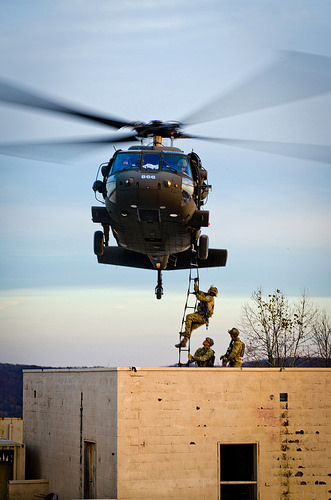
Members of the Kentucky Air National Guard’s 123rd Special Tactics Squadron climb a rope ladder onto a Kentucky Army National Guard UH-60 Blackhawk during training at Zussman Range at Fort Knox, Ky., on Nov. 21, 2013. The Airmen were practicing insertions, extractions and close-quarters combat in a simulated Afghan village. (U.S. Air National Guard photo by Master Sgt. Phil Speck)
The center offers realistic combat environments that simulate what troops can expect to find Afghanistan, according to Staff Sgt. Jeff G., a Kentucky Air Guard pararescueman whose last name is being withheld because of the sensitive nature of his duties.
“This is as good as it gets for training,” he said.
Pararescuemen and their combat controller colleagues from the 123rd Special Tactics Squadron are Special Forces Airmen. The former specialize in medical treatment and personnel recovery, while the latter control air traffic and air strikes. Both maintain a high level of training to be prepared for any mission.
The “fast rope insertion” described above is just one of many skills the men trained for in November. They also trained for fast extraction, in which a helicopter hovers overhead and drops a rope ladder for the operatives to climb up.
“We do this training to keep our skills up, stay proficient, so we can seamlessly integrate with other units,” Staff Sgt. G. said.
While at Zussman, the team also conducted close-quarters battle training. The operatives cordoned and searched buildings for people or high-value targets such as weapons caches, clearing the buildings one room at a time and eliminating threats as needed.
Throughout this process, they were met by actors who portrayed local Afghans, from a local market owner to hostile enemy forces that assaulted them with high-powered paintball guns. STS personnel used modified versions of their real-world weapons to fight back, employing non-lethal paint bullets, or “simunitions,” to return fire.
The Airmen also conducted full-mission-profile training tasks, using the equipment they would take with them overseas for a real-world operation. Among these tools were the Jaws of Life, a powered cutting device used to extract individuals from a downed aircraft or vehicle.
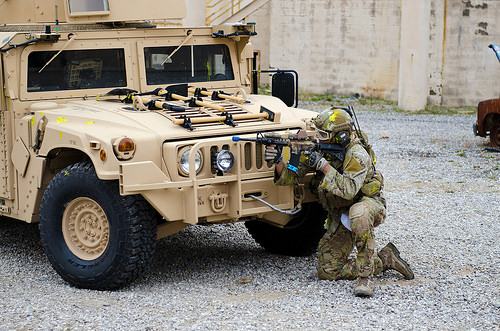
A member of the Kentucky Air National Guard’s 123rd Special Tactics Squadron defends his position during training at Zussman Range at Fort Knox, Ky., on Nov. 21, 2013. The Airman and his teammates were practicing insertions, extractions and close-quarters combat in a simulated Afghan village. (U.S. Air National Guard photo by Master Sgt. Phil Speck)
According to Master Sgt. Bryan Hunt, a combat controller for the 123rd STS, the unit does this type of training — which they call Military Operations on Urban Terrain — four times a year. It benefits both newcomers and unit veterans he said.
Each scenario was preceded by a dry run, or a practice walk-through. The Airmen would then execute a full-mission profile with night-vision goggles while taking simulated hostile fire.
“We try to apply everything we learned during a dry run, so when you’re actually being shot at, and you’re hot, your goggles are fogging up, the challenge was keeping your head, staying calm and applying the techniques you’ve learned previously,” Staff Sgt. G. said.
“The training was excellent and beneficial because it mimicked actual combat in Afghanistan. It represents that 360-degree battlefield that we experience in Afghanistan.”
Story by John Trowbridge, Kentucky National Guard
In recognition of February as Black History Month kentuckyguard.com is publishing several articles honoring African-American men and women who are significant figures in Kentucky’s military history. The following is one such story ….
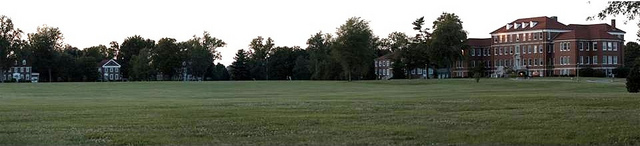
Pvt. Robert H. Brooks is the namesake of Brooks Field at Fort Knox. Ky. When the news of his death reached Fort Knox, the post commander, General Jacob Devers, decided to name the main parade ground in Brooks’ honor.
FRANKFORT, Ky. — Pvt. Robert H. Brooks the son of Adline and Ray Brooks, was born on October 8, 1915, in McFarland, Kentucky. He was raised in Sadieville, Kentucky. As an adult, he moved to Cincinnati, Ohio, where he was inducted into the army in late 1940.
While training at Fort Knox, Kentucky in November, 1940, Brooks was assigned to the maintenance section of D Company, 192nd Tank Battalion, a Kentucky National Guard unit which had been federalized.
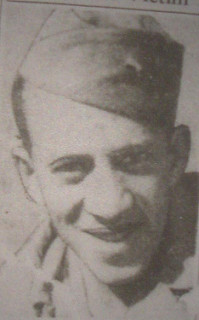
Pvt. Robert H. Brooks, the first U.S. Armored casualty of World War II.
In late August, 1941, the 192nd went on maneuvers in Louisiana. Due to the battalion’s outstanding performance during the maneuvers it was selected to be sent overseas. D Company traveled by train to San Francisco. From there, they boarded ships for the Philippines Islands.
On December 8, 1941, just ten hours after the attack on Pearl Harbor, Japanese planes appeared over Clark Field near Fort Stotsenburg, Philippine Islands. Most of the members of D Company were at lunch at the time of the attack. Brooks was with two mechanics from maintenance section when the first bombs began to fall. It is believed that Brooks was attempting to get to his half-track to man the .50 caliber machine gun, when a bomb exploded next to him. He was killed instantly.
When the news of his death reached Fort Knox, the post commander, General Jacob Devers, decided to name the main parade ground in Brooks’ honor. Brooks was officially declared the first U. S. Armored Forces casualty of WW II.
One of General Dever’s subordinates called the Farmer’s Deposit Bank in Sadieville, attempting to reach Robert’s parents. As it turned out, the bank had the only phone in the town. W. T. Warring at the bank answered the phone. The aide asked if it would be possible for someone from the town to be present at the dedication ceremony.
The aide asked Mr. Warring if he could tell him anything about Robert’s parents. Mr. Warring said, ” His parents are tenant farmers, ordinary black people; maybe you could contact them and see if they could come.”
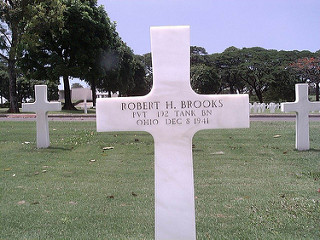
Following World War II Robert Brooks’ remains were moved to the American Military Cemetery outside of Manila. He was posthumously promoted to private first class.
The general’s representative hung up the phone and immediately called back. He said to Mr. Warring, “Did you say they were black?” Warring responded, “Yes, his mother and father are very dark.”
The aide felt that this might change the situation. When he reported back to General Devers, the general said, “It did not matter whether or not Robert was black, what mattered was that he had given his life for his country.”
Remember, this was a time when the U.S. military was segregated. Blacks typically served in all-black units, such as the Tuskegee Airmen, 761st Tank Battalion and the lesser-known but equally distinguished 452nd Anti-Aircraft Artillery Battalion.
Being light-skinned, Brooks often passed for white. His fellow Soldiers knew his background, never questioned it as he was considered “just one of the guys.”
The ceremony dedicating the main parade ground in honor of Robert Brooks was held with Robert’s parents present. During the dedication, General Devers said in his dedication speech, “In death there is no grade or rank. And in this greatest democracy the world has ever known, neither riches or poverty, neither creed or race, draws a line of demarcation in this hour of national crisis.”
After the war, Robert Brooks’ remains were moved to the American Military Cemetery outside of Manila. He was posthumously promoted to private first class.
Today a Kentucky Historical Marker located in Sadieville, Kentucky, honors Pvt. Robert H. Brooks’ service and sacrifice to our country.
