Pages
Stay In Touch
More
© 2013 KentuckyGuard
Story by Master Sgt. Phil Speck, 123rd Airlift Wing Public Affairs
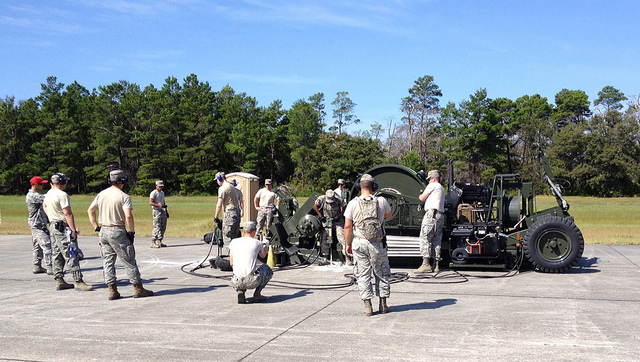
Troops from the Kentucky Air National Guard’s 123rd Civil Engineer Squadron join with other Airmen to anchor a Mobile Aircraft Arresting System at Tyndall Air Force Base, Fla., on Sept 16, 2013. The Kentucky Air Guardsmen were participating in Silver Flag, a week-long exercise to train and test the skills of civil engineers at a bare-base location in a simulated wartime environment. (U.S. Air National Guard photo by Tech. Sgt. Dave Soldat)
KENTUCKY AIR NATIONAL GUARD BASE, LOUISVILLE, Ky. — Kentucky Air National Guardsmen of the 123rd Civil Engineer Squadron deployed to a secluded bare base location to establish and maintain a base during a wartime mission exercise known as Silver Flag.
During the week long exercise, Sept. 13-21, the 26 Airmen joined over 246 Active Duty, Reserve and Guardsmen at Tyndall Air Force Base, Fla. This was the biggest class ever for Silver Flag said Lt. Col. Keith McCallie, Deputy Base Civil Engineer for the 123rd Civil Engineer Squadron, and student commander for Silver Flag.
“This was a well worth learning experience,” McCallie said. “a total force integration, a first that I’ve ever seen at Silver Flag.”
Silver Flag is training for all civil engineering (CE) personnel, including command and control, and specialized craftsmen training. This training is mandatory for civil engineers every 40 months. The exercise challenged each craft area in CE to perform under a wartime mission tasking, including emergency management, utilities, structures, heating ventilation and air conditioning, heavy equipment, electrical, power protection, site development, CE Operations, and fire. The Command and Control (C2) element from the 123rd CES attended the exercise.
Other units from other bases such as Personnel, Services, Communications, and Medical personnel participated in the exercise as well.
Tasks that had to be handled during the war games included purifying water, getting electrical generators online and power distribution, airfield lighting, erecting tent cities, rapid runway repair, installation of mobile aircraft arresting system and bare base site layout, just to name a few.
The units also showed they could pre-stage vehicles and conduct convoy operations with precision. They also defended assets by preventing simulated host-nation saboteurs from disrupting power distribution.
The exercise also allows Airmen access to specialized equipment they normally don’t get to work with back at their home station units, as well as a test bed for new and improved equipment coming through the Air Force. At the Silver Flag location, a new power distribution system was being field tested which consisted of new digital design as compared to an old aging analog system.
“This gives the Airmen a look at the new cutting edge technology, which is a benefit to troops, and gives the command element exposure to new technology.” McCallie said.
During the exercise the Cadre commented on the positive attitudes of everyone, and integration of the Air Force Active Duty, Reserves and Guard.
“Everyone meshed very well, no fights or feuding between the services, and it was eye opening to see how everyone was so enthusiastic.” McCallie added. “Morale was not an issue at this Silver Flag, everyone embraced this training with enthusiasm and the go-get attitude.”
Story by Staff Sgt. Scott Raymond, Kentucky National Guard Public Affairs
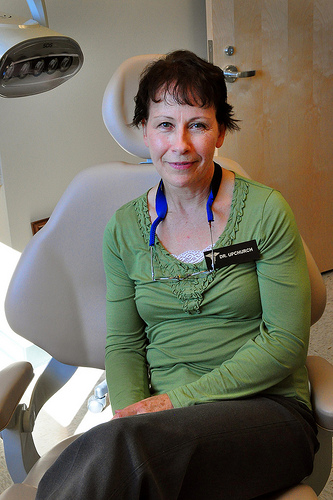
Dr. Sharon Upchurch works as the full-time dentist on staff with the Kentucky National Guard’s Health Servcies in Frankfort, Ky. The Hazard, Ky. native has enjoyed a long and successful career in the dental field with more than 20 years in practice in Kentucky. (U.S. Army National Guard photo by Staff Sgt. Scott Raymond)
FRANKFORT, Ky. — Dr. Sharon Upchurch spent more than 20 years ‘in the teeth’ of patients in Kentucky. And after a seven-year absence, working out of state she’s returned to the Commonwealth as the dentist on staff with the Kentucky National Guard’s Health Services.
“I’ve spent the past six years at Camp Atterbury in Indiana and I was ready to come home,” she said.
Raised in Hazard, Ky., Upchurch started college late and with an interest in biology, pursued the field of dentistry. Through private practice in her hometown and a long run in her own office in Lexington, Upchurch became restless with the administration of running an office. The decision was made to sell her practice, a bittersweet time she said, but a moment of relief.
With the wars raging in Iraq and Afghanistan, Upchurch accepted a position at the dental clinic at Camp Atterbury, assisting with the care of deploying and returning Service members. Married to a Vietnam Veteran and former Kentucky Guardsman, Upchurch had her own understanding of the military and its needs during wartime.
“As a military spouse, this was a great opportunity for me to do my part,” she said. “And it all became fun again at Atterbury. It was just dentistry.”
Always looking to return to Kentucky, Upchurch jumped at the chance to apply for the job in Frankfort.
Capt. Stephanie Fields, Deputy State Surgeon for the Kentucky Guard said Upchurch fills a void the state had for a full-time dentist, and the Health Services team couldn’t be more happier.
“We are very fortunate to have Dr. Upchurch here on staff,” said Fields. “She is very familiar with this sort of environment and brings a wealth of knowledge to the benefit of the Kentucky National Guard.”
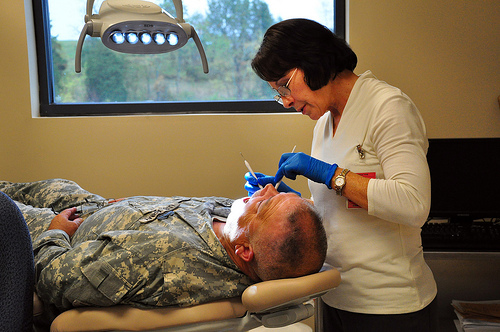
Dr. Sharon Upchurch conducts a dental exam at the Kentucky National Guard’s Medical Readiness Center in Frankfort, Ky., Oct. 17, 2013. (U.S. Army National Guard photo by Staff Sgt. Scott Raymond)
As she makes herself at home in the new Medical Readiness Center in Frankfort, Upchurch sees several Soldiers a day as they check in for their Personal Health Assessment. She knows there will be busier days and weekends as more unit arrive for the annual check-up. Upchurch will also sometimes pack up her things and travel to armories around the state to provide more localized service as well.
Upchurch called her new job a transition, as she winds down her long career in dentistry. She said she is gradually and slowly working toward retirement, but enjoys her work too much to just leave it all behind. She is now able to provide Soldiers and Airmen of the Kentucky Guard some of the medical treatment they require. And all the while, finding enjoyment and fulfillment in each day’s work.
“I am here to support and advise Soldiers to help educate them to take better care of their teeth,” she said. “And I am happy to be doing it here.”
Staff report
“Dogs are our link to paradise. They don’t know evil or jealousy or discontent. To sit with a dog on a hillside on a glorious afternoon is to be back in Eden, where doing nothing was not boring — it was peace.”
― Milan Kundera, author
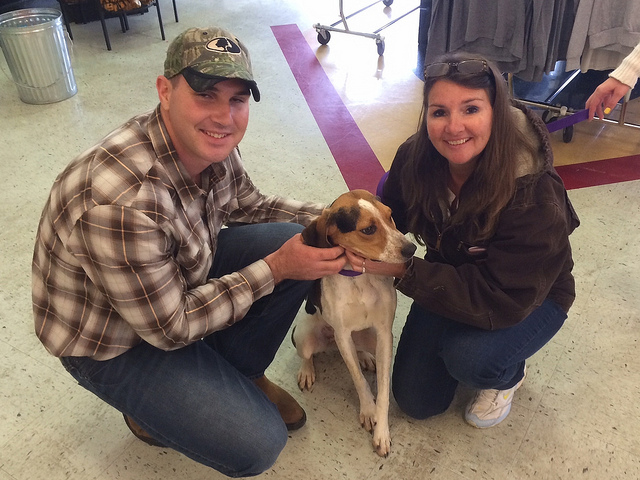
USMC Sgt Rodger Thacker II, his mother Georgia Thacker and Maggie. “Maggie is perfect for him,” said Georgia. “I think they were made for each other. Our son really needed this and I think she really will help him.” (Photo courtesy 1st. Lt. Chris Winburn, Kentucky National Guard Resilience Program)
FRANKFORT, Ky. — The bond between dogs and humans is thousands of years old. For millenia our canine friends have hunted alongside us, guarded our herds and our homes, fought in our wars and comforted us in times of woe. They are more than mere pets; they are our companions, co-workers and our best friends. In some cases they can also be healers of a special sort.
The “Canines Helping Our Military Personnel” or CHOMP program is a partnership between the Kentucky National Guard, the Lexington Humane Society and Federal Medical Center. The Humane Society provides dogs to veterans with a waived adoption fee. Before joining their new masters, the canines must first go through a training program run by inmates at the Federal Medical Center.
1st. Lt. Chris Winburn coordinates the project as part of the Kentucky Guard’s Resilience Program. Winburn’s primary focus is to market the program and find individuals that not only meet the criteria, but also have a desire to participate. To be eligible, a candidate should be a combat veteran and be in a place in their life that gives them a need for a companion animal. This need could come in several forms, but the idea is that the veteran is dealing with issues such as PTSD, thoughts of suicide, family issues or general feelings of loss or loneliness.
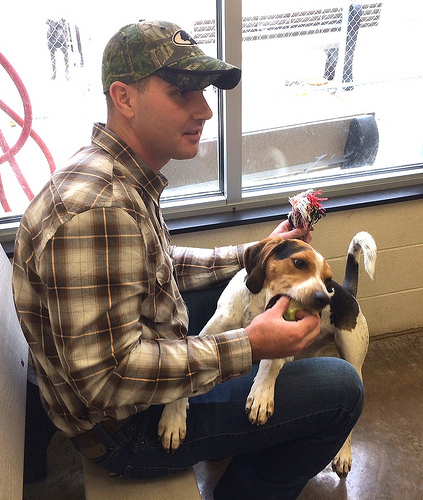
Hunting buddies: USMC Sgt. Rodger Thacker II is a twice deployed combat veteran. He teamed up with Maggie after receiving an email about the Kentucky National Guard’s Canines Helping Our Military Personnel (CHOMP) program. (Photo courtesy 1st. Lt. Chris Winburn, Kentucky National Guard Resilience Program)
“The concept originally came from research which showed that a companion animal can be a powerful positive influence in a person’s life,” said Winburn. “As suicide rates in the military, and particularly among combat veterans, continue to increase, the Kentucky National Guard Resilience Team has been focusing on ways to not only try and curb the problem of suicide, but also to build a stronger and more resilient force.”
Within just a few hours of putting out a notice about the CHOMP program, Winburn’s team received an email from Georgia Thacker, a Kentucky National Guard Family Readiness Group leader. She’s also the wife of Sgt. 1st Class Rodger Thacker, a twice deployed Guard soldier.
But it wasn’t her husband that was in need. Instead, Georgia sent the flyer to her son, an active duty Marine stationed in North Carolina. Almost immediately USMC Sgt. Roger Thacker II asked if he could participate in the program. He explained that he had dealt with issues relating to PTSD from two prior combat deployments, and that he had recently lost his four dogs in a divorce.
“Thacker’s situation was ideal for this program,” said Winburn. “He was twice deployed combat veteran and had gone through a tough spell here at home. His family relationship with the Kentucky Guard made it an easy decision.”
A few emails later and Thacker was in Kentucky the following week to meet his new best friend at the Lexington Humane Society.
After completing an application form, Thacker then met with Humane Society staffers. When asked for details on what kind of dog he wanted to adopt, that was easy: a hunting companion.
The Humane Society had the perfect candidate. Maggie is 11 month old Treeing Walker Coonhound, a breed known for their remarkable hunting ability. Rodger and Maggie spent some time getting to know one another and working with the Humane Society staff on the different commands that came from the FMC training program. The pup was excited to be interacting with people, but she somehow managed to sit and roll-over for a treat.
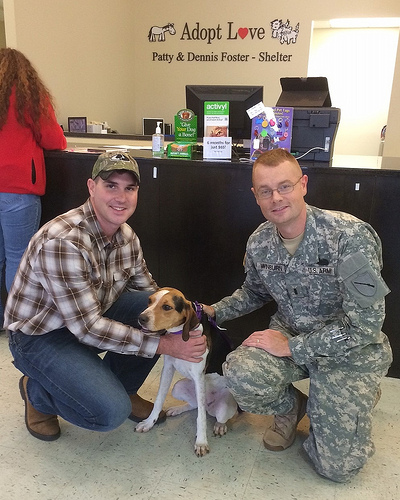
USMC Sgt Rodger Thacker II, 1st. Lt. Chris Winburn and Maggie. For more information on CHOMP contact 1st Lt. Chris Winburn at 502-607-1575 or at christopher.r.winburn.mil@mail.mil. (Photo courtesy 1st. Lt. Chris Winburn, Kentucky National Guard Resilience Program)
“The only thing that was more impressive than watching Maggie’s training was witnessing a bond between dog and owner form before our very eyes in such a short time,” said Windburn. “That was pretty great.”
Humane Society staff helped Thacker fill out the necessary paperwork for adopting Maggie and briefed him about complimentary veterinarian visits and medications. He was even given a big bag of dog food.
“This program will make a huge impact in my life,” said Thacker. “I encourage anyone looking for a companion to help you in any way to consider this program. It was easy and the outcome better than I could ever imagine.”
Georgia, Thacker’s mother, is a big fan of CHOMP — and of Maggie! “This definitely helped my son,” she said. “Before I even heard of the program I told him, I think you need a companion. Then I saw the email and the next thing I knew Rodger was on his way to Kentucky.”
“Our son is so excited,” she said. “Maggie is perfect for him. I think they were made for each other. She’s going to be indoors with him, but they’ll also go hunting together. It was just a wonderful thing. He really needed this in his life right now and I think she really will help him.”
Dad was equally excited about the new addition to the family. “When Rodger got home with Maggie his face was so lit up, it was like, wow!” said Sgt. 1st Class Thacker. “It’s as if the man upstairs said, we got something for you, son.”
Winburn finds his work with CHOMP rewarding. “It’s great to be a part of an organization that cares so much about its members. The Resilience team knows that there are other veterans amongst our ranks that can benefit from the CHOMP program.”
If you or someone you know might be a good candidate for this program, and would like more information contact 1st Lt. Chris Winburn at 502-607-1575 or at christopher.r.winburn.mil@mail.mil.
Story by Spc. John Rader, 149th VCC Unit Public Affairs Historian Representative
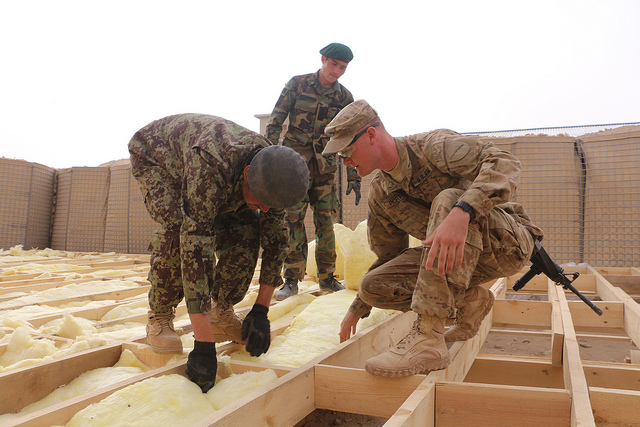
Spc. Clyde Porter of the 149th Vertical Construction Company assists a member of the Afghan National Army install fiber glass insulation in a construction project at Forward Operating Base Lightning, Afghanistan. Porter also assessed the installation by other members of the ANA as part of the unit’s training program with the ANA. (U.S. Army National Guard photo by Spc. John Rader)
BAGRAM, Afghanistan – When the deployment for the Kentucky Guard’s 149th Vertical Construction Company is over, the unit will leave behind more than just the many structures they have built in Afghanistan. They’re leaving behind the knowledge of their construction expertise with the local Afghanistan National Army (ANA) to help ensure the independence of a nation when the U.S. and Coalition forces scale-back their presence in the country.
“This is a mission of building life long bonds and structures with our ANA allies,” said the commander of the 149th, Capt. Adam Evans.
The training schedules cover all aspects of engineering that is organic to the 149th. This has the Kentucky Guardsmen working very closely with the ANA, teaching them the tools of the trade and will also include some priceless experience learned over the years.
“Vertical construction will be the main emphasis of this training mission but horizontal engineering will be incorporated as well,” said Evans. “Even though we are a vertical construction company, we have taken on horizontal training. This allows us to provide full spectrum construction engineering operations to the ANA. We will teach them everything we know to ensure they will be able to build and maintain structures from the ground up without the support of the U.S. and Coalition engineers.”
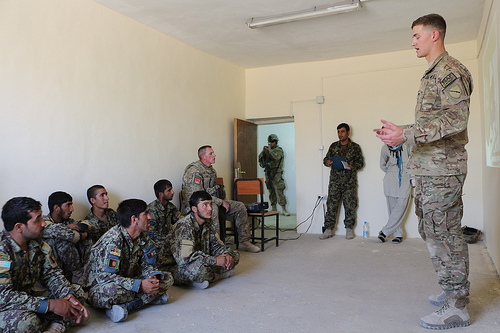
Sgt. Reid Smith of the 149th Vertical Construction Company instructs members of the Afghan National Army on reading blueprints and construction drawings at Forward operating Base Shank, Afghanistan. The class was the first in a lesson plan created by Guardsmen of the 149th specifically for the ANA. (U.S. Army National Guard photo by Spc. John Rader)
The Afghan Army postponed their tactical and combat training a few days out of the week to work with the 149th engineers. The training began with classroom tutorials on basic construction technique and then moved slowly to the hands-on portion of using tools and erecting structures.
The 149th’s 3rd Platoon lead by 1st Lt. Mathew Doyle began spearheading this training in August with Chief Warrant Officer Robert Woita. Situated in the Regional Command East Territory at Forward Operating Base Shank, the two officers began putting together a training curriculum that walks the Afghan Army through a step by step training process in vertical engineering. The training plans that Doyle fostered became a standard that is well accepted among ANA and U.S. Coalition Force leaders. The plan was even adopted as the training model to be passed on to several other ANA brigades throughout Afghanistan. Doyle and 3rd Platoon received great recognition for these contributions to the mission
“I can’t begin to explain how pleased I am with my platoon,” said Doyle. “They have shown time and again that there is no task to big to accomplish. Now that we have the opportunity to expand our experience by teaching our Afghan allies, I’m confident that the men and women of 3rd Platoon will leave this country with a better understanding of the direction Afghanistan is headed. We will teach and be taught and therefore be able to share some amazing experiences when we return back to Kentucky.”
The expertise of 3rd Platoon has been highly praised and acknowledged when it comes to the vertical construction field in Afghanistan. Doyle lead the first big construction project in theater for the company that later became the operations command post for the 149th and the 122nd Engineer Battalion they fall under. They have conducted numerous vertical construction projects since and have earned themselves the opportunity to operate from a satellite location that allows for close proximity with the ANA and the facilities to meet with the Afghan chain of command to accomplish these tasks.
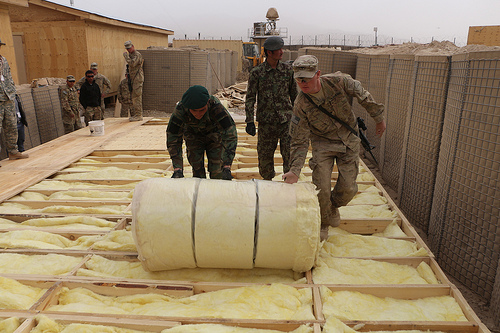
Spc. Clyde Porter with the 149th Vertical Construction Company along with two Afghan National Army Soldiers finish up installing floor insulation at a construction site on Forward Operating Base Lightning, Afghanistan. (U.S. Army National Guard photo by Spc. John Rader)
Additional members of the 149th have been dispatched to other parts of the country to conduct similar training from satellite locations. 1st Lt. Michael Hamblin along with Warrant Officer Jacob Lewis are among a group overseeing the Kentucky Guardsmen in Camp Mike Spann in the Regional Command North Territory. A comparable training curriculum was established by the 149th officers in the Northern Territory because each ANA base employs a different schedule and adjustments must be made as necessary to fit into the program of the Afghan Army.
“Our Soldiers receive a real sense of serving others and giving by passing on their knowledge to the ANA,” said Evans. “At the end of a long work day, ours Guardsmen leave the training site with a great sense of pride and accomplishment. The ANA are really excited and receptive to learning new skills which make it easy to provide training. For our Soldiers, it is a very rewarding experience that they will carry with them long after the deployment is over.”
Many meetings with the Afghan National Army Commanders are held to discuss timelines, checks on learning in the form of quizzes for the ANA engineers, schedules for their troops, and training resources that are available. This is the first challenge for the Guardsmen and it all comes together with the help of local interpreters that bridge the language gap from one nation to another.
“We start by teaching the ANA to request materials for training the way we do. There is some paperwork involved but it only ensures accountability for materials such as lumber for construction or fuel to fill the heavy equipment they will learn to operate,” said Hamblin. “In a part of the world where most things are accomplished with a handshake and a good faith jester, we try to explain the importance of following the proper chain of command when requesting supplies so that when we leave there is an accountable system established. This is the most difficult hurdle thus far.”
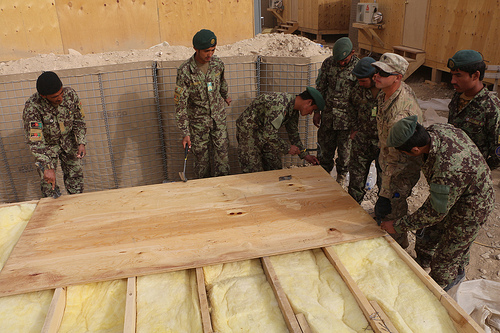
Spc. Chase Hanshaw of the 149th Vertical Construction Company helps guide a group of Afghan National Army Soldiers in laying the first piece of flooring for a “B hut” during a training class at Forward Operating Base Lightning, Afghanistan. (U.S. Army National Guard photo by Spc. John Rader)
Once the training is in full swing, the 149th troops get to work passing along the engineering know how and check the retention of information by administering periodic testing. The vertical engineer team give written exams that have been translated from English to Dari, which is the local dialect in the North. The heavy equipment team grade their students by watching them operate the equipment after giving them a task to perform with the heavy machinery. All is part of a bigger picture to guarantee that the ANA will be ready to continue training and execute their own missions by the time the 149th is ready to redeploy back to Kentucky.
“Were making leaps and bounds with the Afghan Army despite the language barrier we face,” said Lewis. “All seem very eager to learn and show up to class early. It’s a great experience to be given the chance, not only to teach but to get to know them on a much more personal level. Everyday it’s a different experience working with the ANA and it’s also very exciting at the same time.”
In addition to the 149th currently being engaged in two separate Afghan Army training missions, the unit is presently making plans to adopt a few more similar missions in other parts of the Regional Command East Territory. This will put the Kentucky Guardsmen at the top of the list for having the most missions that involve direct contact with the ANA. The company will now shift focus from construction to construction training as the end of another deployment for the 149th is just around the corner.
“Afghanistan is moving forward and with the right tools they will succeed,” said unit 1st Sgt. Grayden Colegrove. “I’m very pleased that we had a chance to be a big part of the training that will later show when Afghanistan is on its own. Our vertical structures may someday be demolished, but the ability to educate and pass on our experience to the people of Afghanistan will last long after our buildings come down. We will return home and back to our civilian jobs knowing we left a legacy here in Afghanistan.”
Staff Report
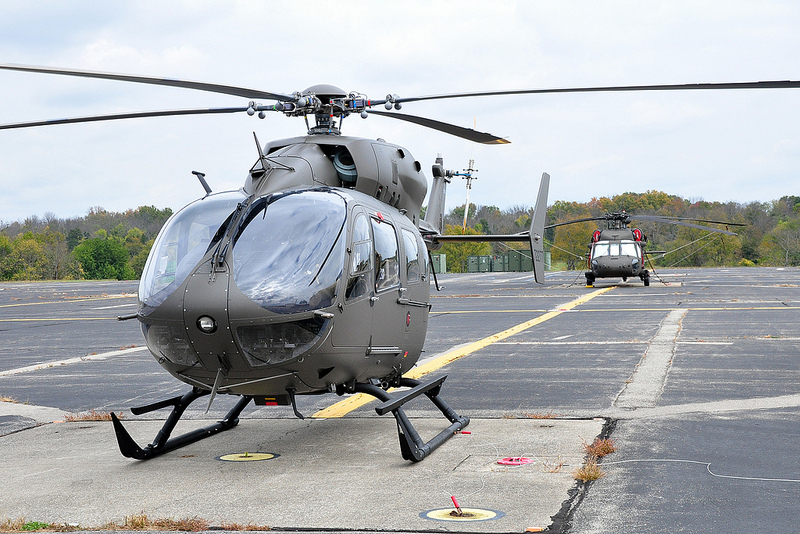
Charlie Co., 1st battalion 376th Aviation received their first UH-72 Lakota to replace the aging OH-58 Kiowas at the Boone National Guard Center, in Frankfort, Ky. Oct. 22, 2013. The Lakota is a twin-engine helicopter with a single, four-bladed main rotor. The UH-72 is a militarized version of the Eurocopter EC145 and is built by American Eurocopter division of EADS North America. (U.S. Army National Guard photo by Staff Sgt. Scott Raymond)
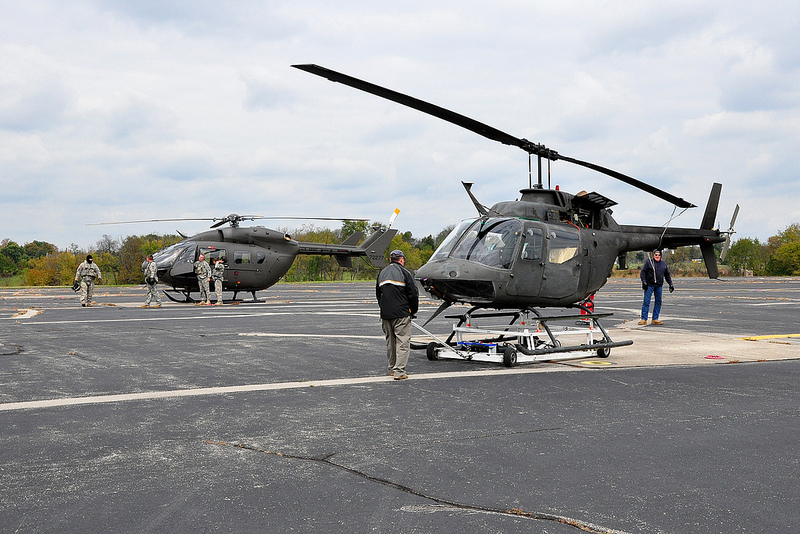
Charlie Co., 1st battalion 376th Aviation received their first UH-72 Lakota to replace the aging OH-58 Kiowas at the Boone National Guard Center, in Frankfort, Ky. Oct. 22, 2013. The Lakota is a twin-engine helicopter with a single, four-bladed main rotor. The UH-72 is a militarized version of the Eurocopter EC145 and is built by American Eurocopter division of EADS North America. (U.S. Army National Guard photo by Staff Sgt. Scott Raymond)
Story by Staff Sgt. Vicky Spesard, 123rd Airlift Wing Public Affairs Office
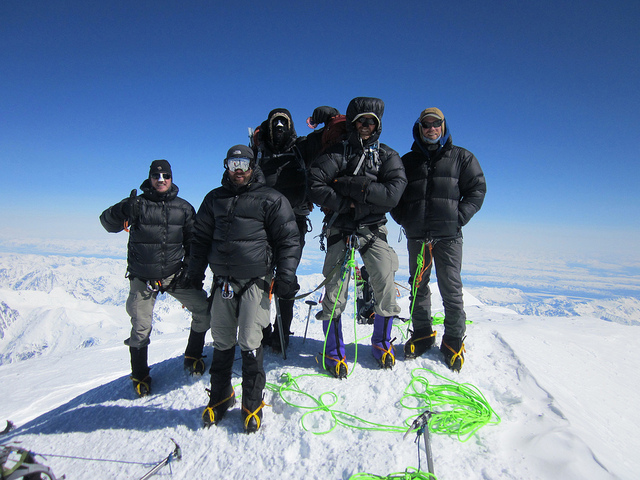
Five combat controllers from the Kentucky Air National Guard’s 123rd Special Tactics Squadron scaled Mount McKinley near Talkeetna, Alaska, on May 25, 2013, as part of arctic mountaineer training. The 20,237-foot summit is the highest mountain peak in North America. (Photo courtesy 123rd Special Tactics Squadron)
KENTUCKY AIR NATIONAL GUARD BASE, LOUISVILLE, Ky. — Five combat controllers from the Kentucky Air National Guard gained valuable extreme-weather experience recently by scaling to the top of Mount McKinley near Talkeetna, Alaska.
Senior Master Sgt. Wes Brooks, Master Sgts. Russ LeMay and Aaron May, and Tech. Sgts. Grant Kinlaw and Harley Bobay of the 123rd Special Tactics Squadron reached the summit of North America’s highest mountain May 25 after many weeks of mid-altitude and high-altitude conditioning.
The objective of such extreme training, which involved glacier travel techniques, crevasse rescue operations and avalanche prediction, was to give the Airmen experience they might need during cold-weather, high-altitude military operations, according to Chief Master Sgt. Tom DeSchane, the 123rd’s combat control enlisted manager.
“In preparing for part of their war-time tasking, these guys have to practice their mountaineering skills and land navigation through arctic conditions,” DeSchane said. “Each operator is issued his own skis, snow shoes and all the accoutrements for surviving the elements. Going up Mount McKinley teaches them how to rope-in and traverse the terrain safely with all of the equipment that they have to carry.”
Combat controllers are part of the Air Force Special Operations community and are among the most highly trained personnel in the U.S. military. As certified air traffic controllers, they deploy undetected into combat and hostile environments to establish assault zones or airfields while simultaneously conducting air traffic control, fire support, command and control, direct action, counter-terrorism, foreign internal defense, humanitarian assistance and special reconnaissance.
Planning for the high-altitude training exercise began about a year ago when the five men participated in mountaineering training in the snowy mountains outside Salt Lake City, Utah, with other members of their squadron.
There, the squadron practiced knots, anchors and other rope skills, as well as movement techniques, minimalistic equipment and clothing, and medium-altitude terrain traversing.
“Originally, the idea to climb (McKinley) came from Aaron, who had tried to climb the mountain before with his previous unit,” LeMay said. “His team was unable to reach the summit when they stopped to help rescue another group of climbers who had an accident.”
Accidents on the mountain are common and mostly caused by climbers who are not properly trained or prepared for the change in altitude and the extreme environment.
The Kentucky team took great care in preparing for their climb.
When the five-member team arrived in Anchorage, Alaska, outside Denali National Park and Preserve, they spent the first day with a guide service, familiarizing themselves with their equipment and preparing meals. The team then departed by air taxi to Mount McKinley base camp, where they spent three days engaged in hands-on training to ensure a solid skill foundation.
For the next 13 days the five Airmen and two guides applied all of their skills and techniques to climb the mountain summit, stopping at camps along the way to acclimate, rest and complete training objectives, before making the return trip to base camp.
“Summit day was the hardest part of the climb,” LeMay said. “It took us five to six hours of straight climbing from the last camp we stayed at to reach it. We were the first group of the day to reach the summit so we had about 45 minutes to ourselves to see how beautiful it was. It was the clearest day at the top, so we could see for miles around us. It was amazing.”
Having to make way for other climbing groups, the combat controllers returned to the camp they stayed in the night before to rest for their descent.
“It was tough to go up to the top,” LeMay continued. “Everything about going up and coming down was tough. The cold-weather environment is very unforgiving, and it makes even the smallest tasks very difficult.
“It was the best kind of cold-weather training we could have gotten. Working in such a harsh environment gave us invaluable experience. The climb was amazing, but a lot of hard work.”
Story by Staff Sgt. Scott Raymond, Kentucky National Guard Public Affairs
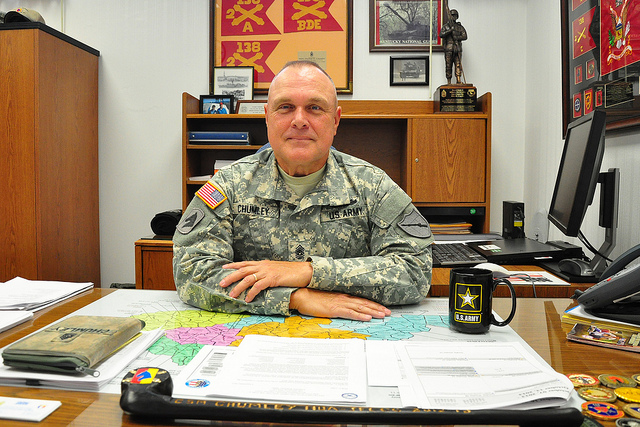
Command Sgt. Maj. Thomas Chumley Jr. sits at his desk at Joint Forces Headquarters in Frankfort, Ky., Oct. 15, 2013. Chumley assumed the role of Kentucky’s eighth State Command Sergeant Major on Oct. 1 after serving as the Command Sergeant Major for the 138th Fires Brigade. (U.S. Army National Guard photo by Staff Sgt. Scott Raymond)
FRANKFORT, Ky. – In May of 1985, Thomas Chumley Jr. walked through the doors of the Elizabethtown, Ky. armory for Bravo Battery, 2nd Battalion, 138th Field Artillery.
He knew he was home.
The 13-year Navy Veteran had experience as a gunner, so when he enlisted into the Kentucky National Guard, it was an easy transition into the Army’s artillery. Chumley said adapting to the changes around him has been the easiest thing for him to do in his military career.
On Oct. 1, Chumley assumed responsibility for every enlisted Soldier in the Commonwealth, as he became Kentucky’s eighth State Command Sergeant Major.
And he did it with ease.
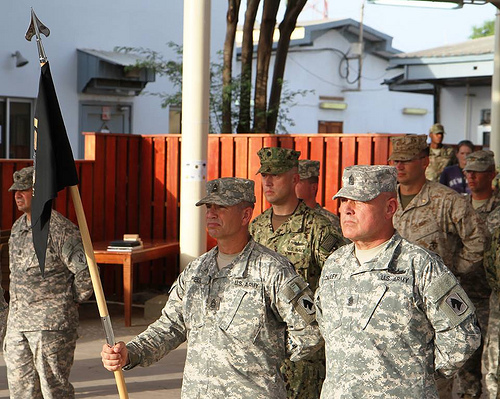
Task Force Longrifles Soldiers, Command Sgt. Maj. Thomas Chumley and Master Sgt. Jeffrey Peel from the Joint Forces Land Component Command (JFLCC) conduct a guide-on casing ceremony in Djibouti, April 20, 2013. The Soldiers deployed with 2nd Battalion, 138th Field Artillery to the horn of Africa in 2012. (U.S. Army National Guard photo by Capt. Daniel Van Horn)
“I’ve said it before, but this is the highlight of my career, this would be the highlight of anyone’s career,” he said. “There’s few Soldiers out there that thought they would ever become a CSM.”
Read about the change of responsibility ceremony here.
Enlisting into the Navy, Chumley said was a rebellious decision against his father, a hard-core, strong-willed Army NCO at Fort Knox. But, after 28 years in Army green, he has been told he’s more like his father than he knows.
Chumley said he is where he is because of his standards and the standards presented before him as he progressed in his career. From a gunner with Bravo Battery, Chumley became a platoon sergeant, a brigade intelligence sergeant, then first sergeant before becoming the Command Sergeant Major for 2nd Battalion, 138th. Taking what he learned from each position, Chumley rose though the artillery ranks over the years to become the Command Sergeant Major for the 138th Fires Brigade in 2011.
Col. Brian Wertzler, commander of the 138th, has worked alongside Chumley for more than 20 years in the Kentucky Guard. He said Chumley’s professionalism has had a profound impact on the careers of the Soldiers in the 138th, helping to foster quality leaders and skilled artillerymen.
“Command Sergeant Major Chumley is undoubtedly the best NCO that I have ever had the pleasure of working with,” said Wertzler. “NCOs and officers alike have always been confident in his knowledge and ability to provide answers, solutions, guidance and direction to any problem; and he proved worthy of that reliance. I am glad to see that Command Sergeant Major Chumley’s untiring efforts, dedication to excellence, leadership and sound judgment have afforded him the opportunity and the recognition to be the State Command Sergeant Major.”
As Chumley settles into his new office in Frankfort, his walls are adorned with keepsakes of a long career in artillery. He agreed that there is a lot of red around him, but is excited to get accustomed to all the branches of the Kentucky Guard. He also knows that changes are coming to the military as the country draws down from war and deals with budget constraints.
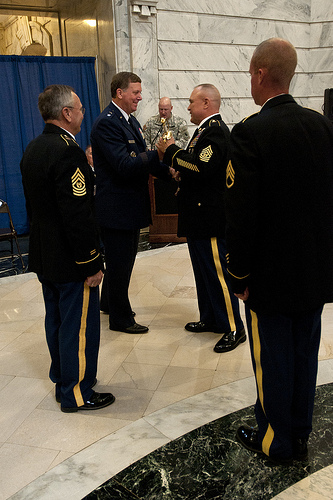
Command Sgt. Maj. Thomas Chumley became Kentucky’s eighth State Command Sergeant Major during a change of responsibility ceremony in Frankfort, Ky., Sept. 12, 2013. (U.S. Army National Guard photo by Staff Sgt. Scott Raymond)
“We’re going to get back to basics,” he said. “We are going to help Soldiers with their careers, where they’re going and what they need to do. The future is looking good, we’ll know what we have and where to put the right Soldiers in the right places. We’ll make sure Soldiers across the state know the information and their families know, just like when I first came to the Guard.”
When ‘Sgt.’ Thomas Chumley first arrived at that armory in Elizabethtown, he was immediately aware of the camaraderie amongst the Soldiers of the battery, many of which were old school mates of his and Vietnam Veterans. Old friends such as 1st Sgt. Roy Wright and Sgt. 1st Class Gabe Ford, who had taken the battery to Vietnam in 1968-69.
Chumley was met with a challenge to adapt to the artillery and the principles of the branch. Chumley said his early leaders instilled in him the basics of being precise, deliberate and safe. They fired rounds downrange without being able to see them, so the knowledge and skill that went into ensuring each step performed to the last detail was crucial.
“All Soldiers deserve good leadership,” he said. “I was fortunate to have that with Bravo Battery. There’s a standard, you go by that standard, its about the basics. I plan on providing that leadership with the precision and capability of an artilleryman.”
Ask him about his leadership style, he will answer, ‘honest, straightforward and here for Soldiers.’ When asked how he will lead as the new State Command Sergeant Major, the answer is a humble one.
“You communicate and set the example,” he said.” I realize that when I walk out my door, eyes are on me. I will practice what I preach, I have to meet the standards, I have to walk the walk. I’ll never ask them to do anything I haven’t done or wouldn’t do myself.”
Story by Staff Sgt. Scott Raymond, Kentucky National Guard Public Affairs
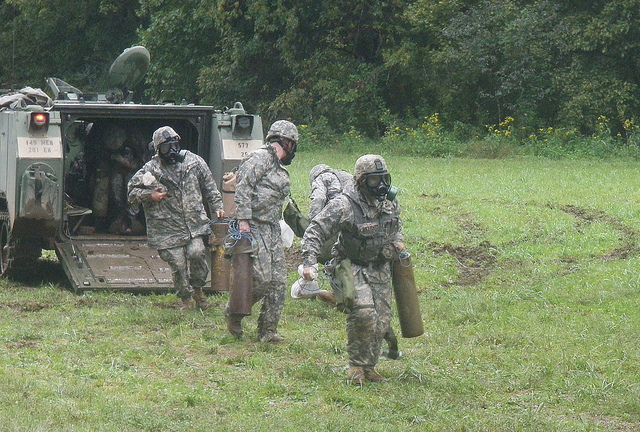
Soldiers of the 577th Sapper Company exit an armored personnel carrier during a training exercise at the Harold L. Disney Training Center in Artemus, Ky., Sept. 22, 2013. Part of the Soldiers traininig included the placement of simulated shaped charges to create crater obstacles. (U.S. Army National Guard photo by Cadet Brian Hicks)
ARTEMUS, Ky. — As a steady rain fell in the hills of Eastern Kentucky, Soldiers in rain gear, combat helmets and gas masks trudged through the muddy terrain of the Harold L. Disney Training Center in Artemus, Ky. Holes were easily dug in the ground for placement of simulated charges, and armored tracked vehicles cruised the fields loading and unloading Soldiers here and there, leaving torn up grass and soil behind.
And Ricky French loves it. He said the all the havoc created is a benefit to the environment.
And just how does armored personnel carriers (APC) benefit the land, you might ask?
It’s all about the grass. According to French, environmental officer for the Kentucky National Guard, the APCs were used as part of the Natural Resource Program.
To see more photos form the training, click here.
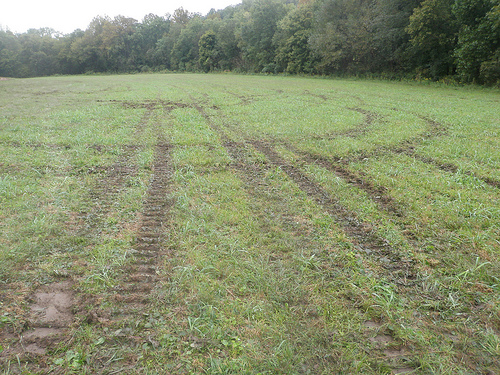
Tracks from an armored personnel carrier streak the fields of the Harold L. Disney Training Center in Artemus, Ky., Sept. 22, 2013. The APCs were used by Soldiers of the 577th Sapper Company as a natural resource tool to assist the root systems of native grasses. (U.S. Army National Guard photo by Cadet Brian Hicks)
“The Natural Resource Program is an ideal situation for blending the needs of training with the stewardship of the land,” said French.
French said native grasses in Kentucky have adapted to build stronger root systems the more they are disturbed. Military training and the use of the APCs were considered a natural resource tool, as they were used in the right location.
This type of disturbance not only supports the growth of native species but helps control non-native species using a mechanical control. Native species thrive with these kinds of disturbances and trampling while the non native species are unable to establish strong root systems.
“Re-establishing native grasses is essential to wildlife habitat and soil stabilization, which also improves and supports the military and environmental mission of the Kentucky Army National Guard,” said French.
Soldiers of the 577th Sapper Company were in the field to conduct platoon, squad and individual training, as part of demolitions training required as part of an engineer company. Soldiers said the exercise was more interesting and motivating with the tracked Armored Personnel Carrier (APC) as part of the training. for some it was a one-of-a-kind experience.
“We usually have to prevent or minimize the damage caused by our tracks, which limits the realism of our training,” said Capt. James Schmitz, commander of the 577th. “Having areas where our drivers can perform full speed combat maneuvers while improving the local environment is a big win for both us and the Disney Training Center.”
“It was one of my first times operating a track during a mock combat operation,” said Pfc. Sonny Ward. “I just recently got my license on the vehicle, and it really helped me develop an appreciation for them.”
Spc. Alexander Weber said the APCs were key to a great training weekend and being able to operate them on grass without worrying about leaving tracks.
“I think it’s cool that we get to get out to use equipment that a lot of National Guard guys never get to see,” said Pfc. David Drummer. “They’re excellent training aids, and let’s be honest: it was just fun getting to tear up some grass in those machines.”
[flickr video=9936999584 secret=d5ac98a612 w=400 h=300]
Story by Staff Sgt. Scott Raymond, Kentucky National Guard Public Affairs
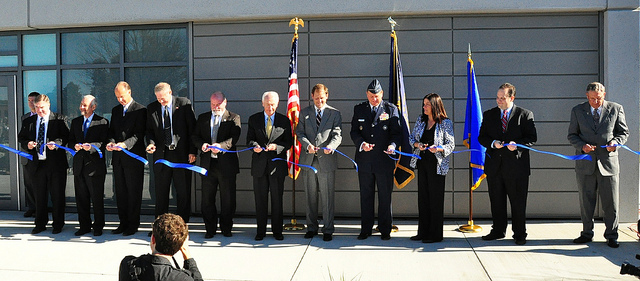
Governor Steve Beshear joins Adjutant General, Maj. Gen. Edward W. Tonini, and state and local elected officials in cutting the ribbon on the new Commonwealth Emergency Operations Center in Frankfort, Ky., Oct. 21, 2013. The facility will act as the hub of operations for future emergency response throughout the state. (U.S. Army National Guard photo by Staff Sgt. Scott Raymond)
FRANKFORT, Ky. — Kentucky Governor Steve Beshear joined Maj. Gen. Edward W. Tonini, the adjutant general for the Kentucky National Guard and emergency management officials from across the state for a ribbon cutting ceremony for the new Commonwealth Emergency Operations Center at Boone National Guard Center in Frankfort, Oct. 21, 2013.
The two-story, 26,150 square-foot facility replaces the former CEOC, built in the 1970s. The new building is constructed to withstand a variety of threats and weather conditions, including winds of up to 250 miles per hour. It is also outfitted with complete state-of-the-art communications technology to ensure rapid and efficient response during natural disasters and emergencies.
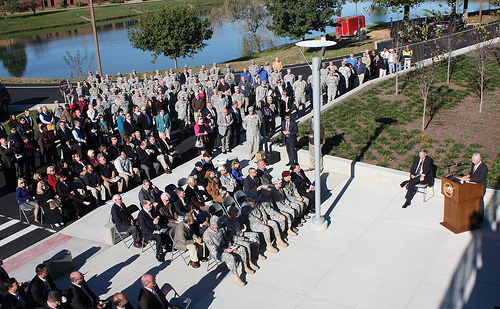
Governor Steve Beshear speaks to a crowd gathered for the ribbon cutting for the new Commonwealth Emergency Operations Center in Frankfort, Ky., Oct. 21, 2013. Gov. Beshear called the facility a lifeline to all 120 counties in the state in their time of need. (U.S. Army National Guard photo by Capt. Stephen Martin)
“This facility is a huge step toward bringing Kentucky’s emergency operations where it needs to be in the 21st century,” said Gov. Beshear. “As nice as it is, this is more than a building, it’s the lifeline to all of Kentucky’s 120 counties in times of trouble.”
To see more photos from the ribbon cutting, click here.
Tonini called the CEOC a symbol of the commitment made to the people of the Commonwealth. He recalled stories from past floods and tornadoes that wreaked havoc across the state, with the emergency response coming from cramped rooms in an out-dated building.
Beshear and Tonini both complimented the emergency operations staff and first responders in attendance, calling them the reason why Kentucky is a national model for emergency management.
“I am very enthusiastic about this new Commonwealth Emergency Operations Center and the effect it will have on Kentucky’s ability to respond in the future,” said Tonini. “This state-of-the-art, nearly $12 million facility, with all of the latest gear and systems, with its media room and conference rooms and planning rooms, it’s not worth a nickel without our people.”
“Our emergency managers are among the best in the nation, and they have proven their worth time and time again,” said Gov. Beshear.
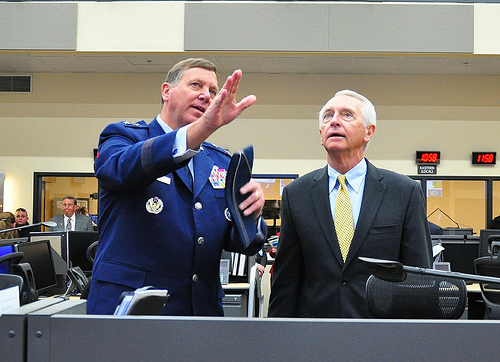
Kentucky’s Adjutant General, Maj. Gen. Edward W. Tonini explains to Governor Steve Beshear, features of the new Commonwealth Emergency Operations Center in Frankfort, Ky., Oct. 21, 2013. The tour followed the official ribbon cutting of the $11.8 million facility which took less than two years to complete. (U.S. Army National Guard photo by Staff Sgt. Scott Raymond)
The new center is capable of supporting more than 200 personnel during a disaster response, including Kentucky Emergency Management, the Kentucky Guard, state and federal agencies and private partners.
A large crowd gathered in front of the new building for the ribbon cutting including state and local elected officials. One in attendance has first hand knowledge of the abilities of those who will work in the facility. Pendleton County Judge Executive Henry Bertram spoke of the day he awoke to a completely flooded city in 1997. The rising waters of the Licking River devastated his county and surrounding areas. He contributed the resilience of the people affected to the work of Gov. Beshear and the agencies that will call the CEOC home.
“This place is a tool to give people the opportunity to put their community back together after a natural disaster,” he said. “The only reason we got back to our lives, was the people with emergency management.”
The new CEOC, funded at $11.8 million, was completed on time and at approximately $400,000 under budget. Nearly $10 million of the funding came from the Federal Emergency Management Agency’s Chemical Stockpile Emergency Preparedness Program. The Kentucky Department of Military Affairs and Office of Homeland Security provided the remainder.
KUWAIT — Charlie Co 2nd Battalion 238th Aviation MEDEVAC, based out of Frankfort, Ky., is currently deployed and providing support to the troops stationed all over Kuwait.
Their primary mission is to provide lifesaving support and transport.
Here’s a snapshot of just a few of the missions they’re supporting…
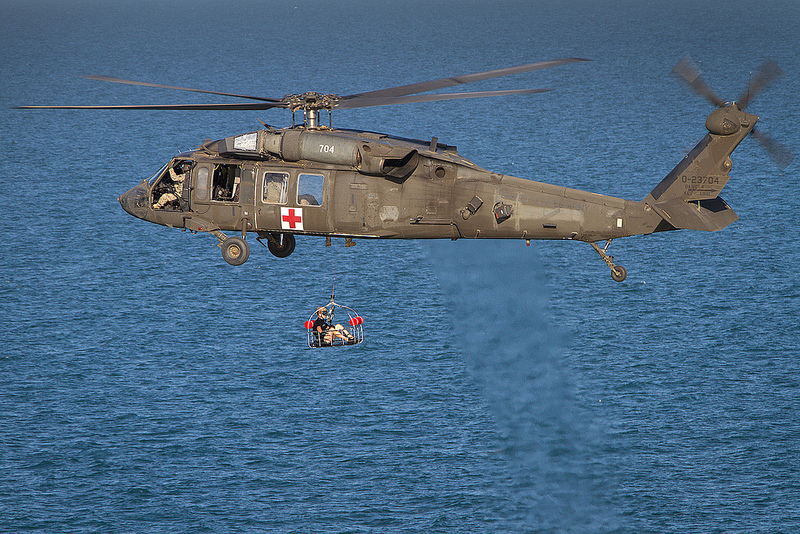
C Co 2nd Battalion, 238th MEDEVAC conducts personnel recovery (PR) operations over the Northern Arabian Gulf (NAG) Oct. 10, 2013. The unit is qualifying all army aviation crewmembers on overwater hoist PR while on deployment. This was conducted as a joint training exercise with a sister flight company who deployed the Navy EOD teams into the water via HeloCast and were recovered by the MEDEVAC aircraft. (photo submitted)
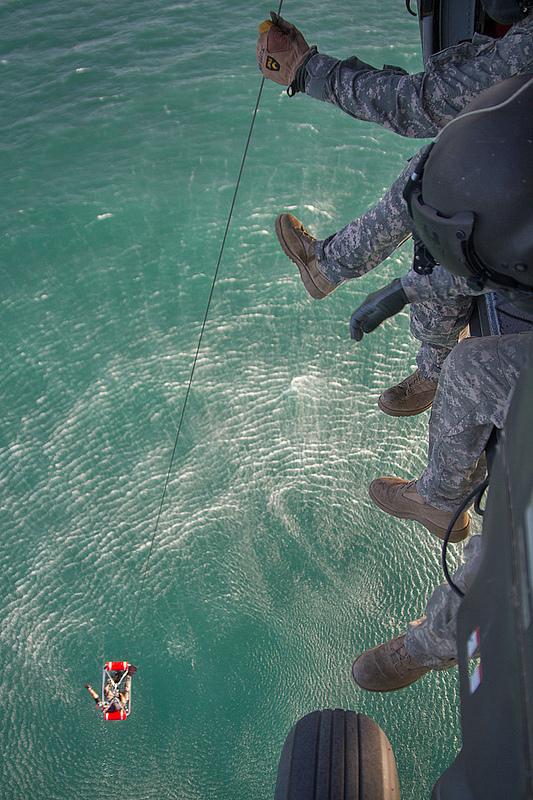
C Co 2nd Battalion, 238th MEDEVAC conducts personnel recovery (PR) operations over the Northern Arabian Gulf (NAG) Oct. 10, 2013. The unit is qualifying all army aviation crewmembers on overwater hoist PR while on deployment. This was conducted as a joint training exercise with a sister flight company who deployed the Navy EOD teams into the water via HeloCast and were recovered by the MEDEVAC aircraft. (photo submitted)
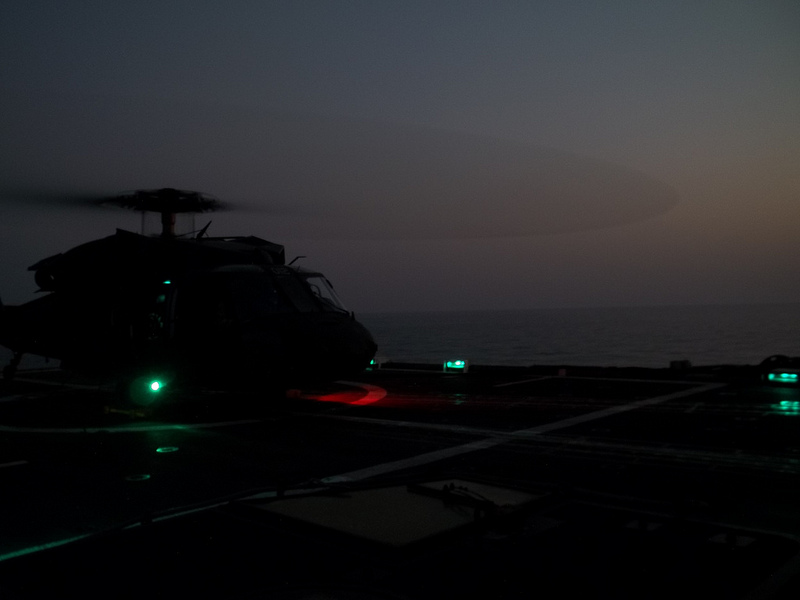
C Co 2nd Battalion, 238th MEDEVAC conducts Deck Landing Qualifications for the unit in the Northern Arabian Gulf (former Persian Gulf). This is to qualify pilots to land on ships in the event that someone had to evacuate for medical reasons from the ship. The Medevac Company, based out of Frankfort, Ky., is currently deployed to Kuwait. (photo submitted)