Pages
Stay In Touch
More
© 2013 KentuckyGuard
By By Maj. Dale Greer, 123rd Airlift Wing Public Affairs
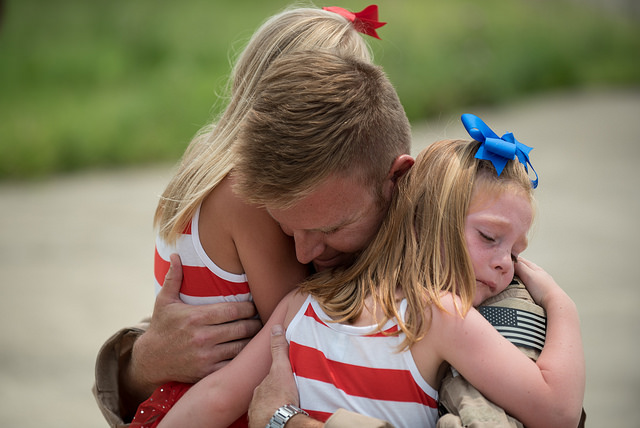
Capt. Ross Farling, a C-130 pilot in the 123rd Airlift Wing, hugs his daughters during an emotional homecoming ceremony at the Kentucky Air National Guard Base in Louisville, Ky., July 4, 2015. Farling was among 39 Kentucky Air Guardsmen who were returning from a deployment to the Persian Gulf region, where they’ve been supporting Operation Freedom’s Sentinel since February. (U.S. Air National Guard photo by Maj. Dale Greer)
KENTUCKY AIR NATIONAL GUARD BASE, LOUISVILLE, Ky. — The 123rd Airlift Wing observed a historic milestone March 24 when Staff Sgt. Patrick Murray retuned from a deployment to Southwest Asia, where he was supporting Operations Freedom’s Sentinel and Inherent Resolve, the counter-terrorism mission in Afghanistan and the campaign against the Islamic State in Iraq and Syria.
Murray’s return marks the first time since October 2001 that the wing has had no personnel deployed to the U.S. Central Command Area of Responsibility, which includes the Middle East and Northern Africa.
During the past 14 years, the wing has deployed its Airmen to more than 45 countries in support of CENTCOM and homeland security operations, totaling more than 393,000 days of active-duty service.
“I am extremely proud of the dedication of our Airmen to answer the nation’s call any time they’re needed, anywhere in the world,” said Col. Ken Dale, commander of the 123rd Airlift Wing, the Kentucky Air National Guard’s primary operations unit. “No unit in the United States Air Force has been more engaged in the wars in Iraq and Afghanistan and the homeland security mission than the 123rd Airlift Wing.”
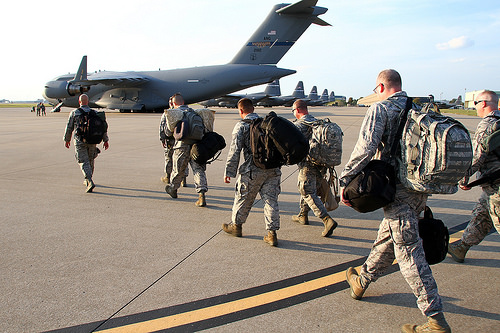
Airmen with the 123rd Contingency Response Group prepare for their deployment to West Africa from the Kentucky Air National Guard Base in Louisville, Ky., Oct. 2, 2014. The Guardsmen will work to set up a logistics hub in support of Operation United Assistance. (U.S. Army National Guard photo by Staff Sgt. Scott Raymond)
Dale emphasized that the new milestone represents more of a temporary pause in deployments than an indication that they will stop completely.
“We anticipate further deployments to the U.S. Central Command AOR in the future, especially from the members of our Special Tactics Squadron, who maintain a constant state of readiness for short-notice contingencies of all kinds,” he said.
Following the terrorist attacks of Sept. 11, 2001, 637 members of the Kentucky Air Guard were placed on active duty for varying lengths of time in support of real-world missions around the world. These deployments included missions to support homeland defense (Operation Noble Eagle), the war on terrorism abroad (Operation Enduring Freedom) and the war in Iraq (Operation Iraqi Freedom). Of these 637 Kentucky Airmen, 454 deployed overseas for U.S. military operations in dozens of countries, including Iraq, Afghanistan, Oman, Pakistan, Qatar, Saudi Arabia, the United Arab Emirates, Algeria, Bosnia, Croatia, Romania, Senegal, Serbia and the Ukraine. Most of these federalized troops were taken off active duty in early 2004, but the wing continued to deploy troops around the world as needed to meet operational requirements.
In 2006, for example, 560 Kentucky Air Guard troops deployed to such location as Afghanistan, Iraq, Curaçao, Qatar, Kyrgyzstan and Antarctica. In 2007, more than 210 wing members deployed to Afghanistan to fly airlift missions that delivered thousands of tons of equipment and supplies to forward-deployed troops who were engaged with the enemy. And nearly 300 Kentucky Air Guardsmen returned to Afghanistan in 2009 for the same mission, transporting 20,000 troops and 6,000 tons of cargo across the theater of operations during a two-month deployment.
More recently, about 160 Kentucky Airmen broke airlift records when they airdropped or transported a record amount of cargo and personnel in support of Operation Enduring Freedom while deployed to Bagram Airfield, Afghanistan, from October 2010 to January 2011. The unit set records again in 2012 when 100 Airmen deployed the Persian Gulf, flying 1,400 missions in four months to airlift 5,300 tons of cargo and 15,000 passengers. It returned to the region last year, flying 625 combat airlift sorties in support of Operations Inherent Resolve and Freedom’s Sentinel.
By Brendan P. Bartholomew, San Francisco Examiner
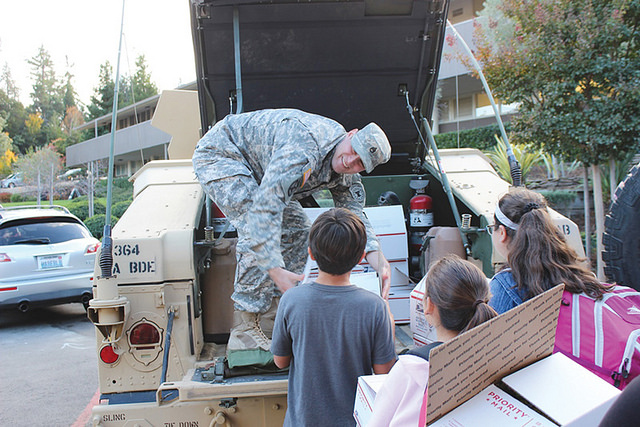
Crocker Middle School students packed up donated items into an Army Humvee in Hillsborough, Calif., to send to troops in Afghanistan. (Courtesy LeAnn Thornton)
HILLSBOROUGH, Calif. — U.S. Army personnel recently visited Crocker Middle School in Hillsborough, where students filled their Humvee with care packages bound for troops in Afghanistan.
The event capped what has become an annual tradition at the school, where kids reach out to their community, soliciting donations of food, personal care products, holiday decorations, and other items intended to provide soldiers overseas with the comforts of home.
Hillsborough adopted the Army’s 1st Brigade combat team, 101st Airborne Division (air assault) in 2007. Crocker Middle School began collaborating with the city and the Hillsborough Police Department on the Adopt-A-Unit campaign in 2012, when coordinator LeAnn Thornton contacted teacher Audrey Fairchild, asking if her students would sign a holiday banner for deployed troops. The students responded by asking what other forms of support they could provide.
This year, the unit from 101st Airborne is back home, so the school adopted the Kentucky Army National Guard’s 1163rd Area Support Medical Company, a team of reservists whose ranks include a police officer and a commercial airline pilot, along with doctors, nurses, and EMT firefighters.
The 1163rd ASMC is attached to an Army combat hospital in Afghanistan, where they provide emergency medical services, both to base personnel and individuals airlifted in from other locations.
The soldiers say the care packages have a positive impact on troop morale by uplifting the spirits of those serving abroad.
Army recruiter Staff Sgt. John Kaleski and reservist Sgt. Rick Nelson accompanied the Humvee at Crocker. Kaleski enjoyed talking with the students about everything from “Star Wars” to their favorite football and soccer teams. He was deployed in Afghanistan in 2003 and Iraq in
2004.
“We had all the local kids talking like Snoop Dogg,” Kaleski laughed.
According to Thornton, the care packages have played a role in establishing good will with Afghan children. Last year, Crocker students collected about 100 pounds of
Halloween candy, which they included in the care packages. This year, the students collected three times that amount.
When troops shared the candy with Afghani kids, the children responded by showing them where hidden explosives were located. “The Halloween candy literally saved lives,” Thornton said.
Kaleski noted the Army has base stores where deployed troops can acquire life’s necessities, but the inventory rarely changes. Part of a care packages’ magic is it might contain specific brands that remind a soldier of home. “When my sister was sending me a care package, all I wanted was Chef Boyardee Beefaroni,” Kaleski said.
Sentiments like Kaleski’s are part of Crocker student Jocelyn Murphy’s motivation for participating in the care package campaign.
“As they’re putting their lives on the line, they deserve something they actually recognize from home,” Murphy said.
Fellow student Christopher Mahoney also talked about the life-and-death stakes deployed soldiers might face.
“I think it’s good to support troops because they’re risking their lives,” Mahoney said, “They enlisted, and that’s very selfless.”
See the original story at the San Francisco Examiner here.
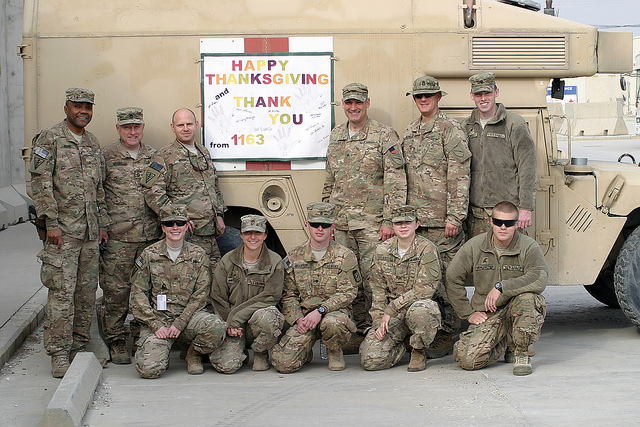
Happy Thanksgiving from Kentucky’s 1163rd Area Support Medical Company currently deployed to Afghanistan. (Photo courtesy of the 1163rd ASMC)
From our family to yours, the Kentucky National Guard wishes everyone a joyous and safe Thanksgiving. We count our blessings everyday and are incredibly thankful for the men and women of our organization and their families.
This year, we are especially thankful for our Soldiers and Airmen that are unable to be home for the holidays, like the 1163rd Area Support Medical Company in Afghanistan, the 441st Survey and Design Team on their way to the Middle East, and Bravo Company, 351st Aviation Support Battalion currently preparing to return home. Keep up the great work Soldiers and Godspeed!
Around your dinner tables this holiday, we ask that you keep these brave Guardsmen in your thoughts and prayers.
By Master Sgt. Phil Speck, 123rd Airlift Wing Public Affairs Office
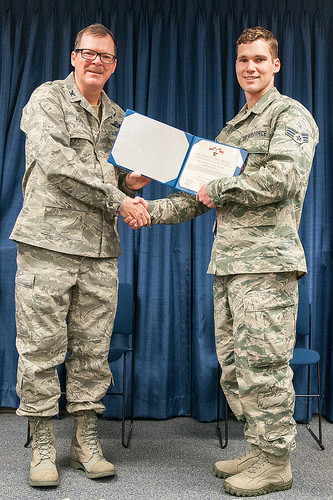 KENTUCKY AIR NATIONAL GUARD BASE, LOUISVILLE, Ky. — A combat controller from the Kentucky Air National Guard’s 123rd Special Tactics Squadron was awarded the Bronze Star Medal in a ceremony here March 14 for meritorious service while deployed to Afghanistan.
Senior Airman Robert Willging served with a combined joint special operations task force in Afghanistan from June 1 to Nov. 1, 2014 in support of Operation Enduring Freedom. During that deployment, Willging assisted in the planning and execution of more than 100 combat patrols and served with lead maneuver elements while coordinating aerial weapons teams, close air support and medical evacuation operations.
Willging personally controlled more than 120 aircraft during multiple day operations, to include combined operations with Afghan National Army Commandos in which he controlled, de-conflicted and engaged with 24 aircraft to ensure the safety of all ground elements, according to the award citation.
“Airman Willging’s utilization and control of aerial weapons teams, close air support, and medical evacuation platforms was second to none, and aided in the timely extraction of multiple wounded Afghan National Security Forces and (U.S. Special Operations Forces),” the citation said.
The Bronze Star Medal was authorized by executive order on Feb. 4, 1944, and is awarded to service members who have distinguished themselves by heroic or meritorious achievement or service in connection with military operations against an armed enemy.
Story by Sgt. Kayla Benson, 96th Sustainment Brigade
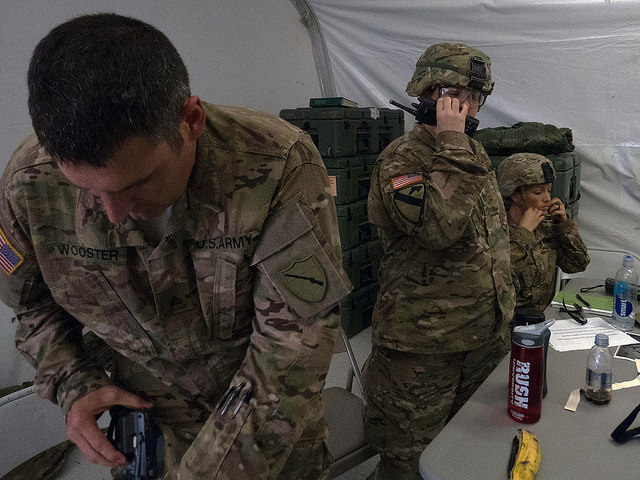
Staff Sgt. Becky Schneider, a combat medic with the 1163rd Area Support Medical Company, receives a simulated emergency call during a premobilization training exercise in North Fort Hood, Texas, May 30, 2015. The unit is scheduled to deploy to Afghanistan to work as an emergency response team. (U.S. Army photo by Sgt. Kayla F. Benson)
FORT HOOD, Texas — A female Soldier sits on a bench along the inside of a green Army ambulance. Even though it is mid-day, it is almost pitch black in the confined space of the ambulance.
Light from a small window between the front seat and the trunk silhouettes her enough to make out short blonde hair framing her round face. She is wearing an Army combat helmet, eye protection and has a large, red emergency response bag at her side.
Staff Sgt. Becky Schneider, with the Kentucky National Guard’s 1163rd Area Support Medical Company, has been a combat medic for over seven years.
She calls up to the driver, a fellow medic, through the small window. They go back and forth, discussing possible injuries and best practices before the vehicle comes to an abrupt stop. The back door opens and she is on the ground and assessing the scene in only seconds.
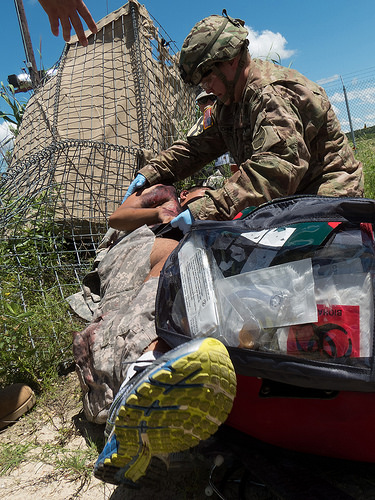
Staff Sgt. Becky Schneider, a combat medic with the 1163rd ASMC, evaluates and treats a simulated casualty during a pre-mobilization training exercise at North Fort Hood May 30. The unit is scheduled to deploy to Afghanistan in support of contingency operations and will work as an emergency response team. (U.S. Army photo by Sgt. Kayla F. Benson)
Schneider and her team member, Sgt. Duncan Wooster, also a combat medic with the 1163rd ASMC, were participating in a pre-mobilization training exercise here, May 30, in preparation for an upcoming deployment to Afghanistan.
The team received its order: load into the ambulances and treat role players as if they were real-world casualties.
“It’s hectic and it’s crazy and you kind of come out at the end of it like, ‘I just forgot to breath for 40 minutes,’” Schneider said.
After assessing the scene, Schneider quickly approaches a role player on the ground with simulated burns and possible shrapnel wounds, surrounded by tall grass and a coiled metal fence. Wooster rushes to another role player with similar injuries underneath an observation tower. They call back up to address additional casualties.
“It’s problem solving,” She explained. “At the end of the day, you’re helping people and that’s what I really like to do. I like the puzzle of, ‘How do I put this back together again?’”
The scene is chaotic and loud. Several role players surround the medics, attempting to use their medical gear and bombarding them with questions.
Backup arrives and the casualties are moved onto stretchers and into the ambulances. Schneider jumps back into the ambulance next to her patients. As they speed back to the emergency response treatment area, she continues to assess and care for the two Soldiers on either side of her, pulling various medical gear from the many pockets of her bag and verbalizing each action.
Moments later, the ambulance stops: end exercise. She removes her helmet to reveal hair drenched in sweat. Once deployed, this scenario would only make up one hour of her 24-hour shift.
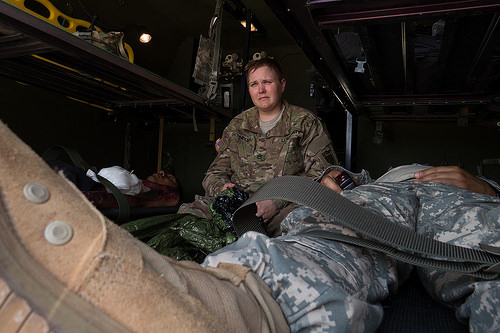
Staff Sgt. Becky Schneider, a combat medic with the 1163rd Area Support Medical Company, receives feedback from an Observer Coach/Trainer after a premobilization training exercise in North Fort Hood, Texas, May 30, 2015. The unit is scheduled to deploy to Afghanistan to work as an emergency response team. (U.S. Army photo by Sgt. Kayla F. Benson)
“The training itself had very realistic patients, very realistic situations,” Schneider said. “It gives me a very real understanding of, ‘OK, in a 24-hour shift what am I going to have to do? How can I better take care of my people?’”
Her face looks tired and she allows her shoulders to sink a little as she listens to feedback from the observer coach/trainer regarding her team’s actions in the day’s exercise. Overall, her team did well and the event was a success.
“You’re constantly evolving, constantly learning, trying to build on every single run you make,” Schneider said. “You’re always trying to get just a little bit better.”
Story by Staff Sgt. Scott Raymond, Kentucky National Guard Public Affairs
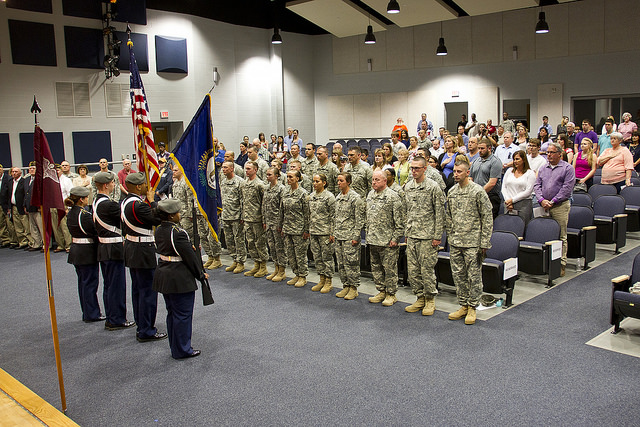
Soldiers of the 1163rd Area Support Medical Company stand at attention for the National Anthem during a departure ceremony in Shelbyville, Ky., May 2, 2015. The unit is deploying to Afghanistan in support of Operation Freedom’s Sentinel. (U.S. Army National Guard photo by Staff Sgt. Scott Raymond)
SHELBYVILLE, Ky. — On a day of tradition in the commonwealth with the annual running of the Kentucky Derby, families and Citizen-Soldiers were reminded of another tradition, Guardsmen answering the call of their nation. Members of the 1163rd Area Support Medical Company were honored during a departure ceremony in Shelbyville, May 2. The unit will deploy to Afghanistan later this month.
The mission of the 1163rd will be to conduct ground ambulance support and evacuation of patients from supported areas in the theater of operation, provide preventive dentistry and emergency dental care. The Soldiers will also provide routine administrative and operational support to a hospital and two clinics that are within the area of operation.
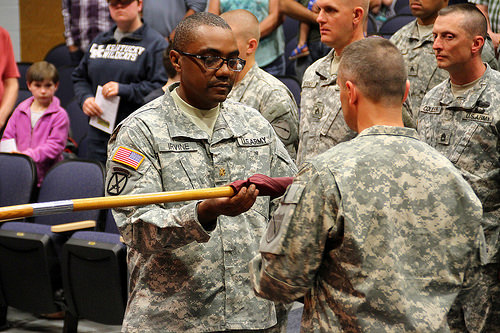
Maj. Ryan Irvine and 1st Sgt. Johnsy Beard case the colors of the 1163rd Area Support Medical Company during a departure ceremony for the unit in Shelbyville, Ky., May 2, 2015. (U.S. Army National Guard photo by Staff Sgt. Scott Raymond)
“We are trained, we are ready, we are confident, and this unit has more cohesion that I’ve seen in a long time,” said Maj. Ryan Irvine, the unit’s commander. “The 1163rd is standing tall and proud as we take on this mission, and I have to thank our families, leadership of the Kentucky National Guard and Shelbyville for all the support.”
Maj. Gen. Edward W. Tonini, adjutant general for Kentucky was on hand to bid the Soldiers farewell. He spoke of the unit’s long history of providing medical support for operations both home and abroad, including tours in both Afghanistan and Iraq, and activations for Hurricane Katrina and the ice storm of 2009.
“This is the unit’s third deployment in support of the Global War on Terror, they’ve got a lot of experience and know what they are doing,” he said. “These men and women will do us proud.”
Click here for more photos.
With more than half of its members having deployed before, there’s experience the unit will rely on while overseas. This will be beneficial for the Soldiers who haven’t deployed such as Sgt. Duncan Wooster. Wooster said the close-knit family-like atmosphere of the unit will make it easier to deal with the time away from home.
“I am nervous of course, headed overseas on my first deployment, but I am ready to do my job, and am very excited to share that experience with the great Soldiers of the 1163rd,” he said.
That family environment also provides a sense of ease for the families left behind. Maj. Irvine’s wife, Carolyn has gone through this before when her husband deployed several years ago. This time he is the commander of the unit and she’s the Family Readiness Group leader.
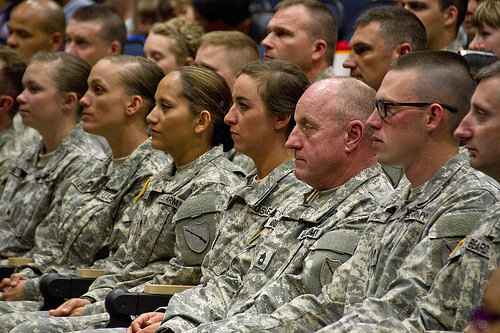
Soldiers of the 1163rd Area Support Medical Company are honored during a departure ceremony for the unit in Shelbyville, Ky., May 2, 2015. The unit will train in Fort Hood, Texas prior to deploying to Afghanistan. (U.S. Army National Guard photo by Staff Sgt. Scott Raymond)
“I feel this mission is very important for them to leave for, and this unit is very family oriented, so I enjoy that, and it makes it easier on us back home,” she said. “I’m just proud of him and the unit.”
Shelbyville’s mayor, Thomas Hardesty also expressed his admiration and respect for the unit, calling them key members of the local community.
“This nation supports you, the commonwealth supports you and the city of Shelbyville supports you in every way we can. We will keep you in our thoughts and prayers for as long as you’re gone,” said Hardesty.
The 1163rd will travel to Fort Hood, Texas for several weeks of training before deploying in support of Operation Freedom’s Sentinel.
Story by Capt. Carla Getchell, 133rd Mobile Public Affairs Detachment
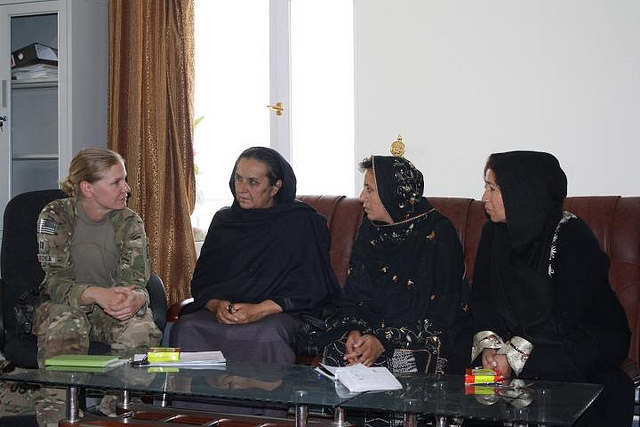
Capt. Carla Getchell discusses agriculture projects during a Key Leader Engagement with the Kapisa’s Director of Women’s Affairs, Saifora Kohistani; the Education Director; and the Women’s Affairs Coordinator with the Director of Agriculture, Irrigation, and Livestock, Sohaila Kohistani.
With March being Women’s History month kentuckyguard.com is publishing a series of stories celebrating Kentucky women and the roles they played in our military history. Following is one such story ….
FRANKFORT, Ky. — While preparing for my deployment to Afghanistan with the Agribusiness Development Team III in 2011, I was given a long reading list of books that would help me develop cultural understanding. One book that was considered mandatory reading at the time was “Three Cups of Tea” by Greg Mortenson.
The book’s namesake is derived from the proverb that the first time you share tea with someone you are a stranger, by the second cup of tea you are a friend, and the third cup shared makes you family.
After months of training, reading, preparing, I was ready to go drink some tea. What I learned after my first mission in Afghanistan was that sometimes all it takes is one hot pepper.
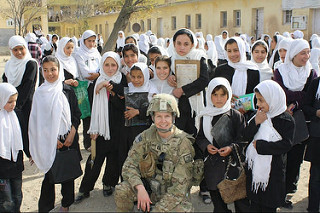
Kentucky Army National Guard Capt. Carla Getchell with Agribusiness Development Team III poses with students after delivering school supplies to a school in Kapisa, Afghanistan. (Photo taken by Army Sgt. Jane Rothstein)
My team and I were fortunate to follow Maj. Bobbie Mayes’ extremely successful deployment with the ADT II team. She built on what the team before her had created, and left my counterpart, Capt. Paula Thrush, and me with thriving relationships with female leaders in the Parwan, Panjshir, and Kapisa provinces of Afghanistan.
During our first mission, Mayes took us to meet some of the provincial leaders she was mentoring for a luncheon where she would say goodbye to the women she had worked with and to introduce us, her replacements, who would begin our year-long friendship with them. There were gifts and tears, and whole fried fish garnished with Afghan peppers. The woman who sat next to me reminded me of my aunt. She was jovial and easy to get along with, even if we could only communicate in hand gestures, smiles, and head nods.
The room was large enough to accommodate 15 or so Afghan and American women along with a couple male interpreters. Izzy and Abbie, our aging male interpreters were working hard to make their rounds and facilitate conversation between the chatting women. Because of this, Sohaila Kohistani and I played Afghan charades.
While we smiled and nodded at one another, I had carefully tucked the remainder of the fried fish head under the corner of tinfoil that lined my Styrofoam lunch container in hopes that none of my Soldiers would dare me to eat it. Instead, Sohaila began to motion toward a small, red hot pepper on my plate. She then smiled and gestured with the universal sign for eating. I immediately knew where this was headed. Here I was in the middle of Afghanistan, in the middle of a war zone, and this woman was egging me on to eat a hot pepper.
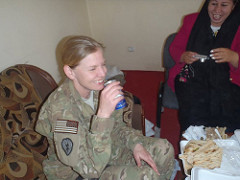
Kentucky Army National Guard Capt. Carla Getchell with Agribusiness Development Team III tries to wash down the heat after eating a hot pepper during lunch with Sohaila Kohistani at the Director of Women’s Affairs office in Kapisa, Afghanistan. (Photo taken by Army Capt. Paula Thrush)
Fortunately, I like spicy food, and while I knew it might be painful I would be able to endure it. Proving I could eat the hot pepper would set the stage for my relationship with this woman for the next year. As I raised the red pepper to my mouth I watched as every Afghan woman in the room reached down into their Michael Kors look alike bags and pulled out a digital camera. They were all poised to snap photos of the American woman eating the Afghan pepper.
It was definitely spicy and a bit painful. I made sure to make a show of grabbing a bite of naan, Afghan flatbread, and a gulp of canned soda to cool down the inferno that was making its way down my throat. As I did this the women in the room laughed and chatted happily over one another.
For the next year, Sohaila and I worked closely with one another to improve the lives of the women in her province of Kapisa. She told the story of the pepper multiple times to the men and women we encountered. I did everything I could for her, and fought for even more. When it was time to leave I gave her a bracelet with small gold stars because I had learned that Sohaila meant morning star in English.
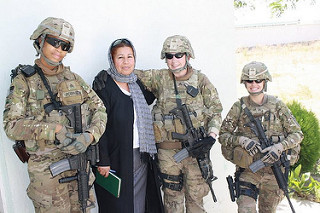
Kentucky Army National Guard Sgts. Kristyn Robinson, Heather Carrier, and Kathleen Gallagher with Agribusiness Development Team III pose for a picture with Sohaila Kohistani before returning from a Key Leader Engagement in Kapisa, Afghanistan. (Photo taken by Army Capt. Carla Getchell)
I did not know the depths of bonds that would develop with the Afghan women I worked with and the women I worked with in Afghanistan. I was fortunate to have an amazing team. Our medic, Sgt. Kathleen Gallagher, was always able to calm down the villagers by helping their children with their medical needs. Sgts Heather Carrier and Kristyn Robinson were my main security detail the entire year. They walked in and out of every room ahead of me. They kept me and everyone around me safe. Carrier even headed up her own projects. Staff Sgt. Jane Rothstein and Sgt. Claudia Rector got us all to Afghanistan, took care of us for the entire year, and got us all home with their amazing skills in personnel and logistics. They also were always willing to come out and work with me wherever we went.
I learned so many lessons from all the women I worked with that year. The lessons of compassion, understanding, and tolerance have stuck with me. Sohaila and I drank a lot of tea together that year, but it only took us one hot pepper to become sisters.
Story by Staff Sgt. Vicky Spesard, 123rd Airlift Wing Public Affairs
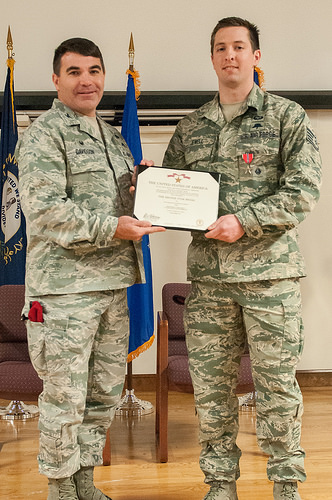
Col. Matthew Davidson (left), commander of the 24th Special Operations Wing, presents Staff Sgt. Nicholas P. Jewell, a combat controller in the Kentucky Air National Guard’s 123rd Special Tactics Squadron, with the Bronze Star Medal during a ceremony Feb. 7, 2015, at the Kentucky Air National Guard Base in Louisville, Ky. Jewell earned the award for meritorious achievement while supporting Operation Enduring Freedom in Afghanistan in 2014. (U.S. Air National Guard photo by Staff Sgt. Vicky Spesard)
KENTUCKY AIR NATIONAL GUARD BASE, LOUISVILLE, Ky. — A combat controller from the Kentucky Air National Guard’s 123rd Special Tactics Squadron was awarded the Bronze Star Medal here Feb. 7 for meritorious service while deployed to Afghanistan, where he engaged enemy forces and deterred their advances.
Staff Sgt. Nicholas P. Jewell served as a Joint Terminal Attack Controller assigned to an Army Special Forces team from Aug. 12, 2014, to Nov. 10, 2014, in support of Operation Enduring Freedom. Jewell was tasked to provide tactical advice and assistance to Afghan Army Commando teams performing combat operations in northeastern Afghanistan when he and his team came under small-arms fire.
As rounds impacted within feet of his position, Jewell ran to cover behind a ridgeline and immediately returned fire while simultaneously relaying enemy locations to aircraft overhead, according to the award citation. He then controlled an immediate air-to-ground engagement with high explosives from an AH-64 attack helicopter, resulting in multiple enemies killed in action.
“So obviously he found himself in a bad spot,” said Col. Matthew Davidson, commander of the 24th Special Operations Wing, who officiated the award ceremony and presented the medal to Jewell. “He went out and saved his teammates and saved the mission. It’s folks like him that we want to emulate.”
Jewell also was recognized for his actions during a clearing operation when his element came under direct small-arms fire. He immediately coordinated efforts between ground signals intelligence forces and overhead aircraft to locate and engage the enemy fighting location with devastating effects.
“What we have asked Nick to do, and his teammates to do — in fact what we ask a lot of Americans out there to do for us sometimes — they have extraordinary responses to that,” Davidson said. “Like (Jewell) did on numerous occasions.”
The Bronze Star Medal was authorized by executive order on Feb. 4, 1944, and is awarded to service members who have distinguished themselves by heroic or meritorious achievement or service in connection with military operations against an armed enemy.
The following is a compilation of significant dates in our commonwealth’s military history. For more on the legacy of our Citizen-Soldiers and Airmen, visit the Kentucky National Guard eMuseum.
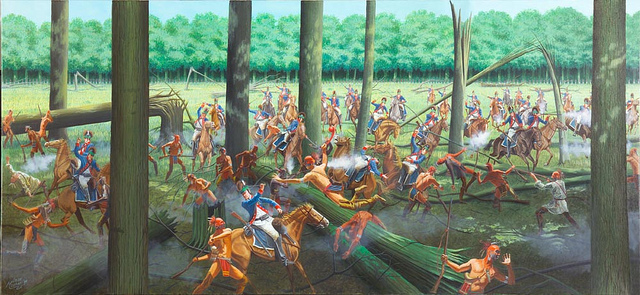
Battle of Fallen Timbers - August 20, 1794
August 1, 1864 – Daniel Weisiger Lindsey is appointed Adjutant General of Kentucky by Gov. Thomas E. Bramlette.
August 2, 1990 – Operation Desert Shield began.
August 3, 1795 – Treaty of Peace between the United States and the Allied Indian Tribes of the Northwest, signed at Greenville, in Ohio (Treaty of Greenville).
August 4, 1790 – U.S. Coast Guard established
August 5, 1864 - U.S. Navy Landsman Daniel Noble, a native of Bath County, Ky., a crewmen of the U.S.S. Metacomet aided in the rescue of the U.S. Monitor Tecumseh when that vessel was struck by a torpedo in passing enemy forts in Mobile Bay, Ala. Noble braved the enemy fire which was said by the admiral to be “one of the most galling” he had ever seen and aided in rescuing from death ten of the crew of the Tecumseh, thereby eliciting the admiration of both friend and foe. Noble receives the Medal of Honor for his actions. (Civil War)
August 5, 1891 - Cpl. Franklin McDonald from Bowling Green, Ky., a Soldier with Company G, 11th U.S. Infantry defended a mail coach from an attack by Kiowa Indians near Fort Griffin, Texas. He receives the Medal of Honor for his gallantry in action. (Indian Wars)
August 4, 1950 – Defense of Pusan/Naktong Perimeter began (Korean War)
August 5, 1968 – Death of Capt. Robert W. “Buz” Sawyer killed in an aircraft crash near Kansas City, Missouri in a RF-101 “Voodoo.” He was a member of the 165th Tactical Recon Sq on federal duty at Richards-Gabeur AFB, Missouri during the Pueblo call up.
August 7, 2002 – Death of Tech. Sgt. Christopher A. Matero and TSgt. Martin A. Tracy, Combat Controllers for the 123rd Special Tactics Flight of the Kentucky Air National Guard both perished when a U.S. Air Force MC-130H crashed during a training flight in Puerto Rico.
August 7, 1792 – Purple Heart Medal established
August 7, 1871 – U.S. and State Guard troops were called at Frankfort, Paris and Lexington, following rioting and shootings at polling locations.
August 7, 1942 – Battle of Guadalcanal (World War II)
August 9, 2001 – Dean Allen Youngman is appointed Adjutant General of Kentucky by Gov. Paul E. Patton.
August 12, 1782 – Battle of the Upper Blue Licks between Captain John Holder and a party of Kentuckians and a band of marauding Wyandotte Indians (Early Indian Wars)
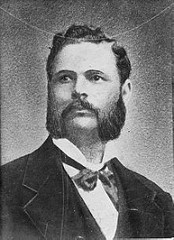
Thomas Shaw
August 12, 1881 - Thomas Shaw, a native of Covington, Ky., while serving with K Company, 9th U.S. Cavalry forced the enemy back after stubbornly holding his ground in an extremely exposed position and prevented the Native Americans superior numbers from surrounding his command. Shaw receives the Medal of Honor for his actions. (Indian Wars)
August 12, 1952 – Battle of Bunker Hill (Hill 122) began (Korean War)
August 14, 1945 – Japan Surrendered, ending World War II.
August 15, 1782 – Siege of Bryan’s Station by Capt. William Caldwell and a combined force of Indians and Canadians. Siege lasted until 17 August 1782 (Early Indian Wars)
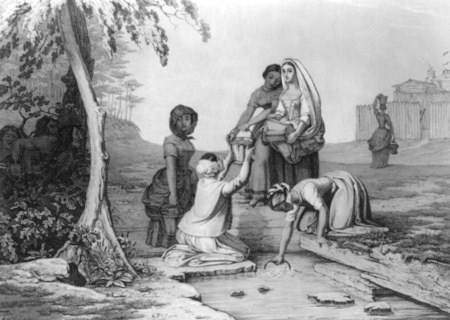
Black and white Nagel & Weingaertner lithograph of the women of Bryant’s Station, Ky supplying the garrison with water and defeating the stratagem of the Indians led on by Simon Girty the renegade 1782. You can see indians spying behind a tree.
August 15, 1851 – Col. William L. Crittenden, of Louisville, Capt. Victor Kerr, and 48 others, nearly all Kentuckians under his command-deceived by Gen. Lopez into the belief that the “patriots” of Cuba were engaged in a revolution for freedom-engage in an armed expedition which invades the island; two days after landing, they are attacked by 700 Spanish troops, and after a gallant fight captured, and, next day, shot; of 80 others of his command, captured with him 77 were afterward shot. The U.S. Government promptly dispatch the steam frigate Saranac, to inquire into the circumstances.
August 15, 1944 – Allied Invasion of Southern France (World War II)
August 18, 1951 – Battle of Bloody Ridge began (Korean War)
August 19, 1782 – Battle of Blue Licks, Kentucky. On a hill next to the Licking River in what is now Robertson County, a force of about 50 British rangers and 300 American Indians ambushed and routed 182 Kentucky militiamen killing some 64. It was the worst defeat for the Kentuckians during the war (Considered the last battle of the American Revolution)

Battle of Blue Licks - August 19, 1782
August 19, 1881 - Sgt. Brent Woods from Pulaski County, Ky., a member of Company B, 9th U.S. Cavalry saved the lives of members of his detachment during fighting against Native Americans in New Mexico. He receives the Medal of Honor for his actions. (Indian Wars)
August 20, 1794– Battle of Fallen Timbers. Gen. “Mad” Anthony Wayne defeats nearly 2000 Indians and 70 Canadians. Gen. Charles Scott, with 1600 Kentucky volunteers were part of this command (Early Indian Wars)
August 22, 1869 – Three companies of volunteer soldiers or state militia, 95 men in all, leave Louisville for Lebanon, to take care of the “Regulators,” whose depredations in that region are again making life unbearable.
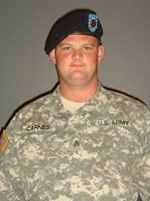
Staff Sgt. Nicholas Carnes
August 26, 2007 – Staff Sgt. Nicholas Carnes of Ludlow (Kenton County) was killed by small arms fire during a firefight in the village of Lewanne Bazaar, Paktika Province, Afghanistan. Carnes, 25, was assigned to Battery A, 2nd Battalion, 138th Field Artillery, based in Carrollton, Ky. Carnes deployed with his unit in March of 2007 in support of Operation Enduring Freedom. Carnes was awarded the Bronze Star Medal, the Purple Heart, the Afghanistan Campaign Medal and the Kentucky Distinguished Service Medal for his service in Afghanistan. A member of the Kentucky Army National Guard since 1999, Carnes is the fourteenth Kentucky Guard Soldier to lose his life as the result of combat action in the global war on terror. He was the second Soldier to be killed in Afghanistan (Global War on Terrorism)
August 29, 1952 – Korean War’s Largest Air Raid (Korean War)
August 31, 1847 – Requisition upon Kentucky for two more regiments of infantry for service in the Mexican War. Before September 20th they are reported and organized, 3rd Kentucky Regiment under command of Col. Manlius V. Thomson of Georgetown and 4th Kentucky Regiment under command of Col. John S. Williams of Winchester (Mexican-American War)
Story by Staff Sgt. Scott Raymond, Kentucky National Guard Public Affairs
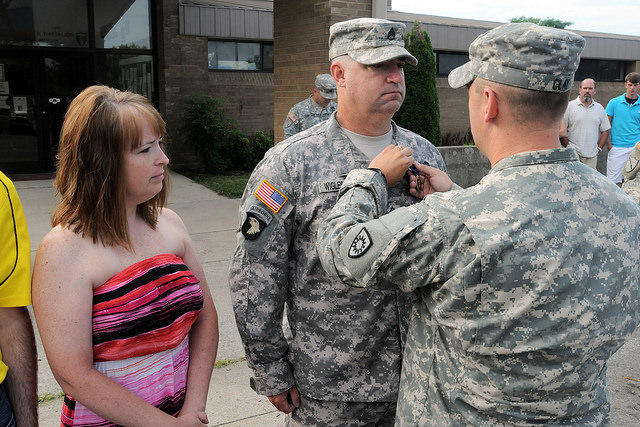
Lt. Col. Doug Clay pins the Purple Heart medal to the uniform of Staff Sgt. Andrew Wiglesworth during a ceremony in Cynthiana, Ky., July 12, 2014. Wiglesworth was injured when his vehicle struck an improvised explosive device in Afghanistan in 2009. (U.S. Army National Guard photo by Staff Sgt. Scott Raymond)
CYNTHIANA, Ky. — In January, 2009, Soldiers with Charlie Company, 201st Engineer Battalion were conducting route clearance patrols in eastern Afghanistan. Along Main Supply Route Alaska, truck Charlie 11 struck an improvised explosive device.
During a ceremony in Cynthiana, July 12, Staff Sgt. Andrew Wiglesworth received the Purple Heart for the injuries he sustained during the attack.
“This is a great feeling, I’m very honored first of all. I’m humbled and extremely proud to give my all in service to my country,” he said.
Click here to see more photos from the ceremony.
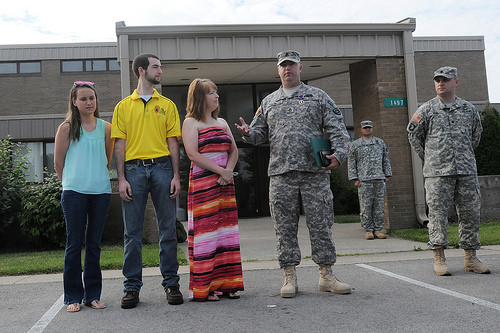
Staff Sgt. Andrew Wiglesworth, flanked by his wife and children, speaks to members of the 149th Vertical Construction Company after receiving the Purple Heart during a ceremony in Cynthiana, Ky., July 12, 2014. Wiglesworth thanked his family for their support through his two deployments including the one in 2009 where he was injured in an improvised explosive device attack in Afghanistan. (U.S. Army National Guard photo by Staff Sgt. Scott Raymond)
Wiglesworth was one of five Soldiers riding in the truck when it was hit. Both he and Spc. Todd Phillips were medically evacuated to Forward Operating Base Salerno and treated for their injuries.
Staff Sgt. Randy Morris was the truck’s commander on the mission and still serves with Wigelesworth, now with the 149th Vertical Construction Company. Morris said as the lead truck during missions, their vehicle was the first to encounter anything in the roads.
The deployment was a rough one for the engineers Morris recalled, as they were in Afghanistan during a surge of violence that saw a large increase in enemy activity and IED attacks. He said there a few Soldiers left in the unit from that deployment and that the award is good for the younger Soldiers to see, especially such a good leader like Wiglesworth.
“This is a great thing today for our unit, I’m really proud of him,” said Morris. “He’s a really good guy. No one deserves to get blown up, but I mean he definitely deserves this award.”
“It’s not that we think it’s funny, but we talk about it now and can bring a smile to our face, because we know we did the right thing and we did our job the right way so we all could come home.”
Wiglesworth agreed that the incident is not something they should think about all the time, but is glad to still have the same friends and Soldiers around him today.
“We reflect back on that day pretty often and we are extremely fortunate,” said Wiglesworth. “Our vehicle was blown in two, and we had injuries, but minor injuries. I guess the grace of God was with us that day.”
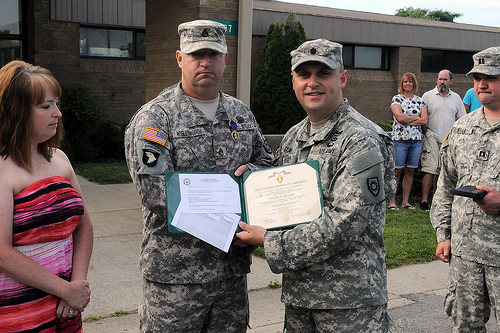
Lt. Col. Doug Clay, commander of the 201st Engineer Battalion presents Staff Sgt. Andrew Wiglesworth with the Purple Heart during a ceremony in Cynthiana, Ky., July 12, 2014. Clay called Wiglesworth an overall great person, Soldier and leader who embodies the Army Value of selfless service. (U.S. Army National Guard photo by Staff Sgt. Scott Raymond)
Lt. Col. Doug Clay, battalion commander of the 201st was on hand to present the award and called Wiglesworth a great overall person, Soldier and leader.
“It’s not everyday you get to award someone a Purple Heart,” he said. “This is such a proud organization here, a great company. One that’s just getting back from another deployment to Afghanistan, so that tells you something about him and his family. They embody the selfless service we always talk about.”
Wiglesworth has served in the Kentucky National Guard for seven years, all with the engineer battalion. He was previously an intelligence analyst for the active-duty Army from 1988-1994.
“I joined the National Guard in 2007 when I heard my hometown unit had been identified for deployment,” he said. “Even after a 13-year break in service, I felt as though I still had something to offer the military.”
Wiglesworth was awarded the Bronze Star and three Army Achievement Medals from the 149th’s recent deployment. He has lived in Cynthiana all his life outside his military service and is a lieutenant in the Cynthiana Fire Department.
Soldiers of the 201st deployed to Afghanistan in support of Operation Enduring Freedom in 2008. Before they returned home in 2009, they were credited with disposing of more than 200,000 land mines and IEDs. For their hard work and sacrifice, the 201st was awarded the Valorous Unit Award and the first Governor’s Outstanding Unit Citation.