By, Maj. Jimmie Warinner, 1st Battalion, 623rd Field Artillery

623 live fire

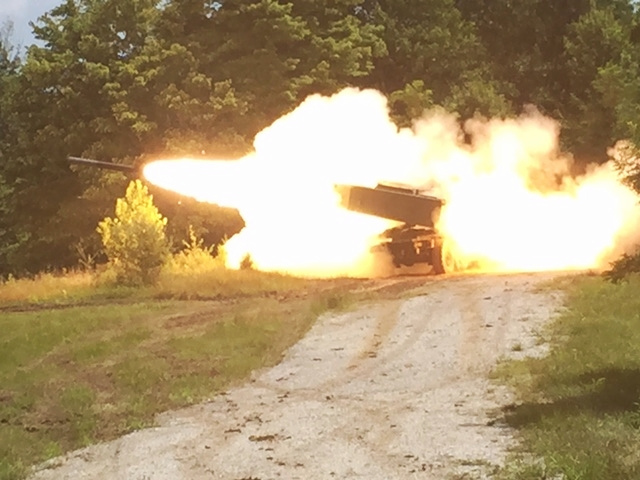
A M142 High Mobility Rocket Launcher (HIMARS) from the 1st Battalion, 623rd Field Artillery fires during training at Camp Atterbury, Ind., July 21, 2015. The launch was the first live fire exercise conducted at Camp Atterbury. (U.S. Army National Guard photo by Maj. Jimmie Warriner)

CAMP ATTERBURY, Ind. — Soldiers of the 1st Battalion 623rd Field Artillery recently completed an innovative and successful annual training at Camp Atterbury, Indiana. The key training event for AT 2015 was a seven day field training exercise that concluded July 24 with all crews in the battalion conducting multiple live fires with the M142 High Mobility Artillery Rocket System (HIMARS).

This was the first Multiple Launch Rocket System (MLRS) or HIMARS live fire ever conducted at Camp Atterbury, and was made possible through close coordination with the 1/623rd and Camp Atterbury’s Range Control personnel. Not only did this coordination allow Morgan’s Men to successfully complete crew certifications, but it also demonstrated an increased training capability for Camp Atterbury confirming that they can support future live fire training for both MLRS and HIMARS units.

This was only one of three “firsts” that Morgan’s Men accomplished during this annual training.

623 Green Crew

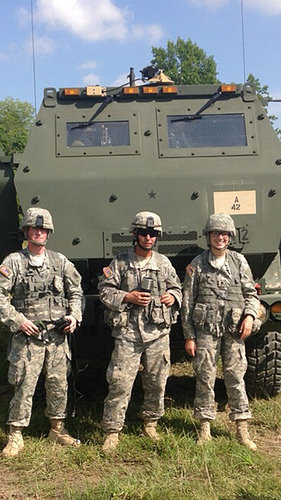
Spc. Michael Fosso, Staff Sgt. Norman Schwartz, and Spc. Logan Green with the 1st Battalion, 623rd Field Artillery stand in front of their HIMARS vehicle, “Rebel 42” during their live fire exercise during annual training July 21, 2015 at Camp Atterbury, Ind. Green is the first female crew member with the 1/623rd. (U.S. Army National Guard photo by Maj. Jimmie Warriner)

Among the crew members sending rockets roaring downrange was Spc. Logan Green, the first female MLRS Crewman to ever fire a rocket for the 1/623rd. With more combat arms military occupational specialties opening to women, females now have the option of becoming MLRS Crewmen (13M) or Fire Direction Control Operators (13P) within HIMARS units.

A HIMARS crew consists of a Gunner, Driver, and Launcher Chief. Green is the driver for Alpha Battery’s HIMARS nicknamed “Rebel 42”. She grew up in Florida and joined the Kentucky National Guard because she always wanted to be in the military and it allowed her to fund her college education.

“I am proud and excited to be the first female to live fire the HIMARS in the 1-623d and I want to set a good example for other Soldiers, males and females, who serve with me”. Green, a 2015 recipient of the Minuteman Scholarship, plans on continuing her military career by pursuing a commission as a Field Artillery officer through the University of Kentucky’s ROTC program.

Click here to read about Green’s enlistment into the Kentucky Guard.

The final “first” completed during Annual Training 2015 was support of a MLRS Crewmen (13M30) Advanced Leadership Course (ALC) conducted by 1st Battalion 238th Regiment. Nine Soldiers, including seven from the 1/623rd completed the first week of the 13M30 course at the Wendell H. Ford Regional Training Center in Greenville, Kentucky before traveling to Camp Atterbury to complete week two in the field. For the culminating event of the course, the ALC students were certified by the battalion’s Master Gunner and then participated in a HIMARS live fire.

This was the first time that a HIMARS live fire has been part of a MLRS crewman course, but something that Regional Training Institutes throughout the country are considering implementing as part of their course of instruction. The partnership between the 1/623rd and 1/238th proved that this concept of training is viable, allowing Soldiers to complete ALC while also participating in valuable training exercises with their assigned units and crews. This cooperative effort also resulted in the Soldiers completing the course with very little additional cost to the Kentucky Army National Guard beyond that of a normal annual training.

With Annual Training 2015 completed, Morgan’s Men are now preparing for future training operations and more “firsts” such as a planned training event with the Kentucky Air National Guard.

To learn more about Morgan’s Men and the great things they’re doing, follow them on Facebook.

Commentary by Chief Warrant Officer Joseph P. Lyddane, 138th Field Artillery Brigade

FRANKFORT, Ky. — The transcontinental railroad was completed on May 10, 1869 by Chinese immigrants and twenty-six years before that, on May 7, 1843 the first Japanese people began migrating to the United States. These are but two of the many reasons why the month of May was chosen to take the opportunity to recognize the contributions made by Asian American and Pacific Islanders (AAPIs). They represent almost fifty countries with more than one hundred languages and dialects. According to the Census Bureau, there are 16.6 million AAPIs residing in the US which accounts for 5.4 percent of the US population and it is estimated that by 2050 that number will rise to about 42.6 million.

For generations Asian Americans and Pacific Islanders have impacted the United States helping to develop and defend the country, often times amid racial and cultural prejudice. The American way of life has been improved by AAPIs through major contributions to athletics, public servitude, science initiatives, and artistic achievements, to name a few.

Click here for more information on Asian American Pacific Islander Month.

Nicknamed Road Runner for her unflagging energy and enthusiasm, Carolyn Hisako Tanaka served in Vietnam in spite of a scarring childhood memory. At the age of six, she saw her family evicted from their California home in the wake of Pearl Harbor and relocated to an internment camp in Poston, Arizona. When the family returned to California after the war, they found their home burned to the ground. In 1966, as an emergency room nurse, she decided to enlist in the Army, telling skeptical friends, “I have a skill that is needed in Vietnam, and I’m going there to do my duty for my country.” Ironically, she returned from that war to a “welcome” that brought back bitter memories.

Daniel Inouye was a Medal of Honor recipient who was wounded during WWII and served on the US Senate; Patsy Mink was the first Asian American Congresswoman; Har Gobind Khorana was a significant contributor to discovering the genetic code and later won the Nobel Prize in 1968; Elaine Chao was President Bush’s deputy secretary of transportation and director of the Peace Corps in the early 90s; Maya Lin, a world renowned architect and designer of the Vietnam Memorial; and Norman Yoshio Maneta who served twenty years in the US House of Representatives.

As a youth, Jimmie Kanaya became fascinated with the military, and at 20 he jumped at the chance to enlist in 1941—months before the attack on Pearl Harbor. After helping his parents relocate from their Oregon home to an Idaho internment camp, Kanaya took his skills as a medic to the 442nd Regimental Combat Team. He aggressively looked out for his men, even negotiating a halt to fighting to bring in casualties from the battlefield. Captured by German troops, he escaped three times and at war’s end was the only non-Caucasian in his POW camp. Kanaya continued to serve his country during the Korean and Vietnam Wars.

These are just some of the countless individuals who overcame adversity and made an impact.

Through partnerships like that of the United States and AAPIs we are able to broaden our horizons and enhance our effectiveness. Diversity is about acceptance; the U.S. military depends on it.

Take time this month to reflect on diversity and the benefits of including everyone. Research other cultures and educate yourself on what makes each of us different; by doing so you will discover how similar we all are and possibly gain a new perspective.

Shutsy Reynolds flew aircraft over the United States to support the war effort

Women Airforce Service Pilots helped pave the way for female pilots today

By Staff Sgt. Vicky Spesard, 123rd Airlift Wing Public Affairs

140322-Z-ZU385-298

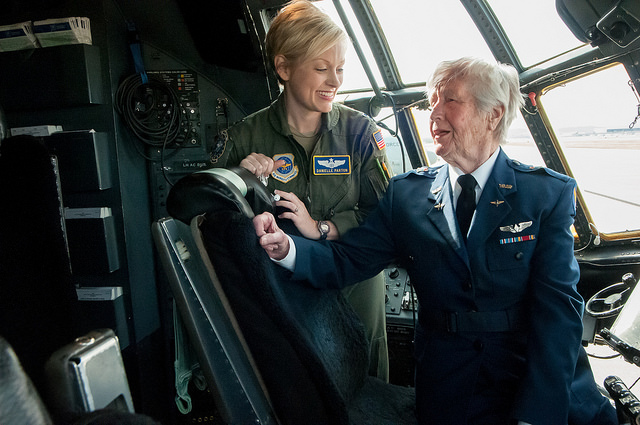
Capt. Danielle Parton, a pilot in the 123rd Airlift Wing, shares flying stories with Florence Shutsy Reynolds on the flight deck of a C-130 aircraft at the Kentucky Air National Guard Base in Louisville, Ky., March 22, 2014. Reynolds, a former pilot in the Women Airforce Service Pilots corps during World War II, was visiting the base as part of National Women’s History Month. (U.S. Air National Guard photo by Staff Sgt. Vicky Spesard)

Wrapping up March, Women’s History month, here is a final story in our series celebrating women and the roles they play in our military history.

KENTUCKY AIR NATIONAL GUARD BASE, LOUISVILLE, Ky.—Sitting in the pilot’s seat of a C-130 cockpit here, Florence Shutsy Reynolds, 91, looked right at home as she beamed a smile at the airstrip in front of her.

Reynolds, a former member of the Women Airforce Service Pilots corps during World War II, was visiting the 123rd Airlift Wing March 22 in celebration of Women’s History Month.

“It truly is my honor and pleasure to have you here at our base to represent women pilots,” said Col. Barry Gorter, commander of the 123rd Airlift Wing, after presenting Reynolds with a certificate declaring her Honorary Wing Commander for the day. “You are one of many of the brave women who performed a dangerous mission and did a job that many people felt, at the time, women shouldn’t be doing. You have helped pave the way for women in our services today.”

140322-Z-ZU385-072

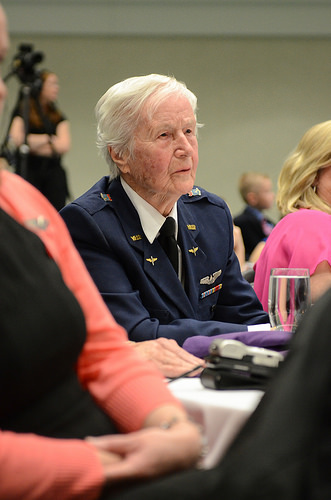
Florence Shutsy Reynolds, 91, a former member of the Women Airforce Service Pilots corps during World War II, attends the Kentucky National Guard’s Airman and Soldier of the year Banquet in Louisville, Ky., March 22, 2014. The WASP program’s primary focus was to reassign responsibility for flight operations over the United States from male to female pilots, freeing men to go to war. (U.S. Air National Guard photo by Staff Sgt. Vicky Spesard)

Indeed, not much is written or spoken about the WASP program. Its primary focus was to reassign the responsibility for flight operations over the United States from male to female pilots, freeing the men to go to war. Because some military leaders believed that women pilots would damage the reputation of the male-dominated military, however, the program was quickly disbanded and brushed aside when the war ended, Reynolds said.

“It was a time when women were not even encouraged to go to work, let alone fly airplanes,” she explained. “We trained hard, flew dangerous assignments and we lost pilots in our group. All of which the military tried to cover up and put away when the war ended.”

Trying to get the word out about the WASP program and the contributions that she and her fellow WASP veterans made is one of the reasons Reynolds accepted the invitation to celebrate National Women’s History Month with the Kentucky Air Guard.

“I was very excited to be invited to the base to share my story of the WASP program,” said the aviator, dressed in a replica WASP uniform that she wears when touring to promote her fellow flyers. (Her original uniform is in a museum.) “It is always wonderful to meet other pilots and, most of all, other women who have the opportunity to fly.”

During her honorary day as wing commander, Reynolds toured the base, got an extensive look inside a C-130, ate lunch with wing members and gave a lecture about the WASP program.

After posing for pictures with many Air Guard members and swapping pilot stories, the Pennsylvania native traveled to the Kentucky State Fairgrounds to serve as the keynote speaker for the annual Kentucky Airman and Soldier of the Year Banquet.

“She truly is an inspiration to all of us,” said Staff Sgt. Shelby Basham, a member of the Kentucky Air Guard’s Fatality Search and Recovery Team. “Her determination in traveling the country, telling her story of the WASP program and doing what she did at a time where many didn’t believe in her is truly amazing.”

Equally amazed was Reynolds herself.

“To see the women here who are trained and who fly as equals is very gratifying,” Reynolds said, wiping tears from her eyes. “My message to them is to keep dreaming. Don’t let anyone tell you that you can’t do something, and always fly as high as you can.”

Story by Chief Warrant Officer Joseph Lyddane

propes3

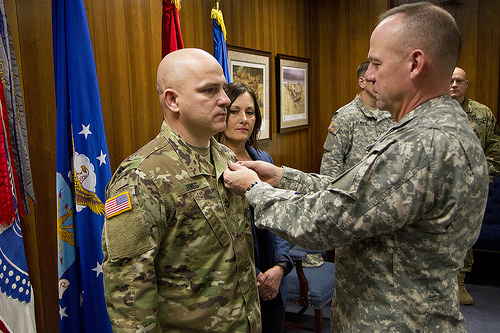
Chief Warrant Officer Melissa Propes (second row from top, middle) with her team in Jordan. During her deployment with 1st Battalion 623rd Field Artillery she was the Battalion Maintenance Officer. She later became the first female FMS Shop Chief for the Kentucky Army National Guard. (Photo courtesy Chief Warrant Officer Melissa Propes)


FRANKFORT, KY. — The title “mechanic” is synonymous with the terms hard work, grease, oil, and more often than not, male. Although inequality remains prevalent between men and women in the workforce, there are those amongst the projected 159.4 million females in the United States proving that women can dominate, excel, and outperform males at their own game.

One Kentucky Army National Guard Soldier decided to break the mold in pursuit her own aspirations. Emerging from humble beginnings, Chief Warrant Officer Melissa Propes took the advice of her mother who told her, “You can be anything you want to be if you work hard for it.”

When Propes joined the Kentucky Army National Guard on February 25, 1999 she was faced with a decision, as many of us are, as to which path to choose. With pride and determination, as a senior at Campbellsville High School, she set her sights on the male dominated Military Occupational Specialty of 63W (Wheeled Vehicle Mechanic) and was assigned to the 326th Ordnance Detachment in Glasgow. She attended basic training thereafter and made a name for herself right away by graduating as the Honor Graduate during her Advanced Individual Training.

2LT Stephanie Scott

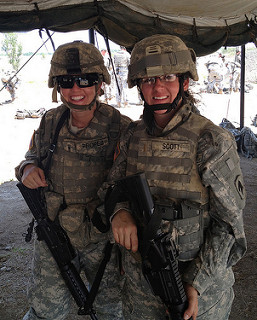
Chief Warrant Officer Melissa Propes (right) and 2nd Lt. Stephanie Scott, both of 1st Battalion, 623rd Field Artillery, pause during training at Wendell H. Ford Regional training Center in Greenville, Ky. July, 2012. (Courtesy photo)

Chief Propes recognized the importance of continuing her education early on and enrolled in Eastern Kentucky University in 1999 and attended Western Kentucky University from 2000-2002. However, she decided her heart was in the maintenance field, so while serving on orders for a pending deployment she decided to apply for the Nashville Auto Diesel College (NADC) and was accepted shortly after.

Propes’ work ethic became apparent during her tenure at NADC. She not only was a contributing member on the school newspaper staff, but she worked her way up the ladder at Outback Steakhouse to become a server trainer.

Amid all of her responsibilities, additional duties and monthly drills Propes was able to graduate in 2004 with a diploma in Auto and Diesel Technology as well as receive the prestigious Craftsman Award for having a ninety-five percent shop average.

“There was a defining moment when I realized that being in the National Guard meant more than just showing up for drill and ‘doing your job,'” said Propes. “I was very young when we got mobilized it became clear to me that if I wasn’t proficient at my job, someone could get killed. That’s when it became serious for me.”

In true leadership fashion, Propes credits her team for getting through that period of her life. “I could not have done it without the flexibility and support from my managers, coworkers and family.”

It is difficult to get a foot in the door at some of your major mechanics facilities much less to be the first female mechanic. Propes did just that when she became a hydraulics technician for Thompson Machinery in 2004. Overcoming the odds against her, the disregard of her coworkers, and even the advice of her supervisor that perhaps she was in the wrong career field, she persevered by starting early, working late, and sometimes putting in over eighty hours per week eventually winning the confidence and respect due her.

The experience and credibility established during her time with Thompson Machinery led to her becoming the first full-time female mechanic to be hired at the Combined Support Maintenance Shop as a Heavy Mobile Equipment Repairer. A promotion and new responsibilities validated her hard work and efforts.

“This was the first time I felt that I could impact my organization beyond just being a good mechanic,” she said.

After being promoted to Staff Sergeant, becoming a shop foreman, senior mechanic, again being the first female to be selected as an equipment specialist, she decided to accept the challenge of attending Warrant Officer Candidate School to become a 915A Surface Maintenance Mechanic Warrant Officer. Did I mention she was the honor graduate once again of her Warrant Officer Basic Course?

propes2

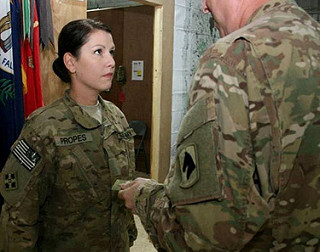
Melissa Propes being promoted to the rank of CW2. Early on in life Propes took the advice of her mother who told her, “You can be anything you want to be if you work hard for it.” (File photo)

A newly minted Warrant Officer Propes was eager to accept the position Battalion Maintenance Officer for the 1-623rd. She later became the first female field maintenance shop chief in the state. She deployed with the 1-623 thereafter in 2013 where she provided area maintenance support of active duty units, Marines, Special Forces, civilian contractors, reefer vans, and UAV launchers.

“There was something new and challenging every day,” said Propes.

Her attitude and approach are exactly why she was nominated for the 2014 Warrant Officer of the Year award. While she didn’t win, she gave her competition a run for their money.

“Chief Propes was very competitive and made the job of the selection board very difficult.” said State Command Chief Warrant Officer Dean Stoops. “We need more women in the warrant officer corps and if Chief Propes is an indicator of the potential that’s out there, then the future of the corps is bright.”

“Chief Propes is proof that with hard work, commitment, and a willingness to assume responsibilities,”said Chief Warrant Officer Connie Vick, one of Propes’ mentors and friends. “All dreams can be accomplished. She is an inspiration to young female Soldiers to excel and achieve their own dreams. I am proud to call her one of my fellow warrant officers.”

After the challenges and struggles throughout the last fifteen years, many would choose to take a break or at least stop to breathe. Not Chief Propes. Upon returning from deployment she now has an additional goal of attending Western Kentucky University’s Technology Management Program in order to enhance her supervisory and leadership skills as well as become, as she put it “an even greater asset to the maintenance community.”

“I can’t take personal credit for my accomplishments,” said Propes. “I’ve had some outstanding mentors throughout my career. Our organization has a focus on mentorship, both in receiving and providing, at all levels, NCOs and officers.”

According to Propes, being a warrant isn’t exactly a walk in the park. “It’s not for easy and I don’t think it’s for everybody. But if you love what you do and you wan to continue being a part of your specialized field and make it better, then the warrant officer program is perfect for someone with that mindset and desire.”


Female troops used the power of sisterhood to make a difference


Story by Capt. Carla Getchell, 133rd Mobile Public Affairs Detachment

three_afghans

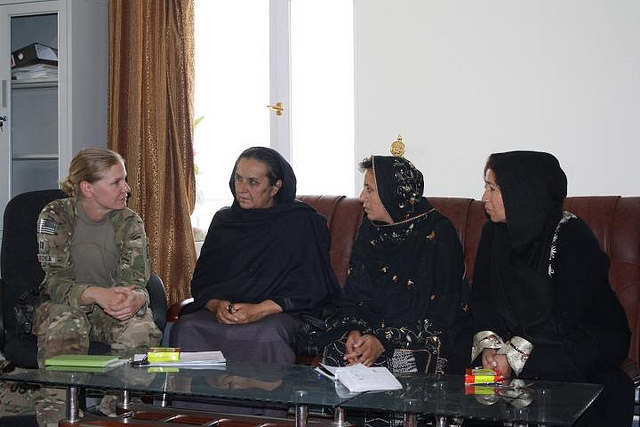
Capt. Carla Getchell discusses agriculture projects during a Key Leader Engagement with the Kapisa’s Director of Women’s Affairs, Saifora Kohistani; the Education Director; and the Women’s Affairs Coordinator with the Director of Agriculture, Irrigation, and Livestock, Sohaila Kohistani.

With March being Women’s History month kentuckyguard.com is publishing a series of stories celebrating Kentucky women and the roles they played in our military history. Following is one such story ….

FRANKFORT, Ky. — While preparing for my deployment to Afghanistan with the Agribusiness Development Team III in 2011, I was given a long reading list of books that would help me develop cultural understanding. One book that was considered mandatory reading at the time was “Three Cups of Tea” by Greg Mortenson.

The book’s namesake is derived from the proverb that the first time you share tea with someone you are a stranger, by the second cup of tea you are a friend, and the third cup shared makes you family.

After months of training, reading, preparing, I was ready to go drink some tea. What I learned after my first mission in Afghanistan was that sometimes all it takes is one hot pepper.

girls_school 1

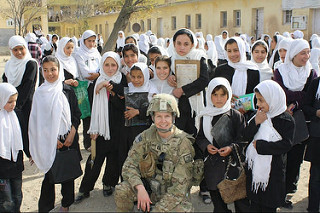
Kentucky Army National Guard Capt. Carla Getchell with Agribusiness Development Team III poses with students after delivering school supplies to a school in Kapisa, Afghanistan. (Photo taken by Army Sgt. Jane Rothstein)

My team and I were fortunate to follow Maj. Bobbie Mayes’ extremely successful deployment with the ADT II team. She built on what the team before her had created, and left my counterpart, Capt. Paula Thrush, and me with thriving relationships with female leaders in the Parwan, Panjshir, and Kapisa provinces of Afghanistan.

During our first mission, Mayes took us to meet some of the provincial leaders she was mentoring for a luncheon where she would say goodbye to the women she had worked with and to introduce us, her replacements, who would begin our year-long friendship with them. There were gifts and tears, and whole fried fish garnished with Afghan peppers. The woman who sat next to me reminded me of my aunt. She was jovial and easy to get along with, even if we could only communicate in hand gestures, smiles, and head nods.

The room was large enough to accommodate 15 or so Afghan and American women along with a couple male interpreters. Izzy and Abbie, our aging male interpreters were working hard to make their rounds and facilitate conversation between the chatting women. Because of this, Sohaila Kohistani and I played Afghan charades.

While we smiled and nodded at one another, I had carefully tucked the remainder of the fried fish head under the corner of tinfoil that lined my Styrofoam lunch container in hopes that none of my Soldiers would dare me to eat it. Instead, Sohaila began to motion toward a small, red hot pepper on my plate. She then smiled and gestured with the universal sign for eating. I immediately knew where this was headed. Here I was in the middle of Afghanistan, in the middle of a war zone, and this woman was egging me on to eat a hot pepper.

getchell_pepper

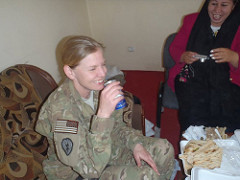
Kentucky Army National Guard Capt. Carla Getchell with Agribusiness Development Team III tries to wash down the heat after eating a hot pepper during lunch with Sohaila Kohistani at the Director of Women’s Affairs office in Kapisa, Afghanistan. (Photo taken by Army Capt. Paula Thrush)

Fortunately, I like spicy food, and while I knew it might be painful I would be able to endure it. Proving I could eat the hot pepper would set the stage for my relationship with this woman for the next year. As I raised the red pepper to my mouth I watched as every Afghan woman in the room reached down into their Michael Kors look alike bags and pulled out a digital camera. They were all poised to snap photos of the American woman eating the Afghan pepper.

It was definitely spicy and a bit painful. I made sure to make a show of grabbing a bite of naan, Afghan flatbread, and a gulp of canned soda to cool down the inferno that was making its way down my throat. As I did this the women in the room laughed and chatted happily over one another.

For the next year, Sohaila and I worked closely with one another to improve the lives of the women in her province of Kapisa. She told the story of the pepper multiple times to the men and women we encountered. I did everything I could for her, and fought for even more. When it was time to leave I gave her a bracelet with small gold stars because I had learned that Sohaila meant morning star in English.

security_sohaila

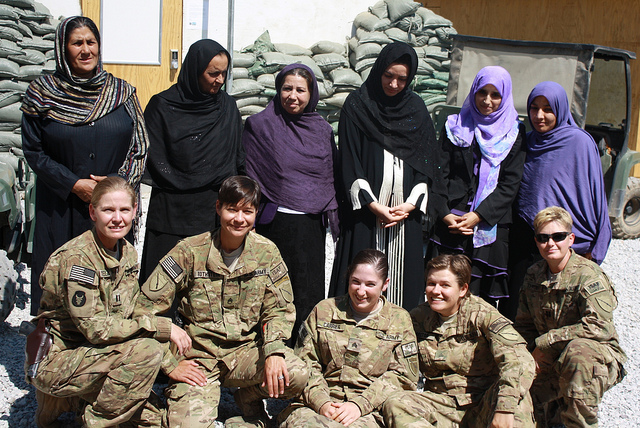
Kentucky Army National Guard Sgts. Kristyn Robinson, Heather Carrier, and Kathleen Gallagher with Agribusiness Development Team III pose for a picture with Sohaila Kohistani before returning from a Key Leader Engagement in Kapisa, Afghanistan. (Photo taken by Army Capt. Carla Getchell)

I did not know the depths of bonds that would develop with the Afghan women I worked with and the women I worked with in Afghanistan. I was fortunate to have an amazing team. Our medic, Sgt. Kathleen Gallagher, was always able to calm down the villagers by helping their children with their medical needs. Sgts Heather Carrier and Kristyn Robinson were my main security detail the entire year. They walked in and out of every room ahead of me. They kept me and everyone around me safe. Carrier even headed up her own projects. Staff Sgt. Jane Rothstein and Sgt. Claudia Rector got us all to Afghanistan, took care of us for the entire year, and got us all home with their amazing skills in personnel and logistics. They also were always willing to come out and work with me wherever we went.

I learned so many lessons from all the women I worked with that year. The lessons of compassion, understanding, and tolerance have stuck with me. Sohaila and I drank a lot of tea together that year, but it only took us one hot pepper to become sisters.


Story by John Trowbridge, Kentucky National Guard Command Historian

In recognition of March as Women’s Month, kentuckyguard.com is publishing a series of articles honoring women who are significant figures in Kentucky’s military history. The following is one such story ….
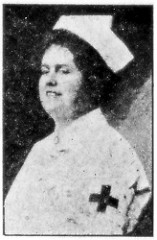
nurse-arvin_the-gleanerFRANKFORT, Ky. — Margaret Willie Arvin was born on April 21, 1879, the oldest of seven children of William and Bettie Arvin, of Henderson, Kentucky. Not much is known about her early years. In 1904, she graduated from the School of Nursing at the Owensboro City Hospital in Owensboro, Kentucky.

In 1914, she is accepted as a member of the General Samuel Hopkins Chapter of the National Society of the Daughters of the American Revolution, in Henderson. Mary was a descendant of Revolutionary War soldiers, Lieutenant Colonel Henry Dixon and General Samuel Hopkins.

That same year, events overseas begin to happen which would change the World forever. In June 1914, the First World War erupts in Europe. The United States remains neutral until April 1917. That same month The Harvard Unit, Base Hospital No. 5 is ordered to prepare for immediate mobilization. The hospital is comprised of doctors and nurses from the Harvard University Hospital, in Boston, Massachusetts. It was one of six Red Cross hospitals organized for Army service. By June 1917 the unit was assigned to support the British Expeditionary Forces in France.
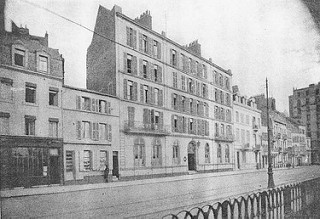
Nurses quarters base hospital 5

Nurses quarters Base Hospital No. 5.

Back in the United States, on June 11, 1917, Nurse Mary Arvin decided to join the war effort. She joined the American Red Cross and was assigned to Base Hospital Number 5. Arvin was immediately sent overseas to join the unit in France on July 18, 1917.

Nurse Arvin’s tour of duty was far from boring. From her nursing duties, seeing the sights of France, meeting people from different countries, social events, and due to the fact that their hospital was supporting the British Army, visits from members of the British Royal family.

However all this would change on the evening of September 4, 1917, when the hospital came under attack. During a night bombing raid by the Germans, the first American battlefield casualties of the First World War were members of Base Hospital No. 5. The next day Nurse Arvin writes home to tell of the attack on the hospital.

“The Lord was certainly with us. While there were a number of our patients wounded from the bombs, our adjutant and three of our American boys were killed, and several wounded. There was not a nurse hurt, so I think we escaped very lucky. It was a beautiful moon light night about 11:30. I was sitting here in my ward at the table when I heard, oh, such loud reports, one right after the other. It shocked me so that it knocked me out of my chair. One of my patients hollowed to me, saying: ‘Sister, lie flat on the floor.’ I said, ‘No, I must go over to the other ward and see if any of the patients are hurt there.’

“Just as I started to cross over I looked up and saw the aeroplane crossing very peacefully over. I thought to myself, oh, if I just had a big gun, you would never know what happened to you. There were five or six bombs dropped altogether in different places. I saved a piece of the shrapnel as a souvenir.”

On June 30, 1918, Base Hospital No. 5 was once again the target of a German night bombing mission. In a letter home she describes some of what occurred during the raid: “I do not know whether or not this will pass the censor, but the very night that we had our dinner, after we had returned to the hut, we were raided. I cannot tell you about it, but you can image the rest. No one in the unit was injured. Oh, how I would love to tell you everything. The next night the colonel came to me and said that I was the heroine’ and was to be decorated with a medal. They tell me that my name will also be put in the dispatches. I told the colonel I didn’t deserve all the credit, I only did my duty, stuck with my patients, kept them under control and tried hard to keep cool and to keep my head. I didn’t for a minute let them know I was frightened. I don’t think I could have managed them if I had. It tore things up considerably, but thank heaven not one of my patients was injured, only a few scratches.”
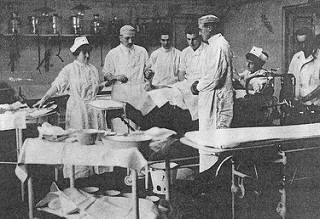
Base Hospital #5 operating room

Base Hospital #5 operating room.

Within a few days Nurse Arvin was awarded the French Cross of War and had received official congratulatory letters from General Pershing and her chain of command.

In his letter, General Pershing wrote, “My Dear Miss Arvin: Please accept my heartiest congratulations and sincere appreciation of the fine work you did on the night of June 30, 1918, when your hospital was a target of German airplane bombs. Your presence of mind and courage in quieting your patients was, under the circumstances, deserving of the highest praise. I am proud to have in the American Expeditionary Forces a nurse whose devotion to duty is of such high character as yours.”

On November 11, 1918, the War to end all wars came to a close. On January 20, 1919, Base Hospital No. 5 was relived from duty with the British Army. Elements began to filter back to the United States, and by late March, Nurse Arvin arrived back home in Henderson. The local newspapers ran a couple articles about her service and she became the guest speaker at a number of local social gatherings. In April she received the U. S. Army’s citation for exceptionally meritorious and conspicuous service, signed by General John “Black Jack” Pershing.

Over the next few months Nurse Arvin settled back into her civilian nursing career, in October she was assigned as a Red Cross welfare worker in Hopkinsville, Kentucky.

In November, she was notified that the British Government had awarded her the British Royal Red Cross Medal. At a ceremony held in Washington D. C. on November 13, 1919, Nurse Arvin received her medal from Prince Edward, who would later become King Edward of England. Nurse Arvin is one of few American women who served in the First World War to be recognized by all three of the major allied countries, France, Britain and the United States.
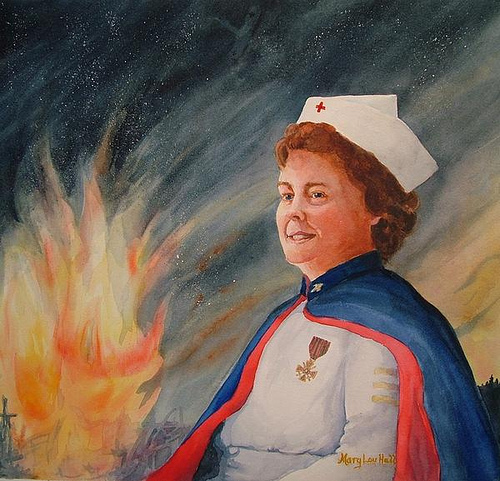
nurse-arvin-mary-lou-hall

In March 2006, Nurse Mary Arvin was honored by the Kentucky Women Remembered program and her portrait was framed and hung in the State capitol in Frankfort.

In a 1920 book published by members of Base Hospital 5, they make mention of Nurse Arvin in a poem:

There has been in our midst, since we’ve been to France,

A nice quiet lady named Arvin;

But as she don’t sing or dance, we have not had a chance,

To find what she really excels in.

The book also states the fact that she was known as “Bill,” by members of the unit, due to her middle name of Willie.

Sometime between 1921 and 1925, Nurse Arvin moved from Kentucky to Orlando, Florida where she worked as a private nurse and then in the local hospital. On March 28, 1925, she married William Tiller. Tiller a native of Georgia and himself a World War One veteran was a realtor in Orlando. Within a year of their marriage William Tiller dies leaving Mary a widow.

In 1932, she marries a second time, Robert Sissons, another veteran of the war, working as an office manager for an automobile firm in Orlando. This second marriage would last fourteen years, until the death of Mr. Sissons in 1946.

In February, 1932, The War Department made the announcement of a new medal, “The Purple Heart Medal.” Today that medal is recognized as being awarded to individuals who sustain a wound in combat, however, originally, it was awarded to individuals for military merit. World War One veterans that had received the Meritorious Service Citation, signed by General Pershing, were entitled to turn-in their citation and be awarded the new medal. Nurse Arvin turned-in her citation and was awarded the Purple Heart Medal, becoming one of the first females in U. S. Military history to receive the Purple Heart Medal.

Nurse Mary Arvin died on September 9, 1947, while visiting her sister in Henderson. She was laid to rest under full military honors conducted by the local American Legion Post in the Fernwood Cemetery in her home town of Henderson.

In March 2006, she was honored by the Kentucky Women Remembered program, her portrait and story are beautifully framed and hangs in the State Capitol in Frankfort.

In 2010, a Kentucky historical marker, was dedicated near her grave in the Fernwood Cemetery which tells her story of her service, sacrifice and dedication to duty.

Commentary by Chief Warrant Officer Joseph P. Lyddane, 138th Field Artillery Brigade

female soldiers in afghanistan

Today’s events are tomorrow’s history: Women continue play a critical role in military operations, particularly in developing relationships with local citizens. Agribusiness Development Team 3’s Female Engagement Team helps to educate and empower the local Afghan women. (File photo)

140927-Z-GN092-039

Army Maj. Bobbie Jo Mayes presents the Physical Fitness Award to Army 2nd Lt. Cassandra Mullins during a commissioning ceremony in Frankfort, Ky., Sept. 27, 2014. Mullins is not only a citizen soldier, but a Kentucky State Trooper who’s been recognized for her bravery. (Kentucky National Guard photo by Staff Sgt. Scott Raymond)

FRANKFORT, Ky. — There are many reasons why every year in March the United States, Australia, and the United Kingdom (Canada in October) reserve a full month of recognition to celebrate women. Among them are the many contributions made by females that have impacted the world. The sad truth is that throughout history many of the achievements made by women have been overlooked and marginalized. In 1911 the first International Women’s Day was organized, which was a benchmark event considering the social climate at the time. In 1980 President Jimmy Carter signed into proclamation declaring the week of March 8 as National Women’s History Week; six years later the week transitioned to a full month.

Looking back at American history I am reminded of women like Susan B. Anthony who in the mid 1800s fought for social equality and collected anti-slavery petitions becoming one of the first women’s rights activists. Sojourner Truth was an amazing person who escaped slavery and became the first black woman to win a case against a white man in the court and went on to recruit black troops for the Union Army during the Civil War.

As a military professional I think of courageous women like Harriet Tubman who ignored her own safety to become a spy for the Union Army and was one of the most prominent figures in humanitarianism and the abolition of slavery. There is also Mary Hayes McCauley, who later became known as “Molly Pitcher” for her efforts to carry water to the men in the battle of Monmouth in 1778.

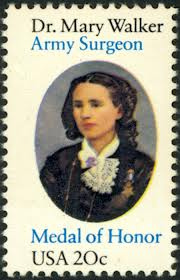
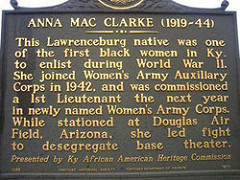
imagesCAHBJRQRDid you know that Dr. Mary Edwards Walker, the only woman to receive the Medal of Honor, called Kentucky home? And 1st Lt. Anna Mac Clarke, who lived in Anderson County, stood up against discrimination more than a decade before Rosa Parks.

These names join the likes of Betsy Ross, Sacajawea, Amelia Earhart , Emily Dickenson, and the first female doctor, Dr. Elizabeth Blackwell and thousands of others who made a lasting impression, along with the modern day females who continue to demonstrate courage by blazing a trail of their own.

Though tremendous strides have been made, a disparity still exists between men and women; the military still struggles with claims of sexual harassment and assault; and wage inequality is still prevalent between men and women in the workforce. By taking thirty days out of the year to recognize the women in our lives, the female leaders we admire, or the ones revered in our history books we can start to bridge these gaps and not only recognize the importance of equality but realize the benefits of diversity.

141107-Z-WA628-095

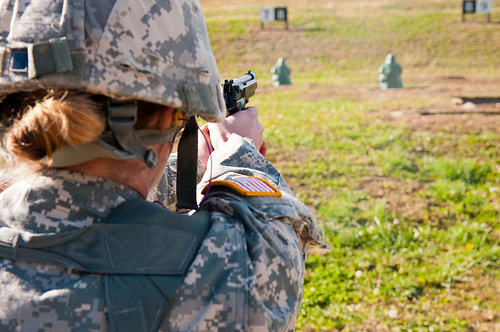
Spc. Caitlin Viera, a paralegal specialist with the 201st Headquarters and Headquarters Company, lines up her next shot with an M9 pistol during the marksmanship portion of the 2015 Best Warrior Competition at Wendall H. Ford Regional Training Center.

Truth be told, one month is not enough; we need to embrace the accomplishments of women each and every day and recognize their potential 24/7. And why wouldn’t we? It’s the 21st Century, more than one hundred years since that first International Women’s Day.

And let’s face it: none of us got to where we are on our own. For most of us, a female was present to pick us up off the ground, dust off our jeans, and give us that push we needed to carry on! And for that I, for one, am grateful.


Story by John Trowbridge, Kentucky National Guard

Wrapping up Black History Month and leading into Women’s History Month, kentuckyguard.com presents this unique look at a woman who swore to fight for her nation and ended up combating social justice ….

ImageDisplay

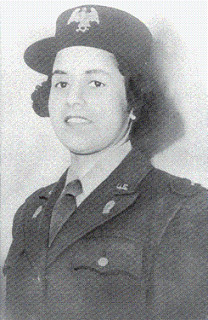
1st Lt. Anna Mac Clarke was a pioneer, part of a unique group of women who came together to help their country win a world war. She and her sister Soldiers also fought another war at home; that of racism, and they, as one unified force, began to break down the barriers of her race and gender which would eventually lead to the civil rights movement of the late 1940s, up through the 1960s.

FRANKFORT, Ky. — “It was raining that April morning as the train rolled into the station at Lawrenceburg, Kentucky. It was one of those day-long rains that slows the world down and gives you time to reflect. They had been waiting to meet the train that was bringing her back home. Home to her final resting place, this young woman who had, in the short span of 24 years, accomplished so much, not only for herself but for her race and her gender.” From the introduction to A Study in Military Leadership, 1997

Anna Mac Clarke was born June 20, 1919 in Lawrenceburg, Kentucky. Anna Mac, as she was called, was always known by her neighborhood friends as a “tomboy” who liked to play football and take care of animals, specifically cats and her pet chameleon. While growing up in her small town community, Clarke’s peers and elders knew that she was destined to do something great.

On May 28, 1937, less than one month before her 18th birthday, Clarke was awarded a diploma from Lawrenceburg High School, which at the time was referred to as the “Colored High School.” After graduating from high school, Anna Mac decided to pursue a college education. She considered many options, but in the end decided to attend Kentucky State College (now KSU), an historically black college located in Frankfort, Kentucky which is less than 15 miles from where she grew up in Lawrenceburg. While at Kentucky State, Clarke was a very active student, participating in sports, Delta Sigma Theta Sorority, and the school’s newspaper, The Kentucky Thorobred. Clarke graduated from Kentucky State College in 1941, earning a Bachelor’s degree in both sociology and economics. However, Anna Mac had a hard time finding employment that was appropriate for her skills and was not extremely low paying.

In 1942, Anna Mac Clarke joined the All-Volunteer Women’s Army Auxiliary Corps and left for Basic Training at Fort Des Moines, Iowa. After she completed Basic Training, Clarke went on to Officer Candidate School.

clarke1

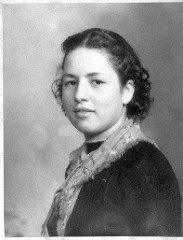
Anna Mac Clarke’s high school photograph.

On November 30, 1942, the Officer Candidate School at Fort Des Moines in Iowa –where Clarke was stationed—was desegregated. Within two weeks of the desegregation, Clarke became a candidate in the 15th Officer Class, WAAC OCS Program. There were two other African Americans in her class, but she would be the only one to finish the course eight weeks later on February 16, 1943. By the end of February, Clarke was reassigned to the Fourth Company, Third Regiment, as a Platoon Leader. Third Officer Anna Mac Clarke was the first African-American WAAC assigned to command what was otherwise an all-White unit.

With First Officer Sara E. Murphy, Clarke led a unit of 144 African-American WAACs to serve in Wakeman General Hospital at Camp Atterbury in Indiana. This assignment lasted for only a month, and in June 1943, Clarke worked in the Classification and Assignment Department of WAAC headquarters in Washington, D.C. She enrolled in the Adjutant General’s School at Camp Meade, Maryland, and after having completed the training she was assigned to Chicago’s WAAC recruiting program. Clarke was promoted to second officer on July 16, 1943, and she returned to Fort Des Moines. The Army transformed the auxiliary units of WAAC into the Regular Army, and Clarke became a member of the Women’s Army Corps (WAC) in September 1943.

Protesting enforced segregation

On February 7, 1944, Clarke led the first WAC unit onto the base at Douglas Army Air Field. Located in eastern Arizona, this Army Air Field was one of only four in the U.S. to have both African-American soldiers and WACs. The theater on the post was segregated, and Clarke had been warned by the African-American soldiers not to go there. However, Clarke and several women went to the theater, refusing to sit in the colored section. She protested the enforced segregation to the theater management, her immediate supervisor and then the Commanding Officer, Colonel Harvey E. Dyer. On February 21, 1944, Colonel Dyer issued the order to his officers “to educate properly all enlisted and civilian personnel in your respective departments to accept any colored WACs assigned as you would any white enlisted man or enlisted woman in the Army of the United States. Every consideration, respect, courtesy and toleration will be afforded every colored WAC. No discrimination will be condoned.”

In March 1944 Anna Mac was admitted to a hospital on the base with sharp pains in her side. Doctors diagnosed her with appendicitis, and decided that she needed an appendectomy to save her life. At first it was believed to be a successful surgery and Clarke was expected to make a full recovery. Unfortunately, gangrene had entered her body due to the infection brought on by the surgery.

1st Lt. Anna Mac Clarke died on April 19, 1944, at the age of 24.

59395680_128580807587She was buried back home in Lawrenceburg, where a Kentucky historical marker located on the grounds of the courthouse now tells her story.
One person can make a difference

Anna Mac Clarke was a pioneer, part of a unique group of women who came together for one purpose, to help their country win a world war. She and her sister WAACs would also fight another war at home; that of racism, and they, as one unified force, began to break down the barriers of her race and gender which would eventually lead to the civil rights movement of the late 1940s, up through the 1960s. Anna Mac would never know the full impact her efforts to right injustice would have on things that we take for granted today, not only in the military, but in the civilian world as well.

On July 26, 1946, a little over two years after her death, President Truman issued Executive Order 9981, which called for equal treatment and opportunity for blacks in the military. Four years later on March 1, 1950, the President’s Committee on Equality of Treatment and Opportunity reported that beginning in April 1950 the Army’s quota system for blacks was out and that segregation was over in the military.

As for the WAC, in 1947 members of the WAC were permitted to opt for service in either the army or the newly separated air force. The Women’s Armed Services Integration Act gave women permanent military status in the regular army or reserves. Finally, in 1978, the WAC itself was disestablished and its members were assigned or could enroll in all branches of the army and air force.

Story by David Altom, Kentucky National Guard Public Affairs

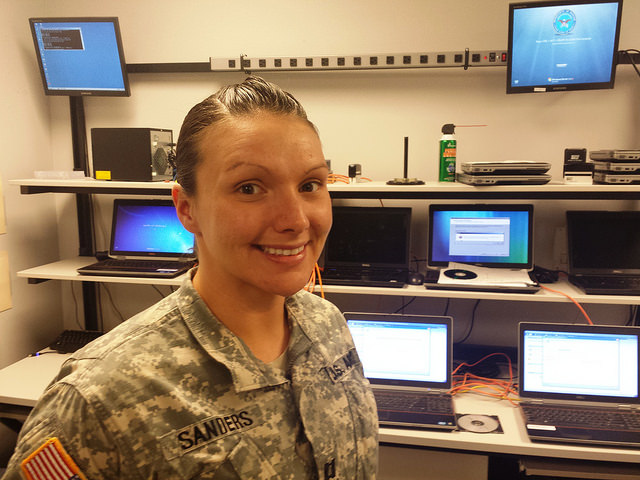
CaptDaynaSanders

Capt. Dayna Sanders comes from a family with a strong military history. She also has a Native American legacy that goes back for generations. (Photo by David Altom, Kentucky National Guard Public Affairs)

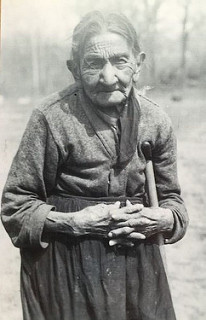
GreatGrandmaEliseMarion

Sanders’ great grandmother, Elise Marion lived on the Turtle Mountain Indian Reservation in Belcourt, North Dakota. (Photo courtesy Capt. Dayna Sanders)

FRANKFORT, Ky. — Like so many who join the National Guard, Capt. Dayna Sanders comes from a military family. Her husband flies Army helicopters, her father deployed to Vietnam as an aerial photographer and her grandfather served during World War II. She has an aunt who was in the Women’s Army Corps and a grandmother who served during World War I.

But Sanders’ legacy goes beyond just the military. She’s also part Native American, with connections that cross the border into Canada and goes back for generations in time.

“My mother, Madonna Seelhammer (maiden name LaFromboise), was born to Elise and Joseph LaFromboise in Belcourt, North Dakota on the Turtle Mountain Indian Reservation. My grandmother and grandfather were half Chippewa - making my mother one half as well. The majority of my mother’s family still resides on the reservation today.”

Click here to find out more about National Native American Heritage Month.

“My father, Wayne Seelhammer, was born to Beverly Seelhammer (Rood) and Lyle Joseph Morrison (aka Ralph Joseph Seelhammer) in Cogswell, North Dakota. My paternal great grandfather was suspected to be a full blood member of a Sioux tribe in the area.”

GrandmaEliseLafromboise

Grandmother Elise Lafromboise is the daughter of great grandmother Elise Marion. Sanders reminds us that not all Native Americans wear their hair in braids or have traditional Indian names. (Photo courtesy Capt. Dayna Sanders)

According to Sanders, the Turtle Mountain Band of Chippewa Indians was established in 1882. Two groups of Native Americans settled in the region: the Pembina Band of Chippewa Indians and Cree. The Pembina Band was originally from the Red River valley of Minnesota and North Dakota. The Cree were from Canada.

“As a child, I was active in the pow wow circuit,” said Sanders. “A pow wow is generally known as community event made up of singing, dance, and drum. I was a traditional jingle dancer. Legend has it that a dream came to a medicine man. In that dream the medicine man was shown the dress and the dance. Upon waking, the man made four dresses, one of which he gave to his wife and showed her the footwork. She then showed that with three of her friends.”

Since moving away from her hometown of South Saint Paul, Minnesota, Sanders has not been back in the pow wow circuit. She still considers her self close to the prayer rituals and medicine associated with her heritage, which she intends to share with her young daughter, Elie.

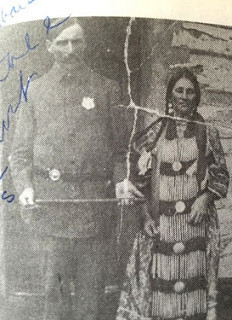
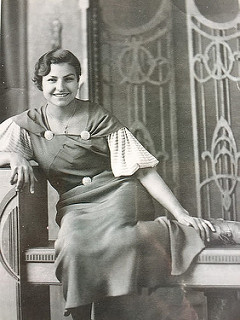
Great Grandparents Joseph and Isabelle LaFromboise

Great grandparents Joseph and Isabelle LaFromboise. Isabelle is in her traditional dress. (Photo courtesy Capt. Dayna Sanders)

“As anyone else, I have a responsibility to pass on the knowledge and traditions of my family to my children so that they are not forgotten.”

Sanders loves being in the military as much as she loves her family’s heritage. “Native Americans are as proud of Americans as any other ethnicity, culture, or group of Americans. Ethnicity has nothing to do with our willingness to service and pride in our country.”

Sanders is eager to share her culture and is open to talking about myths and misconceptions. For example, she says, “Not all Native Americans are the same. There are hundreds of tribes in the United States. The practices and religion of a tribe in North Dakota do not necessarily reflect those of a tribe in Arizona.”

As to what she’d like to be called, it’s not that hard. “Most Native Americans do not care whether or not they are called Native American, American Indian, or Indian. As long as the terminology is utilized respectfully.”

Sanders said American Indians are not necessarily easily identifiable. Not all are dark skinned, with high cheekbones, and their black hair tied up in braids. And not all Native Americans have an Indian name.

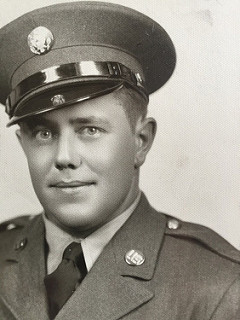
GrandpaRalphSeelhammer

Grandpa Ralph Seelhammer was a private first class with the U.S. Army during World War II. (Photo courtesy Capt. Dayna Sanders)

“This may seem obvious,” she said, “but many people think that Native Americans are confined to reservations, live in tipi’s, and ride horses. This is definitely not true.”

Sanders has deployed twice, once to Iraq as an enlisted troop and again to Kuwait as a brand new second lieutenant. In addition to her full time job with Kentucky Army National Guard’s logistics shop, she is now the commander of the 2138th Forward Support Company. Her passion for the Guard is as strong as her pride in her culture.

“I love being a soldier,” she said. “I’m in a field that is diverse and important to the mission. But most of all I love taking care of my soldiers! My family’s influence guided me to where I am today and this is where I want to be.”

Story by 2nd Lt James Killen, 123rd Airlift Wing Public Affairs

140322-Z-ZU385-040

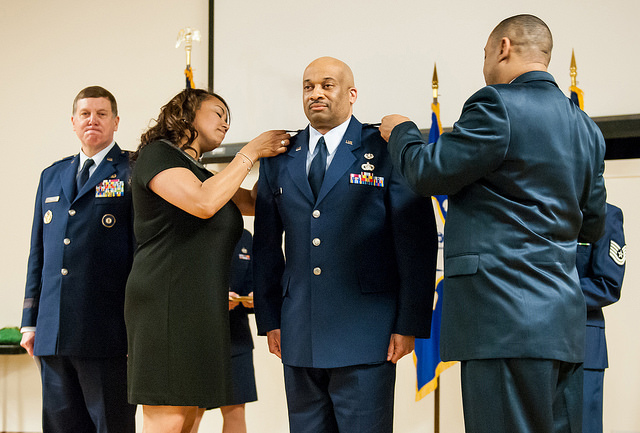
The wife and brother of Lt. Col. Charles Walker pin colonel’s rank to his uniform during a promotion ceremony at the Kentucky Air National Guard Base in Louisville, Ky., March 22, 2014. Walker, staff judge advocate for Joint Forces Headquarters Air Component, Kentucky National Guard, is the first African-American to be promoted to the rank of colonel in Kentucky Air Guard history. (U.S. Air National Guard photos by Staff Sgt. Vicky Spesard)

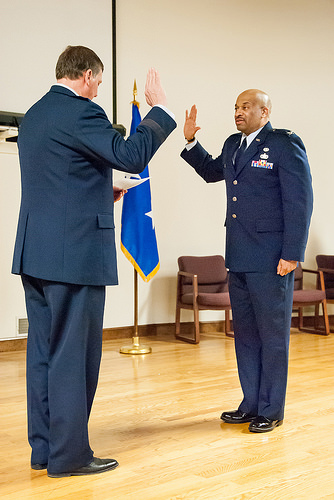
KENTUCKY AIR NATIONAL GUARD BASE, LOUISVILLE, Ky. — The Kentucky Air National Guard promoted two officers to the rank of colonel during a ceremony here March 22, including its first African-American to achieve that rank.

Col. Charles Walker, the first black officer to be promoted to colonel in the organization’s history, is staff judge advocate for Joint Forces Headquarters Air Component, Kentucky National Guard. The other leader promoted, Col. Jeffrey Wilkinson, serves as vice commander of the Kentucky Air Guard’s 123rd Airlift Wing.

“What a fantastic day this is in the history of the Kentucky Air National Guard and, frankly, the Kentucky National Guard in general,” said Maj. Gen. Edward Tonini, adjutant general for the Commonwealth of Kentucky.

140322-Z-ZU385-074

Kentucky’s adjutant general, Maj. Gen. Edward Tonini (left), executes the Oath of Office during a ceremony promoting Charles Walker to the rank of colonel at the Kentucky Air National Guard Base in Louisville, Ky., March 22, 2014. Walker, staff judge advocate for Joint Forces Headquarters Air Component, Kentucky National Guard, is the first African-American to be promoted to the rank of colonel in Kentucky Air Guard history. (U.S. Air National Guard photos by Staff Sgt. Vicky Spesard)

“Chuck has had a very interesting career,” Tonini told the audience of more than 200 family, friends and coworkers, “always going the extra mile” in every task he’s undertaken.

Walker began his career in the active-duty Air Force in 1991, serving until 1998 as a section commander in aircraft generation and mission support units. He also served as an executive officer and, later, the operations officer for a Military Entrance Processing Station. Walker graduated cum laude with a juris doctorate from the John Marshall School of Law in Chicago in 1999 and joined the Air Force Reserves in 2004 as a deputy staff judge advocate.

He remained in the Reserves until 2005, when Walker joined the 123rd Airlift Wing here as a staff judge advocate. He held that post until May 2013, when Walker accepted his current position at Joint Forces Headquarters.

In addition to serving as the state’s top Air Guard lawyer, Walker is director of the Air National Guard’s Contemporary Base Issues Course, a national-level seminar designed to assist commanders, supervisors and support staff in addressing everyday command and legal issues.

In civilian life, Walker is a trial attorney with the United States Department of Justice, Office of the United States Trustee, in Nashville, Tenn. He also serves on the board of directors for the Mid-South Commercial Law Institute, is a co-founder of the Credit Abuse Resistance Education program in Tennessee and is a faculty member at the National Advocacy Center in Columbia, S.C.

Remarking on the depth and breadth of Walker’s career, Tonini praised his dedication to service and excellence.

“He didn’t get (this promotion) because he is African-American, he got it because he is the best,” Tonini said.

Walker used the occasion to thank his family and friends for their support through the years, and to praise his colleagues for their commitment to the Air Force Core Values.

“This is the best airlift wing in the United States Air Force, without question,” Walker told the audience. “We can hold our own against anybody. This is a fantastic wing to serve with. What we do here is important, and we do it the right way.”

140322-Z-ZU385-102

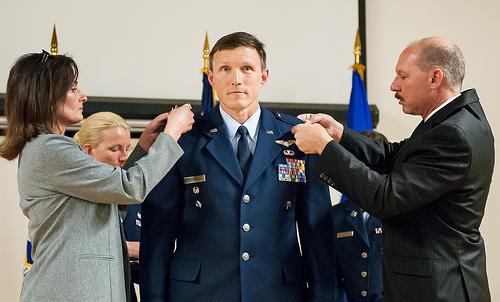
The wife and a family friend of Lt. Col. Jeffrey Wilkinson pin colonel’s rank to his uniform during a promotion ceremony at the Kentucky Air National Guard Base in Louisville, Ky., March 22, 2014. Wilkinson, vice commander of the 123rd Airlift Wing, is the first special tactics officer to be promoted to the rank of colonel in Kentucky Air Guard history. (U.S. Air National Guard photos by Staff Sgt. Vicky Spesard)

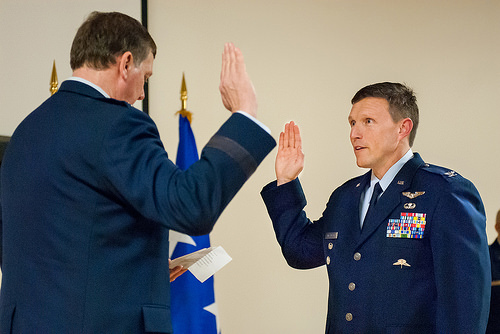
Wilkinson, the 123rd Airlift Wing’s vice commander, represents a different kind of diversity, Tonini said, noting that he is the first special tactics officer in the history of the Kentucky Air Guard to be promoted to the rank of colonel.

“I know you well enough to know that you’re the kind of guy that will accept (your new role), embrace it, and do the very best,” Tonini said to Wilkinson.

The colonel began his Air Force service in 1990, receiving a commissioning through the Reserve Officer Training Corps at the Syracuse University, in Syracuse N.Y. He’s spent most of his career in Air Force Special Operations, with time split between active duty, traditional Air National Guard duty and Active Guard Reserve duty as both a special tactics and combat rescue officer.

After leaving active duty, and before joining the Kentucky Air Guard full time in 2001, Wilkinson worked as a quality engineer for General Electric Appliances in Louisville.

He has participated in multiple overseas deployments, including Operation Uphold Democracy, Operation Joint Endeavor, Operation Enduring Freedom and Operation Iraqi Freedom, as well as numerous national exercises and natural disaster-response missions.

Prior to accepting his current post, Wilkinson served as commander of the Kentucky Air Guard’s 123rd Special Tactics Squadron. In that role, “he was the most most dynamic leader the special tactics squadron has had in their history,” Tonini said.

In his closing remarks, Wilkinson thanked his friends and family for their support and said he’s looking forward to the new challenges of serving as vice commander.

140322-Z-ZU385-156

Kentucky’s adjutant general, Maj. Gen. Edward Tonini (left), executes the Oath of Office during a ceremony promoting Jeffrey Wilkinson to the rank of colonel at the Kentucky Air National Guard Base in Louisville, Ky., March 22, 2014. Wilkinson, vice commander of the 123rd Airlift Wing, is the first special tactics officer to be promoted to the rank of colonel in Kentucky Air Guard history. (U.S. Air National Guard photos by Staff Sgt. Vicky Spesard)

“I recognize and embrace the increased responsibilities that come with this position,” he told the audience. “I will deliver all within my ability to advocate and champion for you, for our mission, and for all of our folks who contribute to the United States Air Force’s finest airlift wing.”

Walker and Wilkinson’s promotions come on the heels of Kathryn Pfeifer’s promotion to the rank of colonel in a ceremony here Aug 17. Pfeifer, director of staff for Headquarters, Kentucky Air National Guard, became the first female line officer to attain the rank of O-6 in Kentucky Air National Guard history.

All three promotions are indicative of the Kentucky National Guard’s commitment to diversity, which Tonini defined as a “readiness imperative” in a recent policy memo.

“Diversity and inclusion allow the Kentucky National Guard to benefit from the talents, abilities, ideas and viewpoints of a workforce drawn from the richness of Kentucky and American society,” Tonini said in the memo, dated March 17. “I am personally committed to making the Kentucky National Guard the service of choice for all who seek to serve our Commonwealth, our nation and its people.”