By Staff Sgt. Vicky Spesard, 123rd Airlift Wing Public Affairs

150314-Z-DI861-208

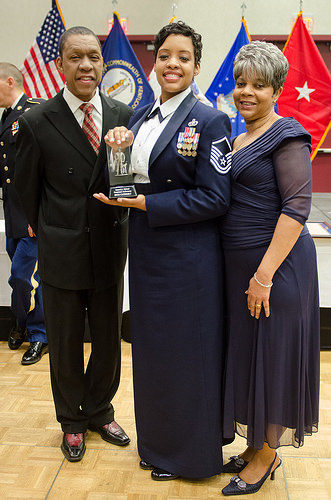
Master Sgt. Zakiya Taylor stands with her parents after receiving the award for 2014 Kentucky Air National Guard Senior Non-Commissioned Officer of the Year during a ceremony held at the Kentucky State Fairgrounds March 14, 2015. Taylor, who a services manager for the Kentucky Air Guard’s 123rd Force Support Squadron, credits her parents’ encouragement for her successful military career. (U.S. Air National Guard photo by Staff Sgt. Vicky Spesard)

KENTUCKY AIR NATIONAL GUARD BASE, LOUISVILLE, Ky. — As the nation honors the accomplishments of women in the military during National Women’s History month, the 123rd Airlift Wing reflects on one of its own, Master Sgt. Zakiya Taylor, a mentor to young people, an acknowledged leader among her peers and a decorated Airman answering the call to duty around the world.

An 18-year veteran of the Kentucky Air National Guard, Taylor joined the wing just after finishing high school, with the encouragement of her parents to help pay for college. She never intended to make it a career.

“I got the love of travel from my musician father, who took me with him when he performed around the world,” Taylor explained. “I knew that the Guard would allow me to travel as well and help me further my education.”

After completing her bachelor’s degree in sociology and psychology at Western Kentucky University, Taylor decided to continue her career in the Guard, where she got her opportunity to see the world. Taylor’s career has taken her to deployments in Kuwait, Saudi Arabia, Europe, Afghanistan and Africa.

“I have had the opportunity to learn all these different cultures and fellowship with all these different people,” Taylor said. “In that process I have learned that we are not very much different. We all want the same things: good health, wealth and security for our families.”

Fellowship through mentoring is a passion for Taylor, who worked throughout her high school summers as a camp counselor for youth at the Metro Parks summer camp in Louisville. While in college, she became a dance instructor for a local youth arts program.

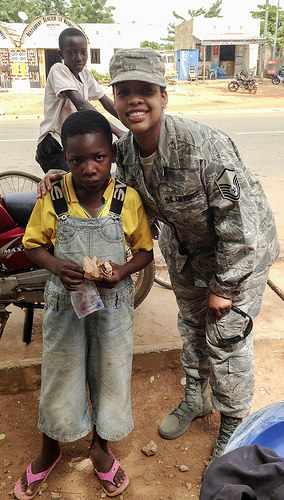
She continued her desire to mentor in her Guard career when she accompanied a group of young Army ROTC cadets to Burkina Faso, Africa.

140607-O-ZZ999-325

Air Force Master Sgt. Zakiya Taylor of the Kentucky Air National Guard’s 123rd Airlift Wing greets a Burkinabe boy while serving as a cadre leader for U.S. Army Cadets participating in the U.S. Army Cadet Command’s Cultural Understanding and Language Proficiency Program in Burkina Faso in June 2014. The program strengthens cultural awareness and foreign language skills among the Army’s future leaders. (Courtesy photo)

“This was a great leadership opportunity for me,” she said. “I was solely responsible for these cadets, getting them to their mission location and taking care of them from start to finish. It has made me a better leader. I know the cadets’ experiences will make them better leaders, too.”

Leading by example is just one of the many characteristics that has brought Taylor to this point in her career. In March, she was honored as the Kentucky Air National Guard’s 2014 Senior Non-Commissioned Officer of the Year.

“As a leader and as a woman, it is exciting to be honored alongside all of the men,” Taylor said. “It shows that we can do this. We have come so far and had so many challenges. I think when an award like this happens, it shows that women are breaking down barriers, moving forward and making progress.”

Accepting challenges is something Taylor is no stranger to. As well as performing her duties as unit training manager for the 123rd Services Flight here, she has been appointed by Chief Master Sgt. Ray Dawson, 123rd Airlift Wing command chief master sergeant, to assist with a new education initiative designed to bring college classes on base.

“She is one of the most professional, dynamic senior NCOs I have ever worked with,” Dawson said about Taylor, who is the Force Development Education Services Technician for his education program. “Her commitment to excellence is second to none. When she is in charge of a detail, the outcome is set from the start.”

And right from the start in her career, Taylor has had a vision of what her own outcome should be.

“It is very important to me to display my leadership and exemplify what it means to me to be here and set an example for other Airmen,” she explained. “I may not always say the right thing, but if I’m doing the right thing at the right time for the right reasons, someone is going to pick up on that. Hopefully, I am making a difference for someone.”

Shutsy Reynolds flew aircraft over the United States to support the war effort

Women Airforce Service Pilots helped pave the way for female pilots today

By Staff Sgt. Vicky Spesard, 123rd Airlift Wing Public Affairs

140322-Z-ZU385-298

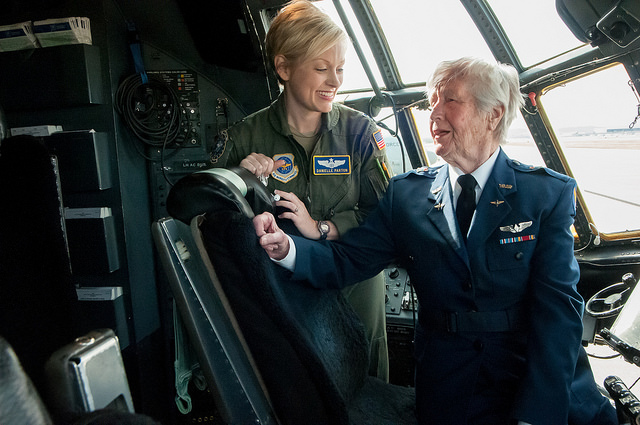
Capt. Danielle Parton, a pilot in the 123rd Airlift Wing, shares flying stories with Florence Shutsy Reynolds on the flight deck of a C-130 aircraft at the Kentucky Air National Guard Base in Louisville, Ky., March 22, 2014. Reynolds, a former pilot in the Women Airforce Service Pilots corps during World War II, was visiting the base as part of National Women’s History Month. (U.S. Air National Guard photo by Staff Sgt. Vicky Spesard)

Wrapping up March, Women’s History month, here is a final story in our series celebrating women and the roles they play in our military history.

KENTUCKY AIR NATIONAL GUARD BASE, LOUISVILLE, Ky.—Sitting in the pilot’s seat of a C-130 cockpit here, Florence Shutsy Reynolds, 91, looked right at home as she beamed a smile at the airstrip in front of her.

Reynolds, a former member of the Women Airforce Service Pilots corps during World War II, was visiting the 123rd Airlift Wing March 22 in celebration of Women’s History Month.

“It truly is my honor and pleasure to have you here at our base to represent women pilots,” said Col. Barry Gorter, commander of the 123rd Airlift Wing, after presenting Reynolds with a certificate declaring her Honorary Wing Commander for the day. “You are one of many of the brave women who performed a dangerous mission and did a job that many people felt, at the time, women shouldn’t be doing. You have helped pave the way for women in our services today.”

140322-Z-ZU385-072

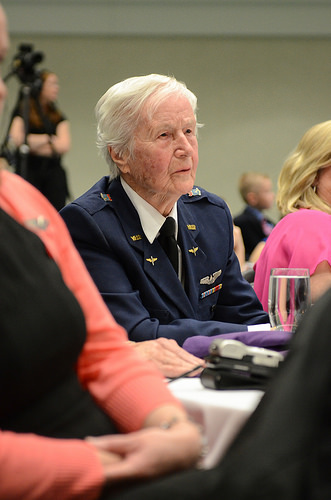
Florence Shutsy Reynolds, 91, a former member of the Women Airforce Service Pilots corps during World War II, attends the Kentucky National Guard’s Airman and Soldier of the year Banquet in Louisville, Ky., March 22, 2014. The WASP program’s primary focus was to reassign responsibility for flight operations over the United States from male to female pilots, freeing men to go to war. (U.S. Air National Guard photo by Staff Sgt. Vicky Spesard)

Indeed, not much is written or spoken about the WASP program. Its primary focus was to reassign the responsibility for flight operations over the United States from male to female pilots, freeing the men to go to war. Because some military leaders believed that women pilots would damage the reputation of the male-dominated military, however, the program was quickly disbanded and brushed aside when the war ended, Reynolds said.

“It was a time when women were not even encouraged to go to work, let alone fly airplanes,” she explained. “We trained hard, flew dangerous assignments and we lost pilots in our group. All of which the military tried to cover up and put away when the war ended.”

Trying to get the word out about the WASP program and the contributions that she and her fellow WASP veterans made is one of the reasons Reynolds accepted the invitation to celebrate National Women’s History Month with the Kentucky Air Guard.

“I was very excited to be invited to the base to share my story of the WASP program,” said the aviator, dressed in a replica WASP uniform that she wears when touring to promote her fellow flyers. (Her original uniform is in a museum.) “It is always wonderful to meet other pilots and, most of all, other women who have the opportunity to fly.”

During her honorary day as wing commander, Reynolds toured the base, got an extensive look inside a C-130, ate lunch with wing members and gave a lecture about the WASP program.

After posing for pictures with many Air Guard members and swapping pilot stories, the Pennsylvania native traveled to the Kentucky State Fairgrounds to serve as the keynote speaker for the annual Kentucky Airman and Soldier of the Year Banquet.

“She truly is an inspiration to all of us,” said Staff Sgt. Shelby Basham, a member of the Kentucky Air Guard’s Fatality Search and Recovery Team. “Her determination in traveling the country, telling her story of the WASP program and doing what she did at a time where many didn’t believe in her is truly amazing.”

Equally amazed was Reynolds herself.

“To see the women here who are trained and who fly as equals is very gratifying,” Reynolds said, wiping tears from her eyes. “My message to them is to keep dreaming. Don’t let anyone tell you that you can’t do something, and always fly as high as you can.”

Story by Chief Warrant Officer Joseph Lyddane

propes3

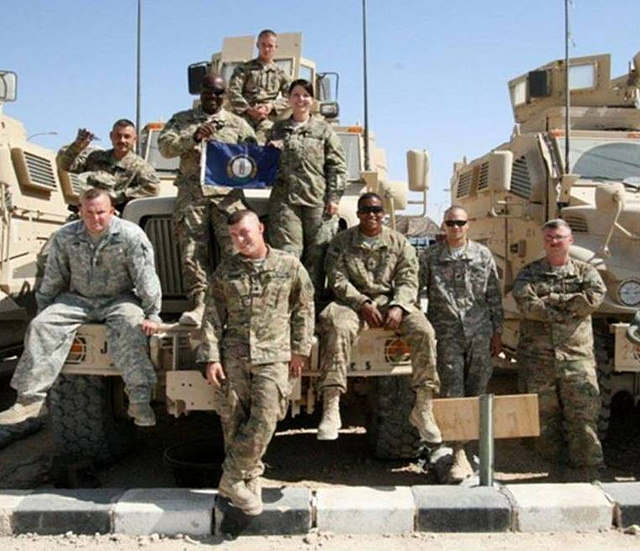
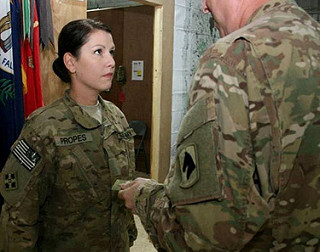
Chief Warrant Officer Melissa Propes (second row from top, middle) with her team in Jordan. During her deployment with 1st Battalion 623rd Field Artillery she was the Battalion Maintenance Officer. She later became the first female FMS Shop Chief for the Kentucky Army National Guard. (Photo courtesy Chief Warrant Officer Melissa Propes)


FRANKFORT, KY. — The title “mechanic” is synonymous with the terms hard work, grease, oil, and more often than not, male. Although inequality remains prevalent between men and women in the workforce, there are those amongst the projected 159.4 million females in the United States proving that women can dominate, excel, and outperform males at their own game.

One Kentucky Army National Guard Soldier decided to break the mold in pursuit her own aspirations. Emerging from humble beginnings, Chief Warrant Officer Melissa Propes took the advice of her mother who told her, “You can be anything you want to be if you work hard for it.”

When Propes joined the Kentucky Army National Guard on February 25, 1999 she was faced with a decision, as many of us are, as to which path to choose. With pride and determination, as a senior at Campbellsville High School, she set her sights on the male dominated Military Occupational Specialty of 63W (Wheeled Vehicle Mechanic) and was assigned to the 326th Ordnance Detachment in Glasgow. She attended basic training thereafter and made a name for herself right away by graduating as the Honor Graduate during her Advanced Individual Training.

2LT Stephanie Scott

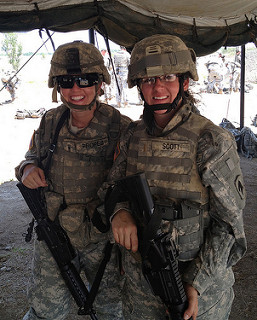
Chief Warrant Officer Melissa Propes (right) and 2nd Lt. Stephanie Scott, both of 1st Battalion, 623rd Field Artillery, pause during training at Wendell H. Ford Regional training Center in Greenville, Ky. July, 2012. (Courtesy photo)

Chief Propes recognized the importance of continuing her education early on and enrolled in Eastern Kentucky University in 1999 and attended Western Kentucky University from 2000-2002. However, she decided her heart was in the maintenance field, so while serving on orders for a pending deployment she decided to apply for the Nashville Auto Diesel College (NADC) and was accepted shortly after.

Propes’ work ethic became apparent during her tenure at NADC. She not only was a contributing member on the school newspaper staff, but she worked her way up the ladder at Outback Steakhouse to become a server trainer.

Amid all of her responsibilities, additional duties and monthly drills Propes was able to graduate in 2004 with a diploma in Auto and Diesel Technology as well as receive the prestigious Craftsman Award for having a ninety-five percent shop average.

“There was a defining moment when I realized that being in the National Guard meant more than just showing up for drill and ‘doing your job,'” said Propes. “I was very young when we got mobilized it became clear to me that if I wasn’t proficient at my job, someone could get killed. That’s when it became serious for me.”

In true leadership fashion, Propes credits her team for getting through that period of her life. “I could not have done it without the flexibility and support from my managers, coworkers and family.”

It is difficult to get a foot in the door at some of your major mechanics facilities much less to be the first female mechanic. Propes did just that when she became a hydraulics technician for Thompson Machinery in 2004. Overcoming the odds against her, the disregard of her coworkers, and even the advice of her supervisor that perhaps she was in the wrong career field, she persevered by starting early, working late, and sometimes putting in over eighty hours per week eventually winning the confidence and respect due her.

The experience and credibility established during her time with Thompson Machinery led to her becoming the first full-time female mechanic to be hired at the Combined Support Maintenance Shop as a Heavy Mobile Equipment Repairer. A promotion and new responsibilities validated her hard work and efforts.

“This was the first time I felt that I could impact my organization beyond just being a good mechanic,” she said.

After being promoted to Staff Sergeant, becoming a shop foreman, senior mechanic, again being the first female to be selected as an equipment specialist, she decided to accept the challenge of attending Warrant Officer Candidate School to become a 915A Surface Maintenance Mechanic Warrant Officer. Did I mention she was the honor graduate once again of her Warrant Officer Basic Course?

propes2

Melissa Propes being promoted to the rank of CW2. Early on in life Propes took the advice of her mother who told her, “You can be anything you want to be if you work hard for it.” (File photo)

A newly minted Warrant Officer Propes was eager to accept the position Battalion Maintenance Officer for the 1-623rd. She later became the first female field maintenance shop chief in the state. She deployed with the 1-623 thereafter in 2013 where she provided area maintenance support of active duty units, Marines, Special Forces, civilian contractors, reefer vans, and UAV launchers.

“There was something new and challenging every day,” said Propes.

Her attitude and approach are exactly why she was nominated for the 2014 Warrant Officer of the Year award. While she didn’t win, she gave her competition a run for their money.

“Chief Propes was very competitive and made the job of the selection board very difficult.” said State Command Chief Warrant Officer Dean Stoops. “We need more women in the warrant officer corps and if Chief Propes is an indicator of the potential that’s out there, then the future of the corps is bright.”

“Chief Propes is proof that with hard work, commitment, and a willingness to assume responsibilities,”said Chief Warrant Officer Connie Vick, one of Propes’ mentors and friends. “All dreams can be accomplished. She is an inspiration to young female Soldiers to excel and achieve their own dreams. I am proud to call her one of my fellow warrant officers.”

After the challenges and struggles throughout the last fifteen years, many would choose to take a break or at least stop to breathe. Not Chief Propes. Upon returning from deployment she now has an additional goal of attending Western Kentucky University’s Technology Management Program in order to enhance her supervisory and leadership skills as well as become, as she put it “an even greater asset to the maintenance community.”

“I can’t take personal credit for my accomplishments,” said Propes. “I’ve had some outstanding mentors throughout my career. Our organization has a focus on mentorship, both in receiving and providing, at all levels, NCOs and officers.”

According to Propes, being a warrant isn’t exactly a walk in the park. “It’s not for easy and I don’t think it’s for everybody. But if you love what you do and you wan to continue being a part of your specialized field and make it better, then the warrant officer program is perfect for someone with that mindset and desire.”


Female troops used the power of sisterhood to make a difference


Story by Capt. Carla Getchell, 133rd Mobile Public Affairs Detachment

three_afghans

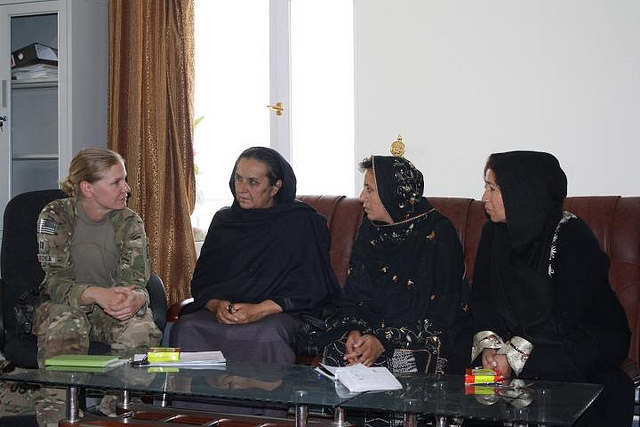
Capt. Carla Getchell discusses agriculture projects during a Key Leader Engagement with the Kapisa’s Director of Women’s Affairs, Saifora Kohistani; the Education Director; and the Women’s Affairs Coordinator with the Director of Agriculture, Irrigation, and Livestock, Sohaila Kohistani.

With March being Women’s History month kentuckyguard.com is publishing a series of stories celebrating Kentucky women and the roles they played in our military history. Following is one such story ….
FRANKFORT, Ky. — While preparing for my deployment to Afghanistan with the Agribusiness Development Team III in 2011, I was given a long reading list of books that would help me develop cultural understanding. One book that was considered mandatory reading at the time was “Three Cups of Tea” by Greg Mortenson.

The book’s namesake is derived from the proverb that the first time you share tea with someone you are a stranger, by the second cup of tea you are a friend, and the third cup shared makes you family.

After months of training, reading, preparing, I was ready to go drink some tea. What I learned after my first mission in Afghanistan was that sometimes all it takes is one hot pepper.

girls_school 1

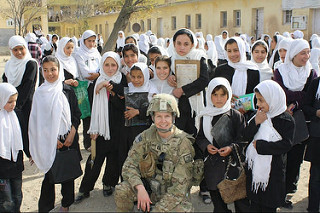
Kentucky Army National Guard Capt. Carla Getchell with Agribusiness Development Team III poses with students after delivering school supplies to a school in Kapisa, Afghanistan. (Photo taken by Army Sgt. Jane Rothstein)

My team and I were fortunate to follow Maj. Bobbie Mayes’ extremely successful deployment with the ADT II team. She built on what the team before her had created, and left my counterpart, Capt. Paula Thrush, and me with thriving relationships with female leaders in the Parwan, Panjshir, and Kapisa provinces of Afghanistan.

During our first mission, Mayes took us to meet some of the provincial leaders she was mentoring for a luncheon where she would say goodbye to the women she had worked with and to introduce us, her replacements, who would begin our year-long friendship with them. There were gifts and tears, and whole fried fish garnished with Afghan peppers. The woman who sat next to me reminded me of my aunt. She was jovial and easy to get along with, even if we could only communicate in hand gestures, smiles, and head nods.

The room was large enough to accommodate 15 or so Afghan and American women along with a couple male interpreters. Izzy and Abbie, our aging male interpreters were working hard to make their rounds and facilitate conversation between the chatting women. Because of this, Sohaila Kohistani and I played Afghan charades.

While we smiled and nodded at one another, I had carefully tucked the remainder of the fried fish head under the corner of tinfoil that lined my Styrofoam lunch container in hopes that none of my Soldiers would dare me to eat it. Instead, Sohaila began to motion toward a small, red hot pepper on my plate. She then smiled and gestured with the universal sign for eating. I immediately knew where this was headed. Here I was in the middle of Afghanistan, in the middle of a war zone, and this woman was egging me on to eat a hot pepper.

getchell_pepper

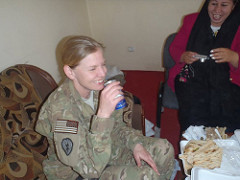
Kentucky Army National Guard Capt. Carla Getchell with Agribusiness Development Team III tries to wash down the heat after eating a hot pepper during lunch with Sohaila Kohistani at the Director of Women’s Affairs office in Kapisa, Afghanistan. (Photo taken by Army Capt. Paula Thrush)

Fortunately, I like spicy food, and while I knew it might be painful I would be able to endure it. Proving I could eat the hot pepper would set the stage for my relationship with this woman for the next year. As I raised the red pepper to my mouth I watched as every Afghan woman in the room reached down into their Michael Kors look alike bags and pulled out a digital camera. They were all poised to snap photos of the American woman eating the Afghan pepper.

It was definitely spicy and a bit painful. I made sure to make a show of grabbing a bite of naan, Afghan flatbread, and a gulp of canned soda to cool down the inferno that was making its way down my throat. As I did this the women in the room laughed and chatted happily over one another.

For the next year, Sohaila and I worked closely with one another to improve the lives of the women in her province of Kapisa. She told the story of the pepper multiple times to the men and women we encountered. I did everything I could for her, and fought for even more. When it was time to leave I gave her a bracelet with small gold stars because I had learned that Sohaila meant morning star in English.

security_sohaila

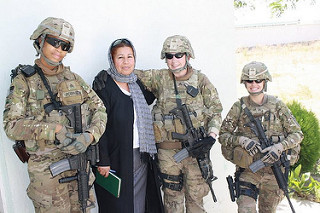
Kentucky Army National Guard Sgts. Kristyn Robinson, Heather Carrier, and Kathleen Gallagher with Agribusiness Development Team III pose for a picture with Sohaila Kohistani before returning from a Key Leader Engagement in Kapisa, Afghanistan. (Photo taken by Army Capt. Carla Getchell)

I did not know the depths of bonds that would develop with the Afghan women I worked with and the women I worked with in Afghanistan. I was fortunate to have an amazing team. Our medic, Sgt. Kathleen Gallagher, was always able to calm down the villagers by helping their children with their medical needs. Sgts Heather Carrier and Kristyn Robinson were my main security detail the entire year. They walked in and out of every room ahead of me. They kept me and everyone around me safe. Carrier even headed up her own projects. Staff Sgt. Jane Rothstein and Sgt. Claudia Rector got us all to Afghanistan, took care of us for the entire year, and got us all home with their amazing skills in personnel and logistics. They also were always willing to come out and work with me wherever we went.

I learned so many lessons from all the women I worked with that year. The lessons of compassion, understanding, and tolerance have stuck with me. Sohaila and I drank a lot of tea together that year, but it only took us one hot pepper to become sisters.


Story by John Trowbridge, Kentucky National Guard Command Historian

In recognition of March as Women’s Month, kentuckyguard.com is publishing a series of articles honoring women who are significant figures in Kentucky’s military history. The following is one such story ….

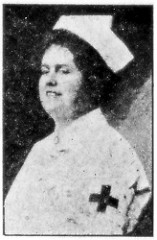
nurse-arvin_the-gleanerFRANKFORT, Ky. — Margaret Willie Arvin was born on April 21, 1879, the oldest of seven children of William and Bettie Arvin, of Henderson, Kentucky. Not much is known about her early years. In 1904, she graduated from the School of Nursing at the Owensboro City Hospital in Owensboro, Kentucky.

In 1914, she is accepted as a member of the General Samuel Hopkins Chapter of the National Society of the Daughters of the American Revolution, in Henderson. Mary was a descendant of Revolutionary War soldiers, Lieutenant Colonel Henry Dixon and General Samuel Hopkins.

That same year, events overseas begin to happen which would change the World forever. In June 1914, the First World War erupts in Europe. The United States remains neutral until April 1917. That same month The Harvard Unit, Base Hospital No. 5 is ordered to prepare for immediate mobilization. The hospital is comprised of doctors and nurses from the Harvard University Hospital, in Boston, Massachusetts. It was one of six Red Cross hospitals organized for Army service. By June 1917 the unit was assigned to support the British Expeditionary Forces in France.

Nurses quarters base hospital 5

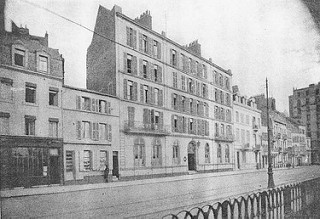
Nurses quarters Base Hospital No. 5.

Back in the United States, on June 11, 1917, Nurse Mary Arvin decided to join the war effort. She joined the American Red Cross and was assigned to Base Hospital Number 5. Arvin was immediately sent overseas to join the unit in France on July 18, 1917.

Nurse Arvin’s tour of duty was far from boring. From her nursing duties, seeing the sights of France, meeting people from different countries, social events, and due to the fact that their hospital was supporting the British Army, visits from members of the British Royal family.

However all this would change on the evening of September 4, 1917, when the hospital came under attack. During a night bombing raid by the Germans, the first American battlefield casualties of the First World War were members of Base Hospital No. 5. The next day Nurse Arvin writes home to tell of the attack on the hospital.

“The Lord was certainly with us. While there were a number of our patients wounded from the bombs, our adjutant and three of our American boys were killed, and several wounded. There was not a nurse hurt, so I think we escaped very lucky. It was a beautiful moon light night about 11:30. I was sitting here in my ward at the table when I heard, oh, such loud reports, one right after the other. It shocked me so that it knocked me out of my chair. One of my patients hollowed to me, saying: ‘Sister, lie flat on the floor.’ I said, ‘No, I must go over to the other ward and see if any of the patients are hurt there.’

“Just as I started to cross over I looked up and saw the aeroplane crossing very peacefully over. I thought to myself, oh, if I just had a big gun, you would never know what happened to you. There were five or six bombs dropped altogether in different places. I saved a piece of the shrapnel as a souvenir.”

On June 30, 1918, Base Hospital No. 5 was once again the target of a German night bombing mission. In a letter home she describes some of what occurred during the raid: “I do not know whether or not this will pass the censor, but the very night that we had our dinner, after we had returned to the hut, we were raided. I cannot tell you about it, but you can image the rest. No one in the unit was injured. Oh, how I would love to tell you everything. The next night the colonel came to me and said that I was the heroine’ and was to be decorated with a medal. They tell me that my name will also be put in the dispatches. I told the colonel I didn’t deserve all the credit, I only did my duty, stuck with my patients, kept them under control and tried hard to keep cool and to keep my head. I didn’t for a minute let them know I was frightened. I don’t think I could have managed them if I had. It tore things up considerably, but thank heaven not one of my patients was injured, only a few scratches.”

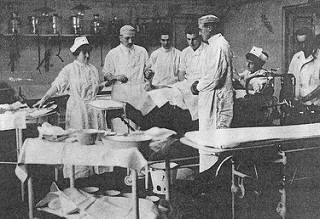
Base Hospital #5 operating room

Base Hospital #5 operating room.

Within a few days Nurse Arvin was awarded the French Cross of War and had received official congratulatory letters from General Pershing and her chain of command.

In his letter, General Pershing wrote, “My Dear Miss Arvin: Please accept my heartiest congratulations and sincere appreciation of the fine work you did on the night of June 30, 1918, when your hospital was a target of German airplane bombs. Your presence of mind and courage in quieting your patients was, under the circumstances, deserving of the highest praise. I am proud to have in the American Expeditionary Forces a nurse whose devotion to duty is of such high character as yours.”

On November 11, 1918, the War to end all wars came to a close. On January 20, 1919, Base Hospital No. 5 was relived from duty with the British Army. Elements began to filter back to the United States, and by late March, Nurse Arvin arrived back home in Henderson. The local newspapers ran a couple articles about her service and she became the guest speaker at a number of local social gatherings. In April she received the U. S. Army’s citation for exceptionally meritorious and conspicuous service, signed by General John “Black Jack” Pershing.

Over the next few months Nurse Arvin settled back into her civilian nursing career, in October she was assigned as a Red Cross welfare worker in Hopkinsville, Kentucky.

In November, she was notified that the British Government had awarded her the British Royal Red Cross Medal. At a ceremony held in Washington D. C. on November 13, 1919, Nurse Arvin received her medal from Prince Edward, who would later become King Edward of England. Nurse Arvin is one of few American women who served in the First World War to be recognized by all three of the major allied countries, France, Britain and the United States.

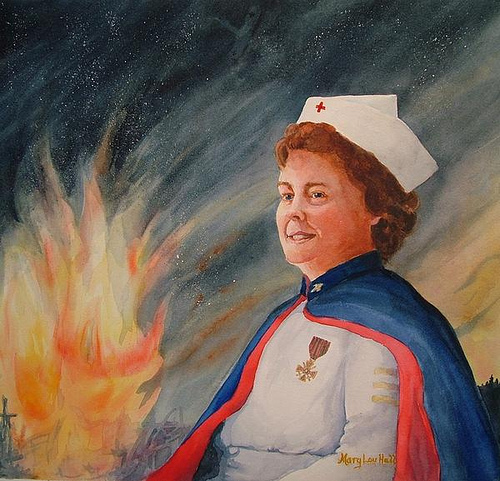
nurse-arvin-mary-lou-hall

In March 2006, Nurse Mary Arvin was honored by the Kentucky Women Remembered program and her portrait was framed and hung in the State capitol in Frankfort.

In a 1920 book published by members of Base Hospital 5, they make mention of Nurse Arvin in a poem:

There has been in our midst, since we’ve been to France,

A nice quiet lady named Arvin;

But as she don’t sing or dance, we have not had a chance,

To find what she really excels in.

The book also states the fact that she was known as “Bill,” by members of the unit, due to her middle name of Willie.

Sometime between 1921 and 1925, Nurse Arvin moved from Kentucky to Orlando, Florida where she worked as a private nurse and then in the local hospital. On March 28, 1925, she married William Tiller. Tiller a native of Georgia and himself a World War One veteran was a realtor in Orlando. Within a year of their marriage William Tiller dies leaving Mary a widow.

In 1932, she marries a second time, Robert Sissons, another veteran of the war, working as an office manager for an automobile firm in Orlando. This second marriage would last fourteen years, until the death of Mr. Sissons in 1946.

In February, 1932, The War Department made the announcement of a new medal, “The Purple Heart Medal.” Today that medal is recognized as being awarded to individuals who sustain a wound in combat, however, originally, it was awarded to individuals for military merit. World War One veterans that had received the Meritorious Service Citation, signed by General Pershing, were entitled to turn-in their citation and be awarded the new medal. Nurse Arvin turned-in her citation and was awarded the Purple Heart Medal, becoming one of the first females in U. S. Military history to receive the Purple Heart Medal.

Nurse Mary Arvin died on September 9, 1947, while visiting her sister in Henderson. She was laid to rest under full military honors conducted by the local American Legion Post in the Fernwood Cemetery in her home town of Henderson.

In March 2006, she was honored by the Kentucky Women Remembered program, her portrait and story are beautifully framed and hangs in the State Capitol in Frankfort.

In 2010, a Kentucky historical marker, was dedicated near her grave in the Fernwood Cemetery which tells her story of her service, sacrifice and dedication to duty.

Commentary by Chief Warrant Officer Joseph P. Lyddane, 138th Field Artillery Brigade

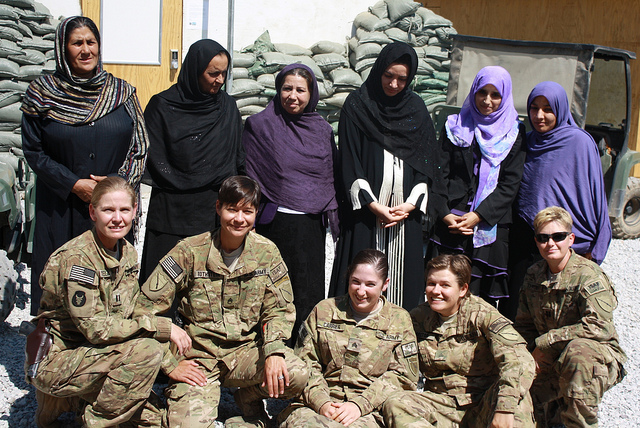
female soldiers in afghanistan

Today’s events are tomorrow’s history: Women continue play a critical role in military operations, particularly in developing relationships with local citizens. Agribusiness Development Team 3’s Female Engagement Team helps to educate and empower the local Afghan women. (File photo)

140927-Z-GN092-039

Army Maj. Bobbie Jo Mayes presents the Physical Fitness Award to Army 2nd Lt. Cassandra Mullins during a commissioning ceremony in Frankfort, Ky., Sept. 27, 2014. Mullins is not only a citizen soldier, but a Kentucky State Trooper who’s been recognized for her bravery. (Kentucky National Guard photo by Staff Sgt. Scott Raymond)

FRANKFORT, Ky. — There are many reasons why every year in March the United States, Australia, and the United Kingdom (Canada in October) reserve a full month of recognition to celebrate women. Among them are the many contributions made by females that have impacted the world. The sad truth is that throughout history many of the achievements made by women have been overlooked and marginalized. In 1911 the first International Women’s Day was organized, which was a benchmark event considering the social climate at the time. In 1980 President Jimmy Carter signed into proclamation declaring the week of March 8 as National Women’s History Week; six years later the week transitioned to a full month.

Looking back at American history I am reminded of women like Susan B. Anthony who in the mid 1800s fought for social equality and collected anti-slavery petitions becoming one of the first women’s rights activists. Sojourner Truth was an amazing person who escaped slavery and became the first black woman to win a case against a white man in the court and went on to recruit black troops for the Union Army during the Civil War.

As a military professional I think of courageous women like Harriet Tubman who ignored her own safety to become a spy for the Union Army and was one of the most prominent figures in humanitarianism and the abolition of slavery. There is also Mary Hayes McCauley, who later became known as “Molly Pitcher” for her efforts to carry water to the men in the battle of Monmouth in 1778.

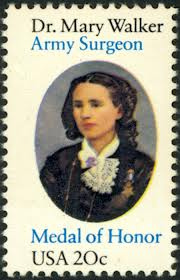
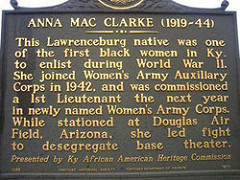
imagesCAHBJRQRDid you know that Dr. Mary Edwards Walker, the only woman to receive the Medal of Honor, called Kentucky home? And 1st Lt. Anna Mac Clarke, who lived in Anderson County, stood up against discrimination more than a decade before Rosa Parks.

These names join the likes of Betsy Ross, Sacajawea, Amelia Earhart , Emily Dickenson, and the first female doctor, Dr. Elizabeth Blackwell and thousands of others who made a lasting impression, along with the modern day females who continue to demonstrate courage by blazing a trail of their own.

Though tremendous strides have been made, a disparity still exists between men and women; the military still struggles with claims of sexual harassment and assault; and wage inequality is still prevalent between men and women in the workforce. By taking thirty days out of the year to recognize the women in our lives, the female leaders we admire, or the ones revered in our history books we can start to bridge these gaps and not only recognize the importance of equality but realize the benefits of diversity.

141107-Z-WA628-095

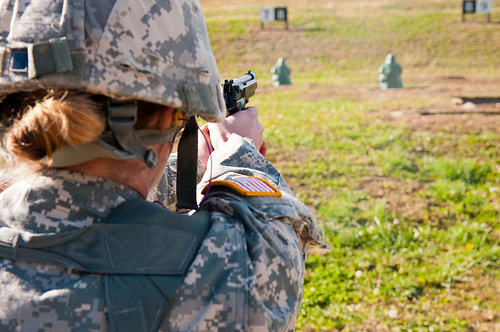
Spc. Caitlin Viera, a paralegal specialist with the 201st Headquarters and Headquarters Company, lines up her next shot with an M9 pistol during the marksmanship portion of the 2015 Best Warrior Competition at Wendall H. Ford Regional Training Center.

Truth be told, one month is not enough; we need to embrace the accomplishments of women each and every day and recognize their potential 24/7. And why wouldn’t we? It’s the 21st Century, more than one hundred years since that first International Women’s Day.

And let’s face it: none of us got to where we are on our own. For most of us, a female was present to pick us up off the ground, dust off our jeans, and give us that push we needed to carry on! And for that I, for one, am grateful.


Story by John Trowbridge, Kentucky National Guard

Wrapping up Black History Month and leading into Women’s History Month, kentuckyguard.com presents this unique look at a woman who swore to fight for her nation and ended up combating social justice ….

ImageDisplay

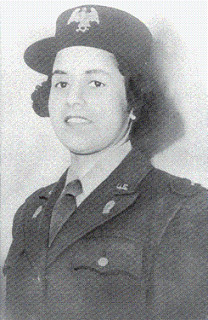
1st Lt. Anna Mac Clarke was a pioneer, part of a unique group of women who came together to help their country win a world war. She and her sister Soldiers also fought another war at home; that of racism, and they, as one unified force, began to break down the barriers of her race and gender which would eventually lead to the civil rights movement of the late 1940s, up through the 1960s.

FRANKFORT, Ky. — “It was raining that April morning as the train rolled into the station at Lawrenceburg, Kentucky. It was one of those day-long rains that slows the world down and gives you time to reflect. They had been waiting to meet the train that was bringing her back home. Home to her final resting place, this young woman who had, in the short span of 24 years, accomplished so much, not only for herself but for her race and her gender.” From the introduction to A Study in Military Leadership, 1997

Anna Mac Clarke was born June 20, 1919 in Lawrenceburg, Kentucky. Anna Mac, as she was called, was always known by her neighborhood friends as a “tomboy” who liked to play football and take care of animals, specifically cats and her pet chameleon. While growing up in her small town community, Clarke’s peers and elders knew that she was destined to do something great.

On May 28, 1937, less than one month before her 18th birthday, Clarke was awarded a diploma from Lawrenceburg High School, which at the time was referred to as the “Colored High School.” After graduating from high school, Anna Mac decided to pursue a college education. She considered many options, but in the end decided to attend Kentucky State College (now KSU), an historically black college located in Frankfort, Kentucky which is less than 15 miles from where she grew up in Lawrenceburg. While at Kentucky State, Clarke was a very active student, participating in sports, Delta Sigma Theta Sorority, and the school’s newspaper, The Kentucky Thorobred. Clarke graduated from Kentucky State College in 1941, earning a Bachelor’s degree in both sociology and economics. However, Anna Mac had a hard time finding employment that was appropriate for her skills and was not extremely low paying.

In 1942, Anna Mac Clarke joined the All-Volunteer Women’s Army Auxiliary Corps and left for Basic Training at Fort Des Moines, Iowa. After she completed Basic Training, Clarke went on to Officer Candidate School.

clarke1

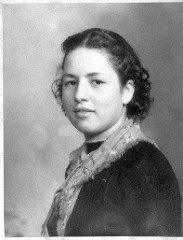
Anna Mac Clarke’s high school photograph.

On November 30, 1942, the Officer Candidate School at Fort Des Moines in Iowa –where Clarke was stationed—was desegregated. Within two weeks of the desegregation, Clarke became a candidate in the 15th Officer Class, WAAC OCS Program. There were two other African Americans in her class, but she would be the only one to finish the course eight weeks later on February 16, 1943. By the end of February, Clarke was reassigned to the Fourth Company, Third Regiment, as a Platoon Leader. Third Officer Anna Mac Clarke was the first African-American WAAC assigned to command what was otherwise an all-White unit.

With First Officer Sara E. Murphy, Clarke led a unit of 144 African-American WAACs to serve in Wakeman General Hospital at Camp Atterbury in Indiana. This assignment lasted for only a month, and in June 1943, Clarke worked in the Classification and Assignment Department of WAAC headquarters in Washington, D.C. She enrolled in the Adjutant General’s School at Camp Meade, Maryland, and after having completed the training she was assigned to Chicago’s WAAC recruiting program. Clarke was promoted to second officer on July 16, 1943, and she returned to Fort Des Moines. The Army transformed the auxiliary units of WAAC into the Regular Army, and Clarke became a member of the Women’s Army Corps (WAC) in September 1943.

Protesting enforced segregation

On February 7, 1944, Clarke led the first WAC unit onto the base at Douglas Army Air Field. Located in eastern Arizona, this Army Air Field was one of only four in the U.S. to have both African-American soldiers and WACs. The theater on the post was segregated, and Clarke had been warned by the African-American soldiers not to go there. However, Clarke and several women went to the theater, refusing to sit in the colored section. She protested the enforced segregation to the theater management, her immediate supervisor and then the Commanding Officer, Colonel Harvey E. Dyer. On February 21, 1944, Colonel Dyer issued the order to his officers “to educate properly all enlisted and civilian personnel in your respective departments to accept any colored WACs assigned as you would any white enlisted man or enlisted woman in the Army of the United States. Every consideration, respect, courtesy and toleration will be afforded every colored WAC. No discrimination will be condoned.”

In March 1944 Anna Mac was admitted to a hospital on the base with sharp pains in her side. Doctors diagnosed her with appendicitis, and decided that she needed an appendectomy to save her life. At first it was believed to be a successful surgery and Clarke was expected to make a full recovery. Unfortunately, gangrene had entered her body due to the infection brought on by the surgery.

1st Lt. Anna Mac Clarke died on April 19, 1944, at the age of 24.

59395680_128580807587She was buried back home in Lawrenceburg, where a Kentucky historical marker located on the grounds of the courthouse now tells her story.

One person can make a difference

Anna Mac Clarke was a pioneer, part of a unique group of women who came together for one purpose, to help their country win a world war. She and her sister WAACs would also fight another war at home; that of racism, and they, as one unified force, began to break down the barriers of her race and gender which would eventually lead to the civil rights movement of the late 1940s, up through the 1960s. Anna Mac would never know the full impact her efforts to right injustice would have on things that we take for granted today, not only in the military, but in the civilian world as well.

On July 26, 1946, a little over two years after her death, President Truman issued Executive Order 9981, which called for equal treatment and opportunity for blacks in the military. Four years later on March 1, 1950, the President’s Committee on Equality of Treatment and Opportunity reported that beginning in April 1950 the Army’s quota system for blacks was out and that segregation was over in the military.

As for the WAC, in 1947 members of the WAC were permitted to opt for service in either the army or the newly separated air force. The Women’s Armed Services Integration Act gave women permanent military status in the regular army or reserves. Finally, in 1978, the WAC itself was disestablished and its members were assigned or could enroll in all branches of the army and air force.

By Kentucky National Guard Command Historian John Trowbridge

With March being Women’s History month kentuckyguard.com is publishing a series of stories celebrating Kentucky women and the roles they played in our military history. Following is one such story ….

pic3

Elizabeth Eleanor and Margaret Gretchen Minnich,
while serving in the U.S. Army Nurse Corps at Sarisbury
Court, England.

FRANKFORT, Ky.Part one of this story provided a brief history on women in the United States during World War I and how Elizabeth and Margaret Minnich came to uniformed service. Part two continues with their mobilization and deployment to Europe.

On 23 February 1918, the Minnich sisters’ unit was mobilized into active duty service and on 1 March was ordered to Camp Zachary Taylor in Louisville for additional instruction and training until 18 June 1918. In early April, the nurses were ordered to active duty for training, some reported to Camp Taylor, others were sent to hospitals at Camp Dix, Camp Sherman, Camp Devens, Camp Greene, Camp Lee, and Camp Upton. The Minnich sisters were sent to Camp Meade, Maryland, for their training.

By June 1918, Gorgas had certified Base Hospital No. 40 was prepared to take charge of a hospital in France, or anywhere else, and to conduct it to the best interest of the soldiers, and to the satisfaction of the Medical Department.

On 28 May 1918, Elizabeth and Margaret Minnich were ordered to the Holley Hotel in New York City, to await the arrival of the remainder of personnel of Base Hospital No. 40 at Camp Mills, prior to deployment overseas. After staying at the hotel, the nurses were assigned to comfortable quarters at various locations around the city until ordered overseas. In the interim, the nurses’ uniforms were being made and fitted by the Red Cross. In the afternoons, at the Armory in New York City, the nurses were drilled and given military instruction. During their stay in New York they were cared for by the Red Cross Association.

By 12 July 1918, the Minnich sisters were aboard the famous White Star Line’s RMS Olympic, which arrived at Southampton, England, on 19 July. The Olympic, sister ship of the Titanic and Britannic, had been converted into a troop transport in support of the war effort. The trip across the ocean was uneventful, the ocean quiet. Although the Olympic was crowded, everyone seemed happy and anxious to get to work. Upon arrival at the Southampton docks the nurses were sent to Sarisbury Court, arriving there the following morning by truck. When the personnel of Base Hospital No. 40 arrived at Sarisbury Court, the construction of the hospital buildings was not complete.

The majority of the personnel were detached and assigned to English and American hospitals in England and France. Quarters for the nurses had not been completed, so they had to be quartered on the third floor of the mansion house. Sarisbury Court was scheduled to be the largest American hospital in England. It was situated along a bend of the Hamble River, about six miles from Southampton; the estate covered 186 acres of rolling farmland, meadows, and woods. The manor house stood on high ground and on a clear day its tower could be seen twenty miles away. The manor house and surrounding property had been purchased by the American Red Cross for conversion to an American hospital.

The Red Cross personnel assigned to Sarisbury Court tried to relieve the Kentuckians’ homesickness and the boredom of waiting for patients by organizing entertainment and recreational activities for them. Captain Thomas C. Campbell, the Red Cross chaplain, organized a glee club and string band with Bruce Reynolds and Sidney Freeman, former members of the Boston Symphony Orchestra, who were serving with Base Hospital No. 40. Captain Campbell introduced croquet and lawn tennis to the nurses. Additionally, he observed that English women rode bicycles, and he procured a number of bicycles for the use of the nurses. To his surprise he discovered that only a few of the American nurses knew how to ride.

The nurses’ time in service was not all fun and games; they still had their duty to perform. When Base Hospital No. 40 arrived in England their hospital was not completely built, so personnel were assigned to various hospitals across England and France. Some of these teams were stationed close to the front and came under the guns of the enemy near the Metz Front and the Argonne Forest. In a letter written to The Lexington Leader, Corporal John R. Marsh, who had been a reporter for the paper before the war, made the following commentary on his returning fellow members of Base Hospital No. 40 that had been serving in France: Our “overseas contingent” got back from France the other day loaded down with souvenirs and stories, not to mention a few of those interesting creatures the A. E. F. has lovingly named “cooties.
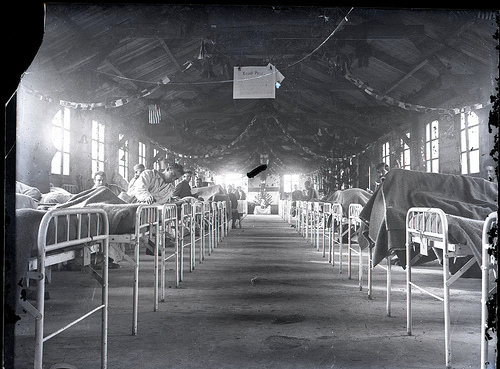
Base Hospital 47On 17 August, Margaret was part of a ten-nurse detachment attached to American Red Cross Medical Hospital No. 21, Paignton, Devonshire, England, and served with that organization until re-assignment to Base Hospital No. 40 on 2 January 1919.

Elizabeth remained with Base Hospital No. 40 in her sister’s absence. The Sarisbury Court hospital was opened for admission of patients on 27 September 1918, 125 cases being admitted on that date. During its operation, the majority of the hospital cases seen by the doctors and nurses were influenza and pneumonia and their complications.

The reunion of the sisters at Sarisbury Court in January 1919, was short lived, for, on 15 February, Margaret reported to Base Hospital No. 113, at Savenay, France.

The following day Elizabeth reported to Evacuation Hospital No. 20, located at Beau Desert, in the vicinity of Bordeaux, France, serving with that organization until 14 May 1919. On 15 May, Elizabeth was assigned to Base Hospital No. 111, also part of the Hospital Center, Beau Desert.

In June 1919, the sisters were reunited, this time in Savenay when Elizabeth was assigned to Base Hospital No. 113. During this time Base Hospital No. 113 was designated as a hospital from which all disabled nurses were to be evacuated to the United States. Records do not indicate if either of the sisters was ill during their time with this unit. However, unlike the other nurses of Base Hospital No. 40, they did not return to the United States with their original unit.

On 15 July 1919, the Minnich sisters sailed from St. Nazaire, France, aboard the Santa Teresa, arriving in New York on 27 July 1919. On 22 August, Elizabeth was placed on the Reserve Nurse List at Camp Dix, New Jersey. On 31 August, Margaret was also relieved from active duty. So ended the military careers of the Minnich sisters.

The war made a lasting impression on the Minnich sisters. They had survived their overseas military service; and although they had not come under direct fire of the enemy, they still shared with their male counterparts the suffering, death, and hazards of war. These women saw, first hand, the horror of war and its aftermath on the human body and spirit. They had to contend with, on a daily basis, the uncertainty of war. There was always the possibility of an attack by the enemy on their hospital, or the possibility of reassignment to a location closer to the front. They not only had to care for their patients, they had to take care of themselves to insure they did not become a casualty of an infectious disease.

Following their military service, the Minnich women returned to Kentucky and their nursing careers. The 1920 Federal Census listed Margaret as living in Paducah and Elizabeth as living in Frankfort.18 In August 1921, Margaret married Dr. Cary Randolph Blain, a Presbyterian minister of Christiansburg, Virginia. Margaret and Cary never had any children of their own; however, they adopted and raised three children.

In the early 1920s Elizabeth was working at Kings Daughters Hospital on East Main Street in Frankfort. She later moved to Breathitt County, taking a nursing position at Bach Memorial Hospital. By the 1930s she had moved to Ashland, where she worked as a nurse at Kings Daughters Hospital.20 In 1936, she became extremely ill, and, due to her veteran status, was sent to the Veterans Home in Dayton, Ohio, for treatment. Elizabeth Eleanor “Lizzy” Minnich died at the Veterans Home on 16 June 1939, following a three year illness. Her body was brought back to Kentucky where she was buried with military honors near the grave of her father, and sister, Rose, in the Ashland Cemetery.

During his military service, Private First Class John Bayles Minnich served at the Edgewood Arsenal in Maryland.23 According to his service record, he served with the newly organized Chemical Warfare Service. He was discharged on 8 December 1918. After the war, John returned to the hotel business, once again managing the Continental Hotel in Pineville. On 27 May 1927, he married Edith Nuckols, a schoolteacher in Pineville. The couple had one child, Elizabeth Gretchen Minnich, named in honor of her two aunts.

John Minnich served as president of the Kentucky Hotel Association in the 1920s. He moved his family to Middletown, Ohio, in 1930 when he took the manager position at the Manchester Hotel for Armco Steel Corporation. He served as the head of the Gas Rationing Board in Middletown during World War II. In 1965, the family moved to Ormond Beach, Florida, where John retired. He became a member of the Ormond Beach American Legion Post 267, the Oceanside Country Club, and the First United Methodist Church. John Minnich died on 21 April 1977, at the Ormond Beach Hospital. His remains were cremated.

A year after the death of her brother, on 1 April 1978, Margaret Gretchen Minnich Blain died at the Regency Nursing Home, Forstville, Maryland. She is buried in the historic Stonewall Jackson MemorialCemetery in Lexington, Virginia.

The story of this Kentucky family serves to illustrate the sacrifice not only of this family, but is typical of many American families who served in the armed forces of the United States during World War I. Although these Kentucky veterans were not in battle or on the battlefront, when called upon, they volunteered to serve. They honorably and faithfully performed their duty to their country. They put their lives on hold, willing to sacrifice their lives for a belief in democracy and freedom in the “War to End All Wars.”

Story by Sgt. 1st Class Dennis Anderson, 238th Regiment Unit Public Affairs Historian Representative

Mayes Family pic

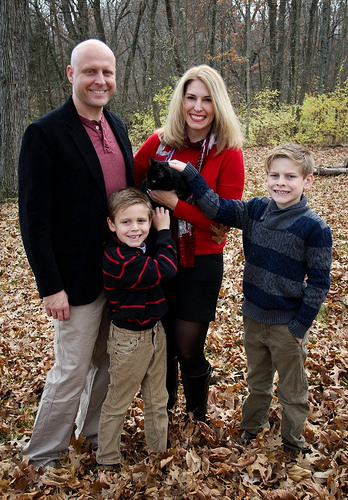
Maj. Bobbie Mayes with her family, husband, Maj. Jacob Mayes and sons, Joshua and Zachary. (Courtesy photo)

GREENVILLE, Ky. -- Maj. Bobbie Mayes is the first female commander of the Kentucky National Guard’s Officer Candidate School program. She was also the first female to serve as a Tactical Training Officer for Kentucky’s OCS in Greenville, Ky.

Mayes said she has two of the best jobs on earth, one at home and the other in uniform. The success that she has achieved has been anything but easy, but her two roles prepare her for the best of what both have to offer.

“Being a mom is much like being a commander,” said the mother of two boys. “When your kids are acting, growing and behaving in a positive light things run pretty smooth, but the moment you get a call from the principal’s office or you find something they aren’t supposed to have, it is time for discipline.”

“I love my troops and I love my children and I am a very fortunate person to have the opportunity to do what I do.”

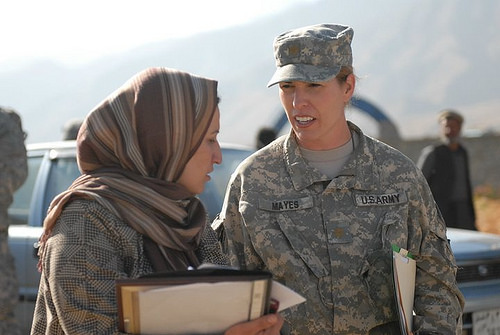
Mayes has served in uniform since 1992, primarily as a military police officer. With tours of duty at Guantanamo Bay, Cuba and with Kentucky’s Agriculture Development Team in Afghanistan, Mayes has held many positions in her career. She doesn’t bother herself with the importance of being the first female Teaching, Advising and Counseling (TAC) officer or OCS commander, to her, it’s about doing your best at your job.

Mayes and Mayes pic

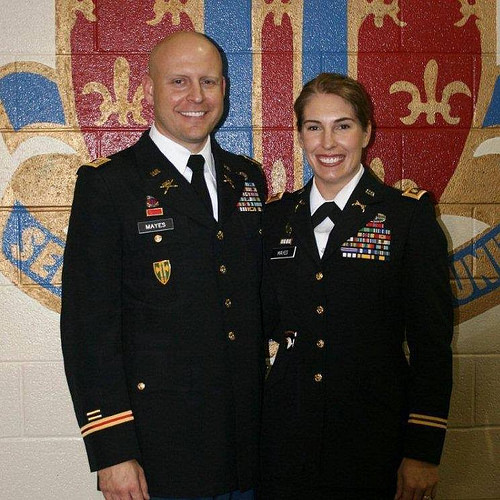
Majs. Jacob and Bobbie Mayes. (Courtesy photo)

When asked about being the first woman to serve in those positions, Mayes said, “The cool thing about this is that nobody really made a big deal out of it. I measure this as success.”

“Throughout history a big deal is usually made of folks who have broken a certain barrier or glass ceiling. The attention they are given is great, however, in my case without the attention, I see this a being very successful.”

Mayes’ husband, Maj. Jacob Mayes agrees that her jobs are similar, knowing when to turn the “drill sergeant” on and off.

“She relishes in her continual commitment to shape and mold those who follow her into something better.”

Being the best at her job has provided Mayes a solid reputation with members of the Kentucky Guard and with future officers in the ranks. Not just as a female Soldier, a woman in uniform, but as a leader.

“If someone just sees you as the OCS Commander, then they see you as one person, not male, female, black, white, short, fat, etc. They see you as a leader because of merit, perseverance and the leadership you give them.”

“I can say that being at the Regiment, I have never felt more like myself because of the caliber of folks I get to work with and being able to produce the finest Soldiers in the world. Who wouldn’t want my job, I am pretty lucky.”

Womens poultry grad

Maj. Bobbie Mayes speaks with a participant at a Women’s poultry course taught by members of Kentucky’s Agribusiness Development Team in Afghanistan, 2010. (Courtesy photo)

Col. Hal Lamberton, commander of the 238th Regiment said the best thing about Mayes is the quality she brings to the OCS program in professionalism and responsibility.

“There is no gender issue with her as the commander because she does the job of teaching, advising, and counseling the OCS candidates that well,” said Lamberton.

“Major Mayes is not seen as a female TAC Officer Commander but as the TAC Officer Commander. The officer candidates, unit cadre, and others outside the unit view her as reliable, responsible, and caring. Which I believe are desirable qualities of all officers regardless of gender.”

They were part of a patriotic clan from Eastern Kentucky in the War to End All Wars

By Kentucky National Guard Command Historian John Trowbridge

With March being Women’s History month kentuckyguard.com is publishing a series of stories celebrating Kentucky women and the roles they played in our military history. Following is one such story ….

pic1

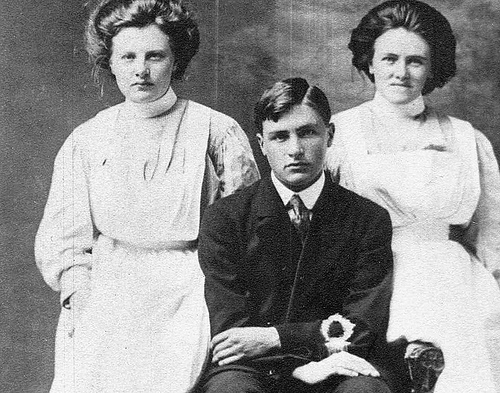
Margaret Gretchen, John Bayles, and Elizabeth Eleanor Minnich.

FRANKFORT, Ky. — The door that barred the way to women joining the ranks of the United States military was opened slightly on 28 February 1901, with the introduction of the Nurse Corps (Female) and on 13 May 1908, with the establishment of the Navy Nurse Corps. However, it was not until the United States entered World War I that the government and the military authorities got serious about allowing women into the service.

Approximately 4,300,000 Americans served in the military during the war. Of that number an estimated 30,000 were women. American women served in the Army, Navy, Marines, and Coast Guard.

American servicewomen served around the globe; by war’s end they had seen service in the Philippines, Guam, Samoa, Haiti, Virgin Islands, England, Ireland, Scotland, France, Belgium, Italy, Serbia, Siberia, Hawaii, and Puerto Rico, in addition to various locations within the United States.

pic2

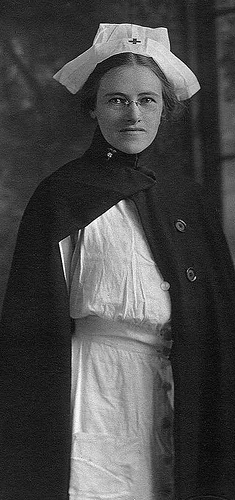
Elizabeth Minnich in her nurse uniform.

Many women who served overseas in combat areas suffered the same hardships and potential dangers of their male counterparts. Some women serving near the battlefront were killed in accidents, others were wounded or gassed, some died of disease. A number of American nurses are buried in military cemeteries in foreign countries far from their native soil. More than 320 American women serving in the military were casualties of the war to end all wars.

Women served valiantly with dedication and devotion to duty throughout the war. Three Army nurses were awarded the Distinguished Service Cross, twenty-three received the Distinguished Service Medal, while numerous others received a variety of citations. Four Navy nurses received the Navy Cross, while six others received citations. More than 100 Army nurses were awarded with French decorations.

The British military presented decorations to more than ninety Army nurses.

Once war ended and the role of women in the military faded, they quietly returned to their homes, families, and civilian life. Though the Army and Navy Nurse Corps continued to exist in peacetime, it would be a number of years before these women would receive the rank, pay, and benefits of their male counterparts. Many of the women “veterans” who had served in the Army Signal Corps during the war were told they would not be eligible for honorable discharge or veterans benefits. After a more than sixty-year battle, however, Congress passed Section 1414 of the GI Bill Improvement Act of 1977, finally giving the women veteran status.

During World War I, Kentucky provided approximately 250 women to the military service. These women came primarily from the nursing profession. Of the 250, fifteen were from the Appalachian region of the state.

An interesting case in point is the story of the Minnich family of Oil Springs in Johnson County, deep in the mountains of southeastern Kentucky. This mountain family provided two daughters and one son to the war effort. The three were the children of William W. and Myrain F. (Long) Minnich. Elizabeth Eleanor “Lizzie” was born on 22 November 1883, Margaret Gretchen was born on 30 July 1888, and John Bayles was born on 6 February 1890.

All three attended Berea College. Elizabeth and Margaret graduated from the College of Nursing with the class of 1909. Both women listed their home address as Olympia, Bath County. In 1911, John completed the three-year course. While attending Berea College, John dreamed of one day becoming governor of Kentucky. His working experience, however, was at Boone Tavern, and he spent his entire career in hotel management. Prior to his entry into military service, John was managing the Continental Hotel in Pineville, Bell County, Kentucky.

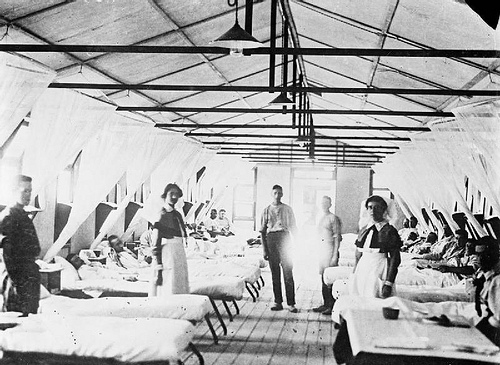
Base HospitalFor nearly ten years following their graduation from Berea College, Elizabeth and Margaret worked at hospitals in Madison, Bell, Franklin, and Fayette counties. The United States entered the war on 6 April 1917. Elizabeth and Margaret joined exactly one year later, on 6 April 1918. John joined five days later, on 11 April. At time of enlistment, Elizabeth was thirty-four, Margaret was twenty-nine, and John was twenty-eight.

Both women were working for the Kentucky Public Health Nursing Association in Frankfort. Elizabeth lived at 190 North Upper Street in Lexington and is credited on official records to Fayette County. Margaret was living in the Pineville hotel managed by her brother and is credited to Bell County.

Elizabeth and Margaret joined Base Hospital No. 40, known as the “Barrow Unit” after its director, Dr. David Barrow of Lexington. In June 1917, Surgeon General William C. Gorgas authorized the organization of Base Hospital No. 40. Home for the base was Lexington’s Good Samaritan Hospital. All base hospitals were required to be sponsored by either a medical school or hospital. Organization of this unit was placed in the hands of the American Red Cross Association, with Colonel Jefferson R. Kean in charge. On 15 July 1917, Elizabeth Bogle, of Lexington, was appointed head nurse.

In December 1917, Dr. Barrow was instructed to change the original 500-bed unit to a 1,000-bed hospital, which would require an organization of thirty-three officers, 100 nurses, five civilian employees and 200 enlisted men. By late December the organization of Base Hospital No. 40 was completed, even though the nurses had not been called to active service.

Next up: Deployment and service in Europe!