Pages
Stay In Touch
More
© 2013 KentuckyGuard
NOTE: As often as we can, kentuckyguard.com publishes stories by Kentucky National Guard unit public affairs historian representatives, also known as UPAHRs. This is an additional duty taken on by a Soldier or Airmen with the intent of telling their unit’s story. This is one such story ….
Story by Spc. Vincent Willingham, 149th BSB Unit Public Affairs Historian Representative
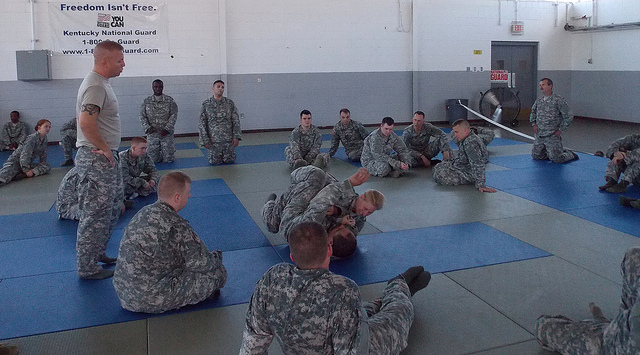
Sgt. 1st Class Amy Parker demonstrates a combatives move as other members of HHC, 149th BSB look on during Restorative Physical Training Saturday, June 29 2013, in Bowling Green, Ky. Soldiers conduct RPT, part of the Modern Army Combatives Program, in order to improve overall physical readiness and to prepare for additional instruction during Annual Training. (U.S. Army National Guard photo by Spc. Vincent Wilingham)
BOWLING GREEN, Ky. — Members of the Headquarters and Headquarters Company (HHC), 149th Brigade Support Battalion conducted Restorative Physical Training (RPT) June 29th, 2013, at the National Guard Armory in Bowling Green, Ky. Staff Sgt. Kevin Borders, HHC Readiness NCO, led the PT session Saturday morning.
“The Modern Army Combatives Training Program (MACP), or simply combatives, involves strength, conditioning, stretching, and flexibility to a degree that can cause injury with improper training. RPT is a series of conditioning drills designed to greatly reduce the chance of injury,” said Borders.
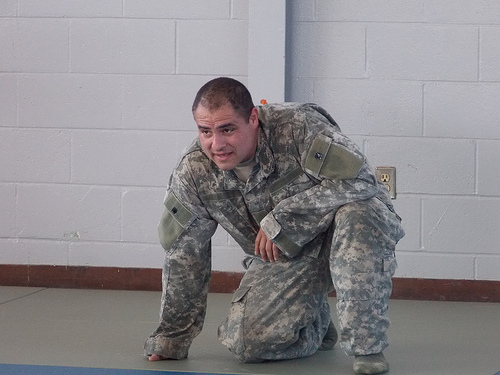
Staff Sgt. James Davis catches his breath during a break from Restorative Physical Training Saturday, June 29 2013, in Bowling Green, Ky. Soldiers conduct RPT, part of the Modern Army Combatives Program, in order to improve overall physical readiness and to prepare for additional instruction during Annual Training. (U.S. Army National Guard photo by Spc. Vincent Willingham)
Beginning at 8 AM, Soldiers conducted a series of stretching exercises to loosen up. The stretches were followed by an intense, nearly two our physical training session designed to toughen the body and mind. Physically exhausted, but better prepared for situations involving hand to hand combat, the Soldiers were released to get cleaned up and to prepare for the rest of the training day.
Combatives training is an intensive, hands-on experience that will instill confidence in Soldiers and greatly improve the desired level of physical fitness Soldiers are expected to maintain. Borders believes that Combatives training is important because it is used to instill the Warrior Ethos in all Soldiers.
“Combatives allows Soldiers to close the distance, gain a dominant position, and finish the fight,” he said.
Story and photos by John Crosby, Atterbury-Muscatatuck Public Affairs
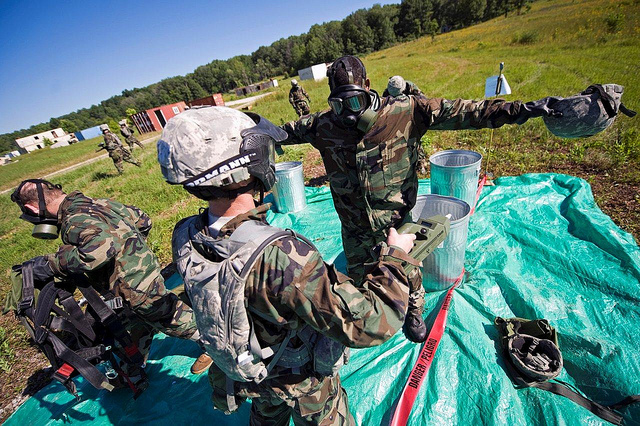
Kentucky National Guard Soldiers of the 103rd Chemical Battalion practice chemical decontamination during a simulated chemical weapons attack at Camp Atterbury, near Edinburgh, Ind., July 25. The battalion wide exercise was the culmination of two weeks of annual training. (Photo by John Crosby, Atterbury-Muscatatuck Public Affairs)
EDINBURGH, Ind. — The Kentucky National Guard’s 103rd Chemical Battalion conducted decontamination training at Camp Atterbury, near Edinburgh, Ind., July 25.
This culminating event, involving search and extraction, reconnaissance and decontamination teams, is the result of two weeks of annual training held here.
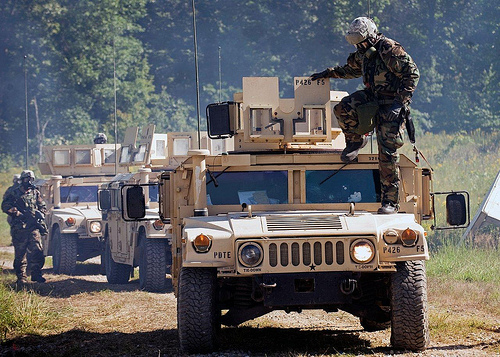
Kentucky National Guard Soldiers of the 103rd Chemical Battalion dismount their Humvees during a chemical decontamination exercise at Camp Atterbury, near Edinburgh, Ind., July 25. The battalion wide exercise was the culmination of two weeks of annual training. (Photo by John Crosby, Atterbury-Muscatatuck Public Affairs)
These troops conducted traditional Soldier skills training including weapons ranges and room clearing, as well as occupational specific training. Additionally, they conducted drivers familiarization training on the M113 Armored Personal Carrier equipped with an M58 Wolf Smoke Generator System. This system creates large plumes of smoke to provide concealment to Soldiers on the battlefield.
“We’ve been doing a lot of training this past year on the vehicle, but this is the first time we’ve been able to really get some hands on driving time, seeing what the vehicle can and can’t do and how it handles the terrain,” said Spc. Chris Mocabee, Chemical Specialist with the 301st Chemical Company. “Basically, if you’ve got a unit coming across the hot zone, we can provide smoke to limit the enemies visibility and make sure our guys don’t take any hits.”
This annual training period is the unit’s first since 2008. The unit deployed in support of Operation Iraqi Freedom from 2009-2010. In 2011 and 2012, the battalion trained to become part of the Kentucky Chemical, Biological, Radiological, Nuclear and High Yield Explosive Enhanced Response Force Package.
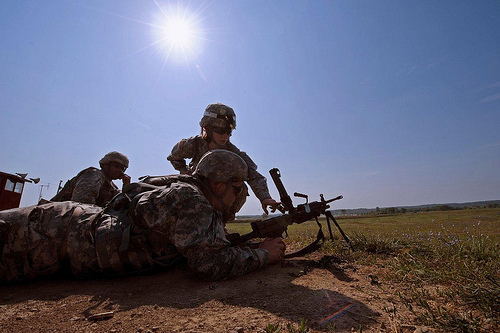
Kentucky National Guard Pfc. Kathrine Hix, Richmond, Ky., chemical specialist in Headquarters and Headquarters Detachment, 103rd Chemical Battalion inspects the chamber of an M249 Squad Automatic Weapon at Camp Atterbury, near Edinburgh, Ind., July 17. The battalion trained a variety of Soldier skills including the weapons ranges and room clearing operations, as well as occupational specialty specific training. (Photo by John Crosby, Atterbury-Muscatatuck Public Affairs)
“It’s been about five years since we’ve been out here as a unit in this capacity, training our traditional National Guard mission,” said 299th Chemical Company 1st Sgt. William Thompson Jr. “We’ve got so many new Soldiers in the unit, which is a plus when it comes to training because these younger guys have the fresh and latest techniques to share.”
The culminating event began with a simulated chemical, biological, radiological, nuclear related incident, in which Soldiers were contaminated. The M113 tracked vehicles rushed to the scene and deployed smoke. Reconnaissance forces donning gas masks and full chemical suits took out to search for casualties. Search and extraction teams helped gather casualties and guided them and their vehicles to the decontamination area where they were methodically filtered and cleaned of the attack.
“The day has been good, they’re operating smoothly now,” said Thompson of his Soldiers. “They’ve come a long way since the beginning of the week.”
Thompson added he hopes to return to Atterbury for annual training next year.
Story by Staff Sgt. Scott Raymond with contributions by Jason LeMay, Kentucky Department of Military Affairs
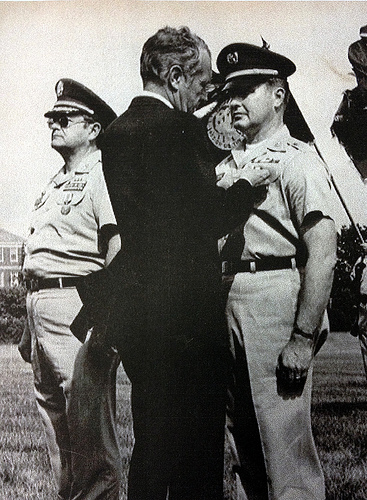
Chief Warrant Officer Wren Walters receives the Kentucky Medal of Valor from Gov. Wendell H. Ford at Fort Knox, Ky., June, 1974. Walters was recognized for saving the life of a woman attempting to jump from a bridge near Fort Knox in 1973. (Courtesy photo)
July has been declared Kentucky National Guard Warrant Officer Month in a proclamation by Gov. Steve Beshear. This is one of a series of articles we are publishing in celebration of the warrant officer corps. Click here to read more about 95th birthday of the Army’s warrant officer corps.
FRANKFORT, Ky. — Chief Warrant Officer Wren Walters is a legend among the warrant officer corps in Kentucky. He was a family man who dedicated many years of his life to being a positive role model to all he encountered, in uniform and out.
Three years after his death, it’s still easy to see the impact the maintenance warrant officer left on a family, a community and an organization.
Wren Howard Walters Sr. enlisted in the Kentucky Army National Guard in March 1948 and retired in April 1989 with more than 40 years of service. He served on active duty during the Korean War and when the Kentucky Guard was activated for the Berlin Crisis from October 10, 1961 to August 11, 1962. He also served with the 103rd Forward Support Battalion in Danville.
“Chief Walters is a familiar name to most warrant officers still serving today,” said State Command Chief Warrant Officer James Simms. “His legacy as a Leader, Mentor, Trainer still lives in each of us as we continue his desire to not only develop young soldiers but the youth in his community as well.”
“His presence and expertise is truly missed and reflected on by many in our day to day decisions effecting our soldiers.”
A native of Bardstown, Ky., Walters served as an enlisted soldier as an instrument repairman helper and instrument repairman at Frankfort’s Combined Support Maintenance Shop. He became a warrant officer in November 1968 and retired as foreman of the armor shop.
Walters is one of only four warrant officers to be awarded the Kentucky Medal for Valor. The medal is awarded to a member of the Kentucky National Guard who has distinguished himself conspicuously by gallantry and intrepidity at the risk of his life while in the service of the State and/or United States.
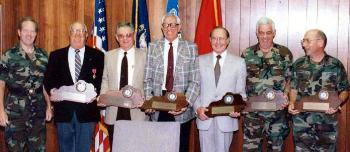
Chief Warrant Officer Wren Walters, (third from right) was recognized along with other Kentucky Guardsmen for their 40 plus years of service during a ceremony in Frankfort, Ky., 1991. From left to right are: Adjutant General Tebbs Moore, Chief Warrant Officer Harold Canon, Chief Warrant Officer John Young, Command Sgt. Maj. Marion Williams, Walters, Command Sgt. Maj. Ray Boyd and Chief Warrant Officer Glenn Birdwhistell. (Courtesy photo)
On January 4, 1973, Walters, while serving with the 413th Heavy Equipment Maintenance Company, was awarded the Kentucky Medal for Valor “for a deed of personal bravery above and beyond the call of duty” for saving an individual above the Salt River near Fort Knox, Ky.
Members of the 413th were traveling in a convoy to Fort Knox. As the convoy passed over the Salt River bridge on Highway 31 W at West Point, Ky., a woman was observed walking along the highway and onto the bridge. She proceeded to climb over the railing apparently intending to jump to her death in the frigid river below. Walters stopped his vehicle as he crossed the bridge and restrained the woman, risking possible injury or being dragged into the river himself until other Guardsmen got to the site and assisted in pulling her back over the railing to safety.
Walters was presented the award by Governor Wendell H. Ford and Maj Gen Richard L. Frymire during a ceremony in June, 1974 at Fort Knox. A total of 57 Kentucky Guard Soldiers and Airmen have received the Kentucky Medal for Valor.
Wren married his wife, Volinda in 1951, and had two children. Their oldest, Wren Jr., enjoyed his own successful military career in the Army, retiring as a lieutenant colonel. A younger son, John died in a scuba diving accident when he was only 17.
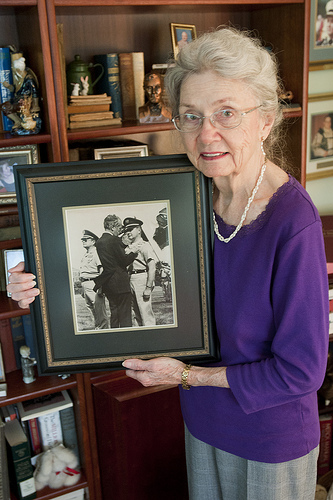
Volinda Walters holds a picture of her husband at her home in Frankfort, Ky., July 22, 2013. The photo shows Chief Warrant Officer Wren Walters receiving the Kentucky Medal of Valor in 1974. (U.S. Army National Guard photo by Staff Sgt. Scott Raymond)
The Walters leaned on each other and provided strength for each other through all their life’s misfortunes, and blessings. A unity for all to respect and a diagram for success in life. For 58 years of their marriage, Volinda was an Army wife, while also a full-time nurse, maintaining the family and the support of her husband.
“When one person is in the military, the whole family is in the military,” she said. “You have to support your husband, and walk the walk with them.”
“He embraced life and lived it very intentionally and intensively, you could say,” she said of her husband. “We had some really interesting times in the Guard.”
Volinda remains a solid supporter of the military and the Kentucky National Guard, continuing the hope her husband had for the future of all Guardsmen.
“It’s amazing how far we have come,” she said of the Guard. “You can’t spend that many years associated with something like that and not continue an interest. I wish the general public knew of all the great things the military does for families and children and society.”
Wren Walters passed away April 19, 2010 at the age of 80, after a long battle with muscular dystrophy. When asked about the time she spent with her husband, Volinda said simply, “While I shed tears, I will not complain. We had a good time, we had a very good life.”
Click here for more information on the Kentucky Medal for Valor and its recipients.
NOTE: The actual citation for the Kentucky Medal for Valor was not available. This account was pieced together from witness accounts and publications. Thanks for information and research assistance to: CW4 (R) Harold Canon; LTC (R) Willoughby S. Goin III; Glenn Minor; SFC (R) Thomas J Murphy III; CSM (R) Frederick D, Schleifer; COL (R) Ralph Palmore and CW4 (R) Murray Parrish.
Story and photos by David Altom, Kentucky National Guard Public Affairs
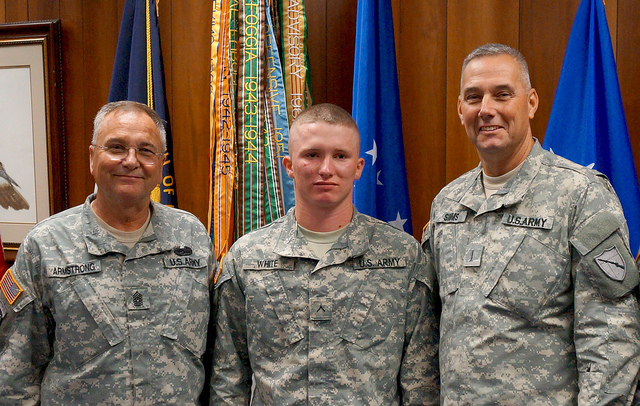
Pvt. Darrick White is flanked by two of the Kentucky National Guard’s top mentors, State Command Sgt. Maj. Greg Armstrong and State Command Chief Warrant Officer Jimmy Simms. An honor graduate from the Guard’s Appalachian ChalleNGe Academy, White went on to become honor graduate during his basic training and AIT classes. (Kentucky National Guard photo by David Altom)
FRANKFORT, Ky. — Pvt. Darrick White is a man with a purpose. A high school dropout with issues at home, he was determined to do something to get out of the rut and make a difference in his life. He got word of the Kentucky National Guard’s Youth ChalleNGe program and decided that might just be the ticket.
“I heard about the Youth ChalleNGe program and saw that as a way of getting my life going,” said White. “It turned out that I really enjoyed it. I learned so much there. I can tell you for sure that it definitely helps get you straight and set you up for what comes later in life.”
White loved the experience so much that at the end of his 22 weeks at the Appalachian ChalleNGe Academy in Harlan he was selected the honor graduate.
His next step? Join the National Guard, of course.
“I wanted to do something to serve and this seemed the best route for me,” he said. “I really like it a lot!”
White joined up last January and went to basic and advanced individual training at Fort Sill, Ok. where he was once again ranked as his class honor graduate.
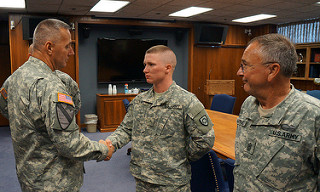
State Command Sgt. Maj. Greg Armstrong looks on as Pvt. Darrick White receives a command coin from State Command Chief Warrant Officer Jimmy Simms. (Kentucky National Guard photo by David Altom)
“What you’ve done is a significant accomplishment,” said State Command Sgt. Maj. Armstrong told white during a recent visit with senior Guard leaders at Boone National Guard Center in Frankfort.
“By taking the initiative the way he has, this young man has done something that not many people could achieve,” said Armstrong. “It speaks to his courage and his determination to do something positive with his life. That, to me, is very impressive.”
White also received a coin from State Command Chief Warrant Officer Jimmy Simms, the ranking member of the Kentucky National Guard’s warrant officer corps. Simms encouraged White to keep up the good work and stay on course.
“We definitely need people like this in the Guard,” Simms said. “To come so far in such a short amount of time, and on your own initiative, that’s awesome! I know for sure I can use more like him in the warrant officer corps.”
White is currently assigned to Detachment 1, Headquarters Company, 1st Battalion 149th Infantry where he serves as a forward observer.
Story by Spc. Brandy Mort, 133rd Mobile Public Affairs Detachment
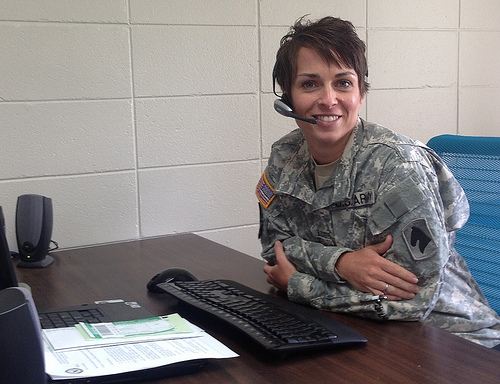
Chief Warrant Officer Stephanie Allen works in human resources for the 138th Fires Brigade. Allen became a warrant officer to make a more positive impact on the lives of Soldiers in the Kentucky Guard. (Courtesy photo)
July has been declared Kentucky National Guard Warrant Officer Month in a proclamation by Gov. Steve Beshear. This is one of a series of articles we are publishing in celebration of the warrant officer corps. Click here to read more about 95th birthday of the Army’s warrant officer corps.
FRANKFORT Ky. — In January 1944, the appointment of women as warrant officers was first authorized and the first women were appointed in March 1944. At the conclusion of World War II, there were 42 women warrant officers on active duty. Today, the Army has roughly 2000 female warrant officers in its ranks.
Chief Warrant Officer Stephanie Allen, Military Personnel Technician with the 138th Fires Brigade stationed in Lexington Ky. is one of many female warrant officers serving in the Kentucky National Guard.
As an MP technician, and qualified Army Instructor, Allen is in charge of human resource services, personnel support, financial services, chaplain activities, medical services, and legal services support. The 15-year Guard Veteran also manages the functions that support the Army’s personnel management systems by monitoring the input of data into automated and manual systems along with many other of other duties.
With the vast amount of responsibilities appointed to Allen as a warrant officer, she has had the opportunity to make a huge impact in Soldier’s lives within the past year.
“This year gave me the opportunity to make a positive difference for our Soldiers,” said Allen. “Additionally, I gained invaluable hands on experience tracking medical and administrative deployment requirements. This opportunity allowed me to work diligently to increase the readiness within the brigade.”
Allen has previously worked as a heavy mobile equipment transporter and as a human resource specialist, but thanks to one of her supervisors, she made the switch to warrant officer.
“My Senior Leadership at the Human Resource Office who trained, mentored, and encouraged me suggested I could make a greater impact to the organization as a warrant officer,” said Allen who became a warrant officer in 2009. “I enjoy what I do for the National Guard, becoming a warrant officer has been one of the best decisions I’ve made.”
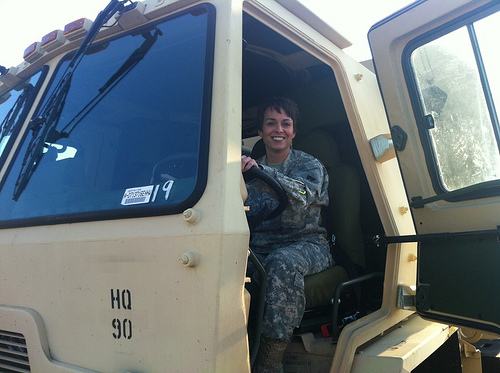
Chief Warrant Officer Stephanie Allen is a 15-year Veteran of the Kentucky National Guard, she became a warrant officer in 2009. Prior to becoming a warrant officer, Allen was a heavy mobile equipment transporter on the enlisted side. (Courtesy photo)
Even though she remains busy with work, in her spare time Allen enjoys spending time with her two boys, Kaden and Zain.
“I am active in my church assisting with children’s programs and women’s ministry,” said Allen, “My children are active in the community. They play baseball and soccer and I spend a lot of time attending their sporting events.”
Allen looks toward the future and hopes to work full time for the brigade and eventually work her way up to supporting and assisting all commands in the state.
“My future is very bright,” said Allen, “I am an integral part of a dynamic organization and I look forward to doing this for a long time.”
Story by Staff Sgt. Scott Raymond, Kentucky National Guard Public Affairs
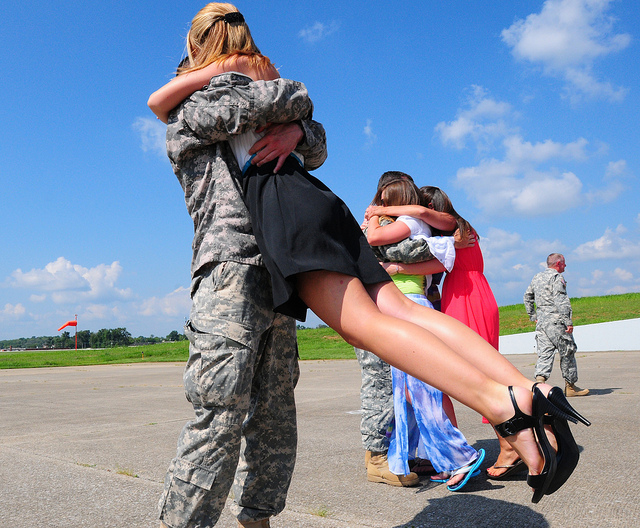
Soldiers of Detachment 11, Operational Airlift Support Command are greeted by friends and family members during a welcome home ceremony at Capital City Airport in Frankfort, Ky., July 24, 2013. The unit deployed to the Middle East in October, 2012 in support of Operation Enduring Freedom. (U.S. Army National Guard photo by Staff Sgt. Scott Raymond)
FRANKFORT, Ky. — Family and friends honored the members of the Kentucky National Guard’s Detachment 11, Operational Support Airlift Command in a welcome home ceremony July 24 at Capital City Airport in Frankfort, Ky.
“I want everyone to know how successful these troops were, how well they represented the Kentucky National Guard and the great state of Kentucky,” said deputy adjutant general, Maj. Gen. Lonnie Culver, who was on hand to greet the unit as they stepped off the plane.
“These amazing Soldiers did some extraordinary things, the kinds of things the general public doesn’t know goes on behind the scenes in wartime,” said Culver.
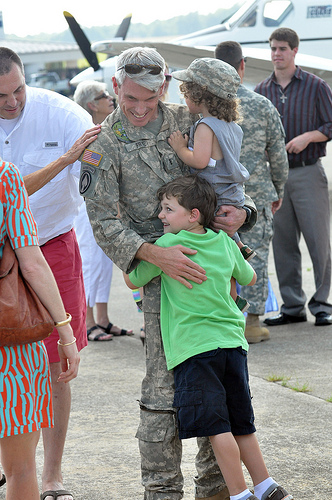
Chief Warrant Officer Justin Frye is greeted by friends and family members during a welcome home ceremony for Soldiers of Detachment 11, Operational Support Airlift Command in Frankfort, Ky., July 24, 2013. The six-man-unit flew more than 2,000 flight hours in the Middle East region in support of Operation Enduring Freedom. (U.S. Army National Guard photo by Staff Sgt. Scott Raymond)
During its nine month deployment Detachment 11 flew the C-12 Huron fixed wing aircraft, moving thousands of personnel and a half million pounds of cargo around the Middle East. They also conducted more than 50 combat sorties in support of the coalition forces in Afghanistan.
To see more photos from the ceremony, click here.
Det. 11’s commander, Chief Warrant Officer Stephen Hunnicutt said he’s not a man of few words, but did not know what to say upon their return.
“This unit is small, but they did the job of many,” said Hunnicutt. “They actually doubled performance of any other group before them. They are a true testament of this organization.”
“The Kentucky Guard, no matter where you go, always stands out, above everyone else,” he said. “And I am just thankful to be part of this organization.”
The unit mobilized in support of Operation Enduring Freedom on October 31, 2012 and operated with Army Guardsmen from Michigan and South Dakota during their mission.
Since 9/11, more than 16,000 Kentucky National Guard Soldiers and Airmen have mobilized in support of the Global War on Terror.
By Master Sgt. Philip Speck, 123rd Airlift Wing Public Affairs
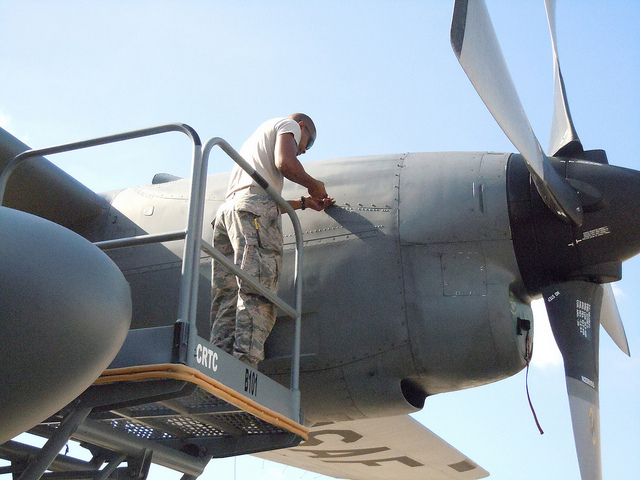
A Kentucky Air National Guard member works on a C-130 Hercules engine at the Air National Guard Combat Readiness Training Center in Gulfport, Miss., on June 18, 2013, as part of a week-long course called Maintenance University. The course was created by the Kentucky Air National Guard’s 123rd Maintenance Group. (U.S. Air National Guard photo by Col. Ken Dale)
KENTUCKY AIR NATIONAL GUARD BASE, LOUISVILLE, Ky. — The Kentucky Air National Guard’s 123rd Maintenance Group held its second-annual Maintenance University Course this summer, giving 130 Kentucky and Connecticut Air Guard members the opportunity to receive concentrated training on a broad range of aircraft maintenance tasks.
The weeklong course, created and managed by the Kentucky Air Guard but held at the Air National Guard Combat Readiness Training Center in Gulfport, Miss., is the first of its kind, according to Col. Ken Dale, commander of the 123rd Maintenance Group.
He said the course was designed to provide Airmen with a block of time away from home station so they could concentrate on maintenance-specific training, eliminating distractions like ancillary training that are often consume a good portion of available time during monthly drill weekends.
“We had an E-6 and below meeting, and the number-one gripe was ‘I never get to work on aircraft’,” Dale said.
To address that issue, senior leaders deployed two C-130 Hercules aircraft and 80 part-time and full-time Airmen to Gulfport last year for a week of maintenance-specific training. The event went so well, they decided to do it again this year and call it “Maintenance University.”
Other Guard wings were invited to participate, and the Connecticut unit accepted. Several others expressed interest, Dale said, but Sequestration-driven budget cuts prevented their participation.
“Other folks have heard about the training, and now we have a waiting list of units that want to go next year,” he added.
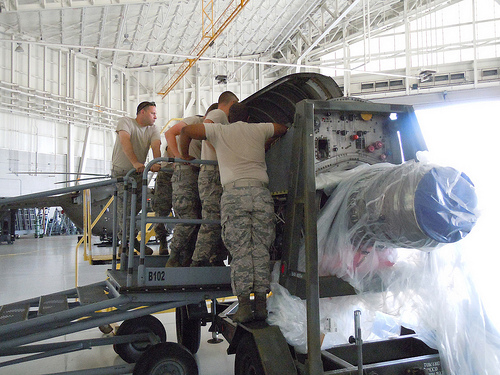
A Kentucky Air National Guard member works on a C-130 Hercules engine at the Air National Guard Combat Readiness Training Center in Gulfport, Miss., on June 18, 2013, as part of a week-long course called Maintenance University. The course was created by the Kentucky Air National Guard’s 123rd Maintenance Group. (U.S. Air National Guard photo by Col. Ken Dale)
In addition to C-130 aircraft, the 123rd took a spare engine to Gulfport this year so Airmen could train on unique tasks such as replacing a starter, something that normally isn’t accomplished very often. No aircraft were flown during the course so maintainers could conduct engine runs and other types of training they normally aren’t able to accomplish during busy drill weekends.
The National Guard Bureau was able to support the university by providing days and dollars for Airmen to attend, said Dale, who said next year’s course is already being planned.
“We want to grow it,” he said. “We’re hoping to continue it, and we have visions of growing it slow and steady.”
Story and photos by Spc. Brandy Mort, 133rd Mobile Public Affairs Detachment
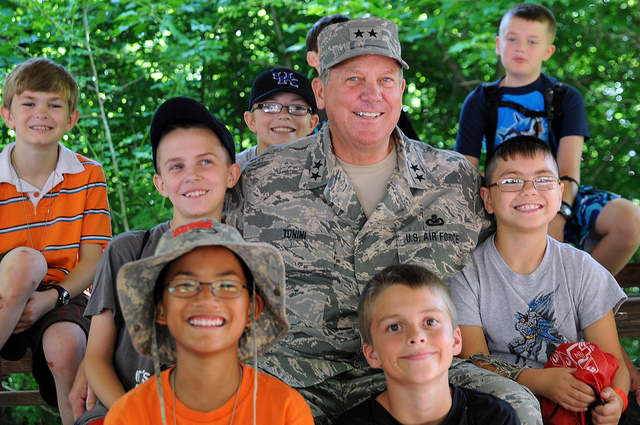
Kentucky’s adjutant general, Maj. Gen. Edward Tonini, joins a group of boys waiting to learn about Archery techniques during the Kentucky National Guard 4-H Youth Camp July 15 at Lake Cumberland in Nancy, Ky. (U.S. Army National Guard photo by Spc. Brandy Mort)
NANCY, Ky. — Children of Kentucky Army and Air National Guardsman participated in the annual Kentucky National Guard 4-H Youth Camp at Lake Cumberland in Nancy, Ky., July 14-19.
This is the third year that nearly 200 boys and girls come together for a week of fun and learning in this location. Members of the Kentucky National Guard, state Fish and Wildlife Department and University of Kentucky Agriculture 4-H program officials were on hand to assist the campers.
“The kids had an awesome experience and a lot of fun at Youth Camp,” said Chief Warrant Officer James Ford, who served as commandant of the camp. “It is an event like no other for the youth of the Kentucky National Guard.”
During the week, the children participated in marksmanship, archery, learned about hunting and received their hunting licenses at the end of the week. The campers enjoyed lots of swimming and canoeing during their lake time, and hiking in the area, including some local caves.
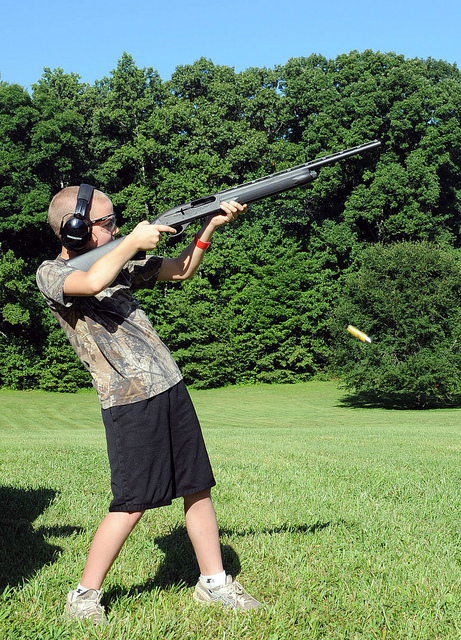
Chance Herrlein, son of Staff Sgt. Eric Herrlein, shoots clay pigeons with a shotgun during the Kentucky National Guard 4-H Youth Camp at Lake Cumberland in Nancy, Ky., July 15. (U.S. Army National Guard photo by Spc. Brandy Mort)
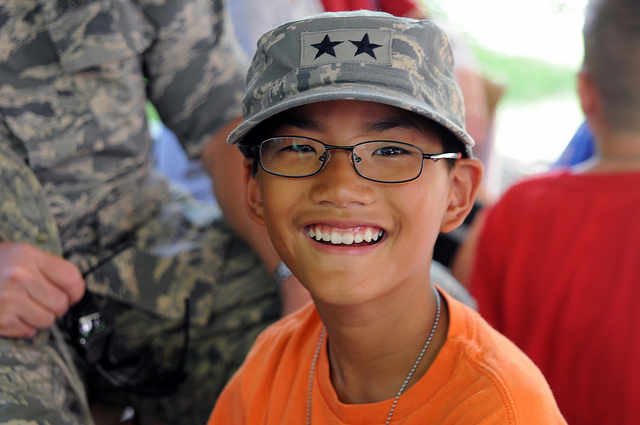
Samuel Evans, son of retired James Evans, trades hats with Maj. Gen. Tonini, during the Kentucky National Guard 4-H Youth Camp July 15 at Lake Cumberland in Nancy, Ky. (U.S. Army National Guard photo by Spc. Brandy Mort)

A participant of the Kentucky National Guard 4-H Youth Camp climbs a rock wall during the ropes course portion of the camp July 15 at Lake Cumberland in Nancy, Ky. (U.S. Army National Guard photo by Spc. Brandy Mort)

Maj. Gen. Tonini speaks with some of the female participants of the Kentucky National Guard 4-H Youth Camp prior to their chance to climb the rock wall, July 15 at Lake Cumberland in Nancy, Ky. (U.S. Army National Guard photo by Spc. Brandy Mort)
Story by Spc. Brandy Mort, 133rd Mobile Public Affairs Detachment
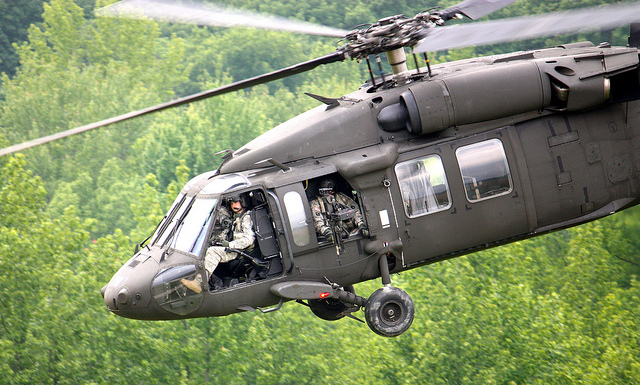
Chief Warrant Officer Jonathon Tidei pilots a UH-60 Blackhawk in aerial gunnery operations at Jefferson proving ground, Ind., June 2013. From an early age, Tidei knew he wanted to fly. (U.S. Army National Guard photo by Sgt. Tom Harrington)
July has been declared Kentucky National Guard Warrant Officer Month in a proclamation by Gov. Steve Beshear. This is one of a series of articles we are publishing in celebration of the warrant officer corps. Click here to read more about 95th birthday of the Army’s warrant officer corps.
FRANKFORT, Ky. — In 1953 the inception of the Warrant Officer Flight Program lead to the training of thousands who later became helicopter pilots during the Vietnam War. In April 1955, the 1st Aviation Class, at then, Camp Rucker, Alabama graduated. These first warrant officer pilots played an important role in the development of Army Aviation and were vital to its evolution.
Chief Warrant Ofiicer Jonathon Tidei, a UH-60 Blackhawk Pilot with Bravo Co. 2/147th Aviation, always knew he wanted a career in aviation. His father, Master Sgt. Anthony Tidei and his three brothers Sgt. Paul Tidei, Spc. Caleb Tidei and Pvt. Joshua Tidei, are all in an Aviation unit within the Kentucky National Guard.
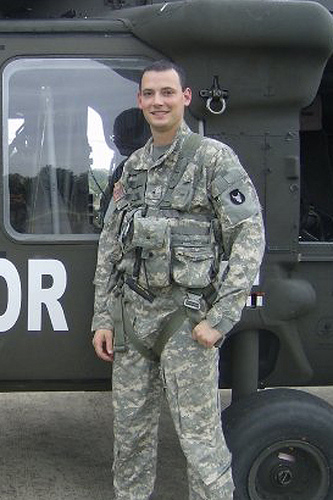
Warrant Officer Jonathon Tidei on deployment to Kosovo, 2009. (Courtesy photo)
“I was always interested in aviation,” said Tidei, “And all I wanted to do when I joined the military was fly. I signed up as an aircrewmember in the Kentucky Air Guard and flew as a C-130 Loadmaster for four years. I wanted to go to flight school as soon as I could, and when my dad told me about the Warrant Officer program I realized that would be the fastest way for me to get into flight school. Once I understood the role Army Aviation Warrant Officers serve in, I knew it was the right fit for me.”
As a Blackhawk pilot, Tidei’s primary job is to plan and fly missions to transport passengers and cargo to the right place at the right time to support ground forces.
“Warrant officers have a high level of specialization in their given job,” said Tidei, “In an aviation unit, warrant officers provide a continuity of experience and serve in specialty tracks as maintenance test pilots, safety officers, instructor pilots and tactical operations officers.”
Tidei and his wife travel whenever they can. Tidei has also previously been deployed. He is thankful for the unique experiences that the military has given him.
“At the end of our deployment to Kosovo we had to fly our aircraft from Kosovo to Germany so the helicopters could be shipped home,” said Tidei, “Flying along the Adriatic coastline and through Austria and Germany was an awesome experience.”
Tidei’s job also lets him be involved with some of the Kentucky National Guards newest pilots.
“I’ve been the Bravo Company ALSE officer,” said Tidei, “ Which means I help maintain aviation life support equipment that air crews require to do their jobs. Right now I’m also a unit trainer, so I help train newer pilots in some of their mission tasks like performing sling load operations.”
Most Service members will tell you that they have the best job, and Tidei thinks that being a warrant officer is the same way.
“I know this claim is made often,” said Tidei, “But I think being a warrant officer is the best job in the Army. If you are interested in being a subject matter expert in your branch, whatever it may be, go warrant!”
Story by David Altom, Kentucky National Guard Public Affairs
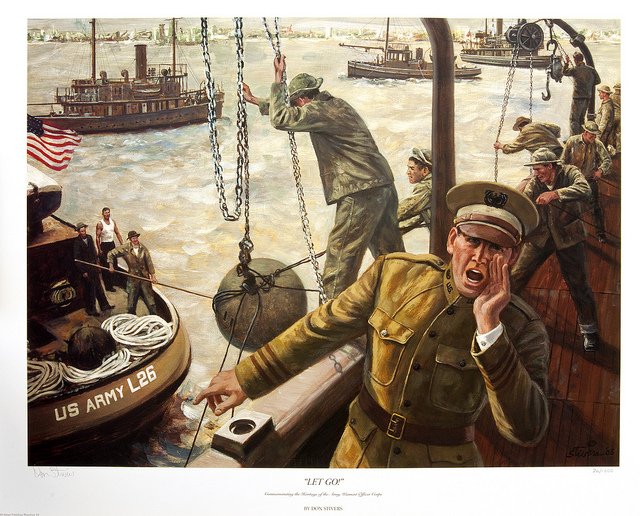
“Let Go!” depicts the founding the Army Mine Planter Service as part of the Coast Artillery Corps. The act designated warrant officers to serve as masters, mates, chief engineers and assistant engineers of mine-planting vessels.
July has been declared Kentucky National Guard Warrant Officer Month in a proclamation by Gov. Steve Beshear. This is one of a series of articles we are publishing in celebration of the warrant officer corps. Click here to read more about 95th birthday of the Army’s warrant officer corps.
FRANKFORT, Ky. — The warrant officer corps is probably the most misunderstood of all of ranks in the United States Army. The truth of the matter is that the warrant officer rank has a long and distinguished legacy going back to 1775 and the founding of our nation. As far as the Army is concerned, in July 1918 the first Warrant Officer Corps was established when an act of congress established the Army Mine Planter Service as part of the Navy’s Coast Artillery Corps; during the First World War warrant officers were responsible for mine defenses in major ports and vessels of all sizes were used to lay and maintain minefields.
Chuck Yeager, famed for breaking the sound barrier, began his career during World War II as a flight officer, the U.S. Army Air Corps equivalent of a warrant officer.
There are several notable warrant officers in military history. Brig. Gen. Chuck Yeager, famous for breaking the sound barrier, began his career as a flight officer (aka warrant officer) in the U.S. Army Air Corps during World War II.
Michael Novosel once piloted a B-29 bomber in World War II. During the Vietnam War he made the decision to give up his rank of lieutenant colonel in the Air Force to fly Army helicopters as a chief warrant officer with special forces and MEDEVAC units. It was as a warrant officer that he was presented the Medal of Honor for his bravery in conducting a medical evacuation under fire.
Tom Hennen was a United States Army warrant officer with 24 years in the imagery intelligence field. His skills and training led to him becoming the first warrant officer in space, flying aboard the Space Shuttle Atlantis in 1991.
A B-29 bomber pilot during World War II, Michael Novosel gave up his commission as an Air Force lieutenant colonel to fly Huey helicopters with the Army during Vietnam. He was a chief warrant officer when he received the Medal of Honor in 1971.
Today, in its 95th anniversary, the Army’s warrant officer corps continues its legacy as an integral and essential element in daily operations and the chain of command. Following are a few myths and facts about this fascinating and often misunderstood rank.
Myth #1. Warrant officers are not “real officers.”
False: Warrant officers are highly skilled, specialty officers, and while the ranks are authorized by Congress, each branch of the uniformed services selects, manages, and utilizes warrant officers in slightly different ways. Warrant officers can and do command detachments, units, activities, vessels, aircraft, and armored vehicles as well as lead, coach, train, and counsel subordinates.
According to Chief Warrant Officer Ryan Turner, who runs the Kentucky Guard’s warrant officer recruiting program, “The warrant officer’s main job is to serve as a technical expert, provide skills, guidance, and expertise to commanders and organizations in their particular field.”
Among his many accomplishments, Tom Hennen goes down in history as the first warrant officer in space.
Myth #2. Only the Army has warrant officers.
False: The United States Navy and the Marine Corps have warrant officers, as does the Coast Guard and the Public Health Service Commissioned Corps. The United States Air Force inherited the warrant officer ranks from the Army Air Corps at its inception in 1947, but stopped appointing warrant officers in 1959.
Myth #3. All warrant officers are pilots.
False: Not so, says Turner. “Warrant officers in the Army are the technical experts, combat leaders, trainers, and advisors in more than forty basic military occupational specialties. They serve across the active component, the Army National Guard, and the U.S. Army Reserve.”
Warrant officers also command the Army’s waterborne and sea-going vessels, most Army Bands and as aircraft commanders of most Army Aviation aircraft. In addition, they may be found in command of various small units and detached teams such as special forces and criminal investigation detachments.
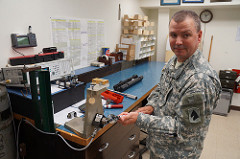
Warrant Officer Robert Boatman’s calibration shop ensures that the Kentucky Guard’s equipment and gear are all set to the right specifications, an essential factor in the increasing technology used by today’s soldiers. (Photo by David Altom, Kentucky National Guard Public Affairs)
Myth #4. Warrant officer training is a piece of cake.
False: Well, depending on your point of view. There are three basic approaches to becoming a warrant officer: 1) The six-week active resident course at Fort Rucker, Ala. 2) Distance learning plus four and a half weeks (if you are an E-5 with Warrior Leader Course) or 3) Through the 238th Regimental Training Institute, completing distance learning, five drills and a two-week annual training period. No matter which direction take, there are classes in leadership, tactics and military history and protocol, along with extensive physical training and testing.
According to Chief Warrant Officer Rick Skelton, TAC officer with the 238th RTI’s warrant officer candidate school, the training ain’t easy, but it’s not insurmountable, either.
“At one point it was actually one of the toughest schools in the army,” said Skelton. “It’s still pretty rigorous. We just finished a 6.2 mile ruck march with a fifty pound pack. You’ve got to have your head in the game, but you can do it. You just have to want to be there.”
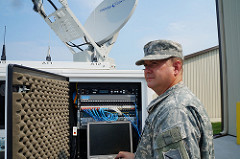
Kentucky National Guard Chief Warrant Officer Harold Brandenburg runs satellite communications during emergencies and natural disaster missions, linking local, state and federal agencies together when traditional networks are at a complete standstill. (Photo by David Altom, Kentucky National Guard Public Affairs)
Myth #5: The warrant officer corps is an archaic and dying breed.
False: “The warrant officer corps is alive and well and growing,” said State Command Warrant Officer Chief Jimmy Simms. “Just recently the Kentucky Army National Guard has received authorization for new warrant positions in electronic warfare, putting us ahead of the curve in this growing field. Artillery targeting is another warrant officer field that is growing, as are warrant positions in special forces. So, yes, we are a powerful force in the Guard and we’re getting stronger every day.”
For more information on the Kentucky National Guard’s warrant officer program contact Chief Warrant Officer Ryan Turner at (502) 607-6200, Cell: (502) 320-3653 or email him at Ryan.turner2@usarec.army.mil.