
Pages
Stay In Touch
More
© 2013 KentuckyGuard
Story by Staff Sgt. David Bolton, 133rd Mobile Public Affairs Detachment
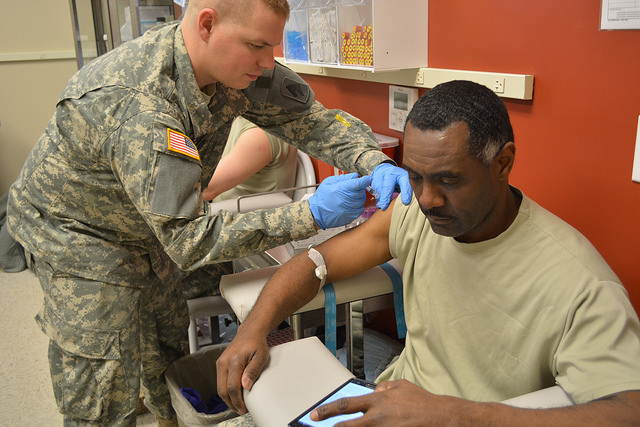
Soldiers assigned to the 138th Field Artillery Brigade conduct annual Periodic Health Assessments Jan. 10, 2015 at Boone National Guard Center in Frankfort, Ky. The 138th conducted the PHA as a self-sustaining unit which did not have to rely on the support from civilian contractors to complete. This self-sustaining capability allowed for minimal delays and saw roughly 350 Soldiers processed over the course of the three-day drill weekend. (U.S. Army National Guard photo by Staff Sgt. David Bolton)
FRANKFORT, Ky. - Soldiers of the 138th Field Artillery Brigade conducted Periodic Health Assessment examinations at the Troop Medical Center Jan. 10, 2015, at Boone National Guard Center in Frankfort. Expediency was the word of the day as the 138th processed roughly 350 Soldiers in just a span of three days; accomplished by implementing some unique changes to the PHA.
“Before it might take a Soldier two or three days to complete a PHA,” said said Sgt. 1st Class Dennis Deatly, 138th brigade medical operations noncommissioned officer. “Now we can push through 120 Soldiers a day. By staggering the units, we can get them through in a day or half a day, so they can get back to the training they need to do.”
“A lot of changes have been subtle, but have had a tremendous impact,” said 1st Lt. John Cebak, a brigade medical officer with the 138th. “Experience is one of those. Having medics and personnel who have done this before and are familiar with the process, facilitates a natural flow.”
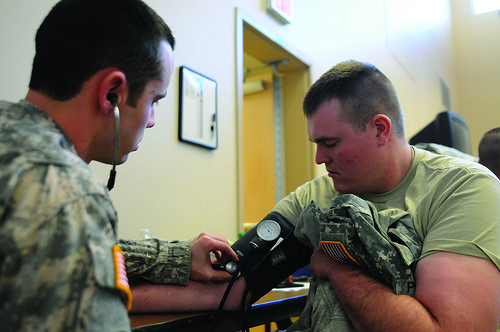
Soldiers assigned to the 138th Field Artillery Brigade conduct annual Periodic Health Assessments Jan. 10, 2015 at Boone National Guard Center in Frankfort, Ky. The 138th conducted the PHA as a self-sustaining unit which did not have to rely on the support from civilian contractors to complete. This self-sustaining capability allowed for minimal delays and saw roughly 350 Soldiers processed over the course of the three-day drill weekend. (Kentucky National Guard photo by Staff Sgt. David Bolton/ 133 Mobile Public Affairs Detachment)
These implementations have allowed the 138th to become a fully self-sustaining unit. This means the unit no longer has to rely on the support of civilian contractors to assist in its medical readiness. With stations that include vitals, vision, height/weight, hearing, dental, immunizations and blood draws, this autonomy has been a boon.
“We have everything we need right here,” said Spc. Nolan Boatwright, a medic at BNGC in charge of running PHAs. “We have case managers, physicians assistants, a state surgeon, behavioral health professionals and more than enough medics to staff a PHA.”
Because the 138th does not have to rely on outside support, the medical members of the unit have had the opportunity to train in many areas necessary to the PHA mission. The ability to have this kind of lateral leeway has helped expedite the entire PHA process for the rest of the Soldiers assigned to the 138th.
“It’s a lot of cross-training,” said Deatly. “The training these medics are getting is invaluable. Any of my medics can go to any station in this process, sit down and do it.”
Deatly said the training offered the chance for the Soldiers to get more experience with the responsibilities they will need to take care of in the future as they progress in their careers. He also said the use of Medical Command’s facilities has been an extraordinary asset to their mission.
The end goal of the three-day PHA was to make sure the Soldiers of the 138th were physically fit for duty; not just on the battlefield but on the home front as well.
“The goal is to get the brigade Soldiers evaluated medically to make sure they are able to deploy if needed and to maintain the fighting force,” said Lt. Col. Kevin Pettus, the brigade surgeon for the 138th. “It’s good for the public to be aware that the Soldiers who have come through and are part of the Kentucky National Guard understand their dual role to support their country and their neighbor.”
Video by Spc. Cody Cooper, 133rd MPAD
Story by Sgt. Paul Evans, 103rd BSB Unit Public Affairs and Historian Representative
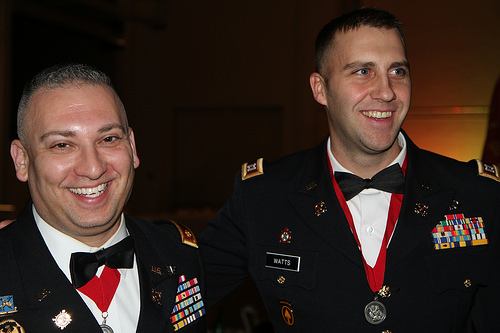
Maj. Brian Mattingly (left) congratulates Capt. Justin Watts after Watts’ induction into the Order of Saint Barbara in Bardstown, Ky., Dec. 12, 2014. Field artillery officers are normally recognized into the order, but Watts’ service to the 138th Fires Brigade during a deployment to Afghanistan earned him the special honor. (U.S. Army National Guard photo by Sgt. Whitney Brown)
BARDSTOWN, Ky.— At the annual gathering of the 138th Field Artillery Brigade Dec. 13, 2014, officers and enlisted alike gathered at the Saint Barbara’s Military Ball to celebrate Christmas and the completion of yet another year’s worth of missions. Among those missions, few had more of an impact on the overall Army mission than that of the 103rd Brigade Support Battalion, 138th Field Artillery Brigade’s Task Force Summit, which returned home from Afghanistan in April of this year. The unit spent nine months overseas supporting the Special Operations Command’s withdrawal and relocation of mission-critical equipment as Operation Enduring Freedom came to a close.
The 138th took time to acknowledge the overwhelming success of TF Summit’s mission by inducting its commander, Capt. Justin Watts, a non-Field Artillery Officer into the Order of Saint Barbara.
According to the U.S. Field Artillery Association’s website, “the Honorable Order of Saint Barbara recognizes those individuals who have demonstrated the highest standards of integrity and moral character; displayed an outstanding degree of professional competence; served the United States Army or Marine Corps Field Artillery with selflessness; and contributed to the promotion of the Field Artillery in ways that stand out in the eyes of the recipient’s seniors, subordinates and peers alike.”
“It feels incredible to be recognized for something even though I’ve never pulled the lanyard on a cannon,” Watts noted. “To me personally, it is an honor in-and-of-itself just to be given an opportunity as somebody who’s not field artillery to be inducted into such a prestigious organization. I like to consider the type of person who, regardless of what branch sits on the collar of my uniform, I’ll support whoever I’m assigned to support.”
“I’m really not sure of the reasons that I was selected for induction, but I would imagine that it’s after coming off a successful deployment leading a group of fifteen Soldiers in Afghanistan, with the great things that those guys did,” he recalled. “I feel that this is an opportunity for me to accept something on behalf of those individuals who served under me and alongside me.”
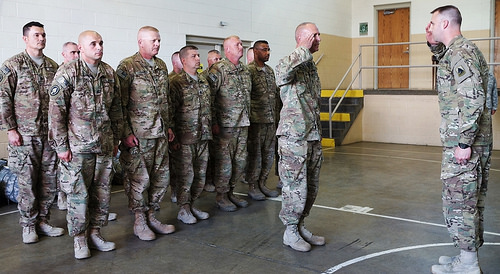
Soldiers of the 103rd Brigade Support Battalion’s Task Force Summit stand in one final formation at their homecoming ceremony in Harrodsburg, Ky. on April 19, 2014. Dozens gathered Saturday to welcome Task Force Summit home from their nine-month deployment in Afghanistan supporting the Special Operations Command’s withdrawal. (U.S. Army National Guard photo by Sgt. Paul Evans)
“Our mission in Afghanistan was pretty straightforward. The drawdown is impending in Afghanistan, based on the President’s directive to get down to 10,000 troops on-ground (by 2015), which means they have a lot of stuff to get out and take it from places from a lot of years prior,” Watts explained. “Because as we’ve seen in the past, things that are military in nature, even Soviet equipment from the 1980s, is used against us.”
“To enable our government and our military to recover as much reusable equipment as possible, it was a big step for us. We recovered about $54 million worth of equipment, moved about 2,000 short-tons, but aside from that…we repositioned it based on where the fight was taking place. In all the regions of Afghanistan, it may come about that certain hotbeds would pop-up in different regions or different areas-of-responsibility, so we shut down camps and moved all that equipment of mission-essential use to other areas,” Watts continued.
For his induction into Honorable Order of Saint Barbara, Capt. Watts especially wanted to thank a few individuals.
“I’d like to thank my wife, Ashley Watts for her continued support,” he said. “You know, there’s one thing you can never get back, and that’s time away from her, time of her being away from me and taking that lead to get things done in my absence. You can’t really put words to it.”
“Also, I’d like to thank the fourteen men that served alongside me in Afghanistan. Their contributions to the mission are immeasurable,” he said. “There was nothing about them riding my coattails. It was all them pushing me from behind.”
“Those guys, they did everything I asked for and more,” he explained. “No problem was too complex. They solved it without fail.”
Watts was also selected to represent Kentucky for the General Douglas MacArthur Leadership Award, which is presented annually to the top 28 Army officers who demonstrate the ideals for which General MacArthur stood - duty, honor, country.
Story by Capt. Carla Getchell, 133rd Mobile Public Affairs Detachment
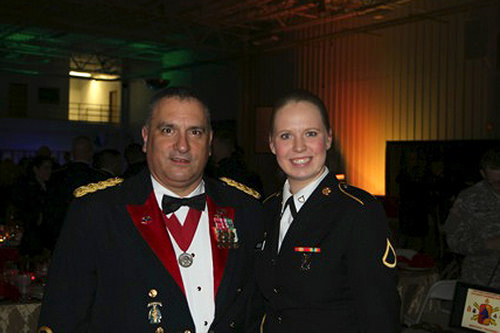
Lt. Col Walter J. Leaumont, deputy commander of the 138th Fires Brigade and Pfc. Samantha L. Jacobs with the 103rd Brigade Support Battalion, pose for a picture while attending the December 2014 Saint Barbara’s Day Dining-Out in Bardstown, Ky., Dec. 13, 2014. This is Leaumont’s last event before retiring in 2015, and it is Jacobs’ first event since joining the Kentucky National Guard in 2012. (U.S. Army National Guard photo by Sgt. Whitney Brown)
BARDSTOWN, Ky. Members of the 138th Field Artillery Brigade, and guests, attended the annual Saint Barbara’s Day Dining-Out Dec. 13 in Bardstown. For a few in attendance, the annual dinner was an inaugural event that will continue throughout their careers, but for one in particular it was his last as the master of ceremonies.
Lt. Col. Walter J. Leaumont, deputy commander and administrative officer, will retire in 2015, and this evening was his last as the voice of Saint Barbara’s; a position he earned in 2004 with his natural comedic timing and disk jockey voice. The only events he has missed were due to deployments to Afghanistan.
“I have attended since I was a lieutenant back in the ‘90s,” said Leaumont. “Back then it was a small event of around 60 or 70 people. Now we encourage all ranks from across the brigade to attend. This year we had over 500 attendees and many were below the grade of E6.”
Pfc. Samantha Jacobs, a cook with the 103rd Brigade Support Battalion, is one of those who attended the event for the first time. She enjoyed the event and plans on attending many more.
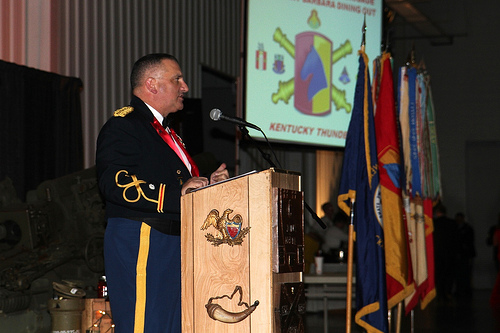
Lt. Col. Walter Leaumont speaks during the annual St. Barbara’s Dining Out in Bardstown, Ky., Dec. 13, 2014. The event was Leaumont’s last before retiring in 2015.(U.S. Army National Guard photo by Sgt. Whitney Brown)
“The people here are absolutely amazing, and everyone is so nice and has really helped me feel welcomed,” said Jacobs, who hopes to one day be inducted into the Order of Saint Barbara.
It is Soldiers like her who will go on to continue the traditions that were started by the senior officers and noncommissioned officers in the room that evening. Someone like her will go on to be the next voice of Saint Barbara’s.
Story by Spc. Lerone Simmons, 133rd Mobile Public Affairs Detachment
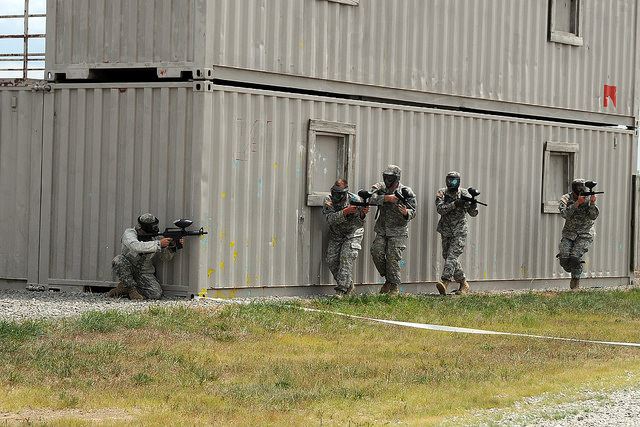
Soldiers assigned to Charlie Battery, 2nd Battalion,138th Field Artillery Brigade, move as a fire team and conduct a Military Operation in Urban Terrain as part of their annual training at Wendell. H. Ford Regional Training Center, July 30, 2014. The 138th focused on Soldier training that helps with individual communication and movement during their reset year after completing a deployment to the Horn of Africa last year. (U.S. Army National Guard photo by Spc. Lerone Simmons)
GREENVILLE, Ky. — Soldiers assigned to the Kentucky Army National Guard’s 138th Field Artillery Brigade carried out their annual two-week training at Wendell H. Ford Regional Training Center in Greenville, during the last two weeks of July.
For a large number of the brigade’s Soldiers, it was their first annual training since deploying to the Horn of Africa in 2012-2013. The unit served as security forces for Camp Lemmonier in Djibouti and assisted in multi-national military training in the region.
“This is a reset year for us, so this AT was focused heavily on individual Soldier training, and has been quite successful,” said Sgt. Maj. Rob Hughes, brigade operations sergeant major.
Hughes mentioned how much time went into planning for an event of this large scale, ushering approximately 800 Soldiers through training.
“From first plans to execution, it took about three years to see this become a reality,” he said. “I’m impressed with the way our leadership kept track and carried out the training as well as our Soldiers who are meeting every task placed in front of them to standard.”
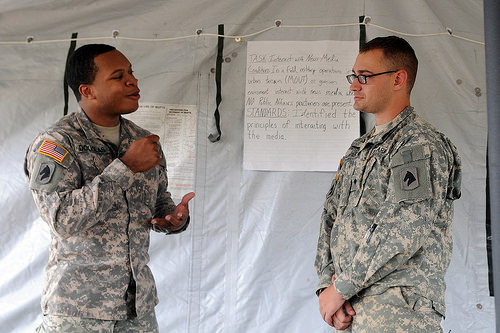
Spc. Tyler Douglas, a fire direction controller assigned to Charlie Battery, 2nd Battalion,138th Field Artillery Brigade, interviews Spc. Christopher Plummer, a petroleum and resupply specialist, assigned to 2/138 Forward Support Company, during a mock “Interacting with Media” exercise during their annual training at Wendell. H. Ford Regional Training Center, July 30, 2014. The 138th focused on individual Soldier training during their reset year after completing a deployment to the Horn of Africa last year. (U.S. Army National Guard photo by Spc. Lerone Simmons)
One of the main priorities of individual Soldier training was completing the Army’s Self Structured Development training, which is a requirement for specialists to master sergeant for promotion.
“The training is designed to be continuous throughout a Soldier’s career, geared to expand the individual Soldier’s knowledge base, self-awareness, and situational awareness,” he said. “So far we have almost 100 percent of those who required the training, completed.”
Soldiers also learned the very important role they play as ambassadors for the Kentucky National Guard and the Army during media engagement training.
“We were briefed on how to properly interact with media,” said Spc. Christopher Plummer, a petroleum & resupply specialist assigned to the 2nd Battalion, 138th Forward Support Company.
“I wouldn’t be surprised if an interview popped up at any time, but now I’m more confident knowing that I have this training to fall back on,” he said.
Aside from theu classroom and computer-based instruction, Soldiers also conducted military operations in urban terrain (MOUT) training. According to 1st Lt. Sean C. Jones, fire direction officer for Charlie Battery, 2nd Battalion, 138th FA, the MOUT training was productive and a good reminder that the unit must work as a team.
“The MOUT training served as a valuable communication tool for our Soldiers, and also gave our junior non commissioned officers more opportunities to lead,” he said.
The training allowed unit leaders to rate the Soldier’s proficiency with the Army warrior tasks also refreshed the teams on important security procedures they may face again in future operations.
“MOUT training requires Soldiers to work as a fire team under small arms fire while moving through an urban environment,” Jones said. “We also train on how to properly conduct a search on an individual to ensure safety and security.”
“Completing individual Soldier training was our mission for this AT and I’m proud of leadership and the Soldiers who carried it out,” said Jones. But the unit is also excited, he said, to “shooting our cannons.”
Story by: Sgt. Brandy Mort, 133rd Mobile Public Affairs Detachment
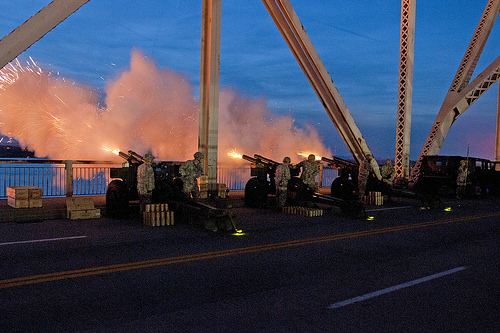
Sgt. 1st Class Timothy Crump from the 138th Fires Brigade oversees Soldiers firing a salvo of Howitzer 105mm rounds from the 2nd street bridge in Louisville, Ky., during the 25th annual Thunder Over Louisville fireworks and air show April 12, 2014. Members of the Kentucky Guard highlighted the evening’s entertainment of music and firework displays.(U.S. Army National Guard photo by Staff Sgt. Scott Raymond)
LOUISVILLE Ky., — Nearly 200 Soldiers gathered together as more than 750,000 people packed the streets of Louisville for the annual Thunder Over Louisville as part of the Kentucky Derby Festival held April 12.
Guardsmen from across the Commonwealth along with the Louisville Metro Police Department served and protected the city of Louisville during the event. No officer was left without a civilian counterpart. This year’s event was anticipated to be one of the largest Thunder Over Louisville events ever.
To see all the photos from this event, please click HERE.
Staff Sgt. Jeremy Hawkins, from the 223rd Military Police Company, was assigned the duty to control traffic alongside an LMPD officer as the massive crowds began to flood the streets by the waterfront. He was honored to work with his civilian equivalent.
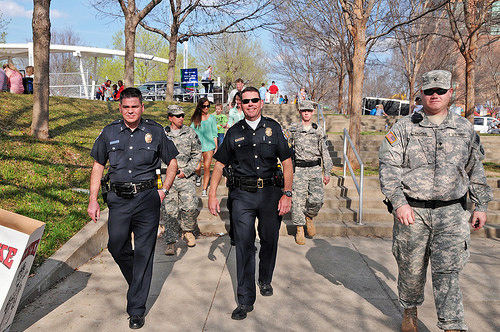
Kentucky National Guard Military Police Officers patrol the grounds Louisville with officers of the Louisville Metro Police Department April 12, during Thunder Over Louisville. (US Army National Guard photo by Sgt. Brandy Mort)
“It gives us a chance to support our local community as well as having the unique opportunity to work with civilian police officers,” said Hawkins, “When people see both sets of uniforms, I think they will have a better sense of security knowing that we have put forth a huge effort to keep them protected.”
Events like Thunder give Soldiers a yearly a chance to put their training to work and also show what the National Guard is all about, working hand in hand with local authorities to protect our home front.
“This is an event we conduct every year,” said 1st Lt. Jacob Lee, Company Commander with the 223rd MP Company, “Working with local officials is a great experience for our Guardsmen. It gives them the opportunity to work with someone who patrols these streets and protects them every day.”
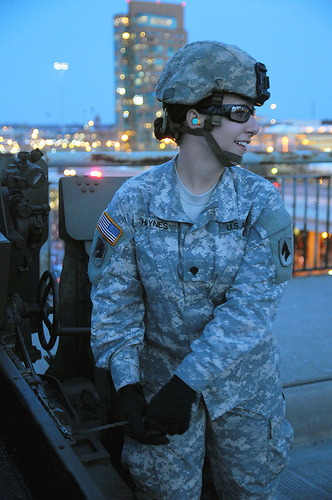
Spc. Samantha Haynes, Information Technology Specialist with the 138th Signal Company prepares to fire a 105mm Howitzer during Thunder Over Louisville, April 12. Haynes has grown up watching the fireworks and was honored to be able to fire the cannon. (US Army National Guard photo by Sgt. Brandy Mort)
Whether it’s your first Thunder Over Louisville or your 15th, this event is something you will remember for years to come. Spc. Samantha Haynes, Information Technology Specialist with the 138th Signal Company, has grown up watching the air and fireworks show since she was young and was honored to have the opportunity to shoot the 105mm Howitzer cannon.
“When I was younger, I would always love hearing the cannons,” said Haynes, “It feels great to be able to pull the cord and make other people feel the same excitement I did when I was their age.”
As another Thunder came to an end, the effort put forth by the Kentucky National Guard and the Louisville Metro Police Department to serve and protect the Commonwealth of Kentucky shined almost as bright as the fireworks.
“Without the Kentucky National Guard, we wouldn’t be able to do this,” said Sgt. William Patterson, LMPD officer, second in command over traffic. “The guard has been with us for so long that without them we wouldn’t keep having successful events such as today.”
Story by Sgt. Alexa Becerra, 138th Field Artillery Brigade Public Affairs
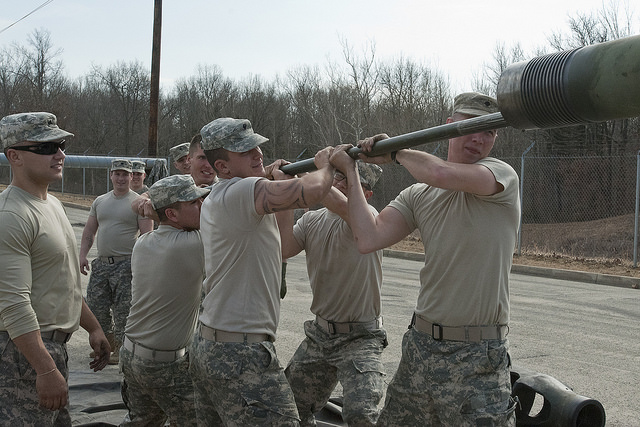
Soldiers with Charlie Battery, 2nd Battalion, 138th Field Artillery clean the barrel of a M109 Paladin during a drill weekend at Fort Knox, Ky., March 8, 2014. (U.S. Army National Guard photo by Sgt. Alexa Becerra)
LEXINGTON, Ky. — After being constantly deployed to different combat zones for the past decade as security forces, convoy security and military trainers, the dynamic 138th Field Artillery Brigade returned their focus to their main field of expertise.
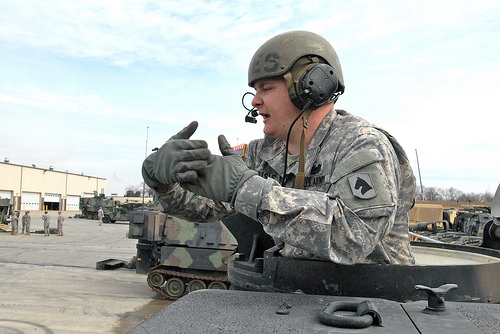
Staff Sgt. Christopher Lisle, a howitzer section chief with the 2nd Battalion, 138th Field Artillery communicates orders to his crew during a training exercise at Fort Knox, Ky., March 8, 2014. The exercise is part of the unit’s goal to complete qualification with functional combat artillery support capabilities. (U.S. Army National Guard photo by Sgt. Alexa Becerra)
As combat deployments become few and far between, the 138th Field Artillery is transitioning back to being able to provide accurate and predictable artillery fires, all while maintaining overall soldier readiness.
“After being off the guns for several years, our focus now is getting back to Field Artillery fundamentals,” said Staff Sgt. Christopher Lisle, Howitzer Section Chief at Bravo Battery, 2nd Battalion, 138th Field Artillery. “It’s amazing to see this level of excitement from our guys, most of which have served almost a full contract doing deployment related tasks and have not been on the Howitzers.”
Lisle added that while there is a depth of experience, it hasn’t all been artillery related.
“We are building our teams from the ground up, and doing it right,” said Lisle, whose battery conducts their training at Fort Knox, Ky. “Our goal by the end of the year is to complete table seven section qualification.”
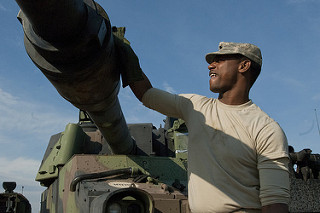
Spc. Glemeau with the 2nd Battalion, 138th Field Artillery wipes grease off the barrel of a M109 Paladin at Fort Knox, Ky., March 8, 2014. (U.S. Army National Guard photo by Sgt. Alexa Becerra)
Table VIII section qualification consists of live fire missions and certifies the units as qualified firing batteries. As in many other fields, to be able to execute the artillery mission operational support is needed.
“Our mission in the fire control section is to redeploy the operations center by retraining and reintegrating ourselves in the role of being digital artillerymen,” said Staff Sgt. J.C. Parsons, Assistant Fire Control Non-Commissioned Officer for Headquarters Headquarters Battery, 138th Field Artillery.
The operations center is currently located at Bluegrass Station, Ky., said Parsons.
“We are training to reestablish proper command flow and control of how the field artillery is used and commanded in the modern day warfare,” said Parsons.
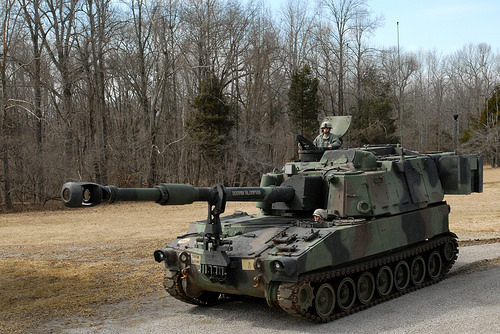
Soldiers with the 2nd Battalion, 138th Field Artillery maneuver a M109 Paladin during a training exercise at Fort Knox, Ky., March 8, 2014. (U.S. Army National Guard photo by Sgt. Alexa Becerra)
The full reintegration process will take time, but so far the 138th is headed in the right direction.
“The environment and circumstances we are working in have changed,” said 2nd Lt. Holdun Reed, Platoon Leader at Charlie Battery, 2/138th. “Yet, we are adaptive and resilient and have smoothly made the changes necessary to operate like we always have; perhaps better than before.”
As with most National Guard units, versatility and adaptability are traits that are required to succeed and have even become second nature to the 138th.
“I have always believed that Field Artillery is the most versatile force and we have proven that so far and will continue to prove it,” said Reed. “We stand ready for missions abroad and within our own state.”
Photos by Sgt. Paul Evans, 103rd BSB Unit Public Affairs Historian Representative
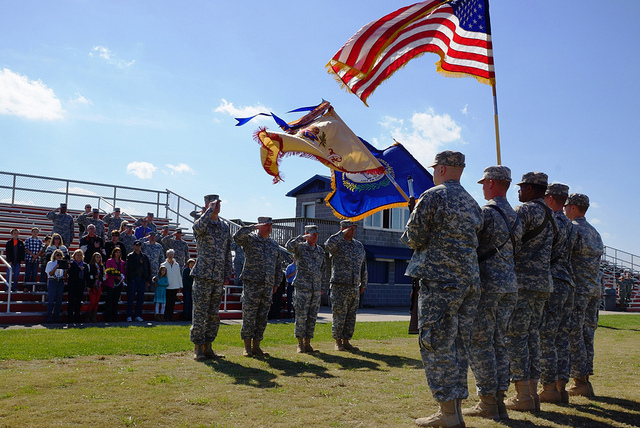
Four leaders from the 103rd Brigade Support Battalion, 138th Fires Brigade render a salute during the National Anthem at a Change of Command Ceremony in Harrodsburg, Ky. on October 27, 2013. Pictured from left to right are: Col. Brian Wertzler of Lexington, Ky., the 138th Fires Brigade Commander; Lt. Col. Jeff Casada of London, Ky., the outgoing 103rd BSB Commander; the incoming 103rd BSB Commander, Lt. Col. David Reed of Florence, Ky.; and the 103rd’s Senior Noncommissioned Officer, Command Sgt. Maj. William Cox of Campbellsville, Ky. (U.S. Army National Guard photo by Sgt. Paul Evans)
HARRODSBURG, Ky.-Dozens of Soldiers gathered on the Mercer County High School soccer field on a warm, windy Sunday in Harrodsburg, Ky., Oct. 27, 2013. While some Soldiers continually ran practice drills on their 105-millimeter canons, others walked through the ceremony about to take place.
On that day, the Soldiers of Harrodsburg-based 103rd Brigade Support Battalion (BSB), 138th Fires Brigade came together from their respective units in Harrodsburg, Frankfort, and Danville along with the top leadership from Lexington’s 138th Headquarters to celebrate the passing of leadership from outgoing Commander Lt. Col. Jeff Casada of London, Ky. to incoming Commander Lt. Col. David Reed of Florence, Ky.
As Col. David Wertzler, Commander of the 138th presided over the ceremony, the two 103rd BSB leaders took time to recall fond memories and gratitude for the opportunity to lead such a distinguished Unit as the 103rd before the canons sounded to mark the passing of leadership from one Commander to another. These photos are simply a few moments to capture that.
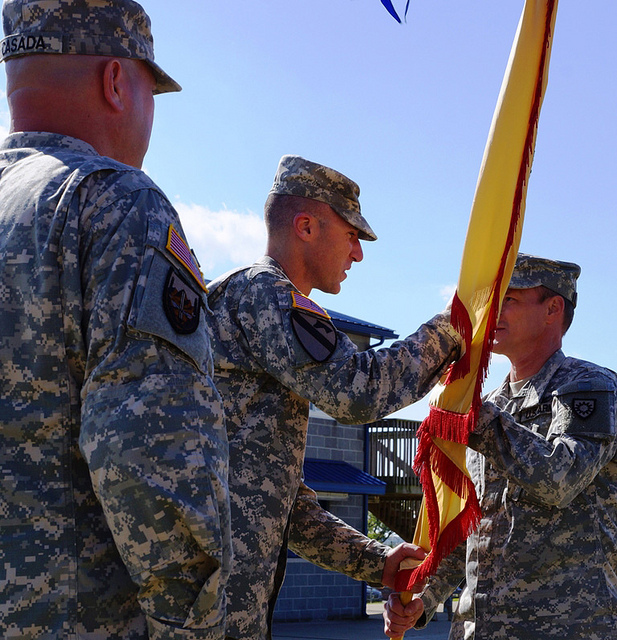
Lt. Col. David Reed (right) of Florence, Ky. receives the 103rd Brigade Support Battalion, 138th Fires Brigade’s Unit flag from the 138th Commander, Col. Brian Wertzler (center) during a Change of Command Ceremony in Harrodsburg, Ky. Reed replaced Lt. Col. Jeff Casada (left) of London, Ky. as the fourth Commander of the 103rd since the Army National Guard unit’s re-formation in 2008 on October 27, 2013. (U.S. Army National Guard photo by Sgt. Paul Evans)
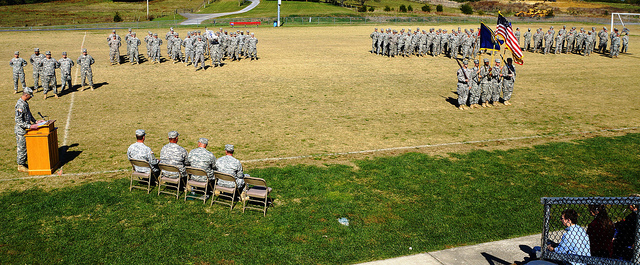
Col. Brian Wertzler (pictured far left), the 138th Fires Brigade Commander addresses Soldiers of the 103rd Brigade Support Battalion, 138th Fires Brigade during a Change of Command Ceremony in Harrodsburg, Ky. on October 27, 2013. Lt. Col. David Reed of Florence, Ky. assumed Command of the 103rd from Lt. Col. Jeff Casada of London, Ky. (U.S. Army National Guard photo by Sgt. Paul Evans)
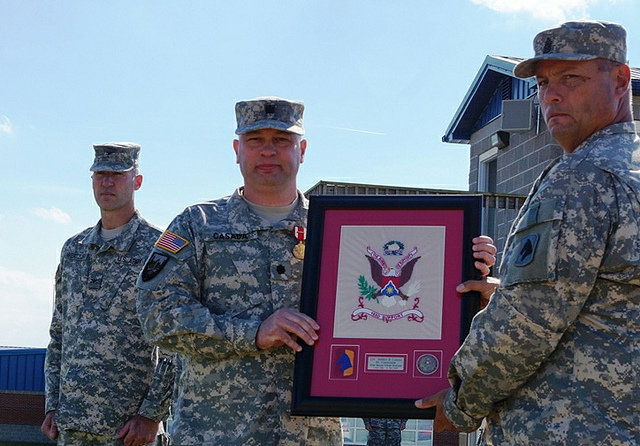
Command Sgt. Maj. William Cox (right) of Campbellsville, Ky. presents a plaque honoring Lt. Col. Jeff Casada (center) of London, Ky. in Harrodsburg, Ky. on October 27, 2013. Casada, who commanded the 103rd for two years, passed leadership on to Lt. Col. David Reed (not pictured) of Florence, Ky. (U.S. Army National Guard photo by Sgt. Paul Evans)
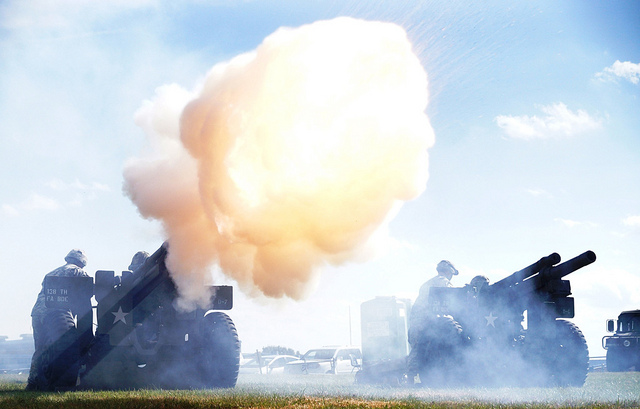
A 105-millimeter howitzer canon fires to mark the changing of commanders for Harrodsburg, Ky.’s 103rd Brigade Support Battalion, 138th Fires Brigade on October 27, 2013. Lt. Col. David Reed of Florence, Ky. assumed Command of the 103rd from Lt. Col. Jeff Casada of London, Ky. (U.S. Army National Guard photo by Sgt. Paul Evans)
Story by Staff Sgt. Scott Raymond, Kentucky National Guard Public Affairs
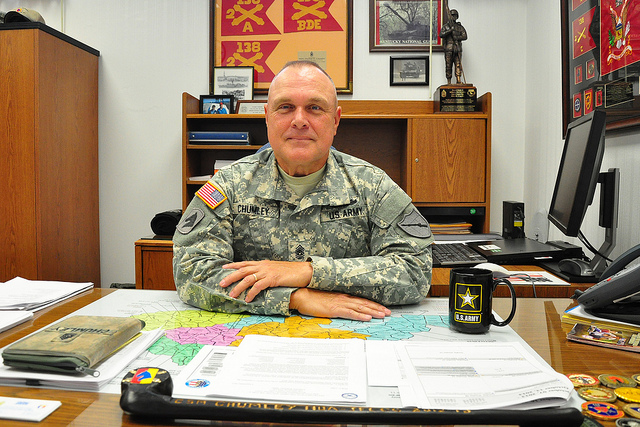
Command Sgt. Maj. Thomas Chumley Jr. sits at his desk at Joint Forces Headquarters in Frankfort, Ky., Oct. 15, 2013. Chumley assumed the role of Kentucky’s eighth State Command Sergeant Major on Oct. 1 after serving as the Command Sergeant Major for the 138th Fires Brigade. (U.S. Army National Guard photo by Staff Sgt. Scott Raymond)
FRANKFORT, Ky. – In May of 1985, Thomas Chumley Jr. walked through the doors of the Elizabethtown, Ky. armory for Bravo Battery, 2nd Battalion, 138th Field Artillery.
He knew he was home.
The 13-year Navy Veteran had experience as a gunner, so when he enlisted into the Kentucky National Guard, it was an easy transition into the Army’s artillery. Chumley said adapting to the changes around him has been the easiest thing for him to do in his military career.
On Oct. 1, Chumley assumed responsibility for every enlisted Soldier in the Commonwealth, as he became Kentucky’s eighth State Command Sergeant Major.
And he did it with ease.
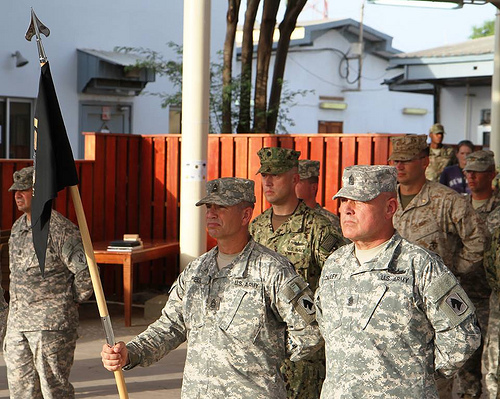
Task Force Longrifles Soldiers, Command Sgt. Maj. Thomas Chumley and Master Sgt. Jeffrey Peel from the Joint Forces Land Component Command (JFLCC) conduct a guide-on casing ceremony in Djibouti, April 20, 2013. The Soldiers deployed with 2nd Battalion, 138th Field Artillery to the horn of Africa in 2012. (U.S. Army National Guard photo by Capt. Daniel Van Horn)
“I’ve said it before, but this is the highlight of my career, this would be the highlight of anyone’s career,” he said. “There’s few Soldiers out there that thought they would ever become a CSM.”
Read about the change of responsibility ceremony here.
Enlisting into the Navy, Chumley said was a rebellious decision against his father, a hard-core, strong-willed Army NCO at Fort Knox. But, after 28 years in Army green, he has been told he’s more like his father than he knows.
Chumley said he is where he is because of his standards and the standards presented before him as he progressed in his career. From a gunner with Bravo Battery, Chumley became a platoon sergeant, a brigade intelligence sergeant, then first sergeant before becoming the Command Sergeant Major for 2nd Battalion, 138th. Taking what he learned from each position, Chumley rose though the artillery ranks over the years to become the Command Sergeant Major for the 138th Fires Brigade in 2011.
Col. Brian Wertzler, commander of the 138th, has worked alongside Chumley for more than 20 years in the Kentucky Guard. He said Chumley’s professionalism has had a profound impact on the careers of the Soldiers in the 138th, helping to foster quality leaders and skilled artillerymen.
“Command Sergeant Major Chumley is undoubtedly the best NCO that I have ever had the pleasure of working with,” said Wertzler. “NCOs and officers alike have always been confident in his knowledge and ability to provide answers, solutions, guidance and direction to any problem; and he proved worthy of that reliance. I am glad to see that Command Sergeant Major Chumley’s untiring efforts, dedication to excellence, leadership and sound judgment have afforded him the opportunity and the recognition to be the State Command Sergeant Major.”
As Chumley settles into his new office in Frankfort, his walls are adorned with keepsakes of a long career in artillery. He agreed that there is a lot of red around him, but is excited to get accustomed to all the branches of the Kentucky Guard. He also knows that changes are coming to the military as the country draws down from war and deals with budget constraints.
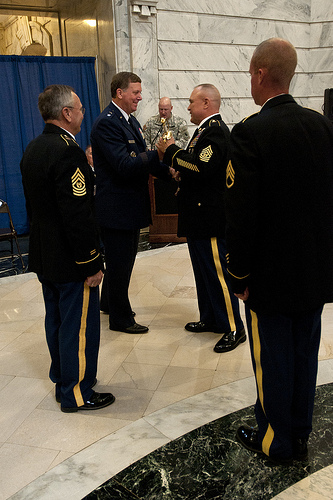
Command Sgt. Maj. Thomas Chumley became Kentucky’s eighth State Command Sergeant Major during a change of responsibility ceremony in Frankfort, Ky., Sept. 12, 2013. (U.S. Army National Guard photo by Staff Sgt. Scott Raymond)
“We’re going to get back to basics,” he said. “We are going to help Soldiers with their careers, where they’re going and what they need to do. The future is looking good, we’ll know what we have and where to put the right Soldiers in the right places. We’ll make sure Soldiers across the state know the information and their families know, just like when I first came to the Guard.”
When ‘Sgt.’ Thomas Chumley first arrived at that armory in Elizabethtown, he was immediately aware of the camaraderie amongst the Soldiers of the battery, many of which were old school mates of his and Vietnam Veterans. Old friends such as 1st Sgt. Roy Wright and Sgt. 1st Class Gabe Ford, who had taken the battery to Vietnam in 1968-69.
Chumley was met with a challenge to adapt to the artillery and the principles of the branch. Chumley said his early leaders instilled in him the basics of being precise, deliberate and safe. They fired rounds downrange without being able to see them, so the knowledge and skill that went into ensuring each step performed to the last detail was crucial.
“All Soldiers deserve good leadership,” he said. “I was fortunate to have that with Bravo Battery. There’s a standard, you go by that standard, its about the basics. I plan on providing that leadership with the precision and capability of an artilleryman.”
Ask him about his leadership style, he will answer, ‘honest, straightforward and here for Soldiers.’ When asked how he will lead as the new State Command Sergeant Major, the answer is a humble one.
“You communicate and set the example,” he said.” I realize that when I walk out my door, eyes are on me. I will practice what I preach, I have to meet the standards, I have to walk the walk. I’ll never ask them to do anything I haven’t done or wouldn’t do myself.”
Story and photos by Sgt. Paul Evans, 103rd BSB Unit Public Affairs Historian Representative
Retired Lt. General Edward D. Baca holds up a flag made by Prisoners of War in the Philippines during WWII at a ceremony honoring American Heroes at Harrodsburg, Ky.’s Anderson Dean Park Aug. 31, 2013. The ceremony was one of many events honoring American heroes coinciding with the 5-day visit of the Traveling Vietnam Memorial Wall to Central Kentucky over the 2013 Labor Day weekend. (U.S. Army National Guard photo by Sgt. Paul Evans)
HARRODSBURG, Ky.— “There’s guys on the Wall that I pulled in,” recalled Jack Mattingly on August 31, 2013. Mattingly is a 63-year-old Vietnam Veteran who served from 1970 to 1971 as a helicopter door gunner in the Marine Corps. “I don’t know their names, but I know they’re on the Wall,” he added.
“I’ve asked myself several times, ‘why are they on the Wall and I’m not?’ And I figured this was the reason why—that I’m here to put this on for them.”
Mattingly and his wife , both longtime residents of Harrodsburg, Ky., decided to begin a massive undertaking to bring the Traveling Vietnam Memorial Wall to Harrodsburg after seeing the Wall years earlier. The effort, which culminated in a holiday weekend from August 29 to September 2, 2013 that teemed with emotional tributes to American heroes, involved numerous dedicated local volunteers and generous donors.
To see more photos from the event, click here.
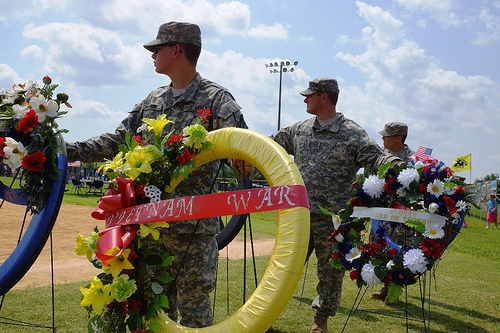
Soldiers from the 103rd Brigade Support Battalion, 138th Fires Brigade look on while holding up commemorative wreaths during a windy ceremony honoring American Heroes at Harrodsburg, Ky.’s Anderson Dean Park Aug. 31, 2013. (U.S. Army National Guard photo by Sgt. Paul Evans)
“When I went down to London, Ky. back in 2010, they had the Wall down there,” Mattingly recalled. “I walked up to the Wall, and…well, I’m a Marine, we don’t cry- we’re hardcore and everything…and I walked up to the Wall, and the Wall reached out and touched me. I broke. That’s when I said I had to bring in here.”
“It’s just a really meaningful weekend to a lot of people,” Mattingly explained. “I got up last night, about 3:30 (am) and just looked out to see if there was anybody here. And there were several people just sitting on the benches, looking at the Wall.”
“That’s usually when you have most of your Vietnam Veterans come that just have a hard time with it anyway,” he observed.
Over the 2013 Labor Day weekend, thousands of Central Kentuckians came to pay tribute to not just those who sacrificed their lives in the Vietnam War, but also those who died defending freedom in various other conflicts throughout America’s existence.
Soldiers from across the Harrodsburg-based 103rd Brigade Support Battalion, 138th Fires Brigade volunteered to assist in the task of honoring the sacrifice of the heroes that came before.
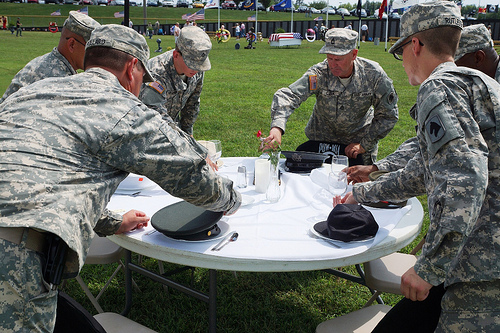
Sgt. 1st Class Robert Clark (center) of Lebanon, Ky. leads Soldiers of the 103rd Brigade Support Battalion in the Missing Man Ceremony honoring Soldiers Missing in Action at Harrodsburg, Ky.’s Anderson Dean Park Aug. 31, 2013.
Pvt. 1st Class Dakota Hawkins, a 19-year-old Harrodsburg, Ky. native who serves as a Radio Operator in Frankfort’s B Co. 103rd BSB was among those volunteers.
“It’s just such an amazing honor to be here, be part of this,” Hawkins said. “The (Traveling Memorial) Wall coming into Harrodsburg, we’ve had a huge turnout for that…there’s a lot of military support here in town.”
“You meet a lot of great people, a lot of people who served—and being able to see the Wall in person, it’s amazing,” Hawkins said of his time volunteering. “It’s an entirely new experience.”
“You come across people in the Airport who say ‘thank you for your service, thank you for your support.’ But being in a big open field (full) of people who think so highly of you (means a lot)…even though you really haven’t done anything compared to the people whose names are up on the Wall,” Hawkins added.
Of the experience, Hawkins offered one emotion that would remain with him over time.
“Seeing the elementary (school) kids kind of look at us in awe, the ones in uniform and just single us out as heroes at such a young age, it’s an incredible feeling,” he said. “It reminds me that there’s always so many people behind us supporting us that think everything of us, of what we do.”
Col. Brian F. Wertzler, Commander of the Lexington, Ky. based 138th Fires Brigade, showed his support for his Soldiers and the Traveling Memorial Wall’s stay in Harrodsburg during a visit on the afternoon of August 31.
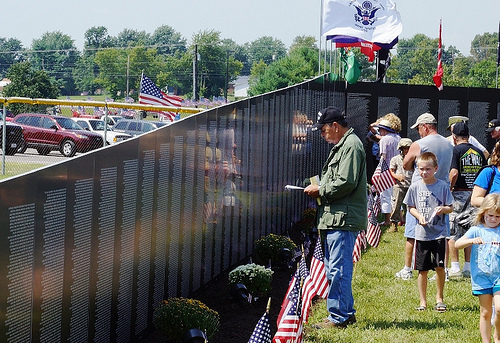
A Vietnam Veteran stops to pay tribute to fallen comrades during the Traveling Vietnam Memorial Wall’s visit to Harrodsburg, Ky.’s Anderson Dean Park over the 2013 Labor Day weekend, Aug. 31, 2013. (U.S. Army National Guard photo by Sgt. Paul Evans)
“I know that it’s a special weekend for the community of Harrodsburg and the Traveling Wall,” Wertzler said. “Obviously, they’re very proud.”
“They have a long heritage and lineage of service in this community,” he added. “They’re certainly very patriotic, and it absolutely shows in what they’ve provided in terms of support and community participation in this event.”
Wertzler offered his own perspective on the Memorial Wall coming to Central Kentucky and his Brigade’s role in honoring Veterans.
“I think it’s special. It gives us an opportunity to remember the Soldiers that have served,” he stated. “Part of the Wall display, it’s very different than what I’ve seen before. It encompasses previous wars, not just the (Vietnam) Wall. And I think it’s important that we remember the past, and honor those who gave the ultimate sacrifice.”
“All of the Soldiers that are serving do it out of a sense of patriotism, and we all know that we could provide the ultimate sacrifice in the execution of our duties,” Wertzler noted.
“I’m proud that the 138th Fires Brigade and the 103rd BSB can assist in honoring the Soldiers that have provided the ultimate sacrifice before us and that we can support the ceremonies.”
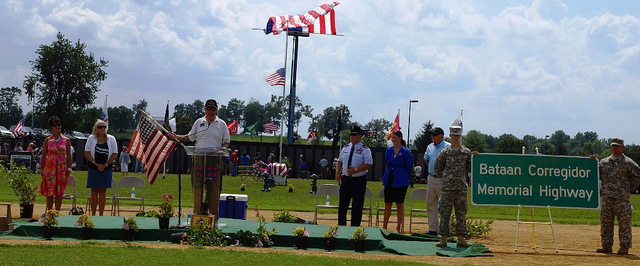
On Saturday, local officials also unveiled a sign which will rename the U.S. 127 bypass in Mercer County as the Bataan Corregidor Memorial Highway. The motion recently passed by the Kentucky General Assembly renamed the road to honor the Soldiers of the 38th Tank Company, Harrodsburg Tankers, a Kentucky National Guard unit activated during World War II who endured the Bataan Death March in the South Pacific. Only 37 of the original 66 Guardsmen survived Japanese captivity.
To learn more about the Harrodsburg Tankers, click here.
Story by Spc. Brandy Mort, 133rd Mobile Public Affairs Detachment
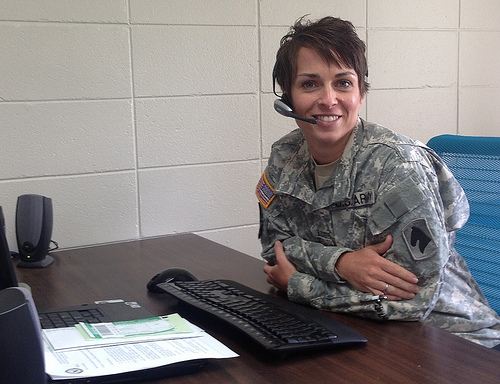
Chief Warrant Officer Stephanie Allen works in human resources for the 138th Fires Brigade. Allen became a warrant officer to make a more positive impact on the lives of Soldiers in the Kentucky Guard. (Courtesy photo)
July has been declared Kentucky National Guard Warrant Officer Month in a proclamation by Gov. Steve Beshear. This is one of a series of articles we are publishing in celebration of the warrant officer corps. Click here to read more about 95th birthday of the Army’s warrant officer corps.
FRANKFORT Ky. — In January 1944, the appointment of women as warrant officers was first authorized and the first women were appointed in March 1944. At the conclusion of World War II, there were 42 women warrant officers on active duty. Today, the Army has roughly 2000 female warrant officers in its ranks.
Chief Warrant Officer Stephanie Allen, Military Personnel Technician with the 138th Fires Brigade stationed in Lexington Ky. is one of many female warrant officers serving in the Kentucky National Guard.
As an MP technician, and qualified Army Instructor, Allen is in charge of human resource services, personnel support, financial services, chaplain activities, medical services, and legal services support. The 15-year Guard Veteran also manages the functions that support the Army’s personnel management systems by monitoring the input of data into automated and manual systems along with many other of other duties.
With the vast amount of responsibilities appointed to Allen as a warrant officer, she has had the opportunity to make a huge impact in Soldier’s lives within the past year.
“This year gave me the opportunity to make a positive difference for our Soldiers,” said Allen. “Additionally, I gained invaluable hands on experience tracking medical and administrative deployment requirements. This opportunity allowed me to work diligently to increase the readiness within the brigade.”
Allen has previously worked as a heavy mobile equipment transporter and as a human resource specialist, but thanks to one of her supervisors, she made the switch to warrant officer.
“My Senior Leadership at the Human Resource Office who trained, mentored, and encouraged me suggested I could make a greater impact to the organization as a warrant officer,” said Allen who became a warrant officer in 2009. “I enjoy what I do for the National Guard, becoming a warrant officer has been one of the best decisions I’ve made.”
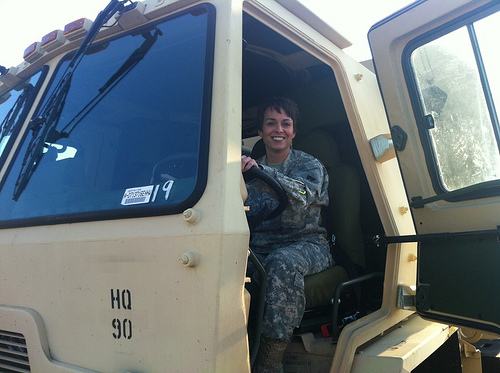
Chief Warrant Officer Stephanie Allen is a 15-year Veteran of the Kentucky National Guard, she became a warrant officer in 2009. Prior to becoming a warrant officer, Allen was a heavy mobile equipment transporter on the enlisted side. (Courtesy photo)
Even though she remains busy with work, in her spare time Allen enjoys spending time with her two boys, Kaden and Zain.
“I am active in my church assisting with children’s programs and women’s ministry,” said Allen, “My children are active in the community. They play baseball and soccer and I spend a lot of time attending their sporting events.”
Allen looks toward the future and hopes to work full time for the brigade and eventually work her way up to supporting and assisting all commands in the state.
“My future is very bright,” said Allen, “I am an integral part of a dynamic organization and I look forward to doing this for a long time.”
