Pages
Stay In Touch
More
© 2013 KentuckyGuard
Story and photos by Sgt. Scott Raper, Kentucky National Guard Public Affairs
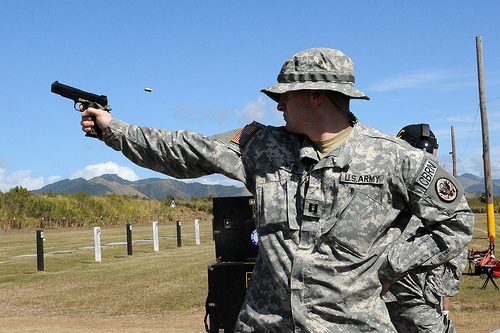
Capt. Steve Smith of the 41st Civil Support Team fires his Colt 1911 during a pistol competition at Camp Santiago Joint Maneuver Training Center, Puerto Rico, Jan. 13. Members of the Kentucky National Guard Marksmanship Team traveled to to compete in the 2012 Puerto Rico State Match. (Photo by Sgt. Scott Raper, Kentucky National Guard Public Affairs)
Click here for more photos.
CAMP SANTIAGO, Puerto Rico – As snowflakes and daily temperatures dropped across the bluegrass, several Kentucky Guardsmen enjoyed a warm alternative in the Caribbean. They are members of the Kentucky National Guard Marksmanship Team who traveled to the tropical climate to compete in the 2012 Puerto Rico State Match.
“It’s a chance to meet with military and civilian professionals, to build relationships and to gain more experience in different kinds of matches,” said Staff Sgt. Eric Dean, a state marksmanship coordinator. “Kentucky has been competing in Puerto Rico for about twenty years.”
Annually the Puerto Rico National Guard sponsors the event held at Camp Santiago Joint Maneuver Training Center in the southern city of Salinas. A mixture of Soldiers and civilians competed in four full days of shooting with both rifle and pistol matches. Teams from North and South Carolina, Texas, New York and Mississippi also traveled to the sun-filled island to shoot against Puerto Ricans on their home turf.
The ranges were busy with the sporadic gunfire from the well-aimed rifles and pistols of the competitors throughout the event. With striking mountains rising as the backdrop, targets were hung at distances of up to 600 yards for the .223 service rifle shooters. Matches included prone, standing and sitting positions. Within earshot of the rifle rounds, those with pistols walked between the 25 and 50-yard line to check their shots. Pistol matches included .22 LR, 9mm and .45 ACP ammunition.
“The wide variety of rounds and events helps us out with the fundamentals of marksmanship,” said Dean. “We do some things differently here, but all in all, its great practice for us.”
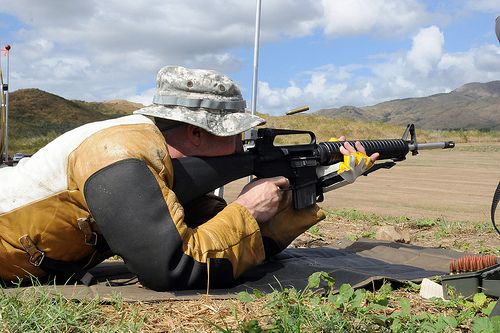
Chief Warrant Officer Greg Scott fires a round down range as part of a shooting competition at Camp Santiago Joint Maneuver Training Center, Puerto Rico, Jan. 15. Scott took third place individually the Rifle Marksman Class in the 2012 Puerto Rico State Match. (Photo by Sgt. Scott Raper, Kentucky National Guard Public Affairs)
Practice for one Soldier is exactly what was needed to return to routines and comfortable territory. Chief Warrant Officer Greg Scott deployed last year to Iraq with the 149th Maneuver Enhancement Brigade. Having just returned in December, the reintegration continues for Scott. And a shooting match in the Caribbean is a good start, as he took third in the Rifle Marksman Class.
“This is my first chance to get back into the swing of things,” said Scott. “It’s a special feeling to get back to some hobbies here at home. And, hey, it’s Puerto Rico!”
Scott’s teammates also returned to good form as both rifle and pistol teams brought home awards from the match. Each team placed third in the overall results. And individually, Sgt. Joel Ray Campbell of the 41st Civil Support Team finished second in Rifle Master Class. Team members represented the long rifle on their shoulder patch well, setting a high note to begin their competitive season.
“This match is a pre-cursor to state, regional and national matches ahead of us,” said Dean. “It’s a great beginning… And it’s in the tropics, certainly better weather than Kentucky right now, so it’s a really nice experience.”
If you were to think that the team was provoking some jealousy, you may be right. The annual trip to Puerto Rico is also a recruiting tool for the team to showcase the opportunities for future shooters.
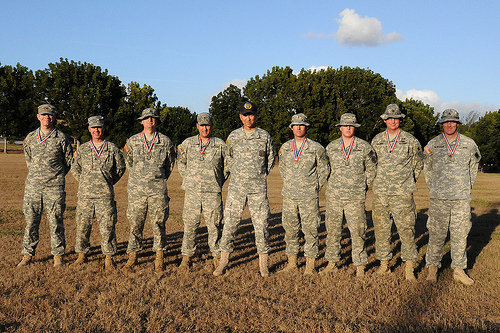
Members of the Kentucky National Guard Marksmanship Team following an award ceremony at Camp Santiago Joint Maneuver Training Center, Puerto Rico, Jan. 15. Both Rifle and Pistol Teams took Third place in their respective competitions in the 2012 Puerto Rico State Match. (Photo by Sgt. Scott Raper, Kentucky National Guard Public Affairs)
“The Marksmanship Team is always looking for the next best shooters,” said team coach, Sgt. 1st Class Chuck Reed. “I know we have quality Soldiers out there with the skills to compete with this team.”
Each year the team organizes the Kentucky State Match to find talented shooters across the Commonwealth and give them the chance to represent their units. This year’s match will be held the weekend of May 24 – 25 in Ft. Knox.
Interested Guardsmen should contact Sgt. 1st Class Chuck Reed by phone at 502.235.4262 or by e-mail at [email protected].
In addition to Puerto Rico, the team competes annually in several matches across the southeast and actively pursues new opportunities for competition.
Story and photos by Sgt. Scott Raper, Kentucky National Guard Public Affairs
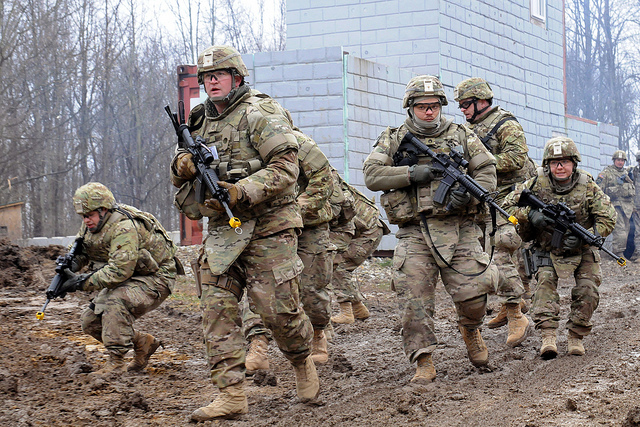
Members of the Kentucky National Guard's Agribusiness Development Team 4 prepare to take cover during a simulated enemy attack as part of the unit's culminating training exercise at Camp Atterbury, Ind., Jan. 25. The team will soon deploy to Afghanistan to assist with agriculture and business needs of provincial locals. (Photo by Sgt. Scott Raper, Kentucky National Guard Public Affairs)
Click here for more photos of this story.
CAMP ATTERBURY, Indiana – Members of the newest Kentucky National Guard Agribusiness Development Team finished up their final pre-mobilization training requirement recently at Camp Atterbury, Indiana, and are ready for deployment.
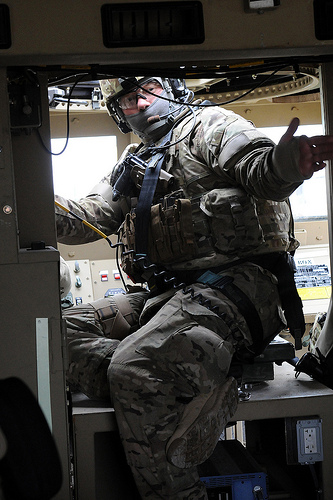
Sgt. Bobby Sizemore, a member of the Kentucky National Guard's Agribusiness Development Team 4 waves as he prepares to take his position in the gunner's hatch as part of the unit's culminating training exercise at Camp Atterbury, Ind., Jan. 25. (Photo by Sgt. Scott Raper, Kentucky National Guard Public Affairs)
“This is our final step,” said Team Commander Col. Aaron Barrier. “This is our Culminating Training Exercise. We have focused on ag-specific training, vehicle training and counterinsurgency training. We showed up here pretty well trained, now I believe we are well prepared to conduct a successful mission overseas.”
Sgt. Bobby Sizemore, a member of the Kentucky National Guard’s Agribusiness Development Team 4 waves as he prepares to take his position in the gunner’s hatch as part of the unit’s culminating training exercise at Camp Atterbury, Ind., Jan. 25. The team will soon deploy to Afghanistan to assist with agriculture and business needs of provincial locals.
Upon completing the necessary instruction for individual Soldiers, the CTE brings all facets of team training together prior to their departure overseas. ADT 4 will depart soon for Afghanistan as their fellow Kentucky Guardsmen in ADT 3 prepare to return home
With the fourth mission of its kind, experience is growing for the Kentucky teams. ADT 4 includes four members who have done it all before. Sgt. Tiffany Teegarden, Staff Sgt. Isaac Jones, Sgt. 1st Class Catherine Corson, both from Nicholasville, Ky., and Maj. Jim Rush of Alvaton are all making their second trip to Afghanistan to again assist with the special assignment.
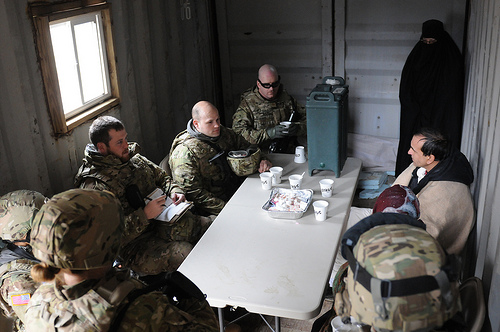
Members of the Kentucky National Guard's Agribusiness Development Team 4 participate in a simulated meeting with Afghan locals as part of the unit's culminating training exercise at Camp Atterbury, Ind., Jan. 25. (Photo by Sgt. Scott Raper, Kentucky National Guard Public Affairs)
“We can build and focus on our experience for this mission,” said Corson. “We all bring our own piece to the fight. I believe in this. It’s a mission to help build [Afghanistan] and it’s a key to winning the war.”
According to Jones, it is not your typical mission. And he is correct. The team is a not a direct combat unit; instead, their objectives are to assist provincial locals in agriculture and business. Just like three prior teams in the country, ADT 4 will deploy to help Afghans improve their quality of life.
Story and photo by David Altom, Kentucky National Guard Public Affairs
Additional photo courtesy Sgt. Cody Stagner, Bravo Battery, 1st Battalion, 623rd Field Artillery
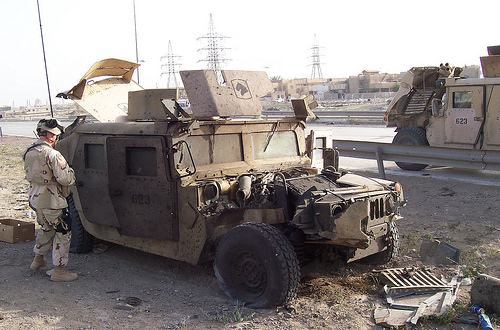
Improvised explosive devices – such as the one that destroyed this Kentucky Army National Guard humvee in 2005 – are the most common factor in the physical and emotional injuries that define many of today’s Wounded Warriors. (Photo courtesy Sgt. Cody Stagner, 1st Battalion, 623rd Field Artillery)
FRANKFORT, Ky. – After ten years of war in Afghanistan and eight years in Iraq, the U.S. military’s role in the global war on terror is one of the longest in our nation’s history; depending on how you do the math, Vietnam lasted between 10-12 years, so we are fast approaching that dubious distinction.
And while there are some similarities between these two historic events, there is also an important difference – how we treat our Wounded Warriors.
“What the Army and our society as a whole have learned is that we as a nation leave no Soldier behind,” said Col. Charlie Jones, J1 director for the Kentucky Army National Guard.
“‘I will never leave a fallen comrade,’ is reflected in both the U.S. Army Warrior Ethos and Soldier’s Creed. This doesn’t mean just overseas,” said Jones, a Veteran of the Iraq War. “That means here at home, too.”
Indeed. To that end, the Kentucky Guard now has case workers working every day to address the needs of returning troops, from dealing with physical injuries and PTSD to reintegration issues and researching resources to bring some sense of normalcy to their lives.
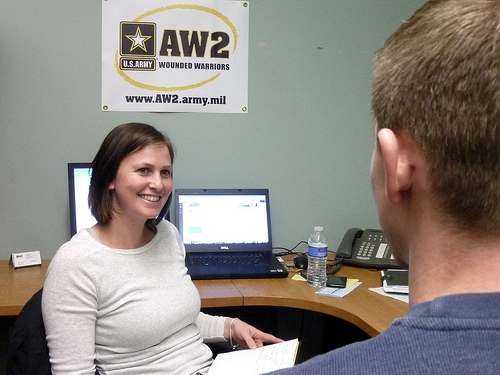
Kristen Wentz is a former U.S. Army captain who now uses her combat medical experience to fight for Kentucky's Wounded Warriors. (Photo by David Altom, Kentucky National Guard Public Affairs)
The Army Wounded Warrior Program (AW2) – a part of Warrior Transition Command and the U.S. Army’s Medical Command – has the mission of developing, coordinating, and integrating wounded, ill, and injured Soldiers, Veterans, and their Families and caregivers in order to promote future success in the force or in civilian life.
“Our motto is ‘As long as it takes’,” said AW2 case worker Kristen Wentz. “Where the VA typically tracks a Soldier returning from combat for five years, we track our Soldiers forever, for as long as they need us.”
Wentz is not your typical case worker. A registered nurse by profession, she is a former active duty captain who served in Baghdad as an emergency room nurse. She now uses her medical training – and her wartime experience – to fight for her wounded brothers and sisters in uniform.
“When I first started here I had about twenty cases,” said Wentz. “I’m up to thirty-five right now, out of nearly five hundred in Kentucky alone.”
There are currently more that 8,500 Soldiers in the program nationwide.
All of the Soldiers in AW2 have to be rated through an Army medical board where an evaluation is conducted to determine their status as a Wounded Warrior. Wentz and her team get cases from the Warrior Transition Units at Fort Campbell and Fort Knox. Sometimes they come in from other sources, such as coordinators and case workers at the VA and self-referrals.
Injuries vary, according to Wentz. Physical trauma from improvised explosive devices are the most common, as are wounded incurred by small arms fire. Post traumatic stress is another part of the returning Soldier’s reality and it is rampant.
Not all of her cases are combat injuries; some have been put on Wounded Warrior status because of a serious injury from an automobile accident, for instance.
Kentucky’s AW2 program has offices in Frankfort, Lexington, Knox and Campbell, but they have clients in every region of the state. While the AW2 works with the VA, the level of care is more focused on the Soldier’s needs.
“It’s case management work, but it’s completely personalized and more specific,” said Wentz. “We have different phases to the process. There’s the management phase, which is contact them every thirty days, then we progress them as needed. They can be fine for a while, then suffer a major life event and go back to phase one again.”
“I’m a local contact for the Soldier,” she said. “Many of our guys, especially those with PTSD or serious brain injury, have trouble navigating the system. Rather than have them organize all these phone numbers, it’s my job to help them.”
Success is sometimes hard to define. The main goal is to help the Wounded Warrior gain independence.
“We want them to become independent, but we don’t want it to be overwhelming,” said Wentz.
If you or someone you know need assistance, contact Kristen Wentz at her office 502-607-1302, cell 859-285-8479 or email her at [email protected]. If you have a service or program that can help the troops, she’s open to that, too.
Click here for more information on the U.S. Army Wounded Warrior Program (AW2).
If you think you or your organization has something to offer, click here for the AW2 Community Support Network.
Click here for the official AW2 blog.
Click here for the AW2 Facebook page.
Click here for the Kentucky Army National Guard Health Services Facebook page.
###
By Maj. Amy Mundell, 123rd Medical Group
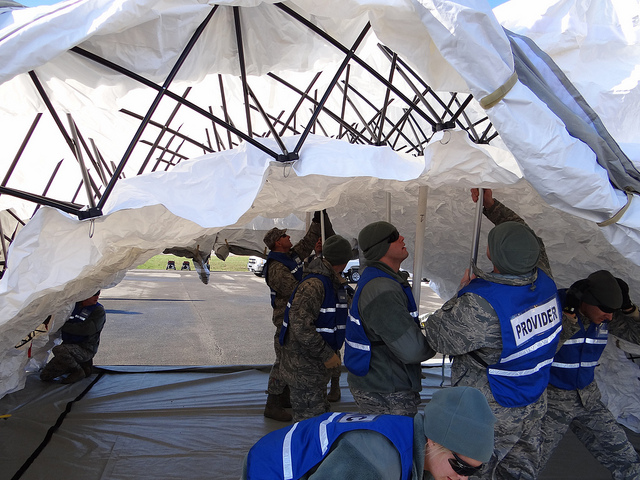
Kentucky Air National Guard CERFP medical team members assemble tents at the Wendell H. Ford Regional Training Center in Greenville, Ky., during a disaster-response exercise Nov. 28, 2011. CERFP — short for Chemical, biological, radiological, nuclear or high-yield explosive Enhanced Response Force Package — provides immediate response capability to the governor of a state affected by an attack, searching an incident site, rescuing and decontaminating casualties, and performing medical treatment to stabilize them for transport to a medical facility. (Courtesy photo)
Click here for more photos.
GREENVILLE, Ky. — More than 40 members of a Kentucky Air National Guard disaster-response team deployed to the Wendell H. Ford Regional Training Center here recently, joining forces with Kentucky Army Guard Soldiers to participate in their first field-training exercise.
The Guardsmen collectively formed a Chemical, biological, radiological, nuclear or high-yield explosive Enhanced Response Force Package, or CERFP for short, said 2nd Lt. Jessica Ellis, medical operations officer. A CERFP is comprised of medical personnel, a search-and-recovery team, a decontamination team and a command-and-control element. Their mission is to provide immediate response capability to the governor of a state affected by an attack, searching an incident site, rescuing and decontaminating casualties, and performing medical treatment to stabilize them for transport to a medical facility.
The exercise, which took place Nov. 28 to Dec. 4, allowed personnel to become more familiar with the equipment they will use in a real-world disaster-response situation, Ellis said. Various exercise scenarios also gave the Air Guard troops an opportunity to perform their duties in a structured learning environment while working with the decontamination team, which is comprised entirely of Army Guard personnel.
According to Ellis, the event was held in preparation for a larger exercise scheduled for May, when the Kentucky CERFP will be required to demonstrate its ability to manage a coordinated response to a simulated attack involving chemical, biological, radiological, nuclear or high-yield explosive agents.
“We’re taking a ‘crawl, walk, run’ approach to our training,” Ellis said, “so this exercise was our initial stage.”
The first day of training was focused on equipment familiarization, such as assembling and breaking down tents, coordinating with the Army decontamination unit, organizing teams and preparing medical supplies.
Lt. Col. David Worley (left), chief nurse of the Kentucky Air National Guard’s 123rd Medical Group, leads Airmen from the CERFP as they position medical tents at the Wendell H. Ford Regional Training Center in Greenville, Ky., during a disaster-response exercise Nov. 28, 2011. (Courtesy photo)
The remainder of the time was spent practicing scenarios in which the CERFP was activated by an incident commander. Participants were tasked with securing the site of an attack; and coordinating the movement of search-and-recovery teams, the decontamination team and the medical unit.
“This was the first time we’ve really gotten together in the field as a team, and for most people it was the first time they had seen the equipment,” Ellis said.
“We’ve all read the Concept of Operations and know our mission, but when you’re actually setting up the equipment and doing the mission, you discover better ways of doing things and things you need to adjust,” she added.
The highlight of the exercise was the final scenario, during which the unit met all of its training evaluation timelines while processing patients and communicating movement through command-and-control channels, Ellis said.
“At the end of the week, all of the new members who took part in their first CERFP exercise were able to completely set up the medical portion of the team and were ‘patient-ready’ after just 29 minutes,” said Maj. Brian McMorrow, the CERFP’s medical plans and operations officer.
That’s more than an hour sooner than required by exercise evaluation standards, he noted. McMorrow attributes the team’s success to the attitudes of its members.
“Most things were new and there were things that did not go as planned, but everyone had a smile on their face,” he said. “The work effort was awesome all week.”
Story by David Altom, Kentucky National Guard Public Affairs
Photos by Sgt. Bryan Ploughe, 1st Battalion, 623rd Field Artillery Unit Public Affairs Historian Representative
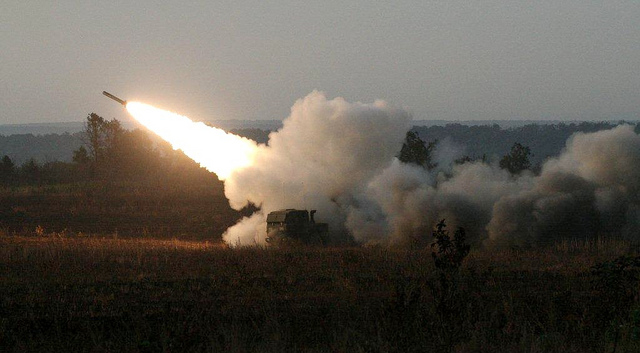
Sgt. Bryan Ploughe recently had this photo published in the U.S. Army’s Fires Bulletin. It’s something he’s proud of, not just for him, but for the recognition it brings on his unit. (Photo by Sgt. Bryan Ploughe, 1st Battalion, 623rd Field Artillery Unit Public Affairs Historian Representative.)
Every week for the past year or so kentuckyguard.com has published stories by Kentucky National Guard unit public affairs historian representatives, also known as UPAHRs. For those who don’t know, this is an additional duty taken on by a Soldier or Airmen with the intent of telling their unit’s story.
Today’s story is different. Today the story is about a UPAHR instead of being presented by one.
GLASGOW, Ky. — Sgt. Bryan Ploughe is a dynamo. If you don’t believe it, just ask anyone around him. The man never has a bad day. He’s one of those guys who has a passion for life and loves being around Soldiers and the National Guard. During last year’s flooding in western Kentucky he was on the road for days documenting the mission of his unit, 1st Battalion, 623rd Field Artillery, and getting photos that the mainstream media couldn’t get due to impassable roads and dangerous conditions.
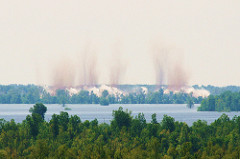
On May 5, 2011, Sgt. Bryan Ploughe shot this photo of the Army Corps of Engineers detonating a levee located on the Mississippi River near Hickman, Ky. (Photo by Sgt. Bryan Ploughe, 1st Battalion, 623rd Field Artillery Unit Public Affairs Historian Representative.)
Click here for one of Ploughe’s stories on the 623rd’s flood mission.
He’s also been on hand to photograph Kentucky National Guard Soldiers taking part in prestigious events like the Running of the Roses, aka, the Kentucky Derby.
Ploughe’s passion sometimes gets out of hand. Whether he’s on the phone during his regular personnel services duties for the troops or as the unit’s safety NCO, you know he’s in the office.
His enthusiasm is even evident when he signs off the phone: “Have a Ploughe day!”
“We used to have to tell Bryan to use his inside voice,” joked retired Sgt. Maj. Joey Simpson. “His energy is overwhelming, but you know his heart is in the right place. He just loves the Kentucky National Guard.”
“My wife says I’m loud,” Ploughe admitted. “I just think I project well.”
Ploughe’s most recent accomplishment being named runner up in a photo competition held by Fires Bulletin, the U.S. Army’s official artillery magazine. It’s something he’s proud of, not so much for himself as for the recognition it brings on his unit.
Click here to see the January-February edition of Fires Bulletin.
“Getting that photo published in an Army-wide magazine is just great!” he said. “I love showing what Soldiers do, especially in a society that too often focuses on the negative.”
Ploughe pursues his responsibilities as a UPAHR with same intensity as he does everything else — as though it’s his mission in life.
“I try hard to get the word out to the community what the Guard does,” he said. “It’s not just parades, not just junior guard stuff. We’re there for support during floods and tornadoes, and we have to go fight wars.
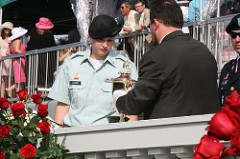
Ploughe shot this photo of Spc. James Farris at the winners circle during last year's Kentucky Derby. (Photo by Sgt. Bryan Ploughe, 1st Battalion, 623rd Field Artillery, Kentucky National Guard)
“Our communities have been there for us and we’ve been there for them. It’s my job to show what our troops are doing on their behalf.”
A veteran of the war in Iraq, Ploughe plans to pursue military journalism as an MOS. He’s currently scheduled to attend the public affairs basic course later this year.
“I can’t wait to get trained up,” he said. “It’s gonna be great!”
In the words of the good sergeant, have a Ploughe day!
For information on the UPAHR program contact Capt. Stephen Martin, 502-607-1798 email [email protected].
Story by David Altom, Kentucky National Guard Public Affairs
Photos courtesy Kentucky Army National Guard J2 Directorate
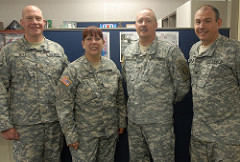
An award-winning team: 1st Lt. Joshua Witt, Sgt. 1st Class Debra Faris, Sgt. 1st Class Sonny Carter and Col. Charlie Harris were recognized as running the second highest rated OPSEC program in the United States Army.
FRANKFORT, Ky. – It’s official. The Kentucky Army National Guard has boasting rights to a world class operational security program. Don’t believe it? Just ask the United States Army!
Kentucky’s J2 directorate received second place in the 2011 United States Army Operations Security Award in the Organizational Achievement Award Category. They came in just behind the United States Army Space and Missile Defense Command/Army Forces Strategic Command (USASMDC/ARSTRAT), based at Peterson Air Force Base, Col.
“We can accept that,” said Col. Charlie Harris, director of Kentucky’s J2 shop. “We figure it’s probably good that the space and missile command has a top-rated security program, too.”
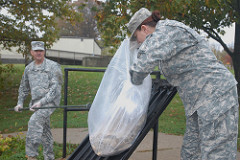
Sgt. 1st Class Sonny Carter and Sgt. 1st Class Debra Faris check for the bits and pieces that could put military operations -- and lives -- at risk.
Nominees came from every corner of the Army’s security world, both overseas and in the continental United States, from the active duty, Army Reserve and National Guard.
“Winning this award says a lot about the Kentucky Guard’s commitment to operational security and the burden of responsibility that we all carry,” said Harris. “We’re proud of the work we do here at the J2 shop, but it’s not just us. Everyone in the chain of command, from our senior leadership down to our most junior private, has a stake in good security practices, and we couldn’t do it without their support and compliance.”
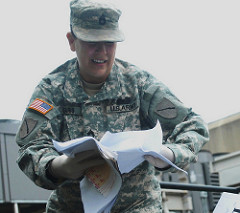
"In the end is lives are at stake," says Sgt. 1st Class Debra Faris, J2 NOIC. "Like the old saying goes, loose lips sink ships."
Kentucky’s OPSEC program was judged in several areas, including critical information list, red hash notes, an organizational inspection program, operational security integration into state training and missions, and training contractors.
“In the end is lives are at stake,” said Sgt. 1st Class Debra Faris, J2 NOIC. “Like the old saying goes, loose lips sink ships. It just takes a little bit from here, a little bit there to complete the puzzle and that puts lives at risk.”
“The Kentucky Guard is it!” Faris said. “I’ve been active duty, reserve and the Guard. This award is just another affirmation of what we do best, and that’s taking care of our Soldiers.”
This is the second year in a row that Kentucky has received the prestigious award.
Story and Photos by Staff Sgt. Steve Tressler, 138th Fires Brigade
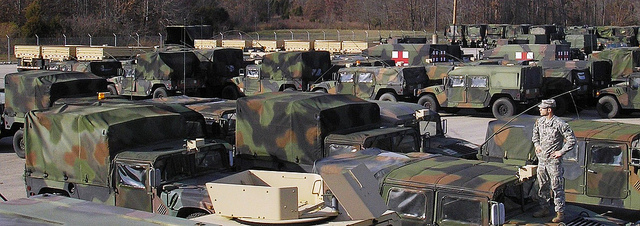
Staff Sgt. Nicholas Tomassi oversees the installation, maintenance and upgrading of the Blue Force Tracker system in more than a hundred vehicles for the 138th Fires Brigade. (Photo by Staff Sgt. Steve Tressler, 138th Fires Brigade)
FORT KNOX, Ky. – One of the most strategic and life-saving breakthroughs in technology for Soldiers in combat was the invention and adaptation of the Blue Force Tracker or ‘BFT’ for short. The BFT is a more intricate version of the GPS that provides military commanders and the Soldiers with location information about friendly and hostile military forces.
So when a part is defective on the BFT, it’s serious. It can cost American lives in combat. The 138th Fires Brigade has a long-standing reputation for taking care of some of the best trained Soldiers in the National Guard.
According to Chief Warrant Officer 2 Bernie C. Caldwell, 138th Fires Brigade Training Officer, “I think the best Soldiers in the National Guard are right here in Kentucky, and they deserve the best equipment and training.”
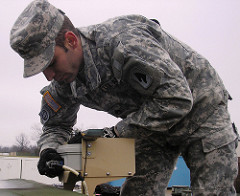
Staff Sgt. Nicholas Tomassi checks the Blue Force Tracker system on a tactical vehicle. (Photo by Staff Sgt. Steve Tressler, 138th Fires Brigade)
It was at this point that Chief Caldwell assigned Staff Sgt. Nicholas Tomassi the task of overseeing, installing, and supervising the upgrades and replacement of the BFT system in over 124 of the 138th’s vehicles staged at Fort Knox, Kentucky.
“I’m proud of the fact he trusted such a huge job to me, however I really didn’t understand how big of a job it would be until I got to Fort Knox” said Tomassi.
Tomassi was given a timeline of three weeks and the help of two Soldiers, Sgt. Brittany Johnson and Staff Sgt. Steve Tressler, and three contractors to complete the mission.
This was no easy task.
Each individual vehicle had to be moved to the installation area, plus the installation of the BFT, and the system test to each BFT to insure it was done correctly, and finally the restaging of all 124 vehicles had to take place, and all within three weeks.
The mission was completed in nine days.
Tomassi and his take-charge style ensured that it was done quickly and efficiently.
“Once we got going we found a good rhythm to it all. The tough part was fighting the weather” said Tomassi. “It rained for several days and was really cold and most of what we were doing was done outside.”
“I was really happy, it’s not every day I can handoff a project this big to someone and know that everything will get done right” said Caldwell. “Tomassi did an outstanding job, so did the whole team at Fort Knox.”
The Soldiers that will be the happiest are the ones that will be in those vehicles down the road.
Story and photos by Capt. Daniel Van Horn, Headquarters and Headquarters Battery, 2nd Battalion 138th Field Artillery
(Editor’s note: Capt. Daniel Van Horn and his wife Alleena discovered the benefits of Space A travel during their trip a few months ago to Europe. We asked them to share their story with our readership and show how Kentucky National Guard members can take advantage of this sometimes misunderstood resource.)
Click here for part one.
Click here for more photos.
NOTICE: Since publication of this article it’s been pointed out that M-Day Guard members (Category 6) have limited access to Space A travel. Check with the Air Mobility Command and Space Availability travel website for complete information on whether you qualify.
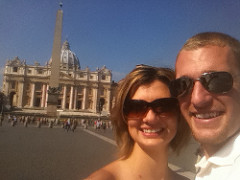
Vatican City. Space A only charged the Van Horns a total of $60 to get to Europe.
FRANKFORT, Ky. — The following day we bought tickets on a “hop on, hop off” bus tour around the city of Rome, which saved our feet tremendously and allowed us to hit all the main tourist spots with ease. Our main point of interest was Vatican City, the world’s smallest independent state in the world encompassing roughly 110 acres and houses one of the world’s largest museums. With our flight leaving that night at 8 p.m. We hastily finished the museum at 5 p.m. and began to make our way to the airport. By 7 p.m. we had boarded our three hour flight to Paris, and were able to catch up on some much needed sleep.
We met our International Business Program friends again and took a metro train with them to their flat near the famous storming of the Bastille which began the French Revolution and Napoleon Bonaparte’s rise to power. By this point, even with a bachelor’s degree in history I was ready to sit back and relax for a change. For the past week and a half we had run around to as many sites as possible and many people probably thought we were competing in the Amazing Race television show.
Through the next five days we toured numerous sites around the city such as the Eiffel Tower, Notre Dame, Palace of Versailles, Arch de Triumph, and finally a three drive to Normandy where I found a new appreciation for what Soldiers went through some 68 years before during the D-Day invasion.
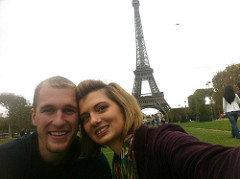
The Van Horns at a world famous landmark. Note: a visit to Paris can reap unexpected dividends!
Heading home, adding up the savings … and a surprise souvenir!
Our five days quickly flew by and before we knew it we were saying good bye to our friends and departing back to Ramstein for our return flight home the following afternoon. I reflected on our trip and just how much we had accomplished. I kept a running total of how much we had spent and the results pleasantly surprised me. After five countries, airfare, rail tickets, car rentals, lodging, food, touring, and shopping, our total so far was only around $3,000.
Amazing.
Our departure from Ramstein the following day went without a hitch, and after we touched back down in Baltimore, I began to realize just how much we had really saved by using Space A. The same trip had we not used Space A and purchased tickets online would have been around $5,200. The door to Europe and many other destinations was suddenly open.
Without hesitation I leaned over and asked my wife, “Sweetie, what are our plans for Valentine’s Day?”
It wasn’t until we got home that we discovered an extra bonus as a result of our trip — we’re expecting our first child early this summer!
Yeah, it was the cabaret in Paris … and the wine.
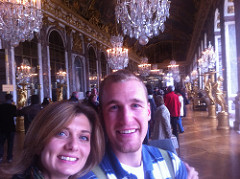
Contrary to popular belief, the Château de Versailles -- also known as the Palace of Versailles -- is not located in Versailles, Kentucky!
You can do it, too!
Alleena and I encourage any service member or retiree reading this to seriously consider taking advantage of Space A. Information is readily available on the internet, which is how our trip began. The process was easy, the customer service outstanding, and the experience exceeded our expectations. With approximately 79 destinations around the world the hardest part was simply connecting the flight schedules to create an itinerary.
The six categories of priority for Space A are as follows:
Category 1: Emergency Leave Unfunded Travel (usually Soldiers who receive news of a death in the family)
Category 2: Environmental Morale Leave (Soldiers on leave from an overseas installation with adverse environmental conditions)
Category 3: Ordinary Leave (Active Duty personnel on regular leave)
Category 4: Unaccompanied Dependents on EML (family members of Soldiers in Category 2 unnacompanied)
Category 5: Permissive TDY (Soldiers completing temporary duty)
Category 6: Retired, Dependents, Reserve, National Guard
Only active duty service members fall under categories 1-5 with category 6 reserved for National Guard, Reserves, retirees, ROTC Cadets, and unaccompanied military family members.
If you are in a government owned aircraft, you will not be charged a fee. Should the flight be a commercially contracted flight, a small fee may be charged for meals and taxes (approximately $15-30). Each passenger may carry two baggage pieces each weighing no more than 70 pounds each and a carry-on that can fit under the seat or in the storage bin, which made my wife quite happy.
And like the old saying goes, “If mama’s happy, everybody’s happy.”
Amen to that!
Click here for more information on Air Mobility Command and Space Availability travel.
Capt. Van Horn is happy to share more information on his Space A experience. He can be reached at 502-607-1358, email: [email protected].
Story and photos by Capt. Daniel Van Horn, Headquarters and Headquarters Battery, 2nd Battalion 138th Field Artillery
(Editor’s note: Capt. Daniel Van Horn and his wife Alleena discovered the benefits of Space A travel during their trip a few months ago to Europe. We asked them to share their story with our readership and show how Kentucky National Guard members can take advantage of this sometimes misunderstood resource.)
Click here for more photos.
NOTICE: Since publication of this article it’s been pointed out that M-Day Guard members (Category 6) have limited access to Space A travel. Check with the Air Mobility Command and Space Availability travel website for complete information on whether you qualify.
FRANKFORT, Ky. — My research for our trip of a lifetime began one day on Google. Like many folks these days our budget was tight and I wanted to find a way to save money. I was amazed at what I found! After an hour of combing through blogs and websites I explained to my wife, Alleena, that we could possibly travel to Europe for our fifth anniversary using Space Available, that mysterious service known far and wide as “Space A.” With a confused look on her face she asked, “What’s that?”
Thanks goodness for the internet. The main source of information came from the Air Mobility Command Website explained that Space A could save us thousands of dollars in travel, thus saving us money and increasing her shopping budget tremendously. My argument was met with immediate and aggressive enthusiasm.
Making arrangements
At my wife’s encouragement, I quickly made a phone call to the nearest AMC terminal — Wright Patterson Air Force Base in Dayton, Ohio. After a lengthy conversation with the helpful AMC representative, my confidence in this method of travel actually working improved tremendously.
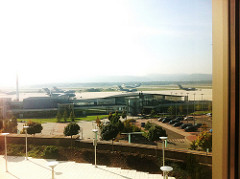
Ramstein, Germany is the primary destination for most Space A flights to Europe.
Ironically, the rep informed me that it was far easier to travel to Europe than to travel around the states. It turns out that Baltimore’s Thurgood Marshall Airport is the major hub to Europe with three commercially contracted flights departing and returning consistently every week from Ramstein, Germany. All I needed to do was call the AMC terminal at Baltimore, get the flight schedule, drive to the airport and register by showing my leave orders, passport, military ID.
This sounded too easy!
My sixteen days of leave began September 26th with a phone confirming a flight was scheduled for Tuesday, September 27th at 8 p.m. and roll call being promptly at 6 p.m. After some backwards planning it was decided that we should be at BWI no later than 4 p.m. giving us two hours of buffer time for traffic, getting lost, etc.
With our car packed with only four bags we began the eight hour drive to Baltimore airport. We arrived a little early and immediately checked in with the Air Mobility Command desk to register for the evening flight departing to Germany. The Air Force Sergeant did not guarantee our seats but did inform us of a small fee of $30 per person if our names were selected since we were flying commercial.
“Sixty dollars,” I exclaimed in disbelief. “That’s all?”
His reply was simply, “Yes Sir, that’s it.”
Several hours later our names were called and in incredible excitement and anticipation we proceeded to the Boeing 777 for our eight hour flight over the ocean for the trip of a lifetime!
An unexpected welcome

The Kaiserslautern Military Community Center at Ramstein offers a wide range of amenities for the weary Space A traveler.
We arrived in Ramstein at 11 a.m. Greenwich Mean Time (six hours ahead of back home) after four movies, little sleep, and two meals. We departed the jet – which was hastily prepping for the flight to Aviano, Italy – and made our way from the tarmac to the terminal for a passport check, customs briefing, and baggage pickup. We were soon finished with this process and able to travel wherever we wanted; which at this point was a shower, breakfast, and a bed.
Thankfully, the Kaiserslautern Military Community Center was just a short walk from the terminal. The 800,000 square feet KMCC featured 350 rooms, a fitness center, sports bar, Tickets and Tour: Portal to Europe, Post-exchange (PX), food court, and a shopping mall. Our room was a welcome sight, was only forty bucks, and after laying down our jet lag soon slipped out of our consciences.
The following day we purchased our tickets, got in a taxi and made our way to the train station for an eleven hour ride to Prague, Czech Republic, to meet up with some friends who were studying in an French International Business Program but had time to tour with us in Czech.
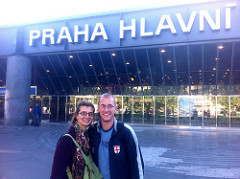
Capt. Daniel Van Horn and his wife, Alleena, in Prague, the Czech Republic, on a trip of a lifetime. You can do this, too, by taking advantage of Space A travel.
The ride was exhausting and lasted through the night stopping in Mannheim, Nuremburg, and Berlin, before arriving to Prague. We learned that had we bought the tickets three days earlier the cost would have been less than half (we know for next time).
We met our friends in Wenceslaus Square (the city main square), got our hotel room, and immediately began touring this beautiful and unique city that was once the capital of the Holy Roman Empire and the center of Europe. According to the Guinness World Book of Records, Prague is home to the largest castle complex in the world and has the beloved St. Charles Bridge, built over the Vltava River by King Wenceslaus.
Wi-Fi is our friend
Thankfully, our hotel had wi-fi and we were able to purchase our flights to Milan, Italy, reserve a rental car and book flight from Rome to Paris. Europe is known for its efficient and cheap travel and our purchases only confirmed this belief. It is highly recommended however, you Google Europe road signs before renting your vehicle and travelling on foreign highways.
We departed Czech Republic after five days, two castles, five cathedrals, a monastery, and miles of walking.
We arrived in Milan, Italy on October 2nd, got our small economy diesel Fiat, a map of Italian roads, and plotted our course to Florence, Italy. After five hours of driving, we made our way into the city to our Hostel. Hostels are a cheap alternative to hotels and can save you as much as half the cost of a regular hotel. If you review hostels in advance you can find really nice ones and reserve the entire room for privacy.
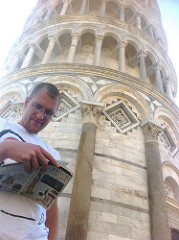
Ain't this thing supposed to be leaning? Van Horn in the city of Pisa, Italy.
The next morning we borrowed a Florence tourist book from the front desk and began to discover this incredible city known for starting the Renaissance, famous sculptures, architecture, and Galileo. Traveling on foot with our book as our tour guide we were able to get away from the noise, people, and tourist shops and see some spectacular often less visited sites. After two days, we left Florence heading west to the coastal town of Pisa for a brief stop to see its famous leaning tower before continuing on to Rome.
We arrived around 5 p.m. on October 5th, turned in our Fiat, and took a bus to our Hotel. That evening we ventured out on foot to find dinner, and see the sites closest to our location to include the Coliseum, Palatine Hill, Palaces, and the numerous piazzas with their grand fountains gilded in gold and bronze.
Just another day in the capital of the Roman Empire.
(Click here for part two of this story — More sights, travel tips and how you can do this, too!)
Check back soon for the new Kentucky National Guard Website.