Pages
Stay In Touch
More
© 2013 KentuckyGuard
Story by David Altom, Kentucky National Guard Public Affairs
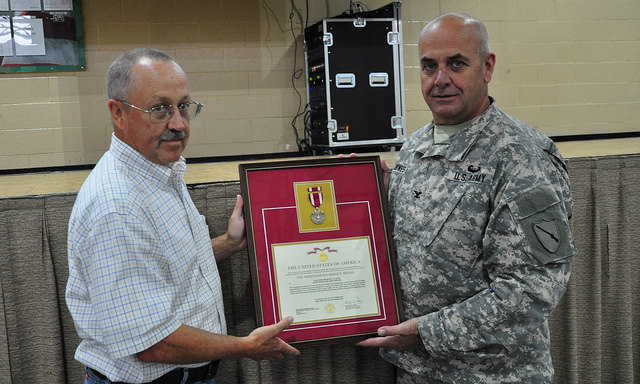
Col. Charles Jones presents Col. (retired) Mike Gavin with a Meritorious Service Medal during a ceremony held at Boone National Guard Center Oct. 16, 2014. Gavin retired after more than 30 years with the Kentucky National Guard, his most recent assignment being the state surgeon. (Photo by David Altom, Kentucky National Guard Public Affairs)
FRANKFORT, Ky. — When Mike Gavin first tried to join the military the recruiters didn’t want him. They said that, among other things, he was practically blind.
“I told them, well, I’m a blind surgeon, if that makes a difference,” he said.
It did.
More than thirty years later Kentucky Army National Guard State Surgeon Col. Mike Gavin retired after a distinguished and amazing career — despite having to wear glasses.
Click here for more photos.
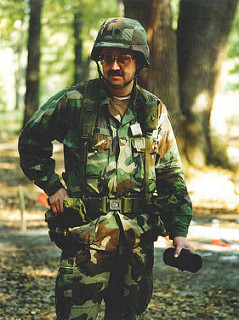
The “blind surgeon.” Mike Gavin in the field on drill weekend. He went on to serve two tours of duty in Iraq and Uzbekistan, saving lives and bringing comfort to others. (Photo courtesy Col. Mike Gavin)
Gavin served as the battalion surgeon for the old 1st Battalion 123rd Armor as well as 2nd Battalion 123rd Armor. He also served as brigade surgeon for the 149th Maneuver Enhanced Brigade.
Col. Mike Abell, G-1 director, remembers the first time he met Gavin.
“I was at my first National Guard drill at the firing range,” he said. “There was this tent that had a sign that said ‘minor surgery’ and I was amazed to find out they were doing actual surgery on drill weekend. I’d just come off active duty as an Army Ranger and we didn’t even have that.”
“I told [then] Major Gavin how I’d just gone through a minor surgery with the Army. He said if I’d seen him during a drill weekend he could have done it, no problem.”
Gavin had a reputation for giving above and beyond to soldiers, but his practice wasn’t limited to drill weekends and annual training. He also served a tour of duty in Uzbekistan and two in Iraq, where he saved lives and brought comfort to his fellow service members.
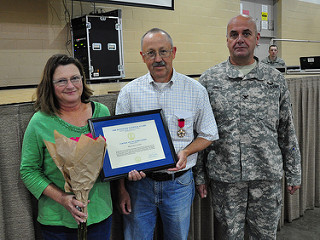
Nancy Gavin, wife of Col. Mike Gavin, was recognized for her contribution as a military spouse. The Gavins have been married for more than 39 years. (Photo by David Altom, Kentucky National Guard Public Affairs)
Needless to say, Gavin received numerous accolades and awards for his professional accomplishments. But that’s not what he talked about at his retirement ceremony. Instead, he focused on the teamwork that made his time with the Kentucky Army National Guard so special.
“I remember after I first got in and going on annual training in Texas,” he said. “I had this group of NCOs that were trying to teach me how to drive an M113 (armored personnel carrier). I’ll never forget it … they would slap the top of my helmet to get me to go, slap the right side to turn right and the left side to turn left. And to get me to stop they would pound the top of my head repeatedly.”
Gavin said throughout his career he relied on soldiers to “slap him on the head” and keep him in line. “It isn’t easy for a Spec. 4 to say, ‘sir, I really don’t think you should do that. It’s due to that kind of guidance, that camaraderie and support that I was able to do what I needed to do.”
“I’ll miss the Guard and working with a great bunch of soldiers,” he said. “It’s been a privilege and an honor to serve.”
The following is a compilation of significant dates in our Nation’s and our commonwealth’s military history. For more on the legacy of Kentucky’s men and women in uniform, visit the Kentucky National Guard eMuseum.
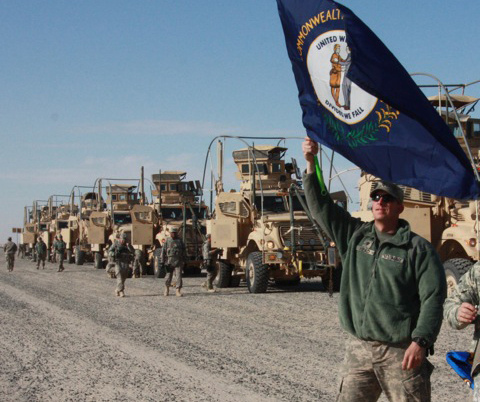
A Kentucky Guardsman with the 149th Maneuver Enhancement Brigade waves the Kentucky flag at the border crossing into Kuwait, Dec.2, 2011, as part of one of the last Kentucky convoy out of the country. (Kentucky National Guard photo by Capt. Andrea Hahn)
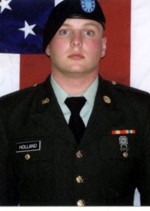
Pfc. Alva Holland
December 1, 2009 – Pfc. Alva Lorenzy Holland, of Bellevue, Ky. (Campbell County) was on active duty status when he was killed in a motorcycle accident. Holland was en route to 149th Vertical Engineer Construction Company of Cynthiana when the accident occurred. Holland was a medical assistant at a chiropractic center in Cincinnati, Ohio. He was a 2004 graduate of Bellevue High School. Holland was a medic in the Kentucky National Guard’s 149th Vertical Engineer Construction Company. Holland volunteered for an active duty deployment in February, 2010 with the 2123rdTransportation Company.
December 2, 2011 - Last Soldiers of the 149th Maneuver Enhancement Brigade leave Iraq. They are among the final U.S. Forces to exit the country following the nearly nine-year war. (Operation New Dawn)
December 6, 1776 – Kentucky County established by Virginia, out of part of Fincastle County.
December 7 – National Pearl Harbor Remembrance Day, observed in remembrance of the December 7, 1941 attack.
December 7, 1971 – Richard L. Frymire is appointed Adjutant General of Kentucky by Gov. Wendell H. Ford. He would be re-appointed by Gov. Julian Carroll. Frymire, the former commander of the 165th Rac. Recon. Sq. became the first member of the Kentucky Air National Guard to serve as Adjutant General of Kentucky.
December 7, 1987 – Michael Walker Davidson is appointed Adjutant General of Kentucky by Gov. Wallace G. Wilkinson.
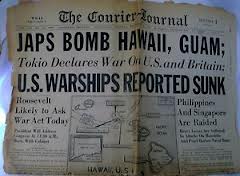
Front page of the Courier Journal, Louisville, Ky., Dec. 8, 1941.
December 8, 1941 – The United States declared war on Japan (World War II)
December 8, 1941 – Initial Japanese attack on the Philippine Islands. Co. D, 192nd Tank Battalion (aka “The Harrodsburg Tankers”), come under attack. (World War II)
December 8, 1959 – Arthur Young Lloyd is appointed Adjutant General of Kentucky by Gov. Bert T. Combs and re-appointed by Gov. Edward T. Breathitt.
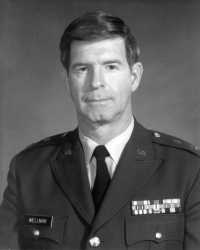
Maj. Gen. Billy G. Wellman
December 8, 1977 – Billy Gene Wellman is appointed Adjutant General of Kentucky by Gov. Julian M. Carroll. He would be re-appointed to the position by Govs. John Y. Brown, and Martha Layne Collins.
December 9, 1947 – Roscoe Lee Murray is appointed Adjutant General of Kentucky by Gov. Earle C. Clements and re-appointed by Gov. Lawrence W. Wetherby.
December 9, 1990 – 1st Battalion, 623rd Field Artillery federally activated for Operation Desert Shield/Storm.
December 9, 2003 – Donald C. Storm is appointed Adjutant General of Kentucky by Gov. Ernest Fletcher.
December 10, 1829 – Peter Dudley is appointed Adjutant General of Kentucky by Gov. Thomas Metcalf. Dudley would be re-appointed to the position by Governors John Breathitt, James T. Morehead, James Clark, Charles A. Wicklife, Robert P. Letcher, William Owsley, John J. Crittenden, and John L. Helm.
December 10, 1895 – Daniel Ray Collier receives his first appointment as Adjutant General of Kentucky from Gov. William O. Bradley. He received a second appointment on November 1, 1898, from Gov. William S. Taylor. Collier was re-appointed Adjutant General under Gov. William S. Taylor on December 13, 1899, following the contested governor’s election, and continued to hold office simultaneously with John B. Castleman from February 3, 1900 while the two candidates disputed the issues in the courts. Collier remained in office in the Old Capitol, serving under Taylor, until May 22, 1900, at which time he yielded the office to General Castleman in compliance with a U.S. Supreme Court order.
December 10, 1903 – William Purcell Dennis (Percy) Haly is appointed Adjutant General of Kentucky by Gov. J.C.W. Beckham.
December 10, 1939 – John Arthur Polin is appointed Adjutant General of Kentucky by Gov. Keen Johnson.
December 10, 1950 – Wonsan-Hungnam Campaign ended. (Korean War)
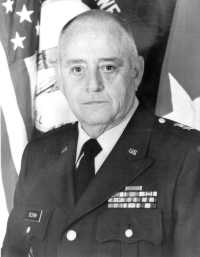
Maj. Gen. Robert DeZarn
December 10, 1991 – Robert Louis DeZarn is appointed Adjutant General of Kentucky by Gov. Brereton C. Jones.
December 11, 1923 – Jouett Henry Adjutant General of Kentucky by Gov. William J. Fields.
December 11, 1935 – George Lee McClain is appointed Adjutant General of Kentucky by Gov. Albert B. (Happy) Chandler.
December 11, 1941 – The United States declared war on Germany and Italy. (World War II)
December 11, 1951 – Jesse Scott Lindsay is appointed Adjutant General of Kentucky by Gov. Lawrence W. Wetherby.
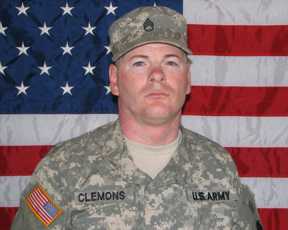
Staff Sgt. Thomas Clemons
December 11, 2007 – Our current Adjutant General, Maj. Gen. Edward W. Tonini is appointed to the role by Gov. Steve Beshear.
December 12, 1967 – Allan Kenneth Carrell is appointed Adjutant General of Kentucky by Gov. Louie B. Nunn.
December 12, 1985 – Gander, Newfoundland airplane crash. Upon leaving the Gander airfield, a military chartered Arrow Air DC-8 left from Gander headed for Fort Campbell, Kentucky, the plane crashed shortly after take-off, killing all 256 people aboard. Two hundred forty-eight members of the 101st Airborne Division and eight crewmembers died.
December 12, 1995 – John Russell Groves, Jr. is appointed Adjutant General of Kentucky by Gov. Paul E. Patton.
December 13, 1636 - General Court of the Massachusettes Bay Colony ordered the organization of the Colony’s militia companies into three regiments: The North, South and East Regiments. The colonists had adopted an English militia system in which all males, aged 16-60 were required to possess arms and participate in the defense of the community. The roots of the modern day National Guard.
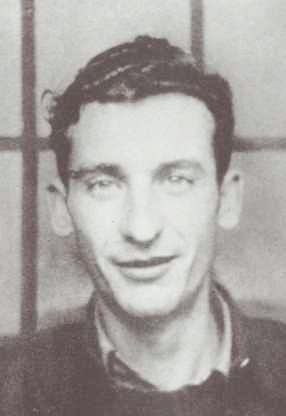
Pvt. Willard Yeast
December 13, 1907 – Philip Preston Johnston is appointed Adjutant General of Kentucky by Gov. Augustus E. Wilson.
December 13, 1955 – John Jacob Bethurum Williams is appointed Adjutant General of Kentucky by Gov. Albert B. Chandler.
December 13, 2003 - Deposed Iraqi leader Saddam Hussein captured near his home town of Tikrit, Iraq by U.S. Forces.
December 14, 1927 – William Henry Jones, Jr. is appointed Adjutant General of Kentucky by Gov. Flem D. Sampson and re-appointed to the position by Gov. Ruby Laffoon.
December 14, 1944 – Staff Sgt Joseph Baxter Million, and Pvt. Willard R. Yeast, both of Company D, 192nd Light Tank Battalion (aka “The Harrodsburg Tankers”) died when they were burned to death during the Palawan Island Massacre. (World War II)
December 14, 2002 – Carrollton National Guard Armory named in honor of Robert “Goose” Caldwell.
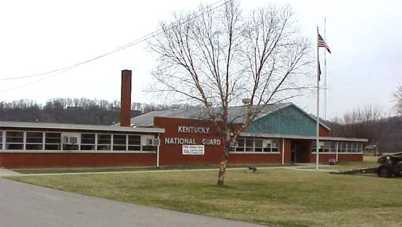
Caldwell Armory, home of Alpha Battery, 2/138th FIeld Artillery
December 16, 1944 – Battle of the Bulge began (World War II)
December 16, 1951 – 1st Lt. Lawrence Bertrand Kelly of Louisville (Jefferson County) died in Korea while serving on active duty flying an F-80 with the 80th Fighter Bomber Squadron, 8th FTR Bomb Group. He was declared missing on this date and his status was changed from MIA to KIA on December 31, 1953. Prior to his active service he was a member of the Kentucky Air National Guard. (Korean War)
December 17, 1861 – Battle of Rowletts Station (Hart County) (Civil War)
December 17, 1989 – Operation Just Cause (Panama).
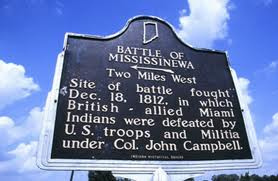
Battle of Mississinewa, Ind.
December 17-18, 1812– Battle of Mississinewa (near Marion, In.) (War of 1812)
December 18, 1972 – Operation Linebacker II (Christmas Bombing) (Vietnam War)
December 20, 1919 – James Madison DeWeese receives his first appointment as Adjutant General of Kentucky, his second appointment is June 16, 1920, by appointments made by Gov. Edwin P. Morrow.
December 22, 1921 – Newport Rolling Mills Strike Duty – The Kentucky National Guard under command of Col. Henry H. Denhardt, who later became Adjutant General, ordered by Gov. Edwin P. Morrow to quiet rioting and wide-spread violence. The first troops arrived on the morning of December 24th to sound of gunfire. The strike continued into 1922.
December 22, 1921– Cpl. Edward Vivion Trisler, of Company D, 192nd Light Tank Battalion died on 23 December 1942 at Camp Cabanatuan, Nueva Ecija, Philippines of dysentery.
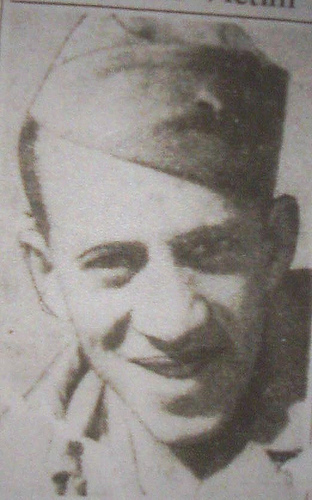
Pvt. Robert Brooks
December 23, 1941 – The main parade grounds at Fort Knox named Brooks Field in honor of Private Robert H. Brooks of Sadieville, first Armored Force casualty of World War II, killed in the Philippines while serving with Co. D, 192nd Tank Battalion. (World War II)
December 24, 1921 – Pvt. Robert Deaton, a member of Company G, 149th Infantry, Barbourville, Ky., was accidentally killed at the corner of Powell and Brighton streets in Covington, while on state active duty during steel strikes at Newport. While he and Sgt. Charles Black were on duty, Sgt. Black became suddenly ill and about to fall, in recovering his balance his right arm knocked Deaton’s revolver from his holster. The revolver fell to the street discharging the cartridge. The bullet struck the right side of Deaton’s neck. He was rushed to the hospital but bled to death on the way. Col. H. H. Denhardt, commanding the troops made an investigation and pronounced the death accidental. Denhardt would later serve as Adjutant General.
December 24, 1964 – USAF began strikes on Laos. (Vietnam War)
December 25, 1846 – Gen. Alexander W. Doniphan (formerly of Mason County, Ky.) defeats the Mexicans at Bracito. (Mexican-American War)
December 27, 1860 – Major Robert Anderson (of Kentucky), U.S. Army, in command in Charleston harbor, burns the inside of Fort Moultrie, spikes the guns, and retires, with his band of 80 men, to Fort Sumter. (Civil War)
December 29, 1776 – McClellan’s fort (Georgetown) attacked by Indians. (Early Indian Wars)
December 29, 1862 - U.S. Army Col. James Williamson from Adair County, Ky., while serving with the 4th Iowa Infantry, led his regiment against a superior force, strongly entrenched, and held his ground when all support had been withdrawn during the Battle of Chickasaw Bayou, Miss. Williamson received the Medal of Honor for his actions.
December 31, 1946 – President Harry S. Truman officially proclaims the end of hostilities in World War II.
The following is a compilation of significant dates in the Nation and in our Commonwealth’s military history. For more on the legacy of our Citizen-Soldiers and Airmen, visit the Kentucky National Guard eMuseum.
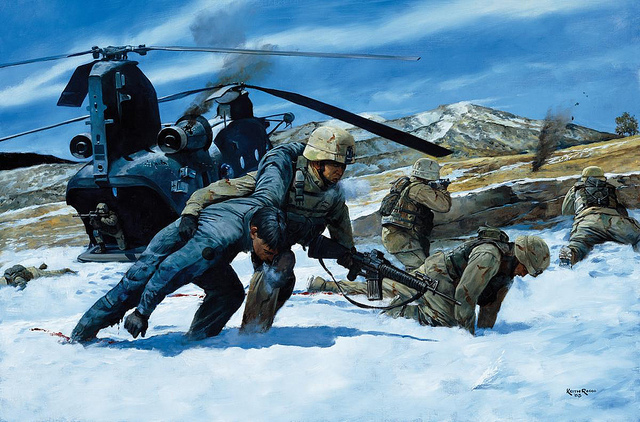
Takur Ghar, Afghanistan, March 4, 2002
March 1, 1781 – Attack on Strode’s Station, Clark County (Early Indian Wars)
March 1, 1847 – Central mound in the Frankfort cemetery conveyed to the State for a public burying ground, The State Mound.
March 2, 1943 – Battle of Bismarck Sea began (World War II)
March 2, 1968 – Operation Rolling Thunder began (Vietnam War)
March 3, 1931 – “Star Spangled Banner” made U.S. National Anthem.
March 4, 1966 – Operation Utah (Vietnam War)
March 4, 2002 – Takur Ghar, Patkia Province, Afghanistan-Tech Sgt. Keary Miller, a Combat Search and Rescue Team Leader from the Kentucky Air Guard’s 123rd Special Tactics Squadron, earns a Silver Star for his actions in pulling wounded men out of the line of fire after their MH-47E helicopter crashed landed due to ground fire. Once he established a safe causality treatment area he immediately began giving first aid to a growing number of men. Later he stripped ammunition from the dead and injured and, while repeatedly exposing himself to enemy fire, resupplied those men still able to defend the position. Although seven soldiers lost their lives and ten others were seriously wounded during this 17-hour engagement with Taliban fighters, probably several more would have died without Miller’s heroic service (Global War on Terrorism).
March 5, 1860 – Act for organization of the Kentucky Militia (State Guard Law).
March 7, 1777 – First siege of Harrodsburg by 47 Indians, under their chief, Blackfish (Early Indian Wars).
March 7, 1951 – Operation Ripper began (Vietnam War)
March 7, 1867 – 235 copies ordered to be purchased of Adjutant General Daniel W. Lindsey’s Report for 1861-66, known as the “History of Kentucky Soldiers during the late War;” by the Kentucky State Legislature.

Josiah Stoddard Johnston, 1870
March 9, 1870 – Josiah Stoddard Johnston is appointed Adjutant General of Kentucky by Gov. John W. Stevenson.
March 9, 1867 – The Kentucky legislature cedes to the United States government jurisdiction over the national cemeteries at Perryville, Camp Nelson, Lebanon, and at Mill Springs.
March 11, 1968 – Operation Resolve to Win began (Vietnam War)
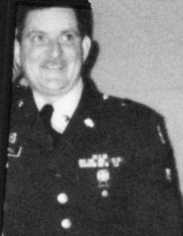
Sgt. Glenn Scott Stanfill
March 12, 2004 – Sgt. Glenn Scott Stanfill, Perry County, sustained fatal injuries when the HUMMWV (M998) he was driving was struck by a tractor-trailer on the Hal Rogers Parkway just East of Manchester, Ky. Stanfill was in route to the East Kentucky Training Site EKTS-A (Artemus) with B Company 206th Engineer Battalion, Hazard, Ky., as part of a Battalion Field Training Exercise (FTX).
March 13, 1922 – Pvt. Frank Crone, of Covington, a member of the Kentucky National Guard, was on duty as a guard at the Newport Rolling Mill, he was being relieved from duty by John Yates of Newport. Pvt. Crone was accidentally killed when a revolver slipped from Yates’ pocket and fell to the ground, discharging and mortally wounding Crone.
March 14, 1862 – Engagement at Pound Gap, Letcher County (Civil War)
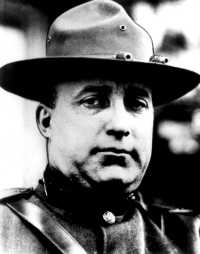
Henry Herman Denhardt
March 14, 1932 – Henry Herman Denhardt is appointed Adjutant General of Kentucky by Gov. Ruby Laffoon.
March 18, 1969 – Operation Breakfast (Vietnam War)
March 19, 1836 – Arsenal at Frankfort burnt, with 4,740 stand of arms, besides equipments.
March 19, 1912 – Kentucky State Guard becomes the Kentucky National Guard.
March 19, 1924 – James Arthur Kehoe is appointed Adjutant General of Kentucky by Gov. William J. Fields.
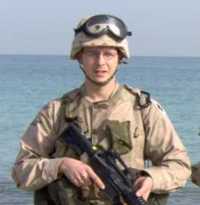
Sgt. Jonathan Hughes
March 19, 2005 – Sgt. Jonathan “Adam” Hughes, of Lebanon, Marion Co., Ky., was killed in Iraq when his armored HMMWV vehicle encountered an improvised explosive device (IED) during an escort patrol for a convoy enroute to Baghdad International Airport. At the time of his death, Hughes was assigned to B Battery, 1st Battalion, 623rd Field Artillery, based in Campbellsville, Ky. He joined the Guard in May 2001 when he was 17. His unit mobilized for Operation Iraqi Freedom in November and deployed to Southwest Asia in January 2005 (Global War on Terrorism)
March 22, 1782 – Estill’s defeat by Indians, near Little Mountain (Mount Sterling) (Early Indian Wars)

Staff Sgt. Brock Beery
March 23, 2006 – Staff Sgt. Brock A. Beery, of Whitehouse, TN was killed when his armored vehicle encountered an improvised explosive device (IED) near Al Habbaniyah, west of Fallujah in Iraq. At the time of the incident Beery was driving a fully-armored light medium tactical vehicle (LMTV). Beery was assigned to the Kentucky Army National Guard’s Headquarters and Headquarters Company, 2nd Battalion, 123rd Armor, based in Bowling Green. The unit mobilized for Operation Iraqi Freedom in March of 2005 and deployed to the Persian Gulf that July (Global War on Terrorism)
March 24, 1992 – SSgt. William Dean Bentley of Elizabethtown (Hardin County) died while on active duty for training at Fort Knox from cardiac arrest while training at the Kentucky Military Academy’s Non-Commissioned Officer Academy in the Primary Leadership Development Course during a field problem. Immediate aid was rendered by members of the 475th MASH and Emergency Room Staff member from Ireland Army Hospital, also participating in PLDC, but they were unable to revive him. Bentley was a member of Battery B, 2nd Battalion, 138th Field Artillery, located in Elizabethtown.

The Medal of Honor
March 25 – Medal of Honor Day.
March 25, 1917 – Claude Somerville of Portland TN. died at the Louisville city hospital, following surgery. He had been ill with measles and later developed pneumonia and after recovering from that became ill from emphysema. He enlisted in the 3rd Infantry Regiment of the Kentucky National Guard in Franklin, Kentucky. He died shortly after returning from federal active duty on the Mexican Border.
March 29, 1973 - Last remaining U.S. forces withdraw from South Vietnam
March 30, 1825 – Confederate General Samuel Maxey is born in Tompkinsville, Kentucky.

Capt. Merlin Kehrer
March 30, 1951 – Capt. Merlin R. “Bob” Kehrer perished in the crash of his F-51 “Mustang” near Leesburg, Va., while returning to Louisville from Bolling Air Force Base , D.C. He was a member of the Kentucky Air National Guard.
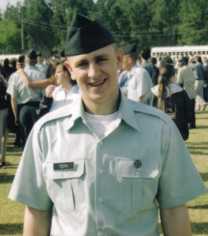
Sgt. Eric Lee Toth
March 30, 2005 – Sgt. Eric Lee Toth, of Edmonton, Metcalfe Co., Ky, was killed in Iraq when his HUMVEE encountered a vehicle-borne Improvised Explosive Device (IED) while returning from an escort patrol for a convoy along the main supply route in Baghdad. Toth joined the National Guard in May 2001. He was assigned to A Battery, 1st Battalion, 623rd Field Artillery, based in Tompkinsville, Ky. This unit mobilized for Operation Iraqi Freedom in November and deployed to Southwest Asia in January 2005 (Global War on Terrorism)
By Capt. Andi Hahn, Kentucky National Guard Public Affairs Office
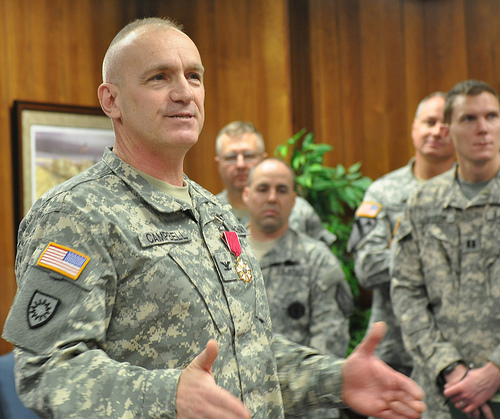
Kentucky Guardsmen Col. Scott Campbell, former 149th Maneuver Enhancement Brigade Commander, speaks to Soldiers after being presented the Legion of Merit award for meritorious service while serving as commander deployed in support of Operation New Dawn at a ceremony in Frankfort, Ky., Jan 11.
FRANKFORT, Ky.-Col. Scott Campbell, former commander of the 149th Maneuver Enhancement Brigade headquartered out of Louisville, Ky., was presented the Legion of Merit during an award ceremony at Boone National Guard Center in Frankfort, Ky., Jan. 11.
The award was presented by Maj. Gen. Edward W. Tonini, Adjutant General of Kentucky, for Campbell’s meritorious service as commander while deployed in support of Operation New Dawn in 2011. The award highlighted Campbell’s leadership, dedication and devotion to his Soldiers across the 2,500 strong brigade. His hard work in planning, resourcing and executing aggressive training opportunities enabled the success of the largest deployment of Kentucky Soldiers since WWII.
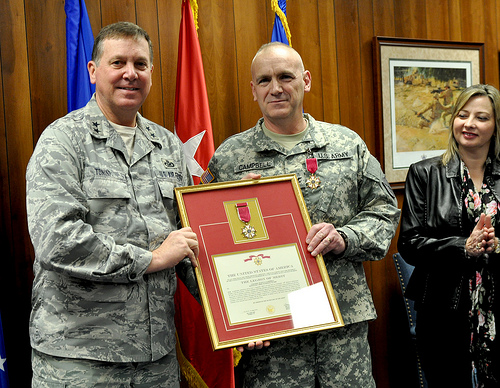
Kentucky National Guardsmen Col. Scott Campbell, former 149th Maneuver Enhancement Brigade Commander, receives the Legion of Merit award from Maj. Gen. Edward W. Tonini as Campbell’s wife, Linda looks on proudly, during a ceremony in Frankfort, Ky., Jan. 11.
The 149th MEB served in Iraq from August 2011 to December 2011 and was responsible for closing down the largest camp, Victory Base Complex, of the Iraq war. The unit was some of the last Soldiers to leave Iraq. Campbell, who served two tours in Iraq, credited the members of his team for the award.
“The Army awards Soldiers for achievement or for service,” Campbell said. “The achievement is for an individual accomplishment, the service is for a team effort. This award represents that.”
Campbell said he had the best team anyone could have put together for such a historic mission.
“This is a reflection of our organization,” he said. “We can plug and play any number of members of our organization and create a ‘winning’ team.”
For more pictures from Campbell’s ceremony, visit our flickr page!
http://www.flickr.com/photos/kyngpao/
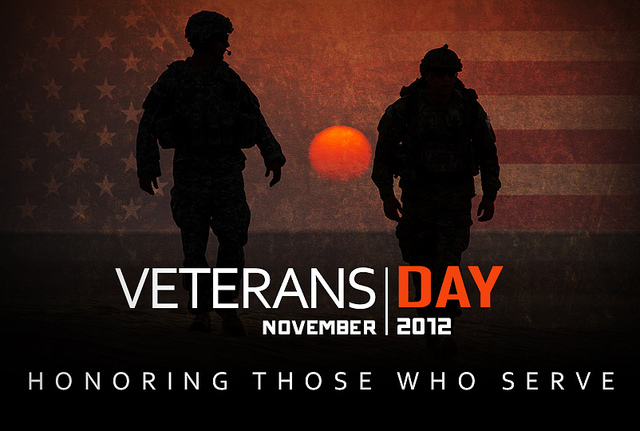
(U.S. Air Force graphic/Corey Parrish)
On Veterans Day, the world stops in silence to pay tribute to the heroes of the battlefield who never see themselves as heroes. To that, we believe we owe veterans more than our silence, our memories, our thanks.
The brave actions of our veterans endure in the pages of history. On Veteran’s Day, we not only remember their gallantry on the battlefield; we also look at the lasting legacy of strength and service they brought with them when they returned home.
But these Troops – our veterans - don’t see themselves as being brave or special, they just say they’re doing their jobs.
Since the attacks of Sept. 11, 2001, almost three million American men and women have answered our nation’s call to arms – to serve their nation and do their job.
In the last 11 years, more than 15,000 Kentucky men and women, Soldiers and Airmen, have deployed-permanently writing on our nation’s scroll and showing their “Unbridled Service”.
On this Veteran’s Day, 2012, the Kentucky National Guard pauses to say “Thank you” to all veterans; all those out of uniform and to those still serving our great country today.
[youtube http://www.youtube.com/watch?v=3diAGPmWlag]
Story by David Altom, Kentucky National Guard Public Affairs
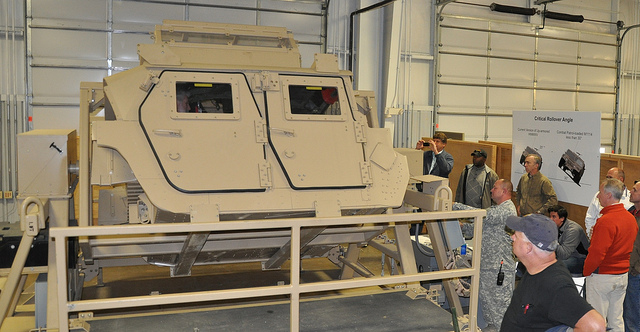
The Humvee Egress Assistance Trainer revving up for a spin. It may seem like a carnival ride to some, but it is a proven lifesaver. (Photo by Capt. Steve Martin, Kentucky National Guard Public Affairs)
Greenville, Ky.— Question: what’s tan and steel, spins 360 degrees, shares its name with a professional basketball team and saves lives on the battlefield?
Answer: The HEAT.
Okay, so it’s not funny. That was just to get your attention. Now comes the important stuff, the part you’re supposed to read ….
Sgt. Michael Fontanez is a true believer in the HEAT. Currently assigned to the Pre-mobilization Training and Assistance Element at the Kentucky National Guard’s Wendell H. Ford Regional Training Center, Fontanez discovered the value of his training during a 2008-09 tour of duty in Iraq with the 101st Airborne Division.
It was while in a 12 vehicle convoy near Fallujah that a roadside IED went off in front of Fontanez’s Mine Resistant Ambush Protected (MRAP) vehicle, creating a large crater. What happened next is a testament to the collective courage of a Soldier and his team — and the value of quality training.
“The explosion made visibility bad and we fell into the hole,” said Fontanez. “As we started rolling the first thing comes to your mind is, what do you do. So we started yelling ‘Roll over! Roll over!’ just as we were trained.”
The team also pulled their gunner down from the turret and held him until the vehicle stopped rolling, an action that most likely saved his life.
“Once we stopped moving the first thing we did was check ourselves,” Fontanez said. “Sometimes you don’t know if you’re injured. We also checked our equipment, weapons, goggles, the important stuff we’re supposed to carry. We tried the door but it wouldn’t open, so we pretty much crawled out of the turret. We then went into a safe area and checked for an ambush.”
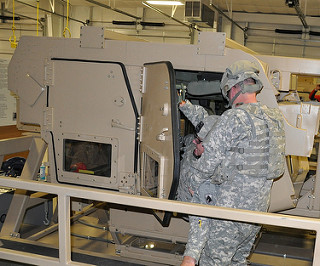
A Kentucky National Guard soldier helps his battle buddy egress from an inverted Humvee Egress Assistance Trainer during a demonstration at the Wendell H. For Regional Training Center in Greenville, Ky. (Photo by Capt. Steve Martin, Kentucky National Guard Public Affairs)
Fortune smiled that day; there was no ambush and no fatalities. But there were injuries. Fontanez hit the top of his head and incurred a cervical injury. The gunner suffered an inch wide cut on his face. But they survived, thanks to the HEAT and the quick reaction of the team.
“The training helped us run on autopilot,” said Fontanez. “We knew what was going to happen and we knew what to do. That step by step training triggered our muscle memory, we all ran on the same page, even with being disoriented.”
Fontanez now helps Kentucky’s Citizen Soldiers prepare for deployment using the HEAT and he loves his job. His advice to anyone getting ready to go through his lane?
“They should most definitely take it seriously. It can seem like a exciting ride, like at the county fair. So sure, have fun with it. But it has a purpose. It will save your life.”
Don’t take our word for it. Ask Fontanez’s wife and three girls. They’ll make believers out of you.
The following is a compilation of significant dates in our commonwealth’s military history. For more on the legacy of our Citizen-Soldiers and Airmen, visit the Kentucky National Guard eMuseum.
September, 1793 – Gen. “Mad” Anthony Wayne calls for mounted volunteers from Kentucky; but, having lost confidence in the regular troops in Harmar’s and St. Clair’s defeats, Kentuckians refuse to volunteer.
September 1, 1864 – Battle of Jonesboro, Ga. part of Atlanta Campaign. Kentucky Orphan Brigade attempts to hold strategic railroad position south of the city. However are not reinforced when attacked in force and are cut off from main Confederate position, suffer heavy casualties. The loss of rail line cuts off any hope of resupply for the Confederates in Atlanta and the city is evacuated. Union Army enters Atlanta the next day. (Civil War)
September 1, 1863 – John Boyle appointed Adjutant General of Kentucky by Gov. Thomas E. Bramlette.
September 1, 1891 – First appointment of Andrew Jackson Gross as Adjutant General of Kentucky by Gov. John Y. Brown.
September 1, 1952 – Largest All-Navy Raid (Korean War)
September 1, 2010 - Beginning of Operation New Dawn, end of U.S. Military’s combat role in Iraq.
September 2, 1914 – James Tandy Ellis appointed Adjutant General of Kentucky by Gov. Augustus O. Stanley. Ellis would be re-appointed as the Adjutant General by Gov. James B. Black.
September 2, 1945– VJ (Victory Japan) Day: Japan signed formal surrender (World War II)
September 2, 2007 – Staff Sgt. Delmar White, Lexington (Fayette County), was killed by an improvised explosive device (IED) while on a convoy escort mission in Baghdad, Iraq. White, 37, was assigned to Battery B, 2nd Battalion, 138thField Artillery, based in Carlisle, Ky. White was a corrections officer with Lexington Fayette Urban County Government and deployed with his unit in August 2007 in support of Operation Iraqi Freedom. He joined the Kentucky Army National Guard in 1998. (Global War on Terror)
September 4, 1864 – Gen. John Hunt Morgan shot and killed by Union officers at Greenville, Tennessee (Civil War)
September 4, 1875 – John Montgomery Wright is appointed Adjutant General of Kentucky by Gov. James B. McCreary.
September 5, 1871 – James Allen Dawson is appointed Adjutant General of Kentucky by Gov. Preston H. Leslie.
September 5, 1883 – John Breckinridge Castleman is appointed acting Adjutant General of Kentucky from 1883 – 1887, by Gov. J. Proctor Knott.
September 6, 1845 – Gov. Owsley is notified by the secretary of war, that Gen. Zachary Taylor is authorized to call upon Kentucky for troops to repel the apprehended Mexican invasion. Gov. Owsley replies that any requisition upon Kentucky will be promptly and gallantly responded to.
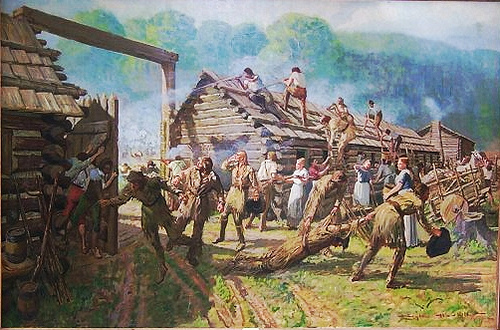
Siege of Boonesborough, 1778. Courtesy of Fort Boonesborough museum.
September 7, 1778 – Siege of Boonesborough by Captain de Quindre and a large force of Indians and Canadians. Siege ended 20 September (American Revolutionary War)
September 7, 1944 – 2nd Lt. Harry Ricker LaFon, Jr., and Pvt. Hugh J. Leonard, both serving with Company D, 192nd Light Tank Battalion (Harrodsburg Tankers) died aboard the Japanese “Hell Ship” Shinyo Maru when it was sunk (World War II)
September 8, 1898 – Wilbur Rush Smith is appointed Adjutant General of Kentucky by Gov. William O. Bradley.
September 9, 1943 – Operation Avalanche (Allied landing at Salerno, Italy) (World War II)
September 10, 1962 – U.S. Naval Sea Cadet Corps Incorporated.
September 10, 1845– Gen. Peter Dudley, sent by Gov. Owsley to Clay County. Two companies of troops from Madison County, under command of Col. John Miller ordered out to maintain law and order, remain until after the execution of Dr. Baker.
September 10, 2007 – Pfc. Sammie E. Phillips of Vine Grove (Hardin County), was killed when his vehicle overturned while conducting a traffic control mission on a highway near Rustamiyah, Iraq. Phillips, 19, was assigned to Battery B, 2nd Battalion, 138th Field Artillery, based in Carlisle, Ky. Phillips joined the Kentucky Army National Guard in 2006 and deployed with his unit in August 2007 in support of Operation Iraqi Freedom. He was a 2006 graduate of North Hardin High School. (Global War on Terrorism)
September 11 – Patriot Day: World Trade Center and Pentagon Terrorist Attacks
September 11, 1895 – Two cannon crews of Battery A, 1st Regiment of the Kentucky State Guard, known as the Louisville Legion were dispatched from the downtown Louisville armory to Phoenix Hill Park to fire a 44-gun salute at sunrise to awaken the city as a part of the festivities for the 29th Encampment of the Grand Army of the Republic (GAR). Each cannon was to fire 22 times. When the second caisson, which was 15 minutes behind the first, reached 4th and Broadway at 5:30 a.m. an explosion occurred. Forty-four bags of carefully packed black powder; each weighing 1.5 lbs., mysteriously ignited. The result was five men and two horses killed several people injured and property damage to buildings in the area. Those killed were Corp. Arthur Langan Robinson, Pvt. Charles Brechner (Biechner), Pvt. Charles C. Woods, Pvt. Archibald McBride, and a civilian, Mr. William Adams Sr. Mr. Adams had been hired by the officers of the Louisville Legion to drive the caisson to Phoenix Hill.
September 11, 1967 – Siege of Con Thien began (Vietnam War)
September 12, 1859 – Scott Brown is appointed Adjutant General of Kentucky by Gov. Beriah Magoffin.
September 13, 1951 – Battle of Heartbreak Ridge began (Korean War)
September 13, 1956 – The Kentucky Air National Guard receives its first F-86 Sabrejets at Standiford Field. The full complement of 25 Sabres was expected by October 15, with three T-33s and eight T-28 trainers.
September 14, 1781 – Long Run Massacre. As Indian activity increased the settlers at Boone’s Station sought protection at Linn’s Station. While enroute to that location they were attacked along the banks of Long Run Creek, about 60 people were killed.
September 14, 1814 – “Star Spangled Banner” written by Francis Scott Key (War of 1812)
September 14, 1966 – Operation Attleboro began (Vietnam War)
September 14, 1971 – Capt. Roger M. Sanders died when his RF-101 “Voodoo” crashed shortly after takeoff. He was able to eject, but did not survive his injuries from the incident. Sanders was taking off simultaneously with another aircraft for a night refueling exercise. The other aircraft landed safely in Indiana.
September 14, 2002 – Marion National Guard Armory named in honor of 1st Sgt. Carson G. Davidson.
September 15, 1950 – Inchon Landing (Korean War)
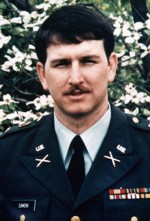
2nd Lt. Vincent Simon
September 15, 1984 – 2nd Lt. Vincent Simon, age 30, of Glasgow (Barren County), died at Fort Knox, Kentucky in the line of duty while on inactive duty for training (IDT). He was a member of Battery C, 1st Battalion, 623rd Field Artillery based in Monticello. He died from injuries he received when the military vehicle, a M-151 ¼ ton “Jeep” he was operating was involved in an accident. He was a graduate of Western Kentucky University and was a Civil Engineer in his civilian life with J. N. Gray Construction Company in Glasgow. He joined the US Army in 1972 after high school and rose to the rank of Specialist 5 before leaving the Army and joining the Kentucky Army National Guard in December 1975. He rose to the rank of Staff Sgt. He was a graduate of the Boone Raiders course in 1983 and the Kentucky Military Academy’s Officer Candidate School. He was commissioned a 2nd Lt. on July 8,1984, just a few weeks before his death.
September 16, 1847 – Kentucky soldiers who fell at the Battle of Buena Vista, Mexico, from Shelby, Montgomery, and Franklin counties, interred with full military honors in the state cemetery.
September 16, 1950 – Naktong Perimeter Breakout began (Korean War)
September 17, 1787 – Citizenship (Constitution) Day: U.S. Constitution approved.
September 17, 1862 - Battle of Antietam near Sharpsburg, Maryland (Civil War)
September 17, 1914 – Ladies Auxiliary VFW organized.
September 17, 1944 – Operation Market Garden (World War II)
September 18-20, 1863 - Battle of Chickamaugua, Georgia (Civil War)
September 18, 1947 – U.S. Air Force established.
September 18, 1950 – Inchon Operation and Liberation of Seoul began (Korean War)
September 18, 1994 – Operation Uphold Democracy.
September 19 – POW/MIA Recognition Day.
September 19, 1817 – Oliver Garnett Waggoner/Waggener is appointed Adjutant General of Kentucky by Gov. Gabriel Slaughter. He was re-appointed to the position under governors John Adair, and Joseph Desha.
September 19, 1971– Kentucky Air National Guard Chaplain Lt. Col. William Hisle died after a long illness. His work with Korean War orphans had been carried on despite his declining health and Lt. Col. Hisle was presented the first Legion of Merit received by a member of the Kentucky Air Guard.
September 20, 2005– Staff Sgt. William Alvin Allers III, 28, of Leitchfield (Grayson County) Ky., was killed near Al Khalis, Iraq (40 miles north of Baghdad) when his armored humvee encountered an Improvised Explosive Device (IED). Allers was assigned to the Kentucky Army National Guard’s 617th Military Police Company, based in Richmond with a detachment in Bowling Green. The 617thMP Company mobilized for Operation Iraqi Freedom in October of 2004 and deployed to Southwest Asia that November. Originally from Baltimore, Md., Allers joined the Kentucky Army National Guard in September of 2003 after serving with the U.S. Army and worked in Leitchfield for an office supply business. (Global War on Terror)
September 20, 2006 – Sgt. 1st Class Charles Jason Jones of Lawrenceburg (Anderson County), 29, died at Camp Liberty in Baghdad of non-combat related cause. Jones was assigned as a medic to the 149th Brigade Combat Team Headquarters. The unit, comprised of 50 soldiers, deployed to Iraq earlier in 2006 and had teams stationed throughout Iraq. Jones joined the Kentucky National Guard in 1993 at age 17 and graduated from South Laurel High School in London, Ky. in 1994. Prior to deploying to Iraq, Jones was a full-time Kentucky National Guard soldier stationed in Frankfort, Ky. Jones was a seasoned veteran, with previous deployments in 2002 to Germany and Bosnia. He also deployed to Afghanistan in support of Operation Enduring Freedom in 2004. (Global War on Terror)
September 21, 1813 – Commodore Oliver Hazard Perry’s victory at Put-In-Bay (Battle of Lake Erie). Approximately 150 Kentucky Militiamen served as Marines aboard Perry’s fleet (War of 1812)
September 21, 1951 – Operation Summit (Korean War)
September 24, 1846 – Capture of Monterey, Mexico. The Louisville Legion, being posted to guard a mortar battery, and exposed to the enemy’s cannon fire for about 24 hours without being able to return their fire, hold in check the enemy’s cavalry, and “display obedience, patience, discipline, and calm courage.” Maj. Gen. Wm. O. Butler seriously wounded, and Maj. Philip Norbourne Barbour, of the 3rd regular infantry, killed (both Kentuckians). (Mexican-American War)
September 28, 1793 – Gov. Shelby orders the first draft for Kentucky troops, which is successful in getting troops for Wayne’s expedition. (Early Indian Wars)
September 28 – Gold Star Mother’s Day.
September 28, 1953 – Four Kentucky Air National Guardsmen were cited for their heroic efforts to rescue survivors in the wreckage of a chartered C-46 transport carrying soldiers from Camp Kilmer, NJ to Fort Knox. Recognized for their bravery were Jess D. Brown, Walter Carter, Howard A. Curtis and Charles W. Simmons, all were full-time air guard technicians.
September 29, 1899 – VFW established.
September 29, 2003 – Sgt. Darrin K. Potter, 24, of Louisville, Ky., was killed in Iraq when his military police team responded to reports of a mortar attack outside of Baghdad near Abu Ghraib Prison, in Iraq. Potter was a member of the 223rd Military Police Company serving with the 800th Military Police Brigade in Iraq. It was the Kentucky Guard’s first combat-related death since the Vietnam War. (Global War on Terrorism)
September 30, 1848 – Col. Edward Brooks reaches Frankfort with the bones of the brave Kentuckians who were massacred by the Indians at the River Raisin, Jan. 18, 1812, which are interred in the state cemetery. They had been found in a common grave, and discovered, while digging down a street in Monroe, Michigan. The skulls were all cloven with the tomahawk, and an aged French citizen, a survivor of the massacre, knew them as the bones of the unfortunate Kentuckians, because he remembered the spot where they were buried.
Story by Sgt. Scott Raymond, Kentucky National Guard Public Affairs Office
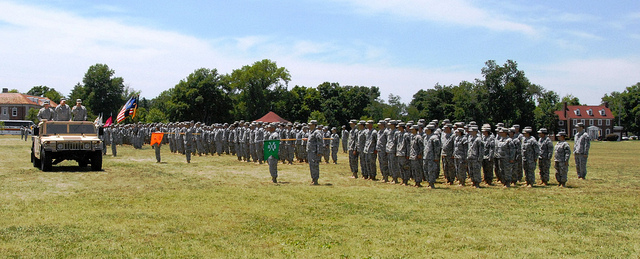
The official party, Maj. Gen. Edward W. Tonini (center), the Adjutant General of the Kentucky National Guard, Col. Scott A. Campbell (right), outgoing commander of the 149th Maneuver Enhancement Brigade, Kentucky Army National Guard, and incoming commander, Col. Michael A. Abell (left), review the troops during for the 149th MEB Change of Command ceremony on June 23, 2012. (KYNG photo by Maj. David Page)
FORT KNOX, Ky. – A change of command ceremony was held June 23, 2012 at Fort Knox, Ky., to hand off the guidon of one of the most recognized units in the Kentucky National Guard.
Col. Scott Campbell relinquished command of the 149th Maneuver Enhancement Brigade to Col. Mike Abell on Brooks Field in front of the large 149th family.
Campbell led the 149th since 2008, preparing them for the largest deployment of the Kentucky National Guard since World War II, to Iraq in 2011.
Kentucky’s Adjutant General, Maj. Gen. Edward W. Tonini presided over the event, complimented both leaders for their service and character as excellent Citizen-Soldiers.
“We are recognizing the accomplishments of a man who has been at the core of activity, at the very heart of the organization that we all serve and love,” said Tonini of Campbell. “He was already an exceptional officer to the Kentucky National Guard, and his accomplishments as brigade commander mirror the rest of his extraordinary career.”
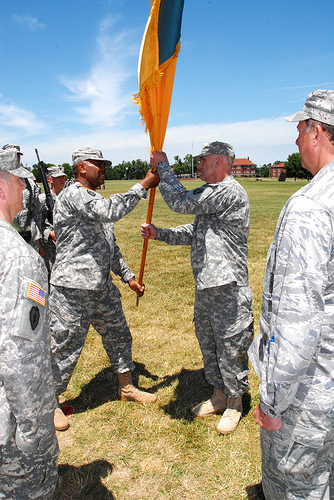
Col. Scott A. Campbell, former commander of the 149th Maneuver Enhancement Brigade, Kentucky National Guard, receives the brigade colors from the Brigade Command Sgt. Maj. Thomas L. Johnson during the change of command ceremony on June 23, 2012. (KYNG photo by Maj. David Page)
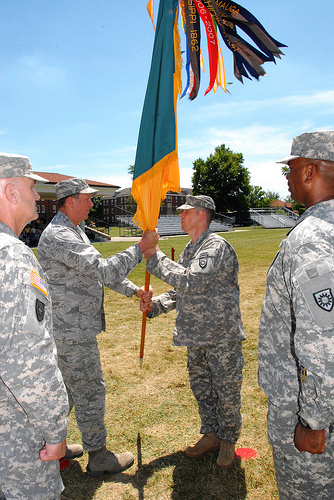
Col Michael A. Abell receives the brigade color from the Adjutant General Maj. Gen. Edward W. Tonini on June 23, 2012, signifying Col. Abell’s assumption of command of the 149th Maneuver Enhancement Brigade, Kentucky National Guard. (KYNG photo by Maj. David Page)
……
“Colonel Abell has a very strong reputation as a Kentucky National Guard officer, he is truly deserving of this opportunity,” said Tonini. “He is now in a place where he can make a huge difference, not just to the Soldiers under his command, but for the citizens of the Commonwealth in their time of need.”
Abell has served as an officer since 1993. He commanded the 1st Battalion, 149th Infantry prior to taking the role of Deputy G-1 (Personnel). Abell recently graduated form the U.S. Army War College.
Campbell was commissioned in 1984, serving a variety of command and staff positions before becoming the Executive Officer of the then 149th Armor Brigade, then into command of the 149th MEB. He will now fill the role as head of the State G-3 (Plans and Operations).
Story by 1st Lt. Mark Slaughter, Kentucky National Guard Public Affairs
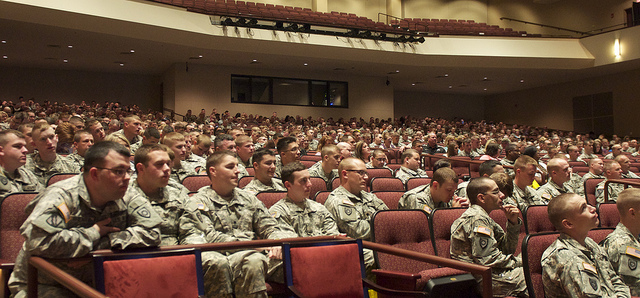
Soldiers and their Families from the 1/149th Infantry Battalion attending "ReBlue" briefings hosted by Kentucky National Guard Yellow Ribbon Program held on April 20-21, 2012 at the Eastern Kentucky University Center for the Arts in Richmond, Kentucky (Photo by 1st Lt. Mark Slaughter, Kentucky National Guard Public Affairs)
Click here to see more photos.
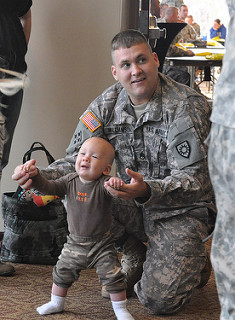
Staff Sgt. Anthony Williamson helps his seven month old son Jaxton practice his marching skills during a break at the 1/149th Infantry Battalion "ReBlue."(Photo by 1st Lt. Mark Slaughter, Kentucky National Guard Public Affairs)
RICHMOND, Ky. – Kentucky Guardsmen and Family Members of the 1/149th Infantry Battalion attended the Yellow Ribbon Reintegration event at Eastern Kentucky University in Richmond, Ky. April 20-21. This “ReBlue” was the final chapter of their deployment in Iraq supporting Operation New Dawn.
“This was the largest event ever conducted by the Yellow Ribbon Reintegration Program,” said 1stLt. Oscar Ortiz, Kentucky National Guard Yellow Ribbon Event Coordinator. “We pulled resources from all over the state to ensure we were able to provide a quality product for the deserving Service Members and their families.”
Yellow Ribbon is a program authorized by the National Defense Authorization Act of 2008 by the Department of Defense. The goal of the Yellow Ribbon Reintegration Program is to provide information, services, referral and proactive outreach opportunities throughout the entire deployment cycle for the Guard and Reserve members and families.
This was a team effort by the staff of the Kentucky Army National Guard Family Programs and everybody worked hard to pull off this event.
“The Yellow Ribbon Staff was very nice and helpful,” said Tina Goforth, fiancée of Spc. Garrick Wilson.
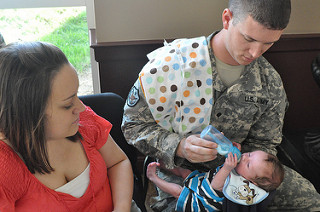
Spc. Caleb McEndree feeds his son Braxton during a break at the 1/149th Infantry Battalion “ReBlue” hosted by Kentucky National Guard Yellow Ribbon Program held on April 20-21, 2012 at the Eastern Kentucky University Center for the Arts in Richmond, Kentucky (Photo by 1st Lt. Mark Slaughter, Kentucky National Guard Public Affairs)
“I think it a good idea,” said Vietnam Veteran Steve Medairos, father of Spc. Christopher Ricci. “They never had anything like this for us. What they are doing now for the guys is good.”
“The Richmond event was the capstone to a weeklong reintegration process which prepares the unit to return to training status,” said Ortiz.
At the conclusion of the two-day training, Tina Wynn said, “We got a lot of helpful information about Tricare, Military One Souces and other information we didn’t have before.”
Story by Specialist Matthew Dornbusch, 1204th Aviation Support Battalion Unit Public Affairs Historian Representative
Click here for more photos on this story.
NOTE: Each week kentuckyguard.com publishes stories by Kentucky National Guard unit public affairs historian representatives, also known as UPAHRs. This is an additional duty taken on by a Soldier or Airmen with the intent of telling their unit’s story. This is one such story ….
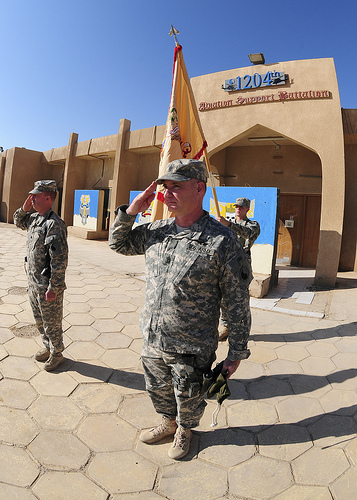
Lt. Col. Tom Roach, Command Sgt. Maj. Tim Walton render honors at the transfer of authority ceremony for the 1204th Aviation Support Battalion, Camp Taji Iraq, 3 November 2011. (Kentucky National Guard photo)
CAMP BEUHRING, Kuwait – On December 16th 2011 the Soldiers of the 1204th Aviation Support Battalion departed Contingency Operating Site Taji, Iraq bound for Kuwait, representing more than eight years of Kentucky National Guard operations in support of Operation Iraqi Freedom and Operation New Dawn.
The story began four months earlier when on August 24th 2011 when the 1204th, under the command of Lt. Col. G. Tom Roach Jr., mobilized in support of Operation New Dawn. On August 27th Headquarters and Support Company and Alpha Company left their home station in Independence, Ky. to join units from four other states to include Alabama, Florida, Maryland and South Carolina in Fort Hood, Texas for mobilization training. For over 53 days the 600 Soldiers completed their validation and deployed to execute operations Iraq and Camp Buehring, Kuwait beginning October 1st 2011.
Following the uncasing of the battalion colors on November 3rd 2011, the 1204th quickly got to work, assuming the extraordinary responsibility of aviation logistics sustainment and support operations from COS Taji, while simultaneously planning for the withdrawal of the 29th Combat Aviation Brigade.
“The withdrawal of U.S. forces from Taji and the Iraq Joint Operations Area was the biggest such operation since the World War II,” said Roach. “The 1204th accomplished this with just 30% of the battalion’s strength forward. The remainder of the battalion worked to establish operations in Kuwait to further support the 29th CAB’s mission.”
The variety of tasks were daunting but doable. Plans had to be made to support for the 29th CAB over the final 45 days of aviation operations in Iraq, to include running arming and refueling points and supplying aviation repair parts. Also, ground maintenance completed over 28 work orders with approximately 1,056 man-hours performed. Both teams were critical in keeping refueling equipment running around the clock.
“The Taji refueling point reminded me of a speedway you see off the side of a highway,” said Sgt. John Amburgey. “At times there would be aircraft in a line to get fuel. At one point we had 14 aircraft waiting on fuel.”
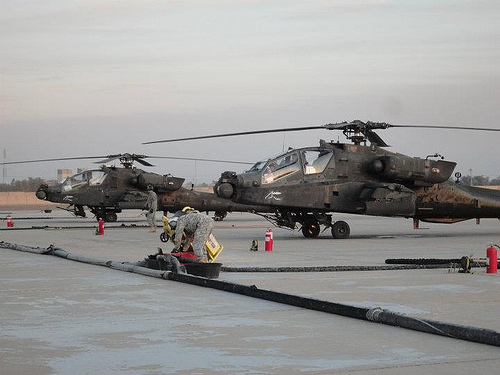
Members of the Kentucky National Guard's 1204th Aviation Support Battalion service U.S. Army AH-64D helicopters at Camp Taji FARP.in Taji, Iraq. The 1204th is the last Kentucky National Guard unit out of Iraq. (Kentucky National Guard photo)
Alpha Company broke records by refueling nearly 100 aircraft in a twenty-four hour period. In the forty-five days, the fuelers at Taji pumped nearly 370,000 gallons of fuel into more than 2,600 American and Iraqi rotary wing aircraft. Likewise, Echo Company refueled over 64 aircraft and pumped nearly 150,000 gallons of fuel.
Alpha Company’s transportation control team also manifested and oversaw the movement of 3,40 personnel and loaded over 580 pallets of equipment with a value of $26 million and requiring 100 flatbed trailers to move – all this five days ahead of schedule.
“It was a smooth process from beginning to end,” said Spc. Greg Woodring. “Of course you’re going to have a learning curve not knowing the job, but we quickly learned.”
With aviation repair parts no longer locally available, the Soldiers of the 1204th developed procedures to use aviation transportation to move repair parts from Kuwait to Taji. During this high operational tempo period, they processed over 400 high-priority requisitions valued at over $5 million.
Bravo Company – comprised of troops from Alabama, Florida & South Carolina – completed phase maintenance inspections and oversaw the relocation of contractor maintenance from Iraq to Kuwait. They shipped over 6,000 separate types of parts worth $60 million and filling over 100 flatbed trailers from Iraq to Kuwait.
While all this was going on Charlie Company kept everyone connected and talking, providing 24/7 operations network capability, redundant back-ups, communication security keys and secured video teleconferencing capabilities to the entire brigade with only five personnel.
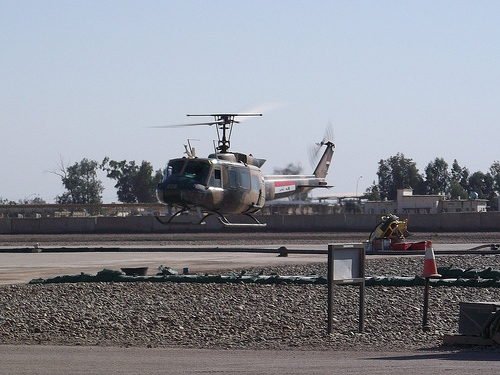
An Iraqi UH-1H hover taxis in for service by members of the Kentucky National Guard's 1204th Aviation Support Battalion in Taji, Iraq. The 1204th is the last Kentucky National Guard unit out of Iraq. (Kentucky National Guard photo)
The health and safety of deployed troops is always a concern. To that end, the medical platoon treated more than 1,100 patients in just five weeks while at Taji. These figures include Soldiers, Department of Defense employees, Department of State employees, and third country nationals.
According to Sgt. Jerrod Dean, “The 1204th Medical section upon arriving at COS Taji was a relatively inexperienced group of medics that in time were able to come together while working with other medical elements to provide above standard care to all personnel.”
The medical platoon also trained 117 civilians on basic medical care.
The 1204th Mortuary Affairs section had the unenviable distinction of participating in the last two KIA evacuations during Iraqi Freedom and New Dawn; the first a third country national killed in a truck convoy and the last for the personal effects of the last U.S. Soldier killed.
While conducting operations at Taji the 1204th was assigned to clear all equipment, buildings, and personnel. In total they collected nearly $2 million worth of lost, abandoned or frustrated Army equipment; received 18 tons of ammunition valued at nearly $300,000, and cleared nearly 400 buildings of sensitive material. They also coordinated the movement to Kuwait of nearly 1,400 containers, pieces of rolling stock, or over-sized items by 22 convoys during the final 30 days U.S. forces were in Iraq.
The 1204th’s legacy in Iraq is one to be proud of, said Roach. “With the conclusion of Operation New Dawn and the withdrawal of U.S. combat forces from Iraq, the 1204th Aviation Support Battalion wrote another chapter in the vaunted history of the 29th Division.
The 1204th ASB is currently stationed in Kuwait and continues to support the 29th Combat Aviation Brigade.