
Pages
Stay In Touch
More
© 2013 KentuckyGuard
The following is a compilation of significant dates in our commonwealth’s military history. For more on the legacy of our Citizen-Soldiers and Airmen, visit the Kentucky National Guard eMuseum.
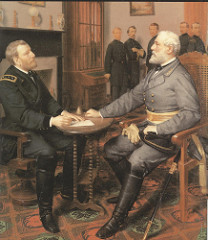
General Robert E. Lee surrenders (Civil War)
April 1, 1945 – Invasion of Okinawa began (World War II)
April 1, 1968 – Operation Pegasus began (Vietnam War)
April 1, 1977 – Kentucky Air National Guard wing vice commander John B. Conaway appointment as Deputy Director of the Air National Guard at National Guard Bureau approved by Congress.
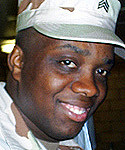
Sgt. James Alexander Sherrill, Operation Iraqi Freedom
April 3, 2005 – Sgt. James Alexander Sherrill, of Ekron, Ky. in Meade County, was killed in Bayji, Iraq, when his armored medium truck encountered an Improvised Explosive Device (IED). Sherrill was assigned to the Army National Guard’s 2113th Transportation Company, Paducah, Ky. This unit mobilized for Operation Iraqi Freedom in December 2004 and deployed to Southwest Asia in January 2005.
April 5, 1951 – Operation Rugged began (Korean War)
April 6, 1972 – Operation Linebacker began (Vietnam War)
April 8, 1972 – Siege of An Loc began (Vietnam War)
April 9, 1845 – The officers of the 123rd Regiment of Kentucky Militia unanimously, by newspaper communications and petitions, seek the abolition of the present militia system.
April 9, 1858 – Twenty-one companies volunteered for service. Only 10 companies were selected by Governor Morehead (The Utah War)
April 9, 1856 – General Lee surrenders (Civil War)
April 9, 1942 – Fall of Bataan (World War II)
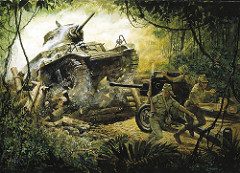
Roadblock on the Road to Bataan, World War II
April 10, 1942 – Bataan Death March – Sixty-six Kentucky Army National Guardsmen from Harrodsburg took part in the march; only 33 survived captivity to return home. (World War II)
April 10, 1968 – Battle for Lang Vei began (Vietnam War)
April 10, 1990 – Staff Sergeant Regina L. Isenberg of Bowling Green (Warren County) was killed in a military vehicle accident on the Western Kentucky Parkway near Leitchfield in Grayson County. She was assigned to Headquarters, State Area Command (STARC) Kentucky Army National Guard. She was transporting a M-60 tank engine from the Ford Regional Training Site (WHFRTC) to the Combined Support Maintenance Shop (CSMS) in Frankfort in an engineer dump truck on rain slick roads. She was a Technician Material Control and Accounting Specialist at the Unit Training Equipment Site (UTES 2) in Greenville. Isenberg graduated from Warren Central High School in 1978 and joined the 2123d Transportation Company (Heavy Truck), Kentucky Army National Guard in Bowling Green in February 1981. She also served in Headquarters and Headquarters Battery of the 138th Field Artillery Brigade. Her awards included Army Service Ribbon, Army Reserve Component Achievement Medal, Army Reserve Components Overseas Training Ribbon (ARCOTR) and the Kentucky Service Ribbon.
April 11, 1873 – Brig. General Edward R.S. Canby, U.S. Army, commanding the Department of Columbia, murdered by Captain Jack, chief of the Modoc Indians, while mediating for their removal from their rocky fastness on the northern border of California to a government reservation. General Canby was a native of Mason County, Kentucky.
April 11, 1991 – Persian Gulf Official Cease Fire
April 15, 1777 – First attack on Fort Boonesborough by Indians (Early Indian Wars)
April 16, 1851 – John Marshall Harlan appointed Adjutant General of Kentucky by Governor John L. Helm. At time of his appointment Harlan was 17 years old, the youngest individual to hold the position. He served as Adjutant General from 1851 to 1859.
April 16, 1953 – Battle of Pork Chop Hill began (Korean War)
April 16, 1978 – Private First Class Jeffery Clinton Howard died while training with his unit, the 307th Maintenance Company – Central City, at Ft. Campbell. Howard reportedly retrieved his gas mask from the cab of the truck to put it on as a part of training and unknowingly released the hand brake before he walked behind the truck, which had been parked on a gradual incline, the vehicle rolled backwards some 4 feet and pinned him between a tree and the trailer of a truck.
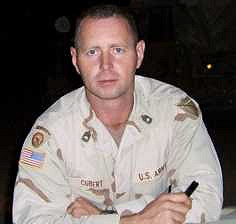
Master Sgt. Clinton Wayne Cubert, Operation Iraqi Freedom
April 16, 2006 – Master Sgt. Clinton Wayne Cubert, died at the Lexington Veterans Affairs Medical Center, Lexington, Ky., of injuries sustained when an improvised explosive device detonated near his armored HMMWV during combat operations in Samarra, Iraq, on Sept. 11, 2005. Cubert was assigned to the Kentucky Army National Guard’s 2113th Transportation Company, based in Paducah, during his deployment.
April 17, 1868 – Re-interment, with impressive ceremonies, at the cemetery in Lexington, of the remains of General John Hunt Morgan.
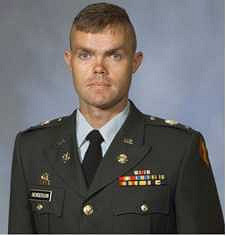
1st Lt. Robert Lewis Henderson II, Operation Iraqi Freedom
April 17, 2004 – First Lieutenant Robert Lewis Henderson, II, of Alvaton, Ky., (Warren County) died in, Diwaniyah, Iraq, when his convoy tried to avoid an overturned trailer and came under small arms attack. Henderson, though mortally wounded, continued to drive his vehicle and lead the convoy out of the ambush and repositioned his vehicle so that the other soldiers in the vehicle could return fire before he collapsed. 1st Lt. Henderson was assigned to the Army National Guard’s Detachment 1, 2123rd Transportation Company, Owensboro, Ky.
April 18, 1847 – Storming of Cerro Gordo, Mexico. Captain John S. Williams’ company (the only Kentucky company engaged) behaved with distinguished valor (Mexican-American War)
April 18, 1942 – Doolittle Raid on Japan (World War II)
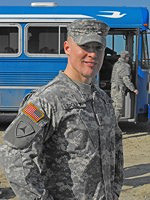
Sgt. Randolph A. Sigley Jr., Operation Enduring Freedom
April 18, 2010 – Sgt. Randolph A. Sigley Jr., of Richmond (Madison County), was found dead in his quarters at Bagram Airbase, Afghanistan where he was serving with the Kentucky Army National Guard’s 2123rd Transportation Company. A member of the Kentucky Army National Guard since 2006, Sigley served from 2000-2004 with the United States Marine Corps. He served a tour of duty in Afghanistan with the Marines.
April 19, 1906 – Henry Robert Lawrence appointed Adjutant General of Kentucky by Governor J. C. W. Beckham.
April 19, 1968 – 2nd Battalion, 138th Field Artillery, Kentucky National Guard with units in Louisville, Bardstown, Elizabethtown and Carrollton, Kentucky were ordered to active duty by President Lyndon B. Johnson (Vietnam War)
April 19, 1968 – Operation Delaware began (Vietnam War)
April 20, 1953 – Operation Little Switch began (Korean War)
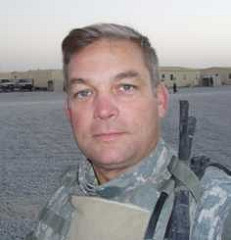
Capt. Clayton Lee Adamkavicius, Operation Enduring Freedom
April 20, 2006 – Capt. Clayton Lee Adamkavicius, of Louisville, was mortally wounded by small arms fire while investigating an anti-coalition weapons cache discovered near Dihrawud district, Uruzghan Province, Afghanistan. Adamkavicius, a native of California, joined the Kentucky Army National Guard in 1999, and was assigned to Headquarters Company, 149th Brigade in Louisville. Adamkavicius was on his third operational deployment with the Kentucky Army National Guard. His first deployment was to Eastern Europe in 2003 where he served as Commander of Headquarters and Headquarters Company, 2nd Battalion, 123rd Armor, in support of Operation Joint Forge at Eagle Base, Tuzla, Bosnia-Herzegovina. In a subsequent deployment to Bosnia in 2004, he served with Headquarters Company, 149th Brigade. Adamkavicius had been training Afghan soldiers when he was killed.
April 21, 1945 – Second Lieutenant Everett R. Preston, assigned to Company A, 192nd Light Tank Battalion (Harrodsburg Tankers), died at Fukuoka Camp #1-D Honshu, Japan of acute enteritis.
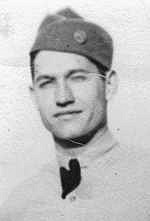
Sgt. Edward Theodore French, World War II
April 22, 1942 – Sgt. Edward Theodore French, Company D, 192nd Light Tank Battalion (Harrodsburg Tankers) died in a field hospital on Bataan while recovering from shrapnel wounds received in a Japanese bombing attack. He perished when the hospital was inadvertently hit by artillery fire from Fort Drum.
April 24, 1873 – Kentucky Legislature directs that the remains of General Cary H. Fry, Colonel Theodore O’Hara, and Adjutant George N. Cardwell to be brought from distant States, and buried in State military lot at Frankfort, and graves marked with appropriate stones.
April 24, 1967 – Battle of the Hills began (Vietnam War)
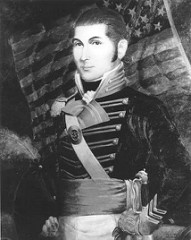 April 27, 1805 – Battle of Derne - Lt. Presley O’Bannon led an expedition across North African desert and captured the fortified city then held against numerous attempts to retake the place until peace treaty was signed on June 4 1805. O’Bannon was the first to plant the American Flag on foreign soil. The phrase “the shores of Tripoli” from the U.S. Marine Corps Hymn refers to Lt. O’Bannon’s expedition. O’Bannon is buried in the Frankfort Cemetery. (War with Tripoli)
April 29, 1984 – Private Steven E. Jones of DeMossville (Pendleton County), died while training with his unit, Company C, 201st Engineer Battalion in Cynthiana. Jones was killed after an accident near the armory when the unit was training on erecting and using gin poles. Jones was struck by the pole when the rigging failed and he was unable to escape the falling pole. He was given immediate aid by members of the 475th Combat Support Hospital who were at the armory and transported to the hospital but he perished from his injuries a short time later. Jones had just joined the unit on March 2, 1984 and was training with the unit until he got orders sending him to basic and advanced training as a Combat Engineer.
Story by Sgt. Matthew A. Trukositz Jr., Headquarter, 63rd Theater Aviation Brigade
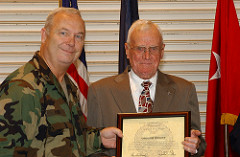
An aviation pioneer: An archive photo showing retired Master Sgt. Leonard Shouse being recognized by Brig. General Howard Hunt for his pioneering efforts in military aviation. (File photo)
FRANKFORT, Ky. – The Kentucky National Guard mourns the loss of an aviation pioneer, Leonard Harrison Shouse, who passed away at the age of 89 on Jan. 3.
Shouse, of Shelbyville, Ky., retired in 1981 as a master sergeant at the age of 60. He was the first man in the Kentucky National Guard trained as a mechanic for helicopters. Kentucky received its first helicopter in 1954, a “G” model Bell OH-13 Sioux light observation aircraft. Shouse had already transitioned from being a mechanic for fixed wing aircraft to a helicopter mechanic. He was the first to work on them and another Kentucky Guardsman, John Faulkenberry, became the first pilot, and so began the transformation from fixed-wing to nearly all rotary-wing assets of the Kentucky Army National Guard as it is today.
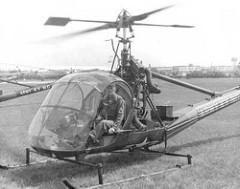
Leonard Shouse powering up a Kentucky Army National Guard OH-23 helicopter as part of his maintenance duties. Shouse was the first rotary wing mechanic for the Kentucky Guard. (File photo)
As a member of the “greatest generation,” Shouse served in the Army during World War II. And if you were to ask anyone in the hangars on Boone National Guard Center in Frankfort, they will tell you that he brought the same work ethic to Kentucky aviation.
“His work habits were like anyone’s from that generation,” said Ray Craig, a civilian aviation mechanic who had the opportunity to work alongside Shouse, whom he called a ‘mentor.’
“He was like a working machine,” recalls Craig. “He stayed at it. It was the way he was. He’d say something like ‘c’mon, let’s see if we can learn something today.”
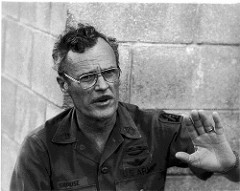
An aviation pioneer: A sergeant first class at the time of this photo, Leonard Shouse literally paved the way for today's aviation practices. Among his many accomplishments he was the first rotary wing mechanic in the Kentucky Army National Guard. (File photo)
Craig says those WWII vets built Kentucky aviation and those working now are just ‘riding the waves.’ Aircraft and technologies have changed, but the skills of those that put aircraft in the skies over the bluegrass remains based upon the foundations laid by Guardsmen such as Shouse.
“The attention to detail and the caring for the people who work and fly on our aircraft is still paramount as he had it when he was here,” said Craig. “He was good in his heart and cared for people.”
Retired Lt. Col. Sandy Goin remembers Shouse fondly. A veteran aviator during the Vietnam War, Goin flew with the Kentucky Army National Guard from 1973-79.
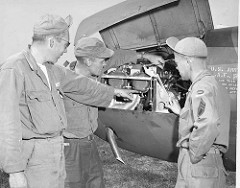
An aviation pioneer: Leonard Shouse (center) literally paved the way for today's aviation practices. Among his many accomplishments he was the first rotary wing mechanic in the Kentucky Army National Guard. (File photo)
“I never saw Master Sgt. Shouse in a bad mood. He was always looking to do something for you, and he always went above and beyond to get the job done,” said Goin.
Goin knew he was always in good hands when he flew an aircraft maintained by Shouse. “I’d kid him and make him go on the test flights just in case. But he was top notch, you couldn’t ask for a better mechanic or Soldier.”
Goin said that after retirement Shouse remained active in life. “He liked to rebuild cars and he even became the first mayor of Simpsonville. He was just a fantastic person.”
“Master Sgt. Shouse and his guys paved the way for our aviation mechanics today.”
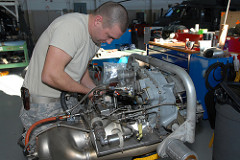
Today's aviation Soldiers carry on the professional legacy established by Master Sgt. Leonard Shouse and his generation. (Photo by Sgt. Matthew A. Trukositz Jr., Headquarter, 63rd Theater Aviation Brigade
Following his incredible military career, Shouse continued his love of being a mechanic, although his vehicle became 1965 Ford Mustangs. He is survived by his wife of more than 71 years, Martha Cozine Shouse and two daughters.
Master Sgt. (Ret) Leonard Harrison Shouse was buried Jan. 6 in Simpsonville Cemetery. Fittingly, his beloved ’65 Mustang was included in the procession.
dwa
The following is a compilation of significant dates in our commonwealth’s military history. For more on the legacy of our Citizen-Soldiers and Airmen, visit the Kentucky National Guard eMuseum.
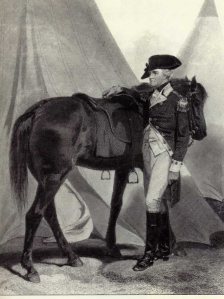
Gen. “Mad” Anthony Wayne
September, 1793 – Gen. “Mad” Anthony Wayne calls for mounted volunteers from Kentucky; but, having lost confidence in the regular troops in Harmar’s and St. Clair’s defeats, Kentuckians refuse to volunteer.
September 1, 1864 – Battle of Jonesboro, Ga. part of Atlanta Campaign. Kentucky Orphan Brigade attempts to hold strategic railroad position south of the city. However are not reinforced when attacked in force are cut off from main confederate position, suffer heavy casualties in KIA, WIA, & POW. The loss of rail line cuts off any hope of resupply for the Confederates in Atlanta and the city is evacuated. Union Army enters Atlanta the next day (Civil War)
September 1, 1863 – John Boyle appointed Adjutant General of Kentucky by Gov. Thomas E. Bramlette.
September 1, 1891 – First appointment of Andrew Jackson Gross as Adjutant General of Kentucky by Gov. John Y. Brown.
September 1, 1952 – Largest All-Navy Raid (Korean War)
September 2, 1914 – James Tandy Ellis appointed Adjutant General of Kentucky by Gov. Augustus O. Stanley. Ellis would be re-appointed as the Adjutant General by Gov. James B. Black.
September 2, 1945– VJ (Victory Japan) Day: Japan signed formal surrender (World War II)
September 2, 2007 – Staff Sgt. Delmar White, Lexington (Fayette County), was killed by an improvised explosive device (IED) while on a convoy escort mission in Baghdad, Iraq. White, 37, was assigned to Battery B, 2nd Battalion, 138thField Artillery, based in Carlisle, Ky. White was a corrections officer with Lexington Fayette Urban County Government and deployed with his unit in August 2007 in support of Operation Iraqi Freedom. He joined the Kentucky Army National Guard in 1998. (Global War on Terror)
September 4, 1864 – Gen. John Hunt Morgan shot and killed by Union officers at Greenville, Tennessee (Civil War)
September 4, 1875 – John Montgomery Wright is appointed Adjutant General of Kentucky by Gov. James B. McCreary.
September 5, 1871 – James Allen Dawson is appointed Adjutant General of Kentucky by Gov. Preston H. Leslie.
September 5, 1883 – John Breckinridge Castleman is appointed acting Adjutant General of Kentucky from 1883 – 1887, by Gov. J. Proctor Knott.
September 6, 1845 – Gov. Owsley is notified by the secretary of war, that Gen. Zachary Taylor is authorized to call upon Kentucky for troops to repel the apprehended Mexican invasion. Gov. Owsley replies that any requisition upon Kentucky will be promptly and gallantly responded to.
September 7, 1778 – Siege of Boonesborough by Captain de Quindre and a large force of Indians and Canadians. Siege ended 20 September (American Revolutionary War)
September 7, 1944 – 2nd Lt. Harry Ricker LaFon, Jr., and Pvt. Hugh J. Leonard, both serving with Company D, 192nd Light Tank Battalion (Harrodsburg Tankers) died aboard the Japanese “Hell Ship” Shinyo Maru when it was sunk (World War II)
September 8, 1898 – Wilbur Rush Smith is appointed Adjutant General of Kentucky by Gov. William O. Bradley.
September 9, 1943 – Operation Avalanche (Allied landing at Salerno, Italy) (World War II)
September 10, 1962 – U.S. Naval Sea Cadet Corps Incorporated.
September 10, 1845– Gen. Peter Dudley, sent by Gov. Owsley to Clay County. Two companies of troops from Madison County, under command of Col. John Miller ordered out to maintain law and order, remain until after the execution of Dr. Baker.
September 10, 2007 – Pfc. Sammie E. Phillips of Vine Grove (Hardin County), was killed when his vehicle overturned while conducting a traffic control mission on a highway near Rustamiyah, Iraq. Phillips, 19, was assigned to Battery B, 2nd Battalion, 138th Field Artillery, based in Carlisle, Ky. Phillips joined the Kentucky Army National Guard in 2006 and deployed with his unit in August 2007 in support of Operation Iraqi Freedom. He was a 2006 graduate of North Hardin High School. (Global War on Terrorism)
September 11 – Patriot Day: World Trade Center and Pentagon Terrorist Attacks
September 11, 1895 – Two cannon crews of Battery A, 1st Regiment of the Kentucky State Guard, known as the Louisville Legion were dispatched from the downtown Louisville armory to Phoenix Hill Park to fire a 44-gun salute at sunrise to awaken the city as a part of the festivities for the 29th Encampment of the Grand Army of the Republic (GAR). Each cannon was to fire 22 times. When the second caisson, which was 15 minutes behind the first, reached 4th and Broadway at 5:30 a.m. an explosion occurred. Forty-four bags of carefully packed black powder; each weighing 1.5 lbs., mysteriously ignited. The result was five men and two horses killed several people injured and property damage to buildings in the area. Those killed were Corp. Arthur Langan Robinson, Pvt. Charles Brechner (Biechner), Pvt. Charles C. Woods, Pvt. Archibald McBride, and a civilian, Mr. William Adams Sr. Mr. Adams had been hired by the officers of the Louisville Legion to drive the caisson to Phoenix Hill.
September 11, 1967 – Siege of Con Thien began (Vietnam War)
September 12, 1859 – Scott Brown is appointed Adjutant General of Kentucky by Gov. Beriah Magoffin.
September 13, 1951 – Battle of Heartbreak Ridge began (Korean War)
September 13, 1956 – The Kentucky Air National Guard receives its first F-86 Sabrejets at Standiford Field. The full complement of 25 Sabres was expected by October 15, with three T-33s and eight T-28 trainers.
September 14, 1781 – Long Run Massacre. As Indian activity increased the settlers at Boone’s Station sought protection at Linn’s Station. While enroute to that location they were attacked along the banks of Long Run Creek, about 60 people were killed.
September 14, 1814 – “Star Spangled Banner” written by Francis Scott Key (War of 1812)
September 14, 1966 – Operation Attleboro began (Vietnam War)
September 14, 1971 – Capt. Roger M. Sanders died when his RF-101 “Voodoo” crashed shortly after takeoff. He was able to eject, but did not survive his injuries from the incident. Sanders was taking off simultaneously with another aircraft for a night refueling exercise. The other aircraft landed safely in Indiana.
September 14, 2002 – Marion National Guard Armory named in honor of 1st Sgt. Carson G. Davidson.
September 15, 1950 – Inchon Landing (Korean War)
September 15, 1984 – 2nd Lt. Vincent Simon, age 30, of Glasgow (Barren County), died at Fort Knox, Kentucky in the line of duty while on inactive duty for training (IDT). He was a member of Battery C, 1st Battalion, 623rd Field Artillery based in Monticello. He died from injuries he received when the military vehicle, a M-151 ¼ ton “Jeep” he was operating was involved in an accident. He was a graduate of Western Kentucky University and was a Civil Engineer in his civilian life with J. N. Gray Construction Company in Glasgow. He joined the US Army in 1972 after high school and rose to the rank of Specialist 5 before leaving the Army and joining the Kentucky Army National Guard in December 1975. He rose to the rank of SSgt. He was a graduate of the Boone Raiders course in 1983 and the Kentucky Military Academy’s Officer Candidate School. He was commissioned a 2nd Lt. on July 8,1984, just a few weeks before his death.
September 16, 1847 – Kentucky soldiers who fell at the Battle of Buena Vista, Mexico, from Shelby, Montgomery, and Franklin counties, interred with full military honors in the state cemetery.
September 16, 1950 – Naktong Perimeter Breakout began (Korean War)
September 17, 1787 – Citizenship (Constitution) Day: U.S. Constitution approved.
September 17, 1914 – Ladies Auxiliary VFW organized.
September 17, 1944 – Operation Market Garden (World War II)
September 18, 1947 – U.S. Air Force established.
September 18, 1950 – Inchon Operation and Liberation of Seoul began (Korean War)
September 18, 1994 – Operation Uphold Democracy.
September 19 – POW/MIA Recognition Day.
September 19, 1817 – Oliver Garnett Waggoner/Waggener is appointed Adjutant General of Kentucky by Gov. Gabriel Slaughter. Waggoner was re-appointed to the position under governors John Adair, and Joseph Desha.
September 19, 1971– Kentucky Air National Guard Chaplain Lt. Col. William Hisle died after a long illness. His work with Korean War orphans had been carried on despite his declining health and Lt. Col. Hisle was presented the first Legion of Merit received by a member of the Kentucky Air Guard.
September 20, 2005– Staff Sgt. William Alvin Allers III, 28, of Leitchfield (Grayson County) Ky., was killed near Al Khalis, Iraq (40 miles north of Baghdad) when his armored humvee encountered an Improvised Explosive Device (IED). Allers was assigned to the Kentucky Army National Guard’s 617th Military Police Company, based in Richmond with a detachment in Bowling Green. The 617thMP Company mobilized for Operation Iraqi Freedom in October of 2004 and deployed to Southwest Asia that November. Originally from Baltimore, Md., Allers joined the Kentucky Army National Guard in September of 2003 after serving with the U.S. Army and worked in Leitchfield for an office supply business. (Global War on Terror)
September 20, 2006 – Sgt. 1st Class Charles Jason Jones of Lawrenceburg (Anderson County), 29, died at Camp Liberty in Baghdad of non-combat related cause. Jones was assigned as a medic to the 149th Brigade Combat Team Headquarters. The unit, comprised of 50 soldiers, deployed to Iraq earlier in 2006 and had teams stationed throughout Iraq. Jones joined the Kentucky National Guard in 1993 at 17 years old and graduated from South Laurel High School in London, Ky. in 1994. Prior to deploying to Iraq, Jones was a full-time Kentucky National Guard soldier stationed in Frankfort, Ky. Jones was a seasoned veteran, with previous deployments in 2002 to Germany and Bosnia. He also deployed to Afghanistan in support of Operation Enduring Freedom in 2004.
September 21, 1813 – Commodore Oliver Hazard Perry’s victory at Put-In-Bay (Battle of Lake Erie). Approximately 150 Kentucky Militiamen served as Marines aboard Perry’s fleet (War of 1812)
September 21, 1951 – Operation Summit (Korean War)
September 24, 1846 – Capture of Monterey, Mexico. The Louisville Legion, being posted to guard a mortar battery, and exposed to the enemy’s cannon fire for about 24 hours without being able to return their fire, hold in check the enemy’s cavalry, and “display obedience, patience, discipline, and calm courage.” Maj. Gen. Wm. O. Butler seriously wounded, and Maj. Philip Norbourne Barbour, of the 3rd regular infantry, killed (both Kentuckians). (Mexican-American War)
September 28, 1793 – Gov. Shelby orders the first draft for Kentucky troops, which is successful in getting troops for Wayne’s expedition. (Early Indian Wars)
September 28 – Gold Star Mother’s Day.
September 28, 1953 – Four Kentucky Air National Guardsmen were cited for their heroic efforts to rescue survivors in the wreckage of a chartered C-46 transport carrying soldiers from Camp Kilmer, NJ to Fort Knox. Recognized for their bravery were Jess D. Brown, Walter Carter, Howard A. Curtis and Charles W. Simmons, all were full-time air guard technicians.
September 29, 1899 – VFW established.
September 29, 2003 – Sgt. Darrin K. Potter, 24, of Louisville, Ky., was killed in Iraq when his military police team responded to reports of a mortar attack outside of Baghdad near Abu Ghraib Prison, in Iraq. Potter was a member of the 223rd Military Police Company serving with the 800th Military Police Brigade in Iraq. It was the Kentucky Guard’s first combat-related death since the Vietnam War. (Global War on Terrorism)
September 30, 1848 – Col. Edward Brooks reaches Frankfort with the bones of the brave Kentuckians who were massacred by the Indians at the River Raisin, Jan. 18, 1812, which are interred in the state cemetery. They had been found in a common grave, and discovered, while digging down a street in Monroe, Michigan. The skulls were all cloven with the tomahawk, and an aged French citizen, a survivor of the massacre, knew them as the bones of the unfortunate Kentuckians, because he remembered the spot where they were buried.
###
Story and photo by Sgt. Bryan Ploughe, 1st Battalion, 623rd Field Artillery UPAHR
Members of HHB 1/623d FA performing a color guard detail at the opening ceremony of Vet Jam, located in Barren County, Ky. This event has been held for five years and the Kentucky Guard has been a participant since its beginning. (Kentucky Army National Guard photo by Sgt. Bryan Ploughe, 1/623rd FA UPAHR)
NOTE: Each Wednesday kentuckyguard.com publishes stories by Kentucky National Guard unit public affairs historian representatives, also known as UPAHRs. This is an additional duty taken on by a Soldier or Airmen with the intent of telling their unit’s story. This is one such story ….
Glasgow, Ky (June 11, 2011) – This year’s Vet Jam held in Glasgow marked five years of an outdoor music festival recognizing and celebrating some of the area’s unsung heroes: the American war veteran.
This year’s event featured performances from 10 local bands ranging from bluegrass to hard rock, and catered to hundreds of supporters. Members of the Kentucky National Guard’s 1st Battalion, 623rd Field Artillery – based in Glasgow – took to the field and conducted a color guard detail as the national anthem was performed. The Soldiers also provided a 21-gun salute in honor of the war heroes.
Ernie Wagoner hosted the celebration on his farm. He expressed emotion in talking about the Kentucky Guard troops attending the event.
“The 623d is near and dear to me, as well as this community,” Wagoner said. “It is just a natural fit to have them here today, and they know we are here for them. They have been here and helped out since the conception of this event, and they are deeply appreciated for all that they do and we hope they are able to continue to do so in the future.”
First time attendee, Staff Sgt. Patrick Raby, Headquarters Battery, 1/623rd, was impressed by the celebration.
“This event is unbelievable,” he said. “I was not sure what to expect upon arrival today, and the sight of all of these veterans, that include World War II, Korea, Viet Nam, Gulf War and others is very humbling.”
“The wealth of knowledge and experience that is concentrated here is priceless,” he added. “More communities need to arrange an event of this caliber to recognize and show appreciation for what they have today.”
Proceeds from Vet Jam go to support local veterans organizations.
###
dwa
The following is a compilation of significant dates in our commonwealth’s military history. For more on the legacy of our Citizen-Soldiers and Airmen, visit the Kentucky National Guard eMuseum.
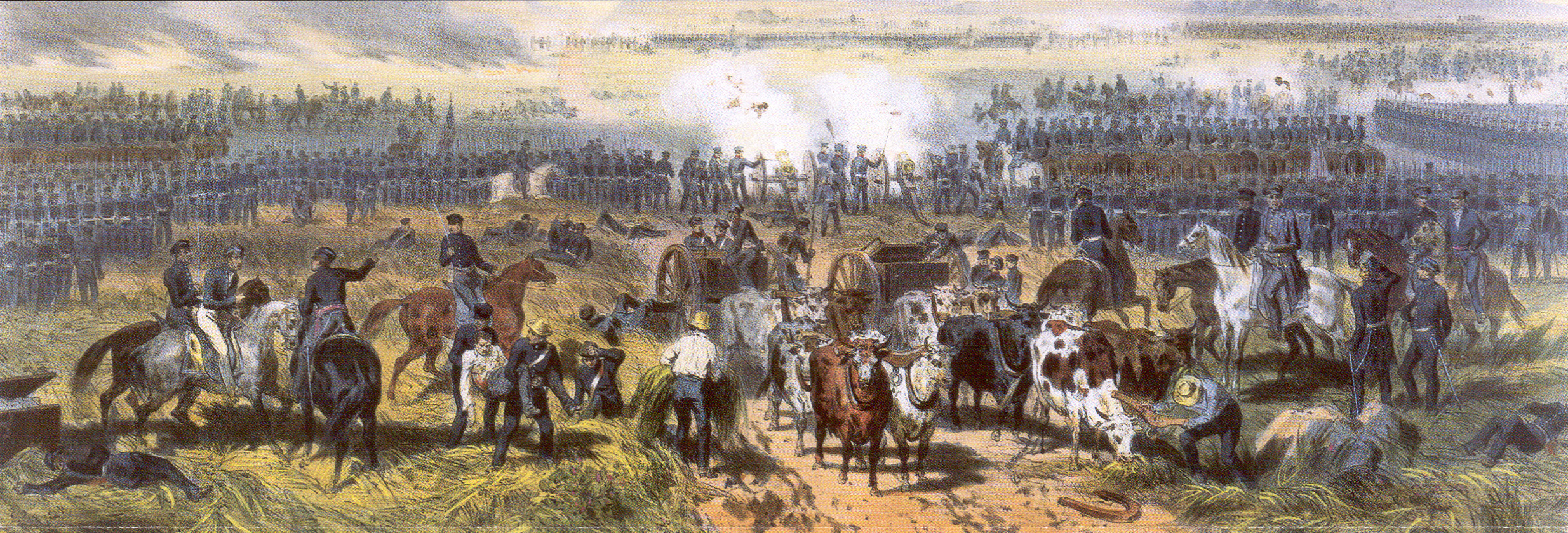
Palo Alto during the Mexican-American War
May 1, 1970 – Cambodia Campaign began (Vietnam War)
May 2, 1945– German Unconditional Surrender to Italian Allies (World War II)
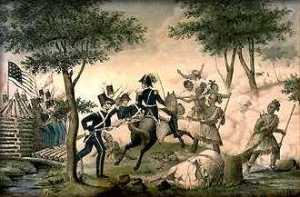
Fort Meigs, Ohio (War of 1812)
May 5, 1813 – Brig. Gen. Green Clay, with 3,000 Kentuckians, reaches besieged Fort Meigs, Ohio. On orders from General William Henry Harrison divides his force, his part of the force cuts their way through the enemy’s lines into the fort. 800 Kentuckians, under Col. Wm. Dudley, are order to cross the Maumee River and attack the guns and spike them so they can no longer fire. Once this was accomplished, the militia pursues what appears to be retreating Indians under the leadership of Tecumseh. After they entered the woods, the Indians counterattacked while the British forces swung around their flanks cutting most off from the river. Only about 150 escaped with the remainder being killed or captured. Of those captured, about 50 were murdered by the Indians before Tecumseh put a stop to it. The British, without use of their artillery, soon lifted the siege and moved back into Canada (War of 1812)
May 5, 1942 – Fall of Corregidor (World War II)
May 5, 1968 – Mini-Tet began (Vietnam War)
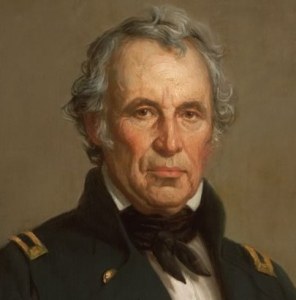
General Zachary Taylor
May 8, 1846 – General Zachary Taylor defeats the Mexicans at Palo Alto (Mexican-American War)
May 8, 1945 – Pvt. Roy Edward Goodpaster, Company D, 192nd Light Tank Battalion (Harrodsburg Tankers) died at Camp Moji Hospital Fukuoka #4 Kyushu Island Japan of wounds received aboard the “Hell Ships” Oryoku Maru & Enoura Maru (World War II)
May 8, 1945 – VE (Victory Europe) Day, Germany’s Unconditional Surrender Signed (World War II)
May 8, 1972 – U.S. Navy mined North Vietnamese ports (Vietnam War)
May 9, 1781 – McAfee Station, along Salt River attacked by over 150 indians. Only 13 men and their families inside who kept up a gallant defense for near 1/2 day until help arrived from nearby Harrodsburg. One settler killed at onset of action, 1 minor wounded. As pursuit was made the Indians made a stand at the ford of the river 1 more killed and 1 injured when thrown from horse. (Early Indian Wars)
May 9, 1846 – General Zachary Taylor defeats the Mexicans at Resaca de la Palma (Mexican-American War)
May 9, 1868 – Kentucky Legislature to present a Gold Medal to Samuel Hatfield, of Floyd County, another survivor of the Kentuckians who assisted in achieving Perry’s victory on Lake Erie, September 10, 1813.
May 9, 1868– Kentucky Legislature appropriates funding to repair monument over Daniel Boone’s grave, which had been defaced by Federal soldiers during the war.
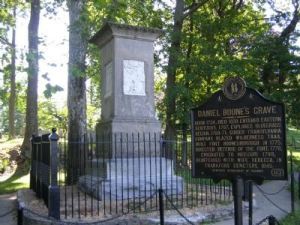
Daniel Boone's grave
May 10, 1773 – The McAfee Company (James Jr., Robert, & George McAfee along with James McCoun Jr. and Samuel Adams) left Virginia on a 4-month expedition into Kentucky . Explored lands along Ohio & Kentucky Rivers. descended the Kentucky to where Frankfort now is located, continued exploration of Henry, Franklin, Anderson, & Mercer Counties. Eventually making land claims along Salt River.
May 10, 1969 – Battle of Hamburger Hill (Vietnam War)
May 10, 1972 – Operation Linebacker (Vietnam War)
May 11, 1871 – Re-interment at Crab Orchard, Lincoln, County, of the unknown Southern soldiers who fell at the Battle of Wildcat Mountain, in 1862.
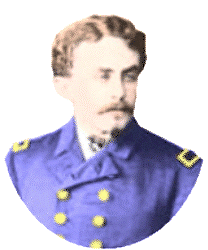
Lieutenant Hugh McKee
May 11, 1871 – Killed in the fight between the men from four U.S. war steamers and the Coreans (now Korea), Lt. Hugh McKee, of Lexington, Kentucky, aged 27. He was the first man to enter the fortress, from which the attack was made by the Coreans. His father, Col. William R. McKee, fell nobly at the battle of Buena Vista, Mexico, February 23, 1847.
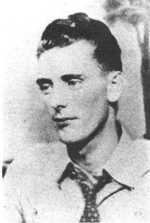
Pfc. Wesley Davis Hungate
May 12, 1942 – Pfc. Wesley Davis Hungate, Company D, 192ndLight Tank Battalion (Harrodsburg Tankers) died at Camp O’Donnell, Capas, Tarlac, Philippines of dysentery while a Japanese prisoner of war (World War II)
May 13, 1846 – Congress of the United States declares war on Mexico. Maj. Gen. E.P. Gaines makes a requisition on the Governor of Kentucky for 4 regiments of volunteers, comprising 2,400 men (Mexican War)
May 13, 1968 – 2nd Battalion, 138th Field Artillery entered active duty and served 11½ months in Vietnam. Kentucky was only one of two states to have both Air and Army Guard units called up in 1968 (the other being Kansas). Kentucky was the only state to have both Air and Army mobilized units deploy overseas (Vietnam War and Pueblo Call-up)
May 17 – Armed Forces Day.
May 17, 1846 – Governor Owsley issues a proclamation, appealing to Kentuckians “to form themselves into volunteer companies,” and to report to him forthwith (Mexican War)
May 18, 1846 – The Louisville Legion, offer their services to the governor, and are accepted (Mexican War)
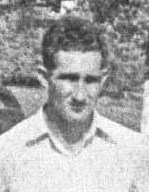
Sgt. Ben R. Devine
May 19, 1942 – Sgt. Ben R. Devine, Company D, 192nd Tank Battalion (Harrodsburg Tankers) died at Camp O’Donnell, Capas, Tarlac, Philippines of dysentery while a Japanese prisoner of war (World War II)
May 20, 1777 – St. Asaph’s or Logan’s Fort or Logan’s Station resists attack by Indians (Early Indian Wars)
May 22, 1846 – Formal proclamation of Governor Owsley for two regiments of infantry or riflemen, and one of cavalry, for the service of the United States against Mexico (Mexican-American War)
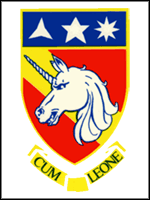
359th Fighter Group patch
May 24, 1946 – The 359th Fighter Group was redesignated as HQ, 123rd Fighter Group, and allotted to the Air National Guard of Kentucky, together with its colors and World War II battle participation credits. The 368th Fighter Squadron was also allotted to the KyANG with its colors and record, and redesignated as the 165thFighter Squadron.
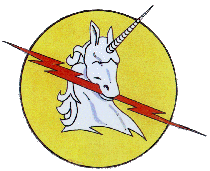
368th Fighter Squadron patch
May 25, 1921 – Pvt. Manley Vaughan, Troop C, 53rd Machine Gun Squadron, Louisa, Kentucky, was killed near Borderland W. Va. Kentucky National Guard soldiers from Louisa, Morehead and London were on state active duty from May 14, to June 4, 1921 along the Kentucky – West Virginia border in connection with a coal strike in the Tug River District.
At approximately 10 p.m. on May 25, 1921, a West Virginal State Policeman reported some sixty shots fired on the Kentucky shore of the Tug River below Nolan, West Virginia. Lt. Fred See of the Kentucky National Guard was stationed nearby in Pike County and asked by the West Virginia State Police to reconnoiter and try to end the disruption. There was a coal strike in progress in the area and martial law was in effect and the shots were apparently fired across the river in the direction of the Big Splint mining camp in West Virginia where the United Mine Workers union had erected a tent camp to house the striking miners.
Lt. See and seven men, including Vaughn, set out to investigate. They crossed the river at Borderland into West Virginia due to heavy rains making roads nearly impassable, he planned to follow the railroad track and cross back to the Kentucky side below Nolan to get to the site of the disturbance. At Nolan he was joined by an unknown number of West Virginia State Police and they proceeded down the track. Hearing a group of men coming up the track, Lieutenant See and his men advanced and stopped four men. When ordered to put up their hands, two men cooperated. Soldiers were searching the individuals for weapons when Vaughan and a West Virginia State Police Officer Charles M. Kackley were shot in the head from behind. Both were killed. One of the union miners in the group escaped in the darkness but was recaptured the next day.
May 26, 1846 – Governor Owsley announces that the requisition upon Kentucky for troops is full (Mexican War)
May 26, 1871 – Confederate Memorial Day inaugurated, commemorating the occasion when Jefferson Davis was freed from prison.
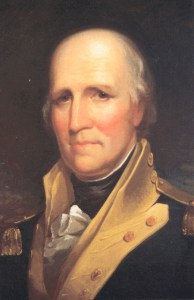
George Rogers Clark
May 27, 1778 – George Rogers Clark and men camp on Corn Island, at Falls of the Ohio (Louisville).
May 30 – Memorial Day
###
dwa
dwa
The following is a compilation of significant dates in our commonwealth’s military history. For more on the legacy of our Citizen-Soldiers and Airmen, visit the Kentucky National Guard eMuseum.
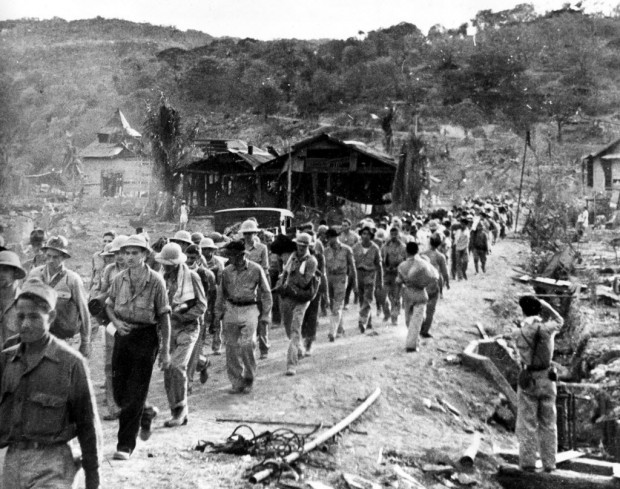
The Bataan Death March (1942)
April 1, 1945 – Invasion of Okinawa began (World War II)
April 1, 1968 - Operation Pegasus began (Vietnam War)
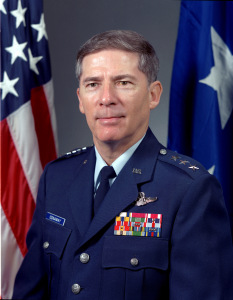
April 1, 1977 - Kentucky Air National Guard wing vice commander John B. Conaway appointment as Deputy Director the Air National Guard at the National Guard Bureau approved by Congress.
April 5, 1951 – Operation Rugged began (Korean War)
April 6, 1972 – Operation Linebacker began (Vietnam War)
April 8, 1972 – Siege of An Loc began (Vietnam War)
April 9, 1845 - The officers of the 123rd regiment of Kentucky Militia unanimously, by newspaper communications and petitions, seek the abolition of the present militia system.
April 9, 1858 - Twenty-one companies volunteered for service. Only 10 companies were selected by Governor Morehead. (The Utah War)
April 9, 1865 - General Robert E. Lee surrenders (Civil War)
April 9, 1942 – Fall of Bataan (World War II)
April 10, 1942 – Bataan Death March - Sixty-six Kentucky Army National Guardsmen from Harrodsburg took part in the march; only 33 survived captivity to return home. (World War II)
April 10, 1968 - Battle for Lang Vei began (Vietnam)
April 11, 1873 - Brig. General Edward R.S. Canby, U.S. Army, commanding the Department of Columbia, murdered by Captain Jack, chief of the Modoc Indians, while mediating for their removal from their rocky fastness on the northern border of California to a government reservation. General Canby was a native of Mason County, Kentucky.
April 11, 1991 – Official cease fire (Persian Gulf War)
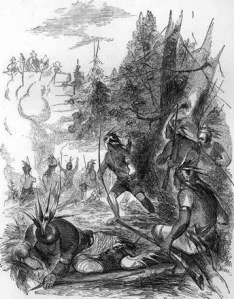
Attack on Fort Boonesborough (1777)
April 15, 1777 - First attack on Fort Boonesborough by Indians
April 16, 1953 – Battle of Pork Chop Hill began (Korean War)
April 17, 1868 - Re-interment, with impressive ceremonies, at the cemetery in Lexington, of the remains of General John Hunt Morgan.
April 18, 1847 - Storming of Cerro Gordo, Mexico. Captain John S. Williams’ company (the only Kentucky company engaged) behave with distinguished valor (Mexican-American War).
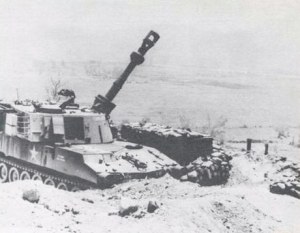
The Kentucky National Guard's 2nd Battalion, 138th Field Artillery in Vietnam (1968)
April 18, 1942 – Doolittle Raid on Japan (World War II)
April 19, 1968 - The Kentucky Army National Guard’s 2nd Battalion, 138th Field Artillery with units in Louisville, Bardstown, Elizabethtown and Carrollton were ordered to active duty by President Lyndon B. Johnson. (Vietnam War)
April 19, 1968 – Operation Delaware began (Vietnam War)
April 20, 1953 – Operation Little Switch began (Korean War)
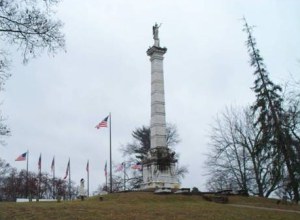
Frankfort War Memorial
April 24, 1873 - Kentucky Legislature directs that the remains of General Cary H. Fry, Colonel Theodore O’Hara, and Adjutant George N. Cardwell to be brought from distant States, and buried in State military lot at Frankfort, and graves marked with appropriate stones.
April 24, 1967 – Battle of the Hills began (Vietnam War)
April 27, 1805 - Lt. Presley O’Bannon led an expedition across North African desert and captured the fortified city then held against numerous attempts to retake the place until peace treaty was signed on June 4 1805. [Courtesy Luther Davenport] O’Bannon was the first to plant the American Flag on foreign soil. The phrase “the shores of Tripoli” from the U.S. Marine Corps Hymn refers to Lt. O’Bannon’s expedition. O’Bannon is now buried in the Frankfort Cemetery. (Battle of Derne, War with Tripoli)
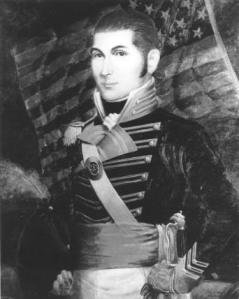
Lt. Presley O’Bannon
###
